What changed in just three months to push Bitcoin from $109K to $82K? Was it just inflation data, or is something bigger happening behind the scenes? Bitcoin’s coldest Q1 in 7 years Just three months ago, the atmosphere in the…
Cryptocurrency News
‘Contrary to popular belief,’ regulation isn’t slowing tokenization — Prometheum CEO [cointelegraph]

The market for tokenized real-world assets (RWAs) is growing by the day, but contrary to belief, the biggest hurdle to broader adoption isn’t regulation, but a lack of dedicated secondary markets for buying and selling tokenized securities, according to Prometheum founder and co-CEO Aaron Kaplan.
In an interview with Cointelegraph, Kaplan drew attention to ARK Invest CEO Cathie Wood’s recent appearance at the Digital Asset Summit in New York, where she said that a lack of regulatory clarity is preventing her company from tokenizing its funds.
“Contrary to popular belief, however, the hurdle isn’t ambiguous regulation,” said Kaplan, who noted that the US Securities and Exchange Commission’s (SEC) special purpose broker-dealer framework and Alternative Trading System (ATS) licensing “already provide a regulated pathway for issuing blockchain-native funds that offer efficiency advantages over traditional issuances.”
“The real bottleneck lies in the limited market infrastructure for delivering tokenized securities trading to a broad investor base,” he said.
Excluding stablecoins, the value of tokenized RWAs has increased by nearly 8% to $19.5 billion over the past 30 days, according to industry data. Private credit and US Treasury debt remain the two largest use cases.

The value of tokenized RWAs has grown rapidly over the past year. Source: RWA.xyz
“These assets currently sit on a handful of blockchains, but there is still no fully public secondary market where institutional and retail investors can buy, sell, and trade them, as they do with traditional securities on Nasdaq or through a brokerage account like Fidelity,” said Kaplan, who identified two general approaches for building out these platforms.
The first is building tokenized securities markets using decentralized finance (DeFi) frameworks, much like what Ondo Finance, Ethena Labs and Securitize are doing.
Related: Ethena Labs, Securitize launch blockchain for DeFi and tokenized assets
The second approach involves integrating tokenization protocols into existing brokerage platforms that operate under SEC-registered entities and are subject to federal securities laws.
“Legacy crypto and fintech platforms are already accustomed to facilitating cryptocurrency trading, so you would expect them to seek to broaden their offerings to include tokenized securities,” said Kaplan.
While many in the latter camp do not operate digitally, they “won’t cede market share without a fight,” said Kaplan. “Many are already investing in their own tokenization initiatives, or partnering with fintech and crypto firms, to remain competitive.”
“What’s at stake is the next wave of users onboarding into the digital asset space […] The question is then, will the brokerage industry enter the digital asset space, or will crypto platforms build the next gen markets for investors to buy and sell digital securities?”
As a digital asset trading and custody firm, Prometheum is attempting to bridge the infrastructure gap by building a full-service digital asset securities marketplace. The company claims that securities traded on Prometheum have reduced fees, faster settlement times and increased efficiency.
Related: CME Group taps Google Cloud for pilot asset tokenization program
Investors want “digital native” versions of assets they’ve always known
Perhaps the biggest demand driver for tokenized assets among traditional investors is that they want to access “digital native versions of all assets, in addition to crypto tokens, through a single ecosystem they are comfortably using […] to meet a range of financial goals,” said Kaplan.
One area where tokenization appears to be gaining traction is in real estate. As Cointelegraph recently reported, luxury and commercial properties are being tokenized all over North America and secondary markets are being established to enable the trading of tokenized shares.
A 2024 report by Boston Consulting Group (BCG) called tokenization a “game-changing blockchain use case in financial services” due to its scalability and near-instant transactions.
According to BCG managing director and senior partner Sean Park, tokenization could boost investors’ annual returns by roughly $100 billion while increasing the revenue streams of financial institutions.

Tokenized RWAs as an investable asset class reached an “inflection point” in 2023. Source: Boston Consulting Group
The potential of tokenization has even been flagged by the World Economic Forum in a recent article published by Digital Asset co-founder and CEO Yuvan Rooz.
In the article, Rooz showed that roughly 10% of the $230 trillion global securities market is eligible for use as collateral.
“Tokenization, which improves collateral mobility and capital efficiency, could unlock this untapped capital and optimize intraday liquidity so that funds can be accessed and moved within the same trading day to meet payment and settlement obligations,” said Rooz.
Magazine: Block by block: Blockchain technology is transforming the real estate market
Here’s why crypto market and gold prices diverged ahead of Liberation Day [btcmanager]
The crypto market has come under pressure this month, continuing a downtrend that began in the fourth quarter of last year. Bitcoin (BTC) dropped from an all-time high of $109,300 in January to $82,000, while Ethereum (ETH) has slumped from…
Circle planning to launch IPO in late April: report [btcmanager]
Circle Internet Financial, the issuer of USDC, is taking a major step toward its long-anticipated initial public offering. The fintech company has enlisted investment banks JPMorgan Chase and Citi to help facilitate the offering, sources familiar with the matter told…
Dogecoin price has crashed, but a rare pattern points to a rebound [btcmanager]
Dogecoin’s price continued its downward trend on Monday as the crypto and stock markets sank. Dogecoin (DOGE), the biggest meme coin in crypto, dropped to a low of $0.1628, its lowest point since March 12. It has fallen by over…
Hashgraph planning to launch new HashSphere blockchain for regulated industries [btcmanager]
Hashgraph, the developer behind the Hedera network, has announced the launch of HashSphere, a private, permissioned blockchain tailored for enterprises in regulated industries. Set to go live in Q3 2025, HashSphere is designed to facilitate low-cost, compliant cross-border stablecoin transactions…
BlackRock CEO warns US debt could weaken dollar’s global role to Bitcoin [btcmanager]
The U.S. risks losing its global financial dominance to Bitcoin if the country’s deficits keep growing, BlackRock CEO Larry Fink warned in his annual letter. BlackRock CEO Larry Fink warns the U.S. dollar’s dominance isn’t guaranteed as soaring debt could…
Bitcoin likely to slip below $80k this week: 10x [btcmanager]
Bitcoin is likely to fall below $80,000 this week, according to digital assets research firm 10x Research. In a recent market update on X, the firm cited growing uncertainty over U.S. tariffs and rising inflation as key risk factors weighing…
Memecoins 2.0: The market crashed, but the billion-dollar circus rolls on [cointelegraph]
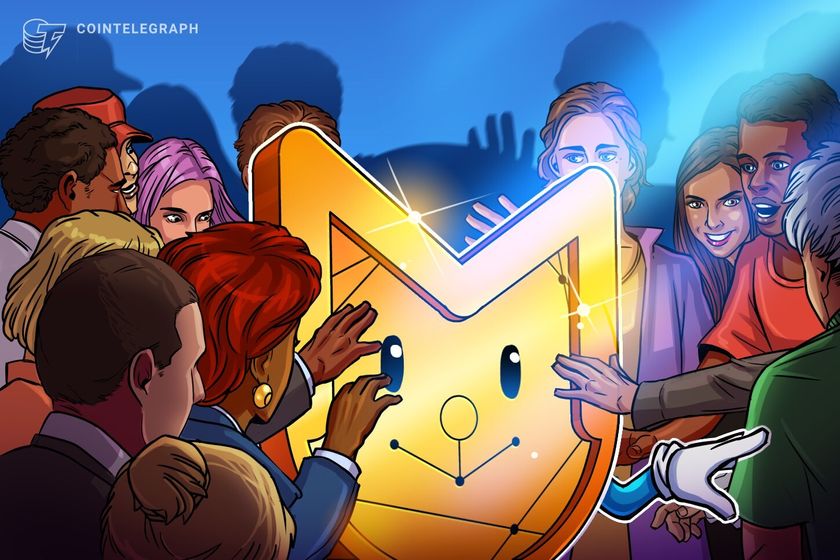
Opinion by: Igor Zemtsov, chief technology officer at TBCC
Following “Libragate,” memecoin prices crashed, with their market cap falling nearly 60% from 2025’s highs. But meme tokens, dead? They’ve got more lives than a cat on caffeine.
Despite the chaos, memecoins were still holding a $47.9-billion market cap as of March 10. It’s not exactly spare change. Meanwhile, degens are still out here “buying the dip” like it’s a Black Friday sale, convinced that absurdly named tokens like Unicorn Fart Dust, Fartcoin and Buttcoin will print them a 100x profit before year’s end.
Some call it irrational. Others call it degeneracy. But when has that ever stopped anyone in crypto?
Down bad, but not dead yet
Sure, memecoins aren’t exactly outshining Bitcoin (BTC), Ether (ETH) or Solana (SOL) right now. They’ve been getting absolutely obliterated. Prices have tanked, liquidity has dried up, and traders who thought they’d be sipping cocktails on a yacht by now are busy coping in Telegram groups.
Let’s not pretend this is the first time memecoins have been pronounced dead. Every time the world writes them off, they somehow claw their way back — sometimes with an even more absurd rally than before.
After all, logic has never been crypto’s strong suit. If it were, we wouldn’t have seen billion-dollar valuations for fart-themed tokens in the first place. And if human nature tells us anything, it’s that people will always chase the next big hype cycle — especially when it comes wrapped in humor and the promise of overnight riches.
Memecoins are down bad right now. But dead? Not a chance. The moment another ridiculous trend takes hold, the money will come flooding back. Because in crypto, what goes down eventually goes way back up — often in the most unexpected, meme-fueled ways.
Better marketing than serious crypto startups
Forget white papers, roadmaps or security audits. Memecoins don’t need any of that. All it takes is a viral meme on X, a 10-minute token launch, and within a few weeks, it could be sitting at a $50-million market cap. Meanwhile, legitimate projects spend years developing products, hiring developers and raising funds, only to watch their tokens struggle to gain traction.
Recent: Solana revenue slumps 93% from January high after memecoin bubble bursts
For memecoins, community is everything. The bigger it is, the better the pump. It’s not just the kind that retweets project updates 10 times daily, but one that fully embraces the joke. These communities don’t just speculate — they believe. And when enough people buy the meme, the token pumps.
Shiba Inu (SHIB) built a cult following as the so-called Dogecoin (DOGE) killer. It never killed DOGE, but it evolved into a $9-billion token with its own blockchain. Others took an even weirder approach. Fartcoin turned flatulence into finance. Unicorn Fart Dust captured the magic of completely nonsensical branding. And Buttcoin, a 2013 meme mocking Bitcoin, made a comeback to troll the entire industry.
The formula is obvious: The more absurd the name, the bigger the hype. Sometimes, “it’s funny” is the only investment thesis you need.
Sure, the crash wiped out some gains, but let’s not act like memecoins vanished. They didn’t go to zero, which, in crypto terms, makes them survivors. A strong community, relentless memes and top-tier shitposting can keep even the most ridiculous assets alive.
Memecoins are a rebellion against traditional finance
People are investing money in Dogecoin instead of Apple stock, and for good reason. Well, sort of. Crypto has become the go-to escape hatch for those fed up with traditional finance. Banks freeze accounts. Regulators add more red tape. Insider trading runs rampant. Meanwhile, memecoins are a free-for-all, where anyone can win big or lose everything. No middlemen. No rules. Just vibes.
The same Buttcoin proves that people will pump anything just for fun. What started as a joke now has a dedicated community trying to make it the next Bitcoin. It’s complete insanity, which is precisely why it works.
If the world has gone mad, why not profit from the chaos? With financial markets becoming more centralized, restrictive and controlled, memecoins offer an anarchic alternative. They represent the financial Wild West, where anything goes; even the most absurd assets can see billion-dollar valuations.
Memecoins as internet culture
Memecoins have been around since 2013, when Dogecoin launched as a joke about speculative trading. No one — not even its creators — took it seriously until Elon Musk got involved and became its unofficial CEO.
That same year, Buttcoin was born from a YouTube video. It wasn’t a token back then, just a meme. But years later, the community decided to turn the joke into an actual cryptocurrency. It exploded because people love jokes — and some believe it could be the next Bitcoin.
Each new wave of memecoins pushes the absurdity even further — first DOGE, then Shiba, then Bonk (BONK). Now we have an entire market of tokens inspired by farts, crap and butts. And somehow, they keep outperforming serious projects.
As long as people love memes, memecoins will have a place in crypto. It is internet culture that has turned into an asset class.
Are memecoins here to stay?
Most memecoins start as a joke, but some have found actual use cases. DOGE is already accepted for payments by Tesla, AMC and GameStop. SHIB holders can shop at Gucci, Nordstrom and Whole Foods. Even newer projects like Solcat are launching games to expand their ecosystems.
Memecoins aren’t just memes anymore. They’re shaping a new financial reality where virality, speculation and internet culture define value. But let’s address the obvious: The recent crash has slashed valuations, leaving many wondering what’s next.
Are they here to stay, or are we watching them fade into irrelevance? If history tells us anything, it’s that memecoins are like cockroaches — resilient, unpredictable and always resurfacing. Investors should brace for more chaos because these tokens are as volatile as ever.
Memecoins may not be running the show right now, but let’s be honest: The next big meme token is probably already brewing in a Telegram group, just waiting for its moment to explode (or implode).
Opinion by: Igor Zemtsov, chief technology officer at TBCC.
This article is for general information purposes and is not intended to be and should not be taken as legal or investment advice. The views, thoughts, and opinions expressed here are the author’s alone and do not necessarily reflect or represent the views and opinions of Cointelegraph.