The crypto market crawled back slightly on April 1 as investors bought the dip after a brutal quarter in which Bitcoin and Ethereum dropped by 12% and 45%, respectively. Bitcoin (BTC) price rose slightly to $84,000, while Pepe (PEPE), EOS…
Cryptocurrency News
Ethena’s USDtb enters top 10 stablecoins by market cap amid March stablecoin shakeup: report [btcmanager]
The stablecoin market has seen major shifts in March, with Ethena’s USDtb breaking into the top 10 stablecoins by market cap, Tether losing 61% of market dominance, and EURC’s market cap reaching a new all-time high. According to CoinDesk’s Stablecoins…
Hacker transfers $70M out of payment platform UPCX [cointelegraph]

Update April 1, 1:42 pm UTC: This article has been updated to add comments from Cyvers co-founder and chief technology officer Meir Dolev.
An unauthorized party withdrew about $70 million in digital assets from open-source payment platform UPCX, according to a security alert issued on April 1.
The blockchain security firm Cyvers flagged suspicious activity involving 18.4 million UPC tokens, estimating the value of the compromised funds at $70 million.
Cyvers said someone accessed a UPCX address and upgraded its ProxyAdmin contract. The attacker then executed a function that allows admins to withdraw, leading to fund transfers from three different management accounts.
At the time of writing, the stolen tokens had not been swapped for other crypto assets.
Cointelegraph contacted UPCX for comment but did not receive an immediate response.
UPC price dips 7% following unauthorized transfer
UPCX acknowledged it had detected “unauthorized activity” involving its management accounts. The team suspended deposits and withdrawals for UPCX in response to the incident. It said user assets are unaffected by the issue and it is actively investigating the matter.
UPC’s token price dropped amid news of the incident. According to CoinGecko, UPC’s token prices dropped 7%, from a high of $4.06 to a low of $3.77 during the incident.

UPCX 24-hour price chart. Source: CoinGecko
Related: Hacker steals $8.4M from RWA restaking protocol Zoth
UPC hack mirrors previous attack patterns
In a statement, Cyvers co-founder and chief technology officer Meir Dolev told Cointelegraph that while the root cause of the attack remained under investigation, these types of incidents often stem from compromised credentials or flawed access control mechanisms.
Dolev told Cointelegraph that both of these vulnerabilities have been the predominant cause of Web3 losses in 2024. The executive said the same causes were responsible for over 80% of the stolen funds during the year.
The cybersecurity executive also said the attack pattern was similar to previous exploits. Dolev told Cointelegraph:
“This incident mirrors attack patterns we’ve documented in prior exploits, where access to critical administrative roles enabled malicious upgrades and fund drainage.”
The executive added that the hack underscored an urgent need to enhance security around wallet permissions, multisignature implementations and runtime transaction validation.
The $70 million stolen in the incident would more than double the amount lost in the previous month. In March, crypto stolen from hacks only reached $33 million.
Magazine: Memecoins are ded — But Solana ‘100x better’ despite revenue plunge
Bybit sunsets its NFT marketplace, IDO services [btcmanager]
Cryptocurrency exchange Bybit announced it will discontinue its NFT and Inscription marketplaces as well as shut down its IDO products. Crypto exchange Bybit is winding down support for its marketplaces for non-fungible tokens and Bitcoin-based NFTs known as inscriptions just…
Former Blade of God X exec claims game ‘abandoned’ Web3 [cointelegraph]
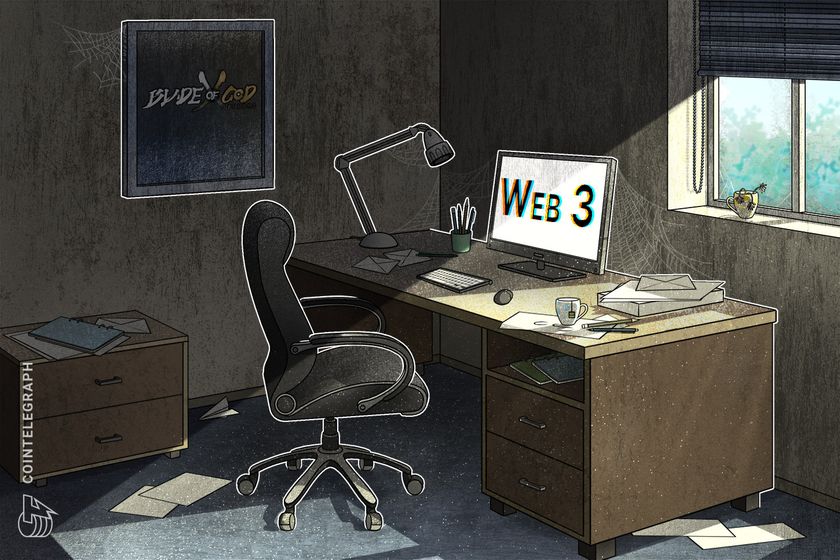
A former executive of the Web3 game Blade of God X (BOGX) accused the project of abandoning its blockchain-based roadmap after raising funds through the crypto space.
On April 1, BOGX’s former chief marketing officer Amber Bella claimed in an X post that despite being funded by Web3 sources, the game “completely abandoned” its Web3 goals and the team working on its Web3 features.
“Web3 was completely abandoned, and my Web3 team’s salaries went from delayed payments to no payments at all,” Bella claimed.
The former game executive also said that instead of compensating users and repaying funds to non-fungible token (NFT) buyers, the game’s founder, Tnise Liu Yang, decided to block her from all personal communication channels.
Related: Kalshi sues Nevada and New Jersey gaming regulators
Former BOGX exec says founder avoided refund conversation
In the X thread, Bella claimed she attempted to convince Yang to properly liquidate the game’s Web3 assets, but the BOGX founder blocked all communications. Bella wrote:
“When I requested that Tnise refund all sold NFTs and properly address the Web3 community, including returning the in-game purchases made by Web3 users during the third test, I discovered I had been blocked from all personal communication channels without any advance notice.”
Bella said this happened when she proposed “settling the Web3 side” responsibly if they were to shift the game into a fully Web2 project.
In addition, the former exec accused the game’s Web2 team of claiming prizes allocated for players. Bella said that while the Web3 team was working to improve player benefits, they discovered that the Web2 team was using their own accounts to complete and claim cash prizes that should’ve gone to players.
“They concealed this from the Web3 team entirely and initially denied it when confronted. Only when we presented evidence showing that the accounts were linked to their own wallets did they finally remove these accounts,” Bella wrote.
Cointelegraph reached out to Blade of God X for comments but did not receive a response by publication.
BOGX is a game action role-playing game (RPG) developed by Void Labs. On May 11, 2024, Web3 investment fund OKX Ventures announced its investment in the game. In a now-deleted press release, OKX Ventures wrote that the game “merges advanced AI agents with blockchain technology.”
Magazine: Classic Sega, Atari and Nintendo games get crypto makeovers: Web3 Gamer
Former Blade of God X exec claims game ‘abandoned’ Web3 [cointelegraph]
A former executive of the Web3 game Blade of God X (BOGX) has accused the project of abandoning its blockchain-based roadmap after raising funds through the crypto space.
On April 1, BOGX’s former chief marketing officer Amber Bella claimed in an X post that despite being funded by Web3 sources, the game “completely abandoned” its Web3 goals and the team working on its Web3 features.
“Web3 was completely abandoned, and my Web3 team’s salaries went from delayed payments to no payments at all,” Bella claimed.
The former game executive also said that instead of compensating users and repaying funds to non-fungible token (NFT) buyers, the game’s founder, Tnise Liu Yang, decided to block her from all personal communication channels.
Related: Kalshi sues Nevada and New Jersey gaming regulators
Former BOGX exec says founder avoided refund conversation
In the X thread, Bella claimed she attempted to convince Yang to properly liquidate the game’s Web3 assets, but the BOGX founder blocked all communications. Bella wrote:
“When I requested that Tnise refund all sold NFTs and properly address the Web3 community, including returning the in-game purchases made by Web3 users during the third test, I discovered I had been blocked from all personal communication channels without any advance notice.”
Bella said this happened when she proposed “settling the Web3 side” responsibly if they were to shift the game into a fully Web2 project.
In addition, the former exec accused the game’s Web2 team of claiming prizes allocated for players. Bella said that while the Web3 team was working to improve player benefits, they discovered that the Web2 team was using their own accounts to complete and claim cash prizes that should’ve gone to players.
“They concealed this from the Web3 team entirely and initially denied it when confronted. Only when we presented evidence showing that the accounts were linked to their own wallets did they finally remove these accounts,” Bella wrote.
Cointelegraph reached out to Blade of God X for comments but did not receive a response by publication.
BOGX is a game action role-playing game (RPG) developed by Void Labs. On May 11, 2024, Web3 investment fund OKX Ventures announced its investment in the game. In a now-deleted press release, OKX Ventures wrote that the game “merges advanced AI agents with blockchain technology.”
Magazine: Classic Sega, Atari and Nintendo games get crypto makeovers: Web3 Gamer