Binance Coin price seems ripe for a strong bullish breakout as the network continues to incinerate more coins. Binance Coin (BNB) was trading at $620 on Tuesday, up 20% from its March lows and 22% below its all-time high. BNB…
Cryptocurrency News
This $0.024 altcoin could give better gains than XRP [btcmanager]
Yeti Ouro, a $0.024 altcoin, is rapidly gaining traction with its GameFi utility, fueling speculation about outpacing XRP’s gains. #partnercontent
Mastercard working on blockchain to connect TradFi and crypto: report [btcmanager]
Mastercard is developing a blockchain-powered Multi-Token Network to connect traditional financial institutions with the digital asset space. The initiative, led by Raj Dhamodharan, Mastercard’s executive vice president of blockchain and digital assets, aims to provide a compliant, user-friendly experience for…
Bitcoin price flips volatile as traders eye $84.5K breakout [cointelegraph]

Bitcoin (BTC) repeated earlier volatility at the April 1 Wall Street open as US trade tariff talk kept markets nervous.
BTC/USD 1-hour chart. Source: Cointelegraph/TradingView
Bitcoin stays erratic ahead of crunch tariffs
Data from Cointelegraph Markets Pro and TradingView showed BTC/USD making rapid moves within its weekly trading range of around $83,000.
US stocks ticked lower at the open, while gold came off fresh all-time highs of $3,149 per ounce.
Talk of recession began to return to the spotlight ahead of US President Donald Trump’s so-called “Liberation Day,” due on April 2 and on which he promised to unveil a new round of trade tariffs.
“Equity markets are clearly pricing-in a recession: The S&P 500 is down -2% since Fed rate cuts began in September 2024,” trading resource The Kobeissi Letter wrote in part of an X thread on the topic.
Kobeissi referred to the Federal Reserve easing of financial policy in the form of interest rate cuts — something now on pause but which markets see resuming in June, per data from CME Group’s FedWatch Tool.

Fed target rate probabilities for June 18 FOMC meeting. Source: CME Group
While this would be a clear bullish catalyst for crypto and risk assets, Kobeissi noted that history had not favored strong equities rebounds under similar circumstances.
“In the case of rate cuts during a recession, the S&P 500 declined -6% in 6 months -10% within 12 months,” it continued.
“The AVERAGE post-pivot return is +1% in 6 months.”
S&P 500 performance comparison. Source: The Kobeissi Letter/X
Trading firm QCP Capital was similarly cautious about the overall market landscape thanks to macroeconomic forces.
“With consumer confidence plumbing 12-year lows and equity markets already rattled by a 4-5% weekly drawdown, the timing couldn’t be worse,” it wrote about tariffs in its latest bulletin to Telegram channel subscribers.
“There is a real risk that a broad and aggressive regime could deepen recession fears and send risk assets spiraling. That said, political theatre often leaves room for recalibration. A softer-than-expected rollout could offer markets a brief reprieve.”BTC price action heads to key resistance
BTC price action thus left market observers keen for stronger signals over momentum, even as fundamental support at $80,000 held firm.
Related: Bitcoin sellers ‘dry up’ as weekly exchange inflows near 2-year low
“Some upside momentum today, but it’s still just a 3-wave move, and resistance is holding strong,” trading channel More Crypto Online summarized about an Elliott Wave schematic for the 30-minute chart, adding that “the rally’s got more to prove.”

BTC/USD 30-minute chart. Source: More Crypto Online/X
Popular trader Jelle noted BTC/USD respecting the 50-week simple moving average (SMA), currently at $76,600, as support.
Bitcoin, he hoped, would reclaim $84,500 as its next leg up, having rejected there earlier in the day.

BTC/USD 1-week chart with 50SMA. Source: Cointelegraph/TradingView
QCP meanwhile shared positive news from investors eyeing possible higher levels to come next.
“On our desk, activity was skewed bullish into Asia open,” it reported.
“Buyers were seen taking topside exposure ($85k-$90k strikes) and selling downside risk ($75k strikes), a potential bet on a firmer start to Q2.”
This article does not contain investment advice or recommendations. Every investment and trading move involves risk, and readers should conduct their own research when making a decision.
Multiple altcoins crash on April Fools’ day, crypto market holds steady [cointelegraph]

Update (April 2, 6:30 am UTC): This article has been updated to add a statement from Binance on investigating the volatility of the Act I The AI Prophecy (ACT) token.
A number of altcoins and memecoins saw a sharp sell-off on April Fools’ Day, April 1, with some tokens, including Act I The AI Prophecy, dropping nearly 60% in minutes.
Act I The AI Prophecy (ACT), a token associated with the eponymous project focused on artificial intelligence, plunged 58% from $0.19 to $0.08 in less than an hour on April 1, with its market cap shedding $96 million, according to data from CoinMarketCap.
The sharp drop of ACT came along with notable red action in the altcoin market, with memecoins like sudeng (HIPPO), CZ’S Dog (BROCCOLI), Kishu Inu (KISHU), DeXe (DEXE), dForce (DF) and more seeing significant price declines.

Cryptocurrency market at a glance. Source: Coin360
The broader crypto market hasn’t reacted negatively to panic in altcoin markets, with major cryptocurrencies like Bitcoin (BTC) remaining green at the time of writing.
Act I “fully aware of the situation”
The massive drop in the ACT token has not gone unnoticed on social media, with Act I taking to X to assure its community that the project is fully aware of the current situation.
“Our team is actively investigating and working collaboratively with all relevant parties to address this matter,” Act I wrote, adding that it also started developing a “response plan” with its trusted partners.

Source: Act I The AI Prophecy
Some crypto commentators linked the sudden price movement to a margin update by Binance.
Binance’s leverage update triggers a $3.8 million whale liquidation
According to data from the blockchain analytics tool Lookonchain, Binance’s update of leverage and margin tiers on tokens like ACT on April 1 has triggered some massive liquidations among whales.
“Binance updated leverage and margin tiers on tokens like ACT — and a whale got liquidated for $3.79M at $0.1877,” Lookonchain said in an X post.

Source: Lookonchain
According to a blog post by Binance, its derivatives platform, Binance Futures, updated to leverage and margin tiers for pairs such as ACT versus Tether USDt (USDT) at 10:30 UTC.
Related: Listing an altcoin traps exchanges on ‘forever hamster wheel’ — River CEO
The update affected existing positions opened before the update, potentially leading to some position expirations, Binance noted.
Binance investigates ACT volatility
Binance subsequently posted about the ACT issue on its blog at around 5:00 pm UTC, reporting that “three VIP users sold ACT token worth approximately 514,000 USDT on the Binance spot market.”
The announcement also mentioned another spot ACT sale worth around 540,000 USDT by a non-VIP user, adding that the exchange has “not identified any single account which made significant profits from this incident.”

An excerpt from Binance’s preliminary investigation into price volatility of low market cap tokens. Source: Binance
Additionally, Binance stressed the role of market makers (MM) in its ecosystem, adding that Binance will continue to adjust different pairs’ leverage based on market conditions.
Speculation over Wintermute selling
The altcoin bleeding came amid community speculation surrounding selling by the global algorithmic trading firm Wintermute, which reportedly liquidated multiple altcoin positions on April 1.
Some market observers even suggested that the selling was due to a hack, while many expressed confusion over possible reasons for the selling’s root cause.
“MMs don’t just nuke their own books for fun. Either it’s a hack, insolvency, or someone is getting margin called hard,” DEFI Kadic commented.
Some also speculated about Wintermute interacting with the USD1 stablecoin by Donald Trump-linked World Liberty Financial.

Source: Daniele (Degen Arc)
“That being a major deal for them, they are derisking all assets that might be non-compliant or non-matching the new brand direction they are taking of an institutional player,” the X user claimed.
Wintermute co-founder and CEO Evgeny Gaevoy denied the company’s involvement in the altcoin massacre on April 1 in a social media exchange with X user ilikeblocks.
“Not us [for what it’s worth], but also curious about that post mortem,” Gaevoy wrote.

Source: ilikeblocks and Wintermute co-founder and CEO Evgeny Gaevoy (wishfulcynic)
Ilikeblocks later posted to express regret for their initial allegation about Wintermute.
“They’re making markets better for all of us and in comparison to their competition they’re really not that shady,” they added.
Cointelegraph approached Wintermute for comment regarding the market action but did not receive a response by the time of publication.
Magazine: Memecoins are ded — But Solana ‘100x better’ despite revenue plunge
Pi Network price nears all-time low ahead of a 124M token unlock [btcmanager]
Pi Network price continued its strong downward trend as buyers remained on the sidelines and concerns about the upcoming token unlock grew. Pi Network (PI) dropped to a low of $0.7012, its lowest level since Feb. 25, and is now…
Bitcoin’s quantum-resistant hard fork is inevitable — It’s the only chance to fix node incentives [cointelegraph]

Opinion by: Dr. Michael Tabone, senior economist for Cointelegraph
Bitcoin (BTC) has long been hailed as unbreakable and untouchable, a digital stronghold against the forces of change. Bitcoin’s bedrock of security is facing its first true test with quantum computing, which should be addressed sooner rather than later. Its cryptographic armor will crack if not addressed, forcing the network to adapt or perish.
Bitcoin’s node count is growing, but incentives are still absent
Bitcoin’s full node network has grown over time, a sign of increasing adoption and a more robust infrastructure, but the core issue remains. The voluntary act of running a node still has no financial incentive. Miners earn rewards for securing the network, yet full node operators get nothing for their role in keeping Bitcoin decentralized.
At the same time, a significant portion of these nodes are run by exchanges, custodians and large mining pools. These are centralized entities with financial incentives to maintain control. Suppose Bitcoin’s node network continues to expand without proper incentives. In that case, the risk remains that validation will become increasingly dependent on a few well-funded players rather than a truly distributed base of individual users (see Figure 1).

FBitcoin node operation has increased by only 15,605 in 8 years. Source: Bitnodes.io
All of this comes as running a Bitcoin node has never been easier. Plug-and-play solutions like Umbrel, Start9, RaspiBlitz, Cubit and Ronin Dojo allow anyone to set up a full node on low-cost hardware with minimal technical knowledge. These tools have lowered the barrier to entry, making node operation more accessible than ever before.
Yet adoption remains stagnant. Despite the ease of setup, most Bitcoin users still do not run their own nodes. The reason is simple: There is no financial incentive to do so.
Recent: Decentralization is in danger — We can fix itUnlike miners, who earn block subsidies and transaction fees for securing the network, full node operators receive nothing. They validate transactions, enforce consensus rules, and contribute to Bitcoin’s decentralization, yet their efforts go unrewarded. As a result, node operation remains an ideological commitment rather than an economically viable activity.
If Bitcoin must be forked, we must use it to strengthen decentralization
Critics of the proposal argue that Bitcoin’s monetary policy should remain untouched. Others warn that introducing full node incentives could lead to Sybil attacks, where bad actors spin up thousands of fake nodes to exploit rewards. These concerns are valid — but they ignore the larger reality.
Bitcoin is on the path toward a forced consensus change. The honest debate is not whether Bitcoin should change but whether we will use this moment to strengthen it. If full Bitcoin node incentives are implemented correctly, they could drive a surge in node adoption, strengthening the network’s censorship resistance and reinforcing its decentralization. This would reduce dependence on large mining pools and exchanges for validation, spreading control more evenly among individual participants. Bitcoiners will have to continue pushing to keep Bitcoin resilient against corporate influence in a post-quantum world where security and decentralization will matter more than ever in the years ahead.
Poorly designed incentives could introduce risks, particularly Sybil attacks, where bad actors spin up thousands of fake nodes to exploit rewards. These challenges can be solved with the right Sybil resistance mechanisms in place. Ignoring them entirely would be far riskier than addressing them head-on.

Source: Michael Tabone
Bitcoin’s future depends on this moment
Bitcoin’s greatest strength is its ability to remain decentralized and censorship-resistant. But that strength is not automatic; it requires an infrastructure that encourages broad participation.
The quantum-resistant hard fork will be a once-in-a-generation event. We may not get another chance if we fail to use it to fix Bitcoin’s broken incentive structure. Bitcoin’s future depends on getting this moment right.
This conversation should continue, but you should have some skin in the game and run a node yourself first.
Opinion by: Dr. Michael Tabone, senior economist for Cointelegraph.
This article is for general information purposes and is not intended to be and should not be taken as legal or investment advice. The views, thoughts, and opinions expressed here are the author’s alone and do not necessarily reflect or represent the views and opinions of Cointelegraph.
Bybit to shut down NFT marketplace as trading volumes decline [cointelegraph]
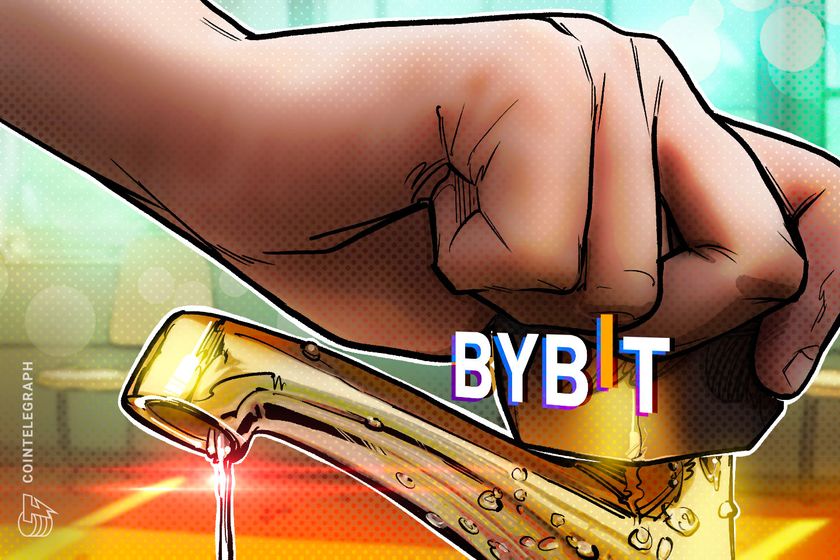
Cryptocurrency exchange Bybit has announced the shutdown of its non-fungible token (NFT) marketplace.
In an April 1 announcement, Bybit warned its users that its NFT marketplace will cease operations on April 8 at 4:00 pm (UTC). Furthermore, at that time, the exchange will also shut down its Inscription Marketplace and its initial decentralized exchange offering initiative.
The announcement explains that the measures are part of Bybit’s “efforts to streamline our offerings.” The decision follows a similar decision by major NFT marketplace X2Y2 announced earlier this week.
Charu Sethi, president at NFT-focused Polkadot and Kusama chain Unique Network, told Cointelegraph at the time that the market moved on from speculative to utility-based:
“The speculative phase focused on collectibles and trading is over, but NFTs are now entering their next growth era as core infrastructure enabling massive opportunities in gaming, AI, fan engagement and content authentication.“The NFT market is on a downward trend
The non-fungible token market at large is seeing a significant downturn. Daily NFT trading volume was over $18 million 364 days ago and stands at $5.34 million at the time of publication — a 70% fall.
Related: Bitcoin NFTs, layer-2 and restaking hype ‘completely gone’
The fall is even more dire when contrasted with the heights reported on Dec. 17, 2024, when volume exceeded $113.6 million. Since then, volume has fallen by over 95%.

NFT marketplace daily trading volume. Source: Token Terminal
Weak investor interest in speculative NFTs is felt throughout the market. Reports resurfaced earlier today show that NFT project Gutter Cat Gang (GCG) saw a rocky token launch of its GANG token on Apechain on March 31, attributed to a “technical issue” by a third party. However, others pointed to reportedly low interest in the token.
Related: Bybit: 89% of stolen $1.4B crypto still traceable post-hack
Data shared online indicated that the project only attracted 3.66 Ether (ETH), worth about $6,800, in its token sale. This is a far cry from the project’s $1 million target — but the team has not yet addressed those claims.
A late March report shows that NFT sales dropped sharply in the first quarter of 2025, plunging 63% year-over-year. Still, the report points out some outliers such as Doodles, Milady Maker and Pudgy Penguins all outperforming expectations.
Magazine: Trump-Biden bet led to obsession with ‘idiotic’ NFTs —Batsoupyum, NFT Collector
Grayscale files to convert Digital Large Cap Fund into ETF [btcmanager]
Grayscale Investments has filed an S-3 form with the U.S. Securities and Exchange Commission to convert its Digital Large Cap Fund into an exchange-traded fund. The April 1 filing seeks to transition the private investment vehicle into a publicly traded…