A bill to regulate stablecoin in the United States has been passed by the US House Financial Services Committee. On April 2, the Committee approved the Stablecoin Transparency and Accountability for a Better Ledger Economy Act in a 32-17 vote.…
Cryptocurrency News
STABLE Act targeting stablecoins advances with House Committee approval [btcmanager]
A bill to regulate stablecoin in the United States has been passed by the US House Financial Services Committee. On April 2, the Committee approved the Stablecoin Transparency and Accountability for a Better Ledger Economy Act in a 32-17 vote.…
Ethereum topped DEX trading volume in March despite 45% Q1 ETH price drop [btcmanager]
Ethereum reclaimed the top spot in decentralized exchange trading volume in March for the first time since September 2024. Ethereum-based DEXs handled $64 billion in spot trading volume, compared to Solana’s $52 billion and BSC’s $44 billion, as per DefiLlama…
Treasure DAO announces huge pivot in hopes of extending runway to February [cointelegraph]

Decentralized video game ecosystem Treasure DAO is restructuring as “a matter of survival” to extend its financial runway to at least February 2026.Treasure DAO’s chief contributor John Patten says in an April 2 video posted to X that he has resumed a leadership role and is taking a plan to the DAO to streamline operations, eliminate unnecessary costs, and center the organization around a few key projects.
“I will introduce this after all of you provide your opinions at this time. I have my own thoughts, but we must make this decision as a community through long deliberation. The best ideas need to rise to the surface,” he said.
The Next Chapter of Treasure ✨We’re releasing an official statement on our pivotal transition, outlining the rationale behind leadership changes, financial restructuring, and our bold new strategic direction.Full details 👇 pic.twitter.com/BjWgZxc98l
— Treasure (@Treasure_DAO) April 2, 2025
As part of cost-cutting to reduce Treasure DAO’s annual burn rate of $8.3 million, Patten says 15 contributors have either left or been laid off, and game publishing support and the treasure chain will be terminated.
At the same time, he is proposing to withdraw an idle $785,000 from the market maker Flowdesk to increase the DAO’s treasury.
Patten says that, with the current runway, “stablecoins will last until roughly December,” but if the DAO approves withdrawing the funds from Flowdesk, this could be extended to February 2026, in “an optimistic scenario.”
The DAO’s current treasury only has $2.4 million left, and the ecosystem fund holds 22.3 million MAGIC, valued at $2.3 million, according to Patten, but if “Magic falls,” the DAO is “unsustainable sometime between December and February.”
Treasure DAO to refocus on four products
Patten says the DAO also needs to focus its energy on a few key products and future partnerships will be based on revenue generation for the DAO, where users of the platform will need to generate value through token use.
“The DAO should officially commit to a focused, streamlined approach of four products and four products only, the marketplace, Bridgeworld, Smolworld and AI agent, scaling technology,” he said.
Related: Illuvium CEO says firm has gone ‘super lean’ to speed up development
“That’s all that Treasure should be through 2025. Bridgeworld and Smolworld will be use cases to demonstrate how other projects utilize magic marketplace and our AI framework and back end to run many, many agents concurrently.”
TreasureDAO, launched in 2021, offered services to provide game publishers access to infrastructure and advisory services to launch Web3-based games.
However, Patten says it “didn’t have a scalable business model” and hasn’t grown since the Arbitrum airdrop in March 2023.
The Treasure ecosystem token MAGIC is down 16.5% to $0.0872 for the last 24 hours, according to CoinGecko. Overall, the token has shed 98% after hitting its all-time high of $6.32 on Feb. 19, 2022.
Magazine: Financial nihilism in crypto is over — It’s time to dream big again
Did ChatGPT come up with Trump’s tariff rate formula? [cointelegraph]

Update (April 3, 10:50 am UTC): This article has been updated to correct the quote attributed to Wojtek Kopczuk
There’s a crazy theory on social media that US President Donald Trump’s newly announced reciprocal tariff plan — which hits all countries with a minimum 10% tariff — could have been designed by an artificial intelligence chatbot.
Only a short period after Trump announced the tariffs at the White House Rose Garden on April 2, some X users claim they were able to duplicate the same tariff plan with a rudimentary prompt using OpenAI’s ChatGPT.
“I was able to duplicate it in ChatGPT,” NFT collector DCinvestor told his 260,000 followers on X following the Donald Trump announcement of reciprocal tariffs on 185 countries on April 2.
“It also told me that this idea hadn’t been formalized anywhere before, and that it was something it came up with,” he added, referring to the chatbot’s ability to calculate the tariff rates. “FFS. Trump admin is using ChatGPT to determine trade policy,” he added.
Of course, the similarities between the artificial intelligence-generated tariff plan and Trump’s plan could also be simply coincidental.
DCInvestor’s observation came in response to crypto trader Jordan Fish, also known as Cobie, who also asked ChatGPT using the prompt: “What would be an easy way to calculate the tariffs that should be imposed on other countries so that the US is on even playing fields when it comes to trade deficit. Set a minimum of 10%.”

ChatGPT response to question on tariff calculations. Source: Cobie
Journal of Public Economics editor Wojtek Kopczuk also experimented with ChatGPT, which generated the same results. “Confirmed, chatgpt… exactly what the dumbest kid in the class would do, without edits,” he said.
Author Krishnan Rohit postulated on X that this “might be the first large-scale application of AI technology to geopolitics.” ChatGPT, Gemini, Claude, and Grok all give the same answer to the question on how to impose tariffs easily, he observed.
Trump’s reciprocal tariffs lead to crypto dip
Founder and CEO of supply chain logistics platform Flexport, Ryan Petersen, said his firm had reverse-engineered the formula the Trump administration used to generate the reciprocal tariffs.
“It’s quite simple, they took the trade deficit the US has with each country and divided it by our imports from that country,”
An editor at The Yale Review, James Surowiecki, said something similar, “they just took our [US] trade deficit with that country and divided it by the country’s exports to us.”
Related: ‘National emergency’ as Trump’s tariffs dent crypto prices
Trump’s reciprocal tariffs, which come into effect on April 5, have hit all countries with a 10% levy, with some nations facing even larger rates, such as China with a 34% tariff, Japan with 24%, and the European Union with 20%.
Crypto markets reacted particularly badly, plunging 5% after the announcement as Bitcoin (BTC) fell by $5,500 to $82,277 before recovering marginally, according to CoinGecko.
Magazine: Financial nihilism in crypto is over — It’s time to dream big again
Bitcoiner speculates ‘massive’ bot spam briefly took down Bitcoin mailing list [cointelegraph]

One of Bitcoin’s key communication tools used to discuss potential protocol changes was knocked out for several hours starting on April 2, with one moderator speculating it may have been a targeted attack assisted by bots.
For several hours across April 2 and 3, Bitcoin core developers and researchers were unable to interact on Google Groups after Google banned the group for spam.
“Bitcoin Development Mailing List has been identified as containing spam, malware, or other malicious content,” Google’s warning stated at the time.

The Bitcoin Development Mailing List’s warning before the ban was lifted. Source: Google
Bitcoin Core developer Bryan Bishop told Cointelegraph that the ban may have been triggered by individuals or bots mass-reporting the Bitcoin mailing list from multiple accounts.
It’s a common tactic by attackers looking to ban or censor a community, Bishop said, noting that similar incidents occur on YouTube, X and TikTok fairly often.
“So it’s possible that this whole thing might have been triggered through something like that. It might have just been someone clicking those links on a massive scale to report it.”
Google Workspace Support’s X account confirmed that the issue had been resolved on April 3 at 2:23 am UTC in response to one of the Bitcoin mailing list’s other moderators, Ruben Somsen.
Bitcoin advocate and head of Block Inc, Jack Dorsey, also called attention to the ban, urging Google CEO Sundar Pichai to investigate the issue.
Related: Bitcoin creator Satoshi Nakamoto may be wealthier than Bill GatesMailing lists typically involve one moderator email sending information to subscribers in a group to discuss and collaborate on a topic or shared interest.
The Bitcoin mailing list is used by Bitcoin core developers and researchers to discuss potential protocol changes to Bitcoin, which secures more than $1.6 trillion worth of value for network users around the world.
It has become one of the main Bitcoin mailing lists since the network’s pseudonymous creator, Satoshi Nakamoto, shared Bitcoin’s white paper on the Cryptography Mailing List on Oct. 31, 2008.
Bitcoin mailing list moderators plan to stay on Google Groups
Despite the incident, Bishop said the Bitcoin mailing list moderators have no intention of moving away from communicating via email:
“The reality of the situation is that this particular mailing list has always been email, and so the contributors that discuss Bitcoin protocol development through email, in order to provide continuity of service, you have to replace it with email.”
The Bitcoin mailing list officially migrated to Google Groups in February 2024.

Source: Bryan Bishop
Before that, the mailing list was hosted on the Linux Foundation, Oregon State University Open Source Lab’s infrastructure and SourceForge.net.
Bishop suggested that a Bitcoin forum shouldn’t be limited to one particular platform, pointing out that there are several other platforms where Bitcoin developments are discussed, including GitHub and the decentralized social network Nostr.
Magazine: 10 crypto theories that missed as badly as ‘Peter Todd is Satoshi’
Binance confirms FDUSD reserves are accurate after a brief de-pegging event [btcmanager]
Binance has reaffirmed the accuracy of FDUSD’s reserve attestation for February, following concerns sparked by a brief de-pegging event. In an Apr. 3 update on the company’s blog, Binance stated it had reviewed First Digital USD’s (FDUSD) reserve data twice,…
US House committee passes stablecoin-regulating STABLE Act [cointelegraph]
Update (April 3, 5:43 am UTC): This article has been updated to add information on the STABLE Act and GENIUS Act.
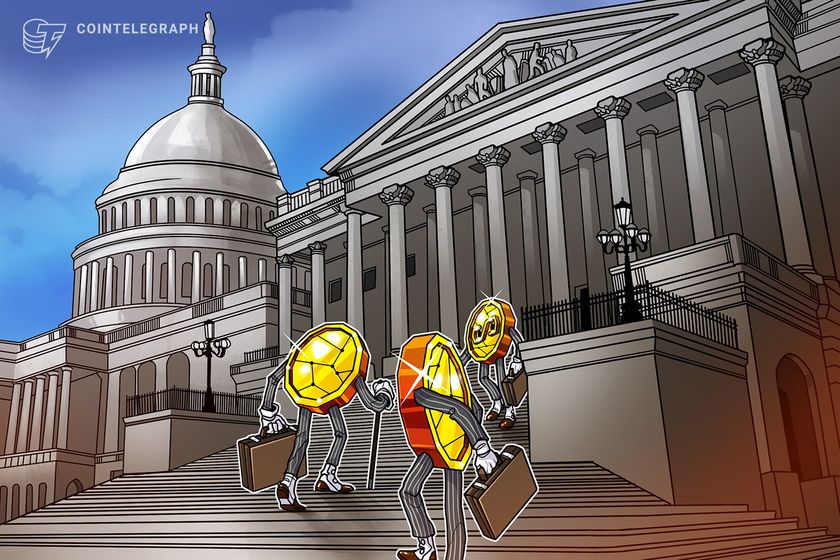
The US House Financial Services Committee has passed a Republican-backed stablecoin framework bill, which will now head to the House floor for a full vote.
The Committee passed the Stablecoin Transparency and Accountability for a Better Ledger Economy, or STABLE Act, with a 32-17 vote on April 2, with six Democrats voting in favor.
The bill was introduced on Feb. 6 by committee Chair French Hill and the chair of its Digital Assets Subcommittee, Bryan Steil — reportedly drafted with the help of the world’s largest stablecoin issue, Tether.

Source: Financial Services GOP
The bill would provide rules around payment stablecoins, a crypto token tied to a currency such as the US dollar, and aims to ensure issuers give information about their business and how they back their tokens.
During an earlier markup session, the committee’s leading Democrat, Maxine Waters, who later voted against the bill, criticized her Republican peers for “setting an unacceptable and dangerous precedent” with the STABLE Act.
She said President Donald Trump could use the bill to allow his family’s stablecoin to be used in government payments and argued the bill validates Trump “and his insiders’ efforts to write rules of the road that will enrich themselves at the expense of everyone else.”
In late March, the Trump family’s World Liberty Financial crypto venture launched a stablecoin, World Liberty Financial USD (USD1). Meanwhile, the US Housing Department, which oversees social housing, was reportedly looking to experiment with using stablecoins for some of its functions.
Stablecoin GENIUS Act also weaves through Congress
Other stablecoin-related bills are also working their way through Congress, including the Republican-led Guiding and Establishing National Innovation for US Stablecoins, or GENIUS Act, which lays out oversight and reserve rules for issuers.
Related: Crypto has a regulatory capture problem in Washington — or does it?
The US Senate Banking Committee voted through the GENIUS Act in an 18-6 vote on March 13, after Senator Bill Hagerty, one of the bill’s co-sponsors, updated it following consultation with the Committee’s Democrats.
Before the vote, Democratic Senator Kirsten Gillibrand said the updated GENIUS Act made “significant improvements to a number of important provisions” in areas such as consumer protections and authorized stablecoin issuers.
Both the STABLE Act and GENIUS Act will now wait until debate time on the floor of the House and Senate, respectively, before they head for a floor vote.
Crypto journalist Eleanor Terrett reported on X that two unnamed crypto lobbyists said there is likely to be “a coordinated push behind the scenes over the next few weeks to get the two bills to mirror each other, as there are still some differences between them.”
Doing so would “avoid having to set up a so-called conference committee which is formed so members from both chambers can negotiate to create a final version of the bill everyone agrees on,” she added.
Magazine: How crypto laws are changing across the world in 2025
Crypto Fear and Greed Index drops to 25, entering ‘Extreme Fear’ as Trump tariffs rattle markets [btcmanager]
The Crypto Fear and Greed Index has plunged to 25, dropping 19 points from the previous day and pushing the market into “Extreme Fear” territory. This steep drop follows U.S. President Donald Trump’s Apr. 2 announcement of aggressive new “Liberation…
DDoS attacks now a dominant means of waging political cyber-warfare [cointelegraph]

Distributed denial-of-service (DDoS) attacks are outpacing many traditional cyber threats and are no longer just a tool but a “dominant geopolitical weapon,” according to network security firm Netscout.
Global DDoS activity increased by 12.7% in the second half of 2024 compared to the first half, totaling almost 9 million attacks, according to the firm.
A DDoS attack is a malicious attempt to disrupt the normal web traffic of a targeted server, service or network by overwhelming the target or its surrounding infrastructure with a flood of internet traffic.
The largest increases have been in Latin America and the Asia Pacific regions, with around 30% and 20% increases from the first half, respectively.
Netscout reported that there were a total of 7.9 million DDoS attacks in the first half of 2024, with a combined total of 16.8 million for the full year, up almost 30% from the 13 million attacks the firm recorded in 2023.
Attackers have been using the internet disruption tool to “exploit moments of national vulnerability to amplify chaos and erode trust in institutions,” the researchers said.
The report described DDoS attacks as “precision-guided digital weapons” capable of disrupting infrastructure at critical moments, highlighting how they have been deployed during sociopolitical conflicts, elections, protests and policy disputes.

Weekly DDoS statistics, 2024. Source: Netscout
AI is supercharging DDoS attacks
DDoS-for-hire services, including booters and stressors, are “more powerful than ever,” they added, as cyber criminals leverage AI and automation to bypass CAPTCHA, with automation “advancing toward capabilities such as behavior mimicry and real-time attack adjustments.”
The researchers concluded that DDoS attacks “are no longer just about raw bandwidth,” adding that they are “adaptive, persistent, and deeply embedded in modern cyber and geopolitical conflicts.”
“The shift to high-powered enterprise infrastructure, turnkey reconnaissance, the rise of AI-enhanced automation and the expansion of DDoS-for-hire services mean that attackers are evolving faster than ever.”
The role of DDoS attacks is evolving, Corero Network Security chief technology officer Ashley Stephenson told Forbes recently, adding, “By automating tasks that were once labor-intensive or required specialized skills, AI lowers the barrier to entry for attackers.”
Related: Crypto crime in 2024 likely exceeded $51B, far higher than reported: Chainalysis
A DDoS attack targeted Elon Musk’s social media platform X in August, aimed at disrupting his interview with then-presidential candidate Donald Trump.
X was targeted again in March when a massive cyberattack prevented some users from accessing the platform.
A hacking group with ties to Russia called “Dark Storm” claimed responsibility for the DDoS attack on Musk’s platform, claiming that it was not politically motivated.
Magazine: Financial nihilism in crypto is over — It’s time to dream big again