The Federal Reserve Chair Jerome Powell has been named one of the unluckiest Fed chairs as he has to deal with a terrible mess created by Donald Trump’s tariffs policy. Since Powell ignored Trump’s urges to cut interest rates, Trump…
Cryptocurrency News
Florida joins Bitcoin reserve race with first committee approval of HB 487 [btcmanager]
Florida has taken its first legislative step toward embracing Bitcoin as a state-held asset, joining the race led by Arizona and closely followed by New Hampshire. Florida is the latest U.S. state to make strides toward adopting Bitcoin (BTC) as…
New Hampshire House passes Bitcoin reserve bill in close vote [btcmanager]
New Hampshire’s Bitcoin reserve bill has passed the state’s House, making it the fourth state to advance such legislation through one chamber. On April 10, the New Hampshire House voted 192-179 in favour of House Bill 302 after it cleared…
Rare CryptoPunk NFT sells for $6M with seller absorbing a $10M loss amid NFT price slump [btcmanager]
A rare CryptoPunk NFT just sold for $6 million at a staggering $10 million loss amid the continued slide in NFT prices. CryptoPunk #3100, one of just nine Alien Punks in the original 10,000-piece collection, was sold for 4,000 Ethereum…
Feds, SEC charge app maker with fraud, saying ‘AI’ service was Philippine workers [cointelegraph]
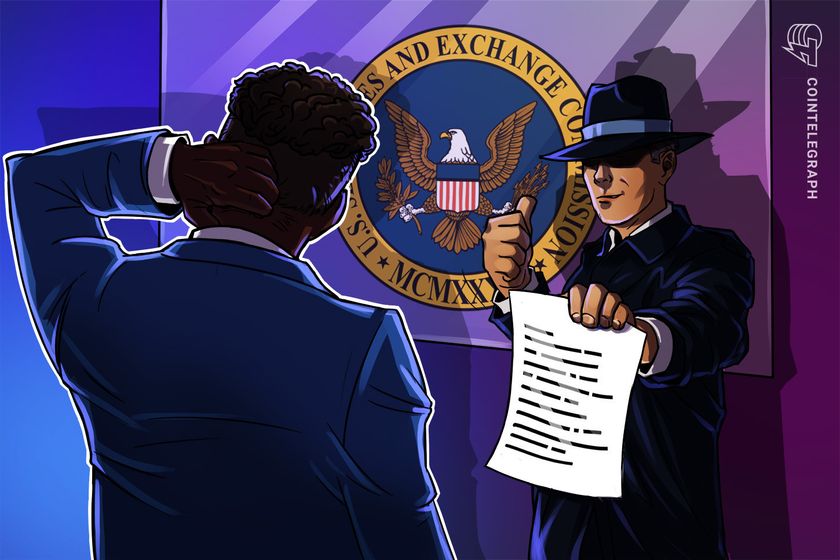
US authorities have charged a tech app founder with fraud, alleging that his advertised artificial intelligence-powered e-commerce app actually relied on human workers in the Philippines.
Albert Saniger of Barcelona, Spain, founder and former CEO of the company Nate, was charged with one count of securities fraud and wire fraud, the Justice Department said in an April 9 statement, while the Securities and Exchange Commission filed a parallel civil action.
Court documents said Saniger founded Nate around 2018 and launched an app of the same name in July 2020, marketing it as an AI-powered universal shopping cart that offered users the ability to complete online retail transactions, including filling in shipping details and sizing, without human input.
The Justice Department alleged that, in reality, “Saniger used hundreds of contractors, or ‘purchasing assistants,’ in a call center located in the Philippines to manually complete purchases occurring over the nate app.”

Source: US Attorney’s Office, Southern District of New York
Investors gave Saniger over $40 million, feds say
Acting US Attorney for New York Matthew Podolsky alleged Saniger duped investors by “exploiting the promise and allure of AI technology to build a false narrative about innovation that never existed.”
Under the guise of investing in the AI-powered app, Sangier allegedly solicited more than $40 million in investments from venture capital firms and told employees to hide the true source of Nate’s automation.
“This type of deception not only victimizes innocent investors, it diverts capital from legitimate startups, makes investors skeptical of real breakthroughs, and ultimately impedes the progress of AI development,” Podolsky said.
The company acquired AI technology from a third party and had a team of data scientists develop it, but authorities claimed the app never achieved the ability to consistently complete e-commerce purchases, and its actual automation rate was effectively zero.
Related: Aussie regulator to shut 95 ‘hydra’ firms linked to crypto, romance scams
During a busy holiday season in 2021, it’s alleged that Sanger directed Nate’s engineering team to develop bots to automate some transactions on the app along with the human workers.
Nate ceased operations in January 2023, and Saniger terminated all of Nate’s employees after media reports started casting doubt on the app’s capabilities, according to the SEC’s court filing.
The securities and wire fraud charges each carry a maximum sentence of 20 years behind bars. The SEC suit is asking the courts to ban Saniger from holding office in any similar company and return investor funds.
Cointelegraph contacted Nate for comment. Information on Saniger’s lawyers was not immediately available.
Magazine: Memecoin degeneracy is funding groundbreaking anti-aging research
Bitcoiners’ ‘bullish impulse’ on recession may be premature: 10x Research [cointelegraph]

It may be too early for Bitcoiners to start getting bullish over the longer-term impacts of a potential recession on Bitcoin’s price, says 10x Research head of research Markus Thielen.
Thielen said in an April 11 markets report that credit spreads continue to widen, indicating that “recessionary concerns may be seeping deeper into the economy.”
“Expecting a bullish impulse is too early,” he said.
Bitcoin may face short-term headwinds
While the long-term effects of a recession could be bullish for Bitcoin (BTC) — due to the monetary easing that typically follows US Federal Reserve rate cuts — Thielen warned that Bitcoin may face headwinds before gaining bullish momentum.
“Normally, Bitcoin first sells off when China devalues or the Fed cuts, as the first cut might not be so impactful and also confirms economic weakness,” Thielen told Cointelegraph.

Bitcoin is trading at $80,620 at the time of publication. Source: CoinMarketCap
White House crypto and AI czar David Sacks said in an April 10 X post that it is “time for a rate cut” after the core Consumer Price Index increased 2.8% year-by-year for March, the lowest it has been since March 2021.
CME Group’s FedWatch Tool shows a 64.8% chance of no rate cut at the Federal Reserve’s May Federal Open Market Committee meeting.
Traders typically see interest rate cuts and monetary supply expansions as positively affecting asset prices, especially Bitcoin and other cryptocurrencies.
However, Thielen said that historically, when year-over-year credit spreads “begin to widen,” Bitcoin often faces more downside pressure and takes longer to recover.
Related: Bitcoin ‘significantly de-risked here’ as nearly 80% of cyclical price correction is done — Analyst
“This pattern suggests that while a longer-term opportunity may emerge, Bitcoin could still face pressure in the near term,” Thielen said. He added that currency devaluations have also historically been bearish for markets in the short term before being bullish in the long term.
It comes amid growing concern among market participants over the weakening US dollar.
The US Dollar Index (DXY) is sitting at 100.337, down 2.92% over the past five days, according to TradingView data.

The DXY is sitting at 100.337 at the time of publication. Source: TradingView
Trading resource account, The Kobeissi Letter, said in an April 10 X post, “The US dollar has exited the room. Once again, something is broken.”
Meanwhile, BlackRock’s head of digital assets, Robbie Mitchnick, said in late March that Bitcoin would most likely thrive in a recessionary macro environment.
“I don’t know if we’ll have a recession or not, but a recession would be a big catalyst for Bitcoin,” Mitchnick said.
Magazine: Memecoin degeneracy is funding groundbreaking anti-aging research
This article does not contain investment advice or recommendations. Every investment and trading move involves risk, and readers should conduct their own research when making a decision.
Democrats slam DOJ’s ‘grave mistake’ in disbanding crypto crime unit [cointelegraph]

Crypto-critical US Senator Elizabeth Warren has led six Senate Democrats in urging the Department of Justice to reverse its decision to terminate its crypto investigations and prosecutions division.
In an April 10 letter to Deputy Attorney General Todd Blanche, the Senators said the decision to disband the department’s National Cryptocurrency Enforcement Team was a “grave mistake” that would support “sanctions evasion, drug trafficking, scams, and child sexual exploitation.”
Senators Richard Durbin, Mazie Hirono, Sheldon Whitehouse, Christopher Coons and Richard Blumenthal signed the letter in addition to Warren.
On April 7, Blanche shuttered the DOJ’s crypto enforcement team, saying in a memo that “The Department of Justice is not a digital assets regulator.”
The senators claim that the decision gave a “free pass to cryptocurrency money launderers” and claimed that crypto mixing services — used to obfuscate blockchain transactions — are “go-to tools for cybercriminals.”
“It makes no sense for DOJ to announce a hands-off approach to tools that are being used to support such terrible crimes,” the letter said.

An excerpt of Democrat’s letter to the DOJ. Source: US Senate Committee on Banking, Housing, and Urban Affairs
The senators also questioned why the Justice Department had decided not to prosecute a “host of crimes involving digital assets, including violations of the Bank Secrecy Act.”
They claimed that this creates a “systemic vulnerability in the digital assets sector,” which “drug traffickers, terrorists, fraudsters, and adversaries” will exploit on a large scale.
The lawmakers requested a staff-level briefing no later than May 1, providing “detailed information on the rationale behind these decisions.”
Targeting Trump family crypto endeavors
The letter also took a swipe at the Trump family’s crypto projects, suggesting potential conflicts of interest.
Related: SafeMoon boss cites DOJ’s nixed crypto unit in latest bid to toss suit
A press release accompanying the letter stated that the senators are raising concerns about the “potential connections” between the DOJ’s actions and the crypto ventures of President Donald Trump and his family.
The Trumps have an interest in and have backed the crypto platform World Liberty Financial along with its token. The platform is also planning to launch a stablecoin while President Trump’s sons, Eric Trump and Donald Trump Jr., are working to launch a crypto-mining company called American Bitcoin.
“Your decisions give rise to concerns that President Trump’s interest in selling his cryptocurrency may be the reason for easing law enforcement scrutiny,” the Democrats stated.
In a memo announcing the crypto enforcement team’s disbandment, Blanche accused the Biden administration of using the Justice Department to “pursue a reckless strategy of regulation by prosecution.”
Magazine: Illegal arcade disguised as … a fake Bitcoin mine? Soldier scams in China: Asia Express
US crypto miners may rush to buy rigs in tariff pause despite ‘clear disadvantage’ [cointelegraph]

US Bitcoin mining firms will try to capitalize on the Trump administration’s recent tariff pause by stocking up on mining rigs, but the baseline 10% tariffs will still leave the industry at a disadvantage, industry executives say.
President Donald Trump paused his administration’s hefty reciprocal tariffs until July 8, but kept a minimum 10% tariff on most countries bar China, which had its rate hiked to 145%.
Hashlabs CEO Jaran Mellerud told Cointelegraph that while the 10% levy is much lighter than the initial tariffs, US miners are still at a “clear disadvantage” when it comes to purchasing mining machines compared to competitors abroad.
He said the baseline US tariffs aren’t enough “to make mining in the US unprofitable, but it definitely raises capital expenditure and will impact the long-term viability of new investments.”
“We expect to see a short-term spike in machine imports as miners rush to get ahead of potential future tariff hikes,” Mellerud added.

Source: Jaran Mellerud
A price hike on crypto mining rigs is already happening, Luxor Technology’s chief operating officer Ethan Vera told Cointelegraph.
“US miners are still looking to purchase machines ahead of the potential further increase in 90 days. In addition, US-landed machines have run up in price, as have contracts with onshore assembly.”
On April 2, Trump’s hiked tariffs placed levies on Thailand, Indonesia and Malaysia — countries home to three of the largest mining rig manufacturers — at respective rates of 36%, 32% and 24%.
Tariff instability will stunt US Bitcoin mining growth
Mellerud said in an April 8 report, before the pause on the hiked tariffs, that Trump’s levies could collapse US demand for mining rigs, to the benefit of non-US mining operations, as manufacturers will look outside the US to sell their surplus inventory for cheaper.
He told Cointelegraph the now-lowered tariffs would offer some relief for US miners, but imposing the tariffs and then suddenly pausing them only added uncertainty to US Bitcoin mining firms looking to plan and scale.
“What miners need is predictability and stable rules — not policy whiplash every few months.”
Luxor’s Vera said that the policy changes “will certainly hurt growth” in the US.
Related: Bitcoin hashrate tops 1 Zetahash in historic first, trackers show
Vera said Luxor has even been forced to rethink its strategy and consider expanding into international markets for future expansion.
Trump pledged during his presidential campaign that he wanted all the remaining Bitcoin (BTC) to be “made in the USA.”Several members of Trump’s family have also partnered with Bitcoin mining firm Hut 8 to lead Bitcoin mining venture “American Bitcoin” late last month. The venture aims to build the world’s largest Bitcoin mining firm with strategic reserves.
While the tariffs are broad in nature, the crypto mining industry simply isn’t a “high priority” for the Trump administration, Vera said.
Trump’s tariffs have shaken up almost every market, including the crypto markets and Bitcoin, which is down 1.2% over the last 24 hours to $80,555, CoinGecko data shows.
Bitcoin is now 26% off the $108,786 all-time high it set on Jan. 20 — the same day that Trump returned to the White House.
Asia Express: Illegal arcade disguised as … a fake Bitcoin mine? Soldier scams in China
Crypto gaming has mixed Q1 as deals jump, investment totals dip: DappRadar [cointelegraph]

Blockchain gaming for the first quarter of 2025 has been a “mixed bag,” seeing a greater number of deals while the amount invested significantly dipped, says blockchain analytics platform DappRadar.
Web3 gaming projects raised $91 million in Q1 2025, marking a 71% decrease from the fourth quarter of 2024 and a 68% drop compared to the same quarter a year ago, DappRadar said in its April 10 State of Blockchain Gaming report.
DappRadar analyst Sara Gherghelas wrote the figures showed “the growing pressure on early-stage startups and hint that 2025 may prove more challenging than previous years — unless broader market conditions improve.”
Another factor for the drop in investments in blockchain games is investors are increasingly shifting toward real-world assets and artificial intelligence, according to Gherghelas.
Over the same time, the number of blockchain gaming-related deals that closed increased by 35% quarter-over-quarter.

Web3 gaming projects raised $91 million for the quarter, marking a 71% decrease from Q4 2024. Source: DappRadar
Gherghelas said the jump in deals shows that “while investors are writing smaller checks, they’re still actively engaging with a broader range of projects — indicating continued interest, albeit with more cautious allocation.”
Web3 gaming investors go big in infrastructure
The lion’s share of funding for Web3 gaming in the first quarter went to infrastructure-focused projects, with most focused on scalable gaming infrastructure, according to the report.
Gherghelas said the focus on infrastructure funding signaled that “investor confidence in the long-term potential of Web3 gaming remains intact,” with a few stand-out projects in the quarter, such as those from MARBLEX and The Game Company.
MARBLEX, the blockchain gaming division of South Korean game developer Netmarble, has plans for a Semi-Publishing Model to support a wider variety of Web3 games, backed by a joint fund exceeding $20 million with Immutable.

Most of the funding for Web3 gaming last quarter went to infrastructure-focused projects. Source: DappRadar
Meanwhile, Dubai-based startup The Game Company, a firm focused on blockchain-based cloud gaming, received $10 million in funding on Feb. 6 to help develop a platform that allows users to play any game on any device.
Related: Blockchain gaming market is a ‘game of musical chairs’ — Gunzilla exec
Gherghelas said that as the Web gaming industry matures, there is “a clear push toward quality, innovation, and interoperability — whether through upgraded gameplay, new identity layers, or AI-enhanced mechanics.”
Magazine: Illegal arcade disguised as … a fake Bitcoin mine? Soldier scams in China: Asia Express
U.S. SEC drops unregistered securities case against Helium developer Nova Labs [btcmanager]
The U.S. Securities and Exchange Commission has officially dropped its case accusing Nova Labs, the team behind the Helium Network, of selling unregistered securities. In an Apr. 11 blog post on its official Medium page, Helium called the outcome “a…