As XRP eyes a $500 billion market cap, a new PayFi contender, Remittix, is turning heads with its seamless crypto-to-fiat payment solution and fast-rising presale momentum. #partnercontent
Cryptocurrency News
How crypto payments can become the new ‘tap-and-go’ — Pulsar co-founder [cointelegraph]
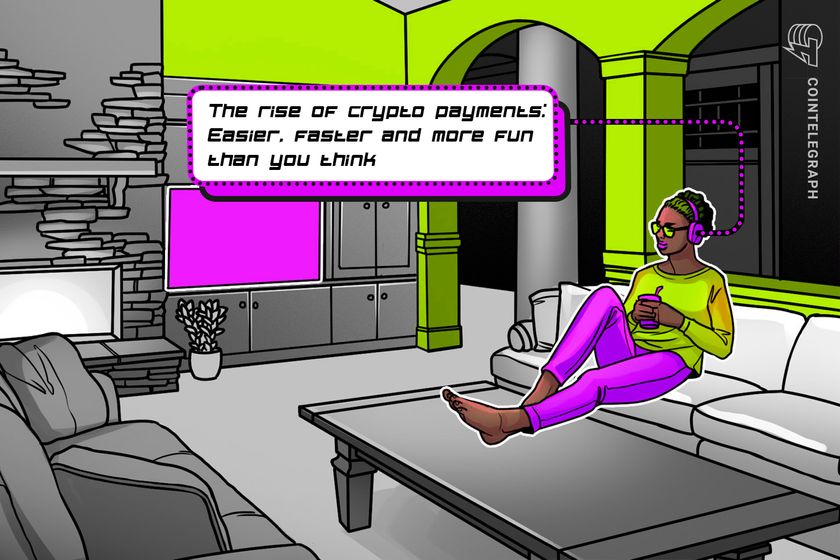
What if paying with crypto was as easy and as fun as sending a meme on X?
In the latest episode of The Clear Crypto Podcast, StarkWare’s Nathan Jeffay and Cointelegraph’s Gareth Jenkinson sit down with Stefana Banciu, growth lead at Pulsar Money, to explore how blockchain is bringing payments into the digital age, with speed, transparency and a dash of playfulness.
Transforming Web3 payments
Banciu lays out how Pulsar is pushing the frontier of Web3 payments with features like social transfers that allow users to send crypto directly through X, simply by tagging a handle.
“You can actually have super seamless, easy and convenient payments, and it can also be super fun.”
The episode cuts through the crypto jargon to tackle a question with mainstream resonance: Why aren’t we using crypto for everyday transactions yet?
“I wish I could say yes, but that wouldn’t be a true reflection of the state of affairs,” Jenkinson admits when asked if crypto is widely used for payments. He points to Mastercard-linked crypto cards as a stopgap, but says the real revolution hasn’t yet reached the coffee shop counter.
Related: Luxury app Dorsia taps MoonPay for crypto payments
For Banciu, the path forward lies in bridging fun and fundamentals. While crypto’s founding ideals include borderless, permissionless transfers and low fees, she says onboarding the next wave of users will require experiences that are intuitive, social and entertaining.
Their platform includes a “social payments module” that lets users send crypto directly through X by tagging a handle, a small but powerful step toward making transactions feel more like communication than banking.
“You can actually send funds directly on Twitter,” Banciu says.
“This is a cool use case to showcase people that yes, with crypto payments you can actually have super seamless, easy and convenient payments.”
But convenience alone isn’t enough. Banciu says making crypto fun is key to onboarding the next wave of users.
“We all know within the crypto space, the whole community that is here for perhaps something else than payments, which is quite boring, right?” she adds. “So we said, OK, why not think of a way to onboard users, make them do payments in a fun way?”
For Jenkinson, making crypto usable as a true “medium of exchange” is essential to its legitimacy.
“If we’re not using cryptocurrencies as a medium of exchange, then it’s not solving one of the core characteristics that makes money, money.”
To hear the full conversation on The Clear Crypto Podcast, listen to the full episode on Cointelegraph’s Podcasts page, Apple Podcasts or Spotify. And don’t forget to check out Cointelegraph’s full lineup of other shows!
Magazine: SEC’s U-turn on crypto leaves key questions unanswered
New Hampshire Bitcoin reserve bill heads to full Senate vote [cointelegraph]

A bill that would allow New Hampshire to invest a portion of its state funds in digital assets and precious metals has advanced to a full Senate vote after passing a second committee.
On April 23, House Bill 302 (HB 302) was reviewed in the second Senate committee and passed in a 4-1 vote.
The legislation, introduced in January, cleared the New Hampshire House earlier this month in a 192–179 vote. It now faces a vote by the full Senate and, if approved, will require the governor’s signature to become law.
Once enacted, it would allow the New Hampshire treasury to use 10% of the state’s general funds to invest in crypto with a market cap of over $500 billion — a threshold currently met only by Bitcoin (BTC).
 Source: Bitcoin LawsDemocratic representative opposes New Hampshire’s crypto reserve bill
During a debate before the full House vote, Democratic Representative Terry Spahr argued that the bill is unnecessary.
The lawmaker said it could undermine the future security of the state’s digital asset stockpile. Spahr argued that the state treasurer already has the authority to manage investments without the bill.
Others said that it could earn the state good returns for its investment. Republican Representative Jordan Ulery said the investments could net the state a “large amount of money.”
Related: US federal agencies to report crypto holdings to Treasury by April 7
Bitcoin Laws, which tracks the progress of digital asset legislation, shows that New Hampshire also has two more blockchain-related bills going through its legislature.
HB 639 addresses blockchain dispute resolution and regulatory frameworks, while HB 310 focuses on real-world asset tokenization and stablecoin usage.
New Hampshire’s progress comes as Arizona pursues a more aggressive approach by exploring the creation of a strategic Bitcoin reserve, aiming to become the first US state to implement the policy.
Magazine: Ethereum maxis should become ‘assholes’ to win TradFi tokenization race
Helium partners with AT&T to bring WiFi to thousands of US locations [cointelegraph]

The telecommunications decentralized physical infrastructure network (DePIN) project, Helium, partnered with US telcom giant AT&T to bring WiFi to its users.
According to an April 24 announcement shared with Cointelegraph, as part of the partnership, AT&T customers can now connect to Helium’s community-built WiFi network. Helium Mobile data shows that the network includes over 93,500 hotspots, most of which are in the United States.
 Helium Network nodes map. Source: Helium World
The Helium Network is run by individuals and businesses that acquire and operate small cell towers that act as hotspots. Those individuals are rewarded with digital assets for their help in developing the network and providing coverage.
Related: VC Roundup: Investors continue to back DePIN, Web3 gaming, layer-1 RWAs
Helium Mobile (Helium’s mobile network division) co-founder and CEO Amir Haleem said that partnering with an industry leader such as AT&T will “rapidly accelerate the adoption of Helium and provide real-world value” to both network participants and the partner’s customers. He also hinted that “this is only the beginning” and that more announcements are to come.
Centralized and decentralized, now united
The integration with AT&T enables WiFi authentication via AT&T’s Passpoint WiFi roaming service that allows customers to automatically connect to WiFi networks when participating networks are available. With this system, decentralized nodes are integrated into a traditional service network.
Helium claims that its decentralized network already has over 800,000 daily users leveraging it for connection. The firm has signed agreements with Telefónica’s Movistar in Mexico and is working with other unspecified mobile network operators that leverage the network to enhance their coverage. The deal follows Helium Mobile’s announcement of a free plan in February, which the company claims is the first free phone plan in the US.
Related: DePIN ecosystem tackles file-sharing challenges, proceeds to offer a new solution
A storied company
In January, the United States Securities and Exchange Commission (SEC) filed a lawsuit against Helium developer Nova Labs. The lawsuit was filed just days before the previous SEC chair, Gary Gensler, stepped down, and alleged that the company sold unregistered investment products.
Earlier in April, the SEC settled with Nova Labs and dismissed the lawsuit after payment of a $200,000 civil penalty. A company representative said at the time:
“[T]he outcome establishes that selling hardware and distributing tokens for network growth does not automatically make them securities in the eyes of the SEC [and] that the SEC cannot bring these charges against Helium again.”
Magazine: Most DePIN projects barely even use blockchain: True or false?
Asian firms ramp up Bitcoin buys: Metaplanet, HK Asia lead charge [cointelegraph]
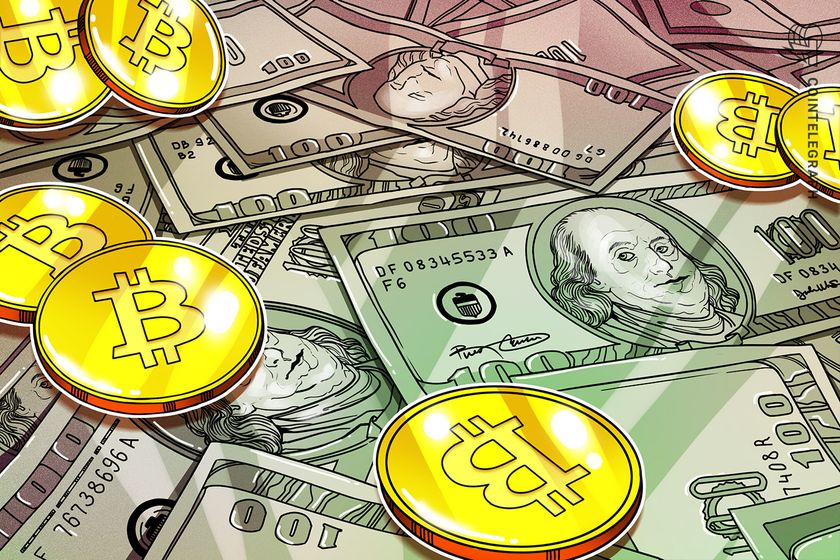
Asian investment firms are stepping up their Bitcoin accumulation strategies, with Japan’s Metaplanet and Hong Kong’s HK Asia Holdings leading the way.
Tokyo-based Metaplanet disclosed on April 24 that it acquired an additional 145 Bitcoin (BTC) for 1.9 billion Japanese yen (around $13.4 million), boosting its total holdings to 5,000 BTC.
Metaplanet CEO Simon Gerovich confirmed the company had reached 50% of its initial goal of amassing 10,000 BTC by the end of 2025.
 Metaplanet CEO Simon Gerovich announcing Bitcoin purchase. Source: Simon Gerovich
The firm has been aggressive in its Bitcoin treasury operations, using bond issuances and Bitcoin income strategies such as selling cash-secured BTC put options to finance its acquisitions.
Since initiating its Bitcoin strategy, Metaplanet’s stock has surged over 3,000%. The company aims to hold 21,000 BTC by the close of 2026.
Related: Strike’s Mallers to head firm seeking superior Bitcoin play to MSTR
HK Asia Holdings to raise $8.35 million for BTC purchases
HK Asia Holdings has also announced plans to raise about $65 million Hong Kong dollars ($8.35 million) by issuing new shares and convertible notes to potentially buy more BTC.
According to an April 23 filing, the company entered into share subscription and convertible note (CN) subscription agreements after trading hours.
The deal includes issuing 3,272,000 new shares at a subscription price of HK$4.01 per share, alongside convertible notes valued at HK$52.38 million in aggregate principal amount. The newly issued shares will represent about 0.82% of HK Asia Holdings’ total shares in circulation.
While the filing does not mention that HK Asia Holdings intends to use the funds to buy Bitcoin, many in the crypto community speculated that the capital raise is expected to fund further Bitcoin acquisitions.
 Source: Cointelegraph
The speculation follows HK Asia’s February decision to step into Bitcoin markets. After buying its first BTC on Feb. 16, the firm doubled its share price within a day.
By Feb. 20, HK Asia expanded its holdings by purchasing an additional 7.88 BTC, bringing its total to nearly 9 BTC at an average price of $97,021 per coin.
Shares in HK Asia were up by around 5.4% on April 24 at the Hong Kong stock market closing, according to Google Finance.
Related: Bitcoin exchange buying is back as ‘Spoofy the Whale’ lifts $90K asks
Saylor’s Strategy champions Bitcoin strategy
Michael Saylor’s Strategy, the world’s largest publicly listed corporate Bitcoin holder, has championed the Bitcoin accumulation strategy by consistently issuing convertible notes and at-the-market (ATM) equity offerings to fund aggressive Bitcoin purchases.
In February, Strategy announced plans to raise another $2 billion through 0% senior convertible notes to purchase more Bitcoin.
As of April 20, Strategy held 538,200 BTC on its balance sheet. The figure includes the company’s most recent acquisition of 6,556 BTC for about $555.8 million.
Magazine: Bitcoin ATH sooner than expected? XRP may drop 40%, and more: Hodler’s Digest, March 23–29
Crypto exchnage Bithumb alerts customers following data breach at Korea’s largest carrier [btcmanager]
Bithumb has issued a security warning to its Korean users following a significant data leak at SK Telecom, South Korea’s largest mobile carrier. South Korea‘s cryptocurrency exchange Bithumb has alerted its customers after a data breach at SK Telecom, the…
Upbit suspends deposit on SNX after DAXA issues warning on April 24 [btcmanager]
South Korean exchange Upbit has announced that it will suspend deposits for SNX, following a recent trade warning from the Digital Asset Exchange Alliance. According to a recent notice from the crypto exchange, the Synthetix (SNX) token has been labeled…
Onyxcoin price surges 10% – is another 200%+ breakout in play? [btcmanager]
Onyxcoin has surged over 10% as it tests the resistance from its 200%+ rally earlier this month — could another parabolic breakout be on the horizon? Onyxcoin (XCN) is up 10% over the past 24 hours, currently trading around $0.020,…
Crypto is the currency of artificial intelligence | Opinion [btcmanager]
AI and crypto are converging—not as hype cycles, but as complementary building blocks of the next internet
Uniswap Foundation posts $5.7m in expenses, $1.1m in revenue for 2024 [btcmanager]
Uniswap Foundation’s 2024 financials show nearly $5.8 million in spending on salaries, audits, events, and admin, offset by $1.11 million in revenue. In 2024, the Uniswap Foundation, a non-profit organization behind the crypto exchange platform, spent $5.79 million to run…