Cryptocurrency News

Get these Crytpo news stories as alerts on Telegram!

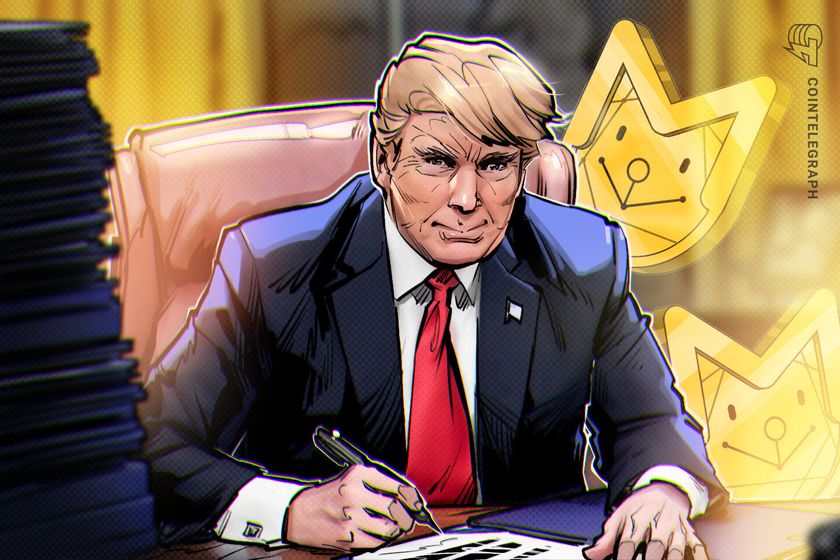
Trump’s use of presidential seal at memecoin event raises legal questions

President Donald Trump is facing scrutiny after speaking at a private event for top investors in his $TRUMP memecoin while standing behind a lectern emblazoned with the official presidential seal — a move that may violate federal law.

The event took place Thursday at Trump National Golf Club in Virginia, where Trump addressed 220 investors in his cryptocurrency project.

According to US law, the presidential seal cannot be used in any manner that could imply government approval or sponsorship. Violators can face fines or up to six months in prison.

Trump, who arrived at the club aboard a military helicopter, praised attendees and took aim at the Biden administration’s crypto stance.

When asked about potential conflicts of interest, White House Press Secretary Karoline Leavitt said the president’s involvement was personal. “It is not a White House dinner,” she told reporters. “It’s not taking place here at the White House.”

Related: Pictures give glimpse inside Trump’s memecoin holder dinner

Trump features presidential seal at private properties

This isn’t the first time Trump has featured the presidential seal at his private properties. Forbes has previously reported its use as golf markers at several Trump-owned clubs.

In a May 22 letter to the Justice Department, 35 House members asked the public integrity section acting chief, Edward Sullivan, to launch an inquiry over the memecoin dinner to determine whether it violated the federal bribery statute or the foreign emoluments clause of the US Constitution. 

Under the emoluments clause, a US president is barred from accepting any gift from a foreign state without the approval of Congress.

Trump’s use of presidential seal at memecoin event raises legal questionsSource: Molly Ploofkins

Bloomberg reported that a majority of the attendees at the memecoin dinner were likely foreign nationals based on their connections to crypto exchanges. 

“US law prohibits foreign persons from contributing to US political campaigns,” said the letter. “However, the $TRUMP memecoin, including the promotion of a dinner promising exclusive access to the President, opens the door for foreign governments to buy influence with the President, all without disclosing their identities.”

Related: US lawmaker introduces anti-corruption bill ahead of Trump’s dinner

Trump embraces crypto despite previous skepticism

Trump’s embrace of crypto marks a sharp turn from his skepticism during his first term. The $TRUMP memecoin, launched earlier this year, peaked at $74.34 before falling to $14.44 by May 22.

High-profile guests at the dinner included Tron founder Justin Sun, ex-NBA player Lamar Odom, and Asian crypto executives Sangrok Oh and Vincent Liu.

Sun, who reportedly invested over $40 million in $TRUMP tokens and spoke at the dinner, also has deep ties to Trump’s crypto ventures. He’s the top backer of World Liberty Financial, a Trump-affiliated firm currently under regulatory scrutiny.

Magazine: Crypto scam hub expose stunt goes viral, Kakao detects 70K scam apps: Asia Express
Read more at cointelegraph.com

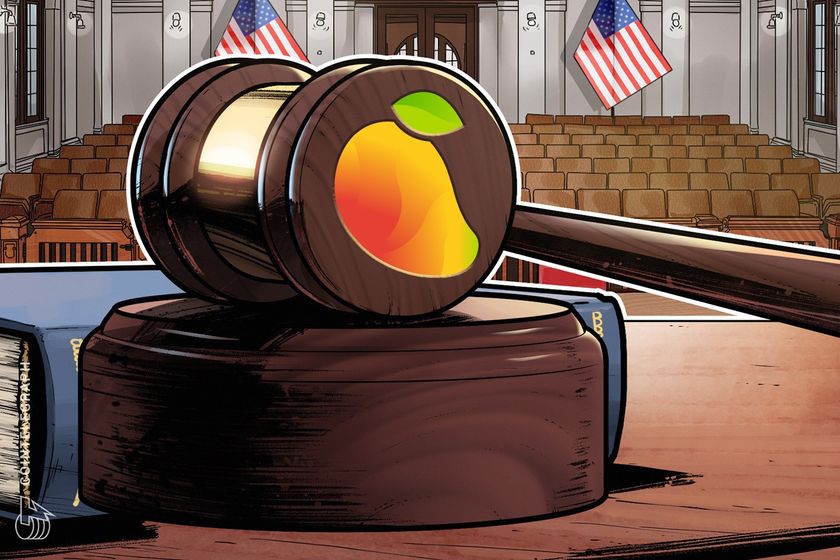
Judge overturns fraud convictions in Mango Markets exploit case

A US federal judge has vacated key fraud and manipulation convictions against Avraham Eisenberg, the trader at the center of the case involving a $110 million exploit of the decentralized exchange Mango Markets.

On Friday, US District Judge Arun Subramanian ruled that the evidence presented at trial failed to support the jury’s conclusion that Eisenberg made materially false representations to Mango Markets.

The decision vacates Eisenberg’s convictions for commodities fraud and market manipulation and acquits him of a third charge, significantly weakening the government’s case.

Eisenberg, a self-proclaimed “applied game theorist,” was convicted in 2024 for artificially inflating the price of Mango’s MNGO token by over 1,300% in a matter of minutes and using the resulting gains as collateral to withdraw $110 million in crypto assets from the platform.

Related: US DOJ seizes $24M in crypto from accused Qakbot malware developer

Judge sides with Eisenberg

The Justice Department argued that he deceived Mango’s smart contract-based lending system, but Eisenberg’s defense maintained that he merely exploited poorly designed, permissionless code — without making any false representations.

Judge Subramanian agreed, writing that “Mango Markets was permissionless and automatic,” meaning the system couldn’t be deceived in a legal sense. “There was insufficient evidence of falsity,” the judge added, siding with Eisenberg’s interpretation of DeFi mechanics.

Judge overturns fraud convictions in Mango Markets exploit caseUS judge siding with Eisenberg on nature of the exploit. Source: Bwbx.io

The judge also rejected prosecutors’ argument that the case should be heard in New York. Eisenberg was in Puerto Rico at the time of the trades, and the court found that no meaningful activity tied to the alleged crime occurred in New York.

The DOJ had cited a Poughkeepsie-based Mango user and a third-party vendor in Manhattan, but the judge ruled these were not enough to establish proper venue.

The US government must now decide whether to refile the vacated charges, though the Trump administration has recently signaled a reduced focus on crypto enforcement. Eisenberg still faces civil suits from both the SEC and CFTC.

While this ruling clears Eisenberg in the Mango Markets case, he remains behind bars.

Related: Mango Markets exploiter sentenced to over 4 years on child abuse material charges

Eisenberg charged with child pornography

In a separate case, Eisenberg was sentenced to nearly four years in prison on May 1 after pleading guilty to possessing child pornography — a charge stemming from unrelated evidence uncovered during his arrest.

In December 2022, US federal law enforcement authorities arrested Eisenberg in Puerto Rico. FBI officials charged the hacker with one count of commodities fraud and one count of commodities manipulation.

A jury found Eisenberg guilty of wire fraud, commodities fraud, and commodities manipulation in April 2024. The defense argued that the exploit was not a cybercrime and represented a “successful and legal trading strategy.”

Magazine: Crypto scam hub expose stunt goes viral, Kakao detects 70K scam apps: Asia Express

Read more at cointelegraph.com

Judge overturns fraud convictions in Mango Markets exploit case

A US federal judge has vacated key fraud and manipulation convictions against Avraham Eisenberg, the trader at the center of the case involving a $110 million exploit of the decentralized exchange Mango Markets.

On Friday, US District Judge Arun Subramanian ruled that the evidence presented at trial failed to support the jury’s conclusion that Eisenberg made materially false representations to Mango Markets.

The decision vacates Eisenberg’s convictions for commodities fraud and market manipulation and acquits him of a third charge, significantly weakening the government’s case.

Eisenberg, a self-proclaimed “applied game theorist,” was convicted in 2024 for artificially inflating the price of Mango’s MNGO token by over 1,300% in a matter of minutes and using the resulting gains as collateral to withdraw $110 million in crypto assets from the platform.

Related: US DOJ seizes $24M in crypto from accused Qakbot malware developer

Judge sides with Eisenberg

The Justice Department argued that he deceived Mango’s smart contract-based lending system, but Eisenberg’s defense maintained that he merely exploited poorly designed, permissionless code — without making any false representations.

Judge Subramanian agreed, writing that “Mango Markets was permissionless and automatic,” meaning the system couldn’t be deceived in a legal sense. “There was insufficient evidence of falsity,” the judge added, siding with Eisenberg’s interpretation of DeFi mechanics.

Judge overturns fraud convictions in Mango Markets exploit caseUS judge siding with Eisenberg on nature of the exploit. Source: Bwbx.io
The judge also rejected prosecutors’ argument that the case should be heard in New York. Eisenberg was in Puerto Rico at the time of the trades, and the court found that no meaningful activity tied to the alleged crime occurred in New York.

The DOJ had cited a Poughkeepsie-based Mango user and a third-party vendor in Manhattan, but the judge ruled these were not enough to establish proper venue.

The US government must now decide whether to refile the vacated charges, though the Trump administration has recently signaled a reduced focus on crypto enforcement. Eisenberg still faces civil suits from both the SEC and CFTC.

While this ruling clears Eisenberg in the Mango Markets case, he remains behind bars.

Related: Mango Markets exploiter sentenced to over 4 years on child abuse material charges

Eisenberg charged with child pornography

In a separate case, Eisenberg was sentenced to nearly four years in prison on May 1 after pleading guilty to possessing child pornography — a charge stemming from unrelated evidence uncovered during his arrest.

In December 2022, US federal law enforcement authorities arrested Eisenberg in Puerto Rico. FBI officials charged the hacker with one count of commodities fraud and one count of commodities manipulation.

A jury found Eisenberg guilty of wire fraud, commodities fraud, and commodities manipulation in April 2024. The defense argued that the exploit was not a cybercrime and represented a “successful and legal trading strategy.”

Magazine: Crypto scam hub expose stunt goes viral, Kakao detects 70K scam apps: Asia Express

Read more at cointelegraph.com

Bitcoin ETFs post $2.75B in weekly inflows as price sits above $108K

US-based spot Bitcoin exchange-traded-funds (ETFs) have recorded a total of $2.75 billion in inflows this week amid Bitcoin surpassing its January all-time high of $109,000.

The $2.75 billion in inflows is approximately 4.5 times larger than the previous week’s $608 million, according to Farside data.

BlackRock Bitcoin ETF continues inflow streak

On May 23, the final day of the trading week, spot Bitcoin (BTC) ETFs recorded $211.7 million in inflows. However, BlackRock’s IBIT was the only fund to post gains in the trading day, adding $430.8 million and extending its inflow streak to eight consecutive days.

Grayscale’s GBTC led outflows with $89.2 million, followed by ARK 21Shares’ ARKB with $73.9 million.

Just two days before, on May 21, the Bitcoin ETFs saw $607.1 million in inflows, the same day Bitcoin surpassed its $109,000 all-time high. The following day, Bitcoin recorded a new all-time high of $111,970.

At the time of publication, Bitcoin is trading at $108,141, according to CoinMarketCap data.

Cryptocurrencies, Bitcoin Price, Bitcoin ETF, ETFBitcoin is trading at $108,490 at the time of publication. Source: CoinMarketCap

Bitcoin’s slight price decline over the past 24 hours came alongside a decline in crypto market sentiment, according to the Crypto Fear & Greed Index.

The Index, which measures overall crypto market sentiment, reads a “Greed” score of 66, down 12 points from its “Extreme Score” of 78 the previous day.

Related: Bitcoin price ‘breather’ expected as short-term traders realize $11.6B in profit

Cointelegraph recently reported that spot Bitcoin ETFs are on its way to potentially surpassing its monthly inflow record of $6.49 billion from November 2024. So far in May, spot Bitcoin ETFs have accumulated approximately $5.39 billion, with five trading days remaining in May.

Meanwhile, several analysts recently suggested that Bitcoin is not showing any signs of overheating despite reaching new all-time highs this week, pointing to fundamentals suggesting that Bitcoin could rise further.

CryptoQuant analyst Crypto Dan said on May 22, “Overheating indicators such as the funding rate and short-term capital inflow remain low compared to previous peaks, and profit-taking by short-term investors is limited.”

Magazine: AI cures blindness, ‘good’ propaganda bots, OpenAI doomsday bunker: AI Eye

Read more at cointelegraph.com

Polygon faces ‘Big L’ as co-founder Mihailo Bjelic steps down

Mihailo Bjelic, co-founder of Ethereum layer-2 scaling solution Polygon, has stepped down from his role at Polygon but suggests he will stay active in the crypto industry in some capacity.

His resignation drew reactions across Polygon and the wider crypto community, with several seeing it as a significant loss for Polygon, which has been tied to several major developments in recent months.

Bjelic winds down ‘day-to-day involvement’

“After much thought and reflection, I’ve decided to step down from the board of the Polygon Foundation and wind down my day-to-day involvement with Polygon Labs,” Bjelic said in a May 23 X post.

“I’ll always be cheering from the sidelines and supporting however and whenever I can,” Bjelic added.

Fellow Polygon co-founder, Sandeep Nailwal, commended Bjelic’s contributions over the years, adding that Bjelic has always been “a force behind so much of what makes Polygon what it is today.”

Cryptocurrencies, PolygonSource: Sandeep Nailwal

Bjelic said that he remains “as passionate as ever” about crypto, and suggested he will stay active in the crypto industry.

“You will likely still see me around,” Bjelic said.

Aave-chan Initiative founder Marc Zella said it was a “Big L for Polygon.” Polygon’s head of marketing Leon Stern said the company is going to miss Bjelic. “Thanks for everything you’ve done for Polygon, and best of luck,” Stern said. Meanwhile, Skale Network CEO Jack O’Holleran said Bjelic should “be very proud” of all he has accomplished at Polygon and is excited to see what he does next.

Cryptocurrencies, PolygonSource: Maggie Love

Over the past two years, two of Polygon Labs’ early founders, Jaynti Kanani and Anurag Arjun, also stepped away from the company.

Arjun’s departure coincided with the Polygon spin-off Avail, a Web3 data availability and consensus layer, becoming an independent entity, with Arjun taking the lead.

Bjelic has yet to reveal his next plans.

Related: Crypto market cycle permanently shifted — Polygon founder

Bjelic’s resignation follows several major announcements tied to Polygon this year.

On March 25, Real-world asset (RWA) tokenization platform DigiShares announced it would bring tokenized real estate trading to Polygon with the launch of RealEstate.Exchange, also known as REX.

Just two months before, on Jan. 16, Jio Platforms, an Indian mobile network operator owned by Asia’s richest person, Mukesh Ambani, partnered with Polygon Labs to upgrade some of its existing offerings with Web3 and blockchain capabilities.

Magazine: AI cures blindness, ‘good’ propaganda bots, OpenAI doomsday bunker: AI Eye

Read more at cointelegraph.com