cointelegraph.com

Traditional financial markets won’t survive without RWA tokenization

Opinion by: Abdul Rafay Gadit, co-founder of ZIGChain

America’s tariff regime has apparently fueled a global trade war, forcing investors to explore stable, yield-generating alternatives. A closer look reveals that illiquidity, opacity and scalability challenges have plagued global financial markets for long. They weren’t in great shape anyway, trade war or no trade war.

Tokenized real-world assets (RWAs) have risen to this occasion — thankfully. For one, they ensure predictable yields, providing a haven for investors amid uncertain market conditions and unproductive volatility. 

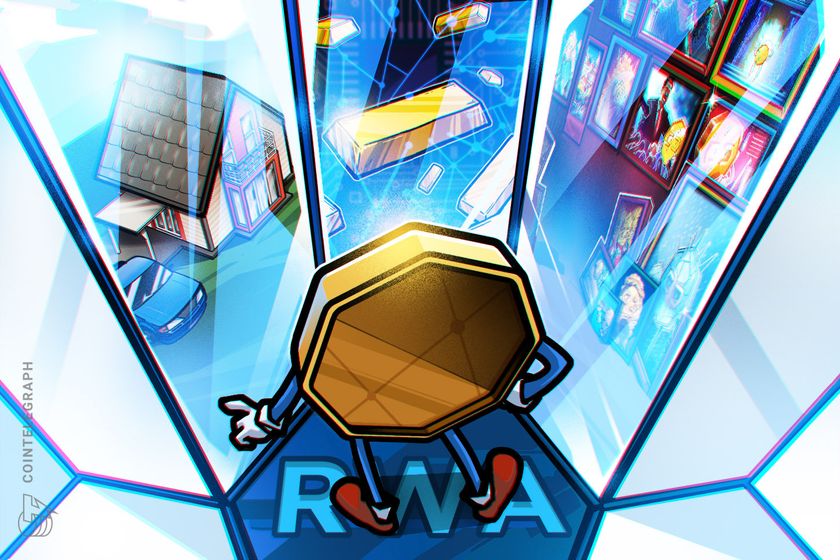
Above all, though, RWAs are a lifeboat for legacy finance, as they enhance market liquidity, bring transparency to opaque markets, and make finance more democratic. Traditional financial markets need to integrate — not resist — RWAs to stay relevant in the coming decade. 

RWAs to the rescue

In legacy finance, capital’s “computability” occurs through slow, expensive and unreliable intermediaries like banks. For example, these entities are primarily unable to rebalance portfolios quickly. 

This limits market scope, and consumers bear significant losses. There are persistent trust issues across the board, while fund managers face immense administrative burdens in handling clients. The bottom line: Everyone suffers, except the value-sucking go-betweens. 

That’s a big reason fundraising in private equity, a key pillar of global financial markets, declined 24% in 2024, per McKinsey’s report. Likewise, as the SIFMA 2025 Capital Markets Outlook revealed, US equity issuance has decreased by 0.6% annually since 2020. Initial public offerings have been down 8.5% during this period. 

RWAs fix these. They make portfolio management more straightforward and seamless, with scalable capital deployment even in turbulent markets. 

Tokenization automates verifiable transactions, enabling precise, deterministic, trustless economies — turning the status quo on its head. It also provides investors with low-risk, low-cost and rapid access to existing and emerging global financial markets. 

Recent: 5 ways real-world asset tokenization is transforming TradFi

No wonder onchain RWAs increased 85% to over $15 billion in 2024. And this trend still has momentum. RWAs are poised to remain a top investment category in crypto.

RWAs reached a new all-time high recently, surpassing $17 billion, with over 82,000 asset holders. Notably, tokenized private credit is the largest asset in the RWA industry, with over $11 billion in valuation. 

It’s clear that investors chose RWAs in the face of a $10-billion liquidation and general, persistent market volatility. Moreover, this asset class is making private credit great again, laying the foundation for future financial markets.

“Smart money” bets on RWAs 

JPMorgan, BlackRock, UBS, Citi, Goldman Sachs — all the big names in legacy finance have moved into RWAs. Capital inflows from such “smart money” entities helped onchain private credit grow 40% last year, while tokenized treasuries surged 179% overall.

All this could very well be routine diversification and capital expansion. But funds like Franklin Templeton’s Franklin Onchain US Government Money Fund (FOBXX) and BlackRock’s US dollar Institutional Digital Liquidity Fund (BUIDL) signal a more long-term motive. 

Initiatives like FOBXX and BUIDL are focused on transforming money markets through lower settlement times, easier liquidity access, better trading environments and other improvements. 

They leverage tokenization to introduce novel yield-generating opportunities in traditionally illiquid markets like the private credit sector. As data from PricewaterhouseCoopers suggests, this could be a $1.5-trillion disruption. S&P Global also believes private credit tokenization is the “new digital frontier” that solves liquidity and transparency issues.

RWAs are thus emerging as a viable, more lucrative alternative for institutional investors, who control nearly one-fourth of the $450-trillion legacy financial market. That’s a strong enough waking sign — plus there’s increasing demand from “retail” users (i.e., the remaining three-fourths of the pie).

Retail is the end-game for RWAs

Institutional adoption is excellent for building initial awareness around RWAs. Like it or not, their actions move the needle. In the long run, however, individual retail users stand to benefit most from RWAs. 

RWAs make capital markets accessible to grassroots investors, including unbanked populations. Fractional ownership, for instance, lets those with smaller capital holdings get exposure to high-ticket assets otherwise reserved for wealthy family offices and institutions.

Because of these benefits, retail users will choose RWAs over traditional, exclusive financial assets and markets. And now it’s a no-brainer for them, thanks to solutions like social investing platforms, which give users intuitive, hassle-free access to novel financial opportunities. 

Multiple reports from Mastercard to Tren Finance and VanEck showcase RWAs’ massive growth potential. It could be anywhere between $50 billion and $30 trillion over the next four to five years. 

Widespread retail adoption will drive this growth, and unless traditional markets adapt or adopt RWAs, they will lose the vast majority of their users. With institutional and retail capital moving into this emerging sector, it’s genuinely do-or-die for legacy systems.

Robust tools and platforms that leverage RWAs to bridge the gap between traditional and emerging financial markets are available now. That makes it a question of intent and priority more than anything else. 

Catch up or become obsolete — that’s the message. It’s the wartime arc, as it has been long due. The best part is that legacy assets coming onchain and markets leveraging RWAs will be a win-win for issuers, institutions and retail users. That’s what the world needs from a financial standpoint. It’s worth all the effort.

Opinion by: Abdul Rafay Gadit, co-founder of ZIGChain.

This article is for general information purposes and is not intended to be and should not be taken as legal or investment advice. The views, thoughts, and opinions expressed here are the author’s alone and do not necessarily reflect or represent the views and opinions of Cointelegraph.
Read more at cointelegraph.com

South Korea to block non-compliant crypto exchanges

South Korean authorities are reportedly looking into blocking crypto exchange platforms that may have operated without adhering to the requirements set by the country’s financial regulator. 

On March 21, local media Hankyung reported that the Financial Intelligence Unit (FIU) of the Financial Services Commission is considering sanctions against crypto exchanges for allegedly operating in the country without reporting as an operator to the appropriate regulators. 

South Korean financial authorities require crypto exchanges to report to regulators as virtual asset service providers (VASPs) under the country’s Specified Financial Information Act. 

The FIU is investigating a list of exchanges and is conducting consultations with related agencies. The regulator is also considering sanctions, such as blocking access to the exchanges, as they begin to prepare countermeasures. 

South Korean regulators eye crypto exchanges

The regulator will reportedly crackdown on exchanges allegedly providing services to South Koreans without the appropriate VASP reports. The exchanges in the FIU’s list reportedly provided marketing and customer support to Korean investors without going through the country’s compliance process. 

Local media Hankyung mentioned that the crypto exchange KuCoin was on the list along with other crypto platforms. In a statement, a KuCoin representative told Cointelegraph:

“We are closely monitoring regulatory developments across all jurisdictions, including Korea. At KuCoin, we believe that compliance is essential for the healthy and sustainable growth of the crypto industry—this has always been our stance and will continue to guide us as we move forward. We remain committed to supporting the industry’s long-term development through proactive and responsible practices.”

Under the country’s laws, operators of crypto sales, storage, brokerage and management are required to report to the FIU. If exchanges don’t comply, their business will be considered illegal and subject to criminal penalties and administrative sanctions. 

An FIU official said in the report that measures to block access to the exchanges included in the list are being reviewed. The official said the financial regulator is currently consulting with the Korea Communications Standards Commission, the regulator in charge of the internet, on how they can block access to the exchanges. 

Related: Wemix denies cover-up amid delayed $6.2M bridge hack announcement

South Korean exchanges face scrutiny 

Apart from foreign exchanges, South Korean crypto exchanges are also facing scrutiny over suspicions and rumors of financial misconduct. 

On March 20, prosecutors raided Bithumb following suspicions that its former CEO, Kim Dae-sik, embezzled company funds to purchase an apartment. The authorities suspect that the exchange and its executive may have violated some financial laws during the apartment purchase. However, Bithumb responded that Kim had already taken a loan to repay the funds. 

In addition, rumors of intermediaries getting paid to list projects on Bithumb and Upbit surfaced. Citing anonymous sources, Wu Blockchain said projects claimed to have paid intermediaries millions to get listed on the exchanges. 

Upbit responded, demanding the media outlet to disclose the list of digital asset projects that paid brokerage fees. 

Magazine: Crypto fans are obsessed with longevity and biohacking: Here’s why

Read more at cointelegraph.com

SEC dropping XRP case was ‘priced in’ since Trump’s election: Analysts

Crypto investors rejoiced after one of the industry’s longest-standing legal battles was overturned by the United States Securities and Exchange Commission, yet markets have seemingly accounted for the victory months ahead of the announcement, according to industry watchers.

On March 19, Ripple CEO Brad Garlinghouse revealed that the SEC would dismiss its legal action against Ripple, ending four years of litigation against the blockchain developer for an alleged $1.3-billion unregistered securities offering in 2020.

However, the outcome may not be as “bullish” since markets may have already priced in this development since President Trump’s election, according to Dmitrij Radin, the founder of Zekret and chief technology officer of Fideum, a regulatory and blockchain infrastructure firm focused on institutions.

SEC dropping XRP case was ‘priced in’ since Trump’s election: Analysts

Ripple’s CEO said the SEC is dropping its case against the blockchain developer. Source: Brad Garlinghouse

“Yes, they are dropping the case, but there was already the appeal,” he told Cointelegraph on the March 20 Chainreaction X show:

“One of the most talked about and oldest cases in crypto has been won. It’s great for the market and Ripple as it can start its expansion in the US. But in general, it’s already priced in. I don’t see a big impact on price or the market.”SEC dropping XRP case was ‘priced in’ since Trump’s election: Analysts

XRP/USD, 1-month chart. Source: Cointelegraph Markets Pro

Despite an 11% relief rally after the March 19 announcement, the XRP (XRP) token is unable to remain above the key $2.5 psychological mark. The token fell over 6.3% since March 19, Cointelegraph Markets Pro data shows.

Related: Crypto market’s biggest risks in 2025: US recession, circular crypto economy

SEC dropping Ripple case was “already expected” – Nansen analyst

Other analysts also attribute the XRP token’s lack of momentum to investors expecting an end to the SEC’s lawsuit against Ripple Labs, paired with generally poor market sentiment.

“I’d attribute it to the market already pricing it in as well as the general market situation,” Nicolai Sondergaard, research analyst at Nansen, told Cointelegraph, adding:

“It was, to be honest already expected at this point and the macro environment and general uncertainty are not doing XRP any favors.”

Related: Bitcoin speculative appetite declines as investors seek safety

Still, some technical chart patterns point to a potential 75% XRP rally after the end of the SEC’s lawsuit.

SEC dropping XRP case was ‘priced in’ since Trump’s election: Analysts

XRP/USD weekly price chart. Source: TradingView

As of March 21, XRP bounced after testing the triangle’s lower trendline, eyeing a rise toward the upper trendline— around the apex point at the $2.35 level—by April. The ultimate target for this possible breakout is $4.35 by June, up 75% from the current price levels.

Conversely, a drop below the lower trendline could invalidate the bullish setup, setting XRP on the path toward $1.28. The bearish target is obtained by subtracting the triangle’s maximum height from the potential breakdown point at $2.35.

Despite XRP’s price trajectory, the SEC overturning the case will have a beneficial “long-term effect on the market because of the narrative change,” and investors’ expectations of a more crypto-friendly SEC, added Fideum’s Radin.

Magazine: SEC’s U-turn on crypto leaves key questions unanswered

Read more at cointelegraph.com

How to buy food with Bitcoin?

Key takeawaysIn 2025, you can have your digital wallet ready to pay with Bitcoin directly at 15,000 merchants and restaurants worldwide.Whether you’re using your own Bitcoin wallet to pay directly at accepting merchants or pay with cards, you’ll find plenty of options to buy food with Bitcoin.Bitcoin has evolved since Laszlo Hanyecz’s first purchase of food. A new whole payment structure has formed around Bitcoin, with innovative creative ways to use it to pay for food.Bitcoin payment processors, such as Bitrefill and BitPay, are now known globally. They handle thousands of transactions each month. 

As Bitcoin becomes more accepted worldwide, many retailers, restaurants and food delivery services are embracing it. They now allow customers to pay for food with Bitcoin (BTC).

You can still buy food with Bitcoin, even if merchants don’t accept it directly. Use methods like crypto cards or crypto gift cards to make your purchase.

Bitcoin has long been recognized as a strong store of value, but its potential goes beyond that. As the world moves toward greater decentralization, Bitcoin is increasingly positioned to challenge traditional payment systems that rely on third-party approval. The primary purpose of Bitcoin is to bypass banks and financial institutions and enable direct payments with no censorship or confiscation. 

Bitcoin’s creator, Satoshi Nakamoto, created a peer-to-peer electronic cash system to make people more independent from financial intermediaries, so you may as well start using the cryptocurrency as intended. 

This article will show you how to pay for food with Bitcoin. You’ll learn different methods for grocery stores, restaurants and food retailers, both in-store and online.

Did you know? The first Bitcoin transaction to buy food was executed by Laszlo Hanyecz on May 22, 2010, which later became the famous Bitcoin Pizza Day. He paid 10,000 BTC for two pizzas, worth $40 at the time.

First real-world purchase using BTC

Can you buy food with Bitcoin?

The short answer is yes, definitely. Depending on the country you’re in, there may be different options presented to you. 

The benefit of using a Bitcoin payment for food directly is to avoid the intermediary and higher costs while performing a pure Bitcoin transaction as Satoshi had intended.  

Although most merchants do not accept BTC as payment yet, Bitcoin cards, gift cards and food delivery portals that accept Bitcoin, even indirectly, are pretty much available everywhere.  

All you need to do is refill the card with some cryptocurrency, and the payment processor will directly exchange Bitcoin for local currency. 

1. Pay for your food via direct Bitcoin payments

Although the number of merchants accepting Bitcoin is increasing globally, very few are still fully embracing the cryptocurrency as a payment method. When Bitcoin is accepted, normally, a Lightning wallet is used for fast payments and very low fees. 

You can visit https://btcmap.org/ to find Bitcoin-friendly food companies around the world. Just choose a nearby area to see where you can use the digital currency.

BTC map to find Bitcoin-friendly food companies around the world

Depending on the jurisdiction, fast food companies that accept Bitcoin include groups like Burger King and Subway. McDonald’s fully accepts BTC as a direct payment in El Salvador and as a pilot program in Lugano, Switzerland.

You can also pay with Bitcoin at specific restaurants such as Mastro’s (at selected US locations) and Tahini’s, a Canadian-Middle Eastern chain with some US presence. This crypto-friendly restaurant even holds Bitcoin as a reserve asset. 

Accepting Bitcoin directly for online orders is less common unless the merchants partner with a delivery service that supports crypto. It’s possible to pay with Bitcoin for food delivery at companies like Manufy in the US that also accept Bitcoin directly. 

You can also buy groceries with crypto directly at many Bitcoin-friendly grocery stores. Whole Foods in the UK, US and Canada accepts BTC via the Flexa network’s Spedn app at specific locations. One of South Africa’s largest grocery retailers, Pick n Pay, is a supermarket accepting Bitcoin payments. It rolled out Bitcoin payments across many of its stores following a successful pilot.  

El Salvador is deservedly known as a Bitcoin country, and in most cases, restaurants, grocery stores and online retailers allow their customers to pay with Bitcoin directly. 

Many small municipalities are adopting Bitcoin as a widely used currency. Other than El Salvador, in places like Lugano, Switzerland and Mossel Bay, South Africa, many merchants, mostly small retailers, accept Bitcoin as a legitimate method of payment. 

How to pay with Bitcoin directlyYou can download a custodial or non-custodial Lightning wallet directly on your mobile. Transfer some Bitcoin there to pay for everyday expenses.Position your wallet to scan merchant QR codes.Your purchase finalizes in just a few seconds.

Did you know? Subway was the first major food chain to accept Bitcoin. The first Bitcoin purchase at a Subway occurred in 2013 in Moscow, Russia.

2. Bitcoin cards, an alternative way to pay for your food

Many services offer Bitcoin-funded debit cards that convert Bitcoin to fiat at the point of sale. BitPay, Wirex and Binance are well-known companies. They support Bitcoin and crypto payments at grocery stores like Walmart. They can also convert cryptocurrency into various currencies. 

The benefit of Bitcoin cards is that the conversion into fiat is instant, without the need for the store to accept Bitcoin directly. ‍The crypto card provider partners with companies like Visa and Mastercard to make sure that your card is accepted by the vast majority of vendors and merchants.

How to pay with Bitcoin cardsSign up with one of the crypto card services available.Link your Bitcoin wallet.Add funds.Use the card at selected merchants by swiping it at checkout like a normal card.Connect the card to your Apple or Google Pay to pay directly with your mobile.How to use Bitcoin gift cards to pay for food

Bitcoin gift cards are Bitcoin vouchers that you can buy to purchase food from popular delivery platforms like Uber Eats, DoorDash or Grubhub. Services like BitPay, CoinGate and Bitrefill let you order food online with Bitcoin. 

Bitcoin gift cards are also widely used for grocery shopping at Walmart, Whole Foods, Safeway and Lidl. The gift cards can be used for shopping in-store or online services, or pick-up or delivery.

How to pay with Bitcoin cardsBuy the card with Bitcoin at selected stores or platforms.Receive the digital gift card.Choose the merchant you want to pay with the gift card.Pay at the checkout with the gift card.

Paying with Bitcoin gift cards is one of the most widely available methods, particularly helpful when the chosen restaurant or merchant doesn’t accept crypto directly yet.

Precautions when paying with Bitcoin for food

While Bitcoin offers a convenient and decentralized payment method, it’s essential to take certain precautions to ensure a safe and smooth transaction:

Security of wallet: Always use a trusted and secure Bitcoin wallet, whether custodial or non-custodial, to store your cryptocurrency. Ensure your wallet’s private keys are kept safe and inaccessible to unauthorized users.Transaction fees: While Bitcoin payments are designed to be cheaper than traditional payment methods, transaction fees may still apply, especially when using the Lightning Network for fast payments. Be aware of the fees associated with each payment method.Merchant reliability: Ensure that the merchant or restaurant you’re purchasing from is legitimate and accepts Bitcoin through trusted payment processors. Avoid using random or unverified third-party services.Bitcoin volatility: Bitcoin’s price can fluctuate rapidly, so be prepared for potential price changes between when you make your payment and when the merchant processes it. This is especially true when converting Bitcoin to local fiat currencies.Regulations and acceptance: Depending on your location, some regions may have different regulations surrounding Bitcoin payments. Make sure you are aware of local cryptocurrency laws and whether merchants in your area are legally allowed to accept Bitcoin.

Remember, the security of your funds is just as important as how you use them. Taking precautions now will ensure your assets remain safe while enjoying the convenience of paying with Bitcoin.

Read more at cointelegraph.com

Hacker steals $8.4M from RWA restaking protocol Zoth

Real-world asset (RWA) re-staking protocol Zoth suffered an exploit leading to over $8.4 million in losses, leading the platform to put its site on maintenance mode. 

On March 21, blockchain security firm Cyvers flagged a suspicious Zoth transaction. The security firm said that the protocol’s deployer wallet was compromised and that the attacker withdrew over $8.4 million in crypto assets. 

The blockchain security firm said that within minutes, the stolen assets were converted into the DAI stablecoin and were transferred to a different address. 

Cyvers added the protocol’s website had been maintained in response to the incident. In a security notice, the platform confirmed that it had a security breach. The protocol said it’s working to resolve the problem as soon as possible. 

The Zoth team said it worked with its partners to “mitigate the impact” and fully resolve the situation. The platform promised to publish a detailed report once its investigation is completed. 

Since the hack, the attackers have moved the funds and swapped the assets into Ether (ETH), according to PeckShield. 

Hacker steals $8.4M from RWA restaking protocol Zoth

Hacker moves stolen funds. Source: Peckshield

Related: SMS scammers posing as Binance have an even trickier way to fool victims

Hack likely caused by admin privilege leak

In a statement, the Cyvers team said the incident highlights vulnerabilities in smart contract protocols and the need for better security. 

Cyvers Alerts senior SOC lead Hakan Unal told Cointelegraph that a leak in admin privileges likely caused the hack. Unal said that about 30 minutes before the hack was detected, a Zoth contract was upgraded to a malicious version deployed by a suspicious address. 

“Unlike typical exploits, this method bypassed security mechanisms and gave full control over user funds instantly,” the security professional said. 

The security professional told Cointelegraph that this type of attack could be prevented by implementing multisig contract upgrades to prevent single-point failures, adding timelocks on upgrades to allow monitoring and placing real-time alerts for admin role changes. Unal added that better key management is also advised to prevent unauthorized access. 

While the attack could be prevented, Unal believes that this type of attack may continue to be a problem in decentralized finance (DeFi). The security professional told Cointelegraph that admin key compromises remain a “major risk” in the DeFi ecosystem. 

“Without decentralized upgrade mechanisms, attackers will continue targeting privileged roles to take over protocols,” Unal added. 

Magazine: Memecoins are ded — But Solana ‘100x better’ despite revenue plunge

Read more at cointelegraph.com

South Korea eyes KuCoin, BitMEX in crypto exchange crackdown

South Korean authorities are reportedly looking into blocking crypto exchange platforms that may have operated without adhering to the requirements set by the country’s financial regulator. 

On March 21, local media Hankyung reported that the Financial Intelligence Unit (FIU) of the Financial Services Commission is considering sanctions against crypto exchanges for allegedly operating in the country without reporting as an operator to the appropriate regulators. 

South Korean financial authorities require crypto exchanges to report to regulators as virtual asset service providers (VASPs) under the country’s Specified Financial Information Act. 

The FIU is investigating a list of exchanges and is conducting consultations with related agencies. The regulator is also considering sanctions, such as blocking access to the exchanges, as they begin to prepare countermeasures. 

Exchanges operated without VASP reports

The list of exchanges that have allegedly provided services to South Koreans without the appropriate VASP reports includes BitMEX, KuCoin, CoinW, Bitunix and KCEX. The exchanges reportedly provided marketing and customer support to Korean investors without going through the country’s compliance process. 

Under the country’s laws, operators of crypto sales, storage, brokerage and management are required to report to the FIU. If exchanges don’t comply, their business will be considered illegal and subject to criminal penalties and administrative sanctions. 

An FIU official said in the report that measures to block access to the exchanges included in the list are being reviewed. The official said the financial regulator is currently consulting with the Korea Communications Standards Commission, the regulator in charge of the internet, on how they can block access to the exchanges. 

Related: Wemix denies cover-up amid delayed $6.2M bridge hack announcement

South Korean exchanges face scrutiny 

Apart from foreign exchanges, South Korean crypto exchanges are also facing scrutiny over suspicions and rumors of financial misconduct. 

On March 20, prosecutors raided Bithumb following suspicions that its former CEO, Kim Dae-sik, embezzled company funds to purchase an apartment. The authorities suspect that the exchange and its executive may have violated some financial laws during the apartment purchase. However, Bithumb responded that Kim had already taken a loan to repay the funds. 

In addition, rumors of intermediaries getting paid to list projects on Bithumb and Upbit surfaced. Citing anonymous sources, Wu Blockchain said projects claimed to have paid intermediaries millions to get listed on the exchanges. 

Upbit responded, demanding the media outlet to disclose the list of digital asset projects that paid brokerage fees. 

Magazine: Crypto fans are obsessed with longevity and biohacking: Here’s why

Read more at cointelegraph.com

South Korea eyes KuCoin, BitMEX in crypto exchange crackdown

South Korean authorities are reportedly looking into blocking crypto exchange platforms that may have operated without adhering to the requirements set by the country’s financial regulator. 

On March 21, local media Hankyung reported that the Financial Intelligence Unit (FIU) of the Financial Services Commission is considering sanctions against crypto exchanges for allegedly operating in the country without reporting as an operator to the appropriate regulators. 

South Korean financial authorities require crypto exchanges to report to regulators as virtual asset service providers (VASPs) under the country’s Specified Financial Information Act. 

The FIU is investigating a list of exchanges and is conducting consultations with related agencies. The regulator is also considering sanctions, such as blocking access to the exchanges, as they begin to prepare countermeasures. 

Exchanges operated without VASP reports

The list of exchanges that have allegedly provided services to South Koreans without the appropriate VASP reports includes BitMEX, KuCoin, CoinW, Bitunix and KCEX. The exchanges reportedly provided marketing and customer support to Korean investors without going through the country’s compliance process. 

Under the country’s laws, operators of crypto sales, storage, brokerage and management are required to report to the FIU. If exchanges don’t comply, their business will be considered illegal and subject to criminal penalties and administrative sanctions. 

An FIU official said in the report that measures to block access to the exchanges included in the list are being reviewed. The official said the financial regulator is currently consulting with the Korea Communications Standards Commission, the regulator in charge of the internet, on how they can block access to the exchanges. 

Related: Wemix denies cover-up amid delayed $6.2M bridge hack announcement

South Korean exchanges face scrutiny 

Apart from foreign exchanges, South Korean crypto exchanges are also facing scrutiny over suspicions and rumors of financial misconduct. 

On March 20, prosecutors raided Bithumb following suspicions that its former CEO, Kim Dae-sik, embezzled company funds to purchase an apartment. The authorities suspect that the exchange and its executive may have violated some financial laws during the apartment purchase. However, Bithumb responded that Kim had already taken a loan to repay the funds. 

In addition, rumors of intermediaries getting paid to list projects on Bithumb and Upbit surfaced. Citing anonymous sources, Wu Blockchain said projects claimed to have paid intermediaries millions to get listed on the exchanges. 

Upbit responded, demanding the media outlet to disclose the list of digital asset projects that paid brokerage fees. 

Magazine: Crypto fans are obsessed with longevity and biohacking: Here’s why

Read more at cointelegraph.com

Australia outlines crypto regulation plan, promises action on debanking

Australia’s government, under its ruling center-left Labor Party, has proposed a new crypto framework regulating exchanges under existing financial services laws and has promised to tackle debanking.

It comes ahead of a federal election slated to be held on or before May 17, which current polling shows is shaping up to a dead heat between Prime Minister Anthony Albanese’s Labor and the opposing Coalition led by Peter Dutton.

The Treasury Department said in a March 21 statement that crypto exchanges, custody services and some brokerage firms that trade or store crypto will come under the new laws.

The regime imposes similar compliance requirements as other financial services in the country, such as following rules safeguarding customer assets, obtaining an Australian Financial Services Licence and meeting minimum capital requirements.

Cryptocurrencies, Government, Australia, Cryptocurrency Exchange

Australia’s Treasury says its new crypto regulations have four priorities. Source: Australian Department of the Treasury

In August 2022, the government initiated a series of industry consultations to draft a crypto regulatory framework.

“Our legislative reforms will extend existing financial services laws to key digital asset platforms, but not to all of the digital asset ecosystem,” the Treasury said in its statement.

Small-scale and startup platforms that don’t meet specific size thresholds will be exempt, along with firms that develop blockchain-related software or create digital assets that aren’t financial products.

Payment stablecoins will be treated as a type of stored-value facility under the Government’s Payments Licensing Reforms; however, some stablecoins and wrapped tokens will be exempt.

“Dealing or secondary market trading in these products will be not treated as a dealing activity, and platforms where they are traded will not be treated as operating a market simply because of that trading activity,” the Treasury said.

As part of its crypto agenda, Albanese’s government has also promised to work with Australia’s four largest banks to better understand the extent and nature of de-banking.

There will also be a review into a central bank digital currency and an Enhanced Regulatory Sandbox in 2025, allowing businesses to test new financial products without needing a license.

Related: May election could open floodgates to institutional crypto: OKX Australia CEO

Albanese’s government intends to release a draft of the legislation for public consultation. However, a change of government could be on the horizon with a looming federal election, a date for which is yet to be called.

Dutton’s center-right Coalition had earlier promised to prioritize crypto regulation if it wins the election.

The latest YouGov poll published on March 20 shows the Coalition and Labor neck in neck for a two-party preferred vote.

Cryptocurrencies, Government, Australia, Cryptocurrency Exchange

The Coalition leads for topline voting intention, while Albanese continues to lead as preferred prime minister. Source: YouGov

Caroline Bowler, the CEO of local crypto exchange BTC Markets, said in a statement shared with Cointelegraph that the areas of reform are sensible and would keep Australia competitive with global peers.

However, she thinks there “will be additional detail required on capital adequacy and custody requirements.”

“We need to ensure that these requirements aren’t overly burdensome for business investment in Australia,” Bowler said.

Kraken Australia’s managing director, Jonathon Miller, said there is an “urgent need for bespoke crypto legislation” to address the existing confusion and uncertainty in the country’s industry.

“We believe that by establishing a clear crypto regulatory framework and mitigating problems like debanking, government can remove the barriers hampering growth in the Australian economy,” he said. 

Magazine: Elon Musk’s plan to run government on blockchain faces uphill battle

Read more at cointelegraph.com

Trump’s crypto czar meets UAE’s national security adviser on crypto, AI

White House crypto and AI czar David Sacks was among a number of Trump administration officials who recently met with United Arab Emirates officials to discuss emerging technologies and UAE’s potential plans to increase its investment in the United States. 

Sheikh Tahnoon Bin Zayed Al Nahyan, the Gulf nation’s national security adviser and brother of the country’s president, said in a March 20 X post that he had spoken with Sacks about AI’s impact, “the expanding role of digital currencies” along with “the investment opportunities emerging at their convergence.”

US President Donald Trump hosted Tahnoon for dinner at the White House on March 18 and posted on his Truth Social platform a day later that he and senior US officials discussed with Tahnoon “ways for our countries to increase our partnership for the advancing of our economic and technological futures.”

Trump’s crypto czar meets UAE’s national security adviser on crypto, AI

Tahnoon (left) meeting with Trump (right) in the Oval Office. Source: Donald Trump

The exact details of Tahnoon’s multiple discussions were not made public, but Bloomberg reported on March 19 that people familiar with his meeting with Trump said he planned to talk about technology, energy and increasing the UAE’s investment in the US.

Multiple posts on Tahnoon’s X account show him meeting Commerce Secretary Howard Lutnick and Treasury Secretary Scott Bessent to discuss trade and investment between the two nations, along with chatting with White House cost-cutting czar Elon Musk via video call to discuss government systems.

He also spoke about AI with tech executives, including Oracle co-founder Larry Ellison, BlackRock CEO Larry Fink, Microsoft CEO Satya Nadella and Nvidia CEO Jensen Huang.

Trump’s crypto czar meets UAE’s national security adviser on crypto, AI

David Sacks (left) meeting with Tahnoon (right) to discuss crypto and AI. Source: Tahnoon Bin Zayed Al Nahyan

Bloomberg reported that Tahnoon planned to discuss how the UAE could gain easier access to computer chips after the Biden administration restricted exports on them in 2023 and to note the country’s plans to build tech infrastructure on US soil. 

Related: Eric Trump joins Metaplanet’s strategic board of advisers

Tahnoon is the chair of the investment firm MGX, which reportedly plans to throw $7 billion into a $500 billion private-led project called “Stargate” to build AI data centers across the US, which Trump announced just days after returning to the White House.

MGX, which invested $2 billion into Binance earlier this month, is a small part of a $1.5 trillion empire that Tahnoon controls, which includes two of the UAE’s sovereign wealth funds, the country’s largest bank, First Abu Dhabi Bank, and the AI development firm G42.

Magazine: Trump’s crypto ventures raise conflict of interest, insider trading questions 

Read more at cointelegraph.com

ETH mega pump coming? Ether on exchanges falls to near-decade low

Ether’s supply on crypto exchanges has dropped to its lowest level since November 2015, leading some analysts to predict a major price rally despite recent bearish sentiment.

“Ethereum’s holders have now brought the available supply on exchanges down to 8.97M, the lowest amount in nearly 10 years (November, 2015),” crypto analytics platform Santiment said in a March 20 X post.

Cryptocurrencies, Markets, Cryptocurrency Exchange

Ether’s supply on crypto exchanges has reached its lowest point since November 2015. Source: Santiment

Santiment said ETH had been rapidly leaving crypto exchanges, with balances now 16.4% lower than at the end of January. This suggests that investors are moving their ETH into cold storage wallets for long-term holding, potentially holding more conviction that Ether’s (ETH) price will rise in the future.

A significant decline in ETH supply across crypto exchanges can signal a potential price surge soon, commonly known as a “supply shock.” However, a surge will only happen if demand remains strong or increases to outpace the reduced supply.

It was recently seen in Bitcoin (BTC). On Jan. 13, Bitcoin reserves on all crypto exchanges dropped to 2.35 million BTC, hitting a nearly seven-year low that was last seen in June 2018. Just a week later, Bitcoin surged to a new high of $109,000 amid the inauguration of US President Donald Trump.

Some crypto traders and analysts anticipate a similar scenario for Ether.

Crypto trader Crypto General told their 230,800 X followers that it is “Just a question of time before the big supply shock.”

Crypto commentator Ted said in a March 19 X post that with ETH supply on crypto exchanges decreasing by the day, “buyers will soon compete, leading to bidding wars.”

Related: ‘Successful’ ETH ETF less perfect without staking — BlackRock

Meanwhile, crypto trader Naber said in an X post on the same day that the largest ETH accumulation is taking place, and it may lead to Ether reaching the $8,000 to $10,000 price range. Even at the lower end of $8,000, Ether would be up 64% from its all-time high of $4,878, reached in November 2021.

While the supply decline is giving crypto traders hope for ETH, other signals have recently cast a bearish shadow over the asset.

Its performance against Bitcoin has been at its lowest in five years. Daan Crypto Trades said in a March 19 X post that it is “unlikely to see this anywhere near its highs anytime soon.”

Cryptocurrencies, Markets, Cryptocurrency Exchange

Ether is down 26% over the past 30 days. Source: CoinMarketCap

Ether is currently trading at $1,971, down 26% over the past month according to CoinMarketCap data. Meanwhile, spot Ether ETFs have had 12 straight days of outflows totaling $370.6 million, according to Farside data.

“This has been one brutal downtrend,” Daan Crypto Trades added.

Scott Melker, aka “The Wolf of All Streets,” said, “Either Ethereum bounces here and this is a generational bottom, or it’s over.”

Magazine: Memecoins are ded — But Solana ‘100x better’ despite revenue plunge

This article does not contain investment advice or recommendations. Every investment and trading move involves risk, and readers should conduct their own research when making a decision.

Read more at cointelegraph.com