
cointelegraph.com

Tether eyes Big Four firm for its first full financial audit: Report

Stablecoin issuer Tether is reportedly in talks with a Big Four accounting firm to audit its assets reserves and verify that its USDT (USDT) stablecoin is backed at a 1:1 ratio.

Tether CEO Paolo Ardoino reportedly said the audit process would be more straightforward under pro-crypto US President Donald Trump. It comes after rising industry concerns over a potential FTX-style liquidity crisis for Tether due to its lack of third-party audits.

Tether to produce first full audit after scrutiny

“If the President of the United States says this is top priority for the US, Big Four auditing firms will have to listen, so we are very happy with that,” Ardoino told Reuters on March 21.

“It’s our top priority,” said Ardoino. It was reported that Tether is currently subject to quarterly reports but not a full independent annual audit, which is much more extensive and provides more assurance to investors and regulators.

However, Ardoino did not specify which of the Big Four firms — PricewaterhouseCoopers (PwC), Ernst & Young (EY), Deloitte, or KPMG — he plans to engage.

Dollar, United States, Tether

Tether recorded a profit of $13.7 billion in 2024. Source: Paolo Ardoino

Tether’s USDT maintains its stable value by claiming to be pegged to the US dollar at a 1:1 ratio. This means each USDT token is backed by reserves equivalent to its circulating supply. 

These reserves include traditional currency, cash equivalents and other assets.

Earlier this month, Tether hired Simon McWilliams as chief financial officer in preparation for a full financial audit.

Industry concerns over Tether’s lack of audits

In September 2024, Cyber Capital founder Justin Bons was among those in the industry who voiced concerns about Tether’s lack of transparency.

“[Tether is] one of the biggest existential threats to crypto. As we have to trust they hold $118B in collateral without proof! Even after the CFTC fined Tether for lying about their reserves in 2021,” Bons said.

Related: Tether freezes $27M USDT on sanctioned Russian exchange Garantex

Around the same time, Consumers’ Research, a consumer protection group, published a report criticizing Tether for its lack of transparency surrounding its US dollar reserves.

Just three years prior, in 2021, the United States Commodities and Futures Trading Commission (CFTC) fined Tether a $41 million civil monetary penalty for lying about USDT being fully backed by reserves.

Meanwhile, more recently, Tether has voiced disappointment over new European regulations that have forced exchanges like Crypto.com to delist USDT and nine other tokens to comply with MiCA.

“It is disappointing to see the rushed actions brought on by statements which do little to clarify the basis for such moves,” a spokesperson for Tether told Cointelegraph.

Cointelegraph reached out to Tether but did not receive a response by time of publication.

Magazine: Dummies guide to native rollups: L2s as secure as Ethereum itself

Read more at cointelegraph.com

Tether seeks Big Four firm for its first full financial audit — Report

Stablecoin issuer Tether is reportedly engaging with a Big Four accounting firm to audit its assets reserve and verify that its USDT (USDT) stablecoin is backed at a 1:1 ratio.

Tether CEO Paolo Ardoino reportedly said the audit process would be more straightforward under pro-crypto US President Donald Trump. It comes after rising industry concerns over a potential FTX-style liquidity crisis for Tether due to its lack of third-party audits.

Tether to produce first full audit after scrutiny

“If the President of the United States says this is top priority for the US, Big Four auditing firms will have to listen, so we are very happy with that,” Ardoino told Reuters on March 21.

“It’s our top priority,” Ardoino said. It was reported that Tether is currently subject to quarterly reports but not a full independent annual audit, which is much more extensive and provides more assurance to investors and regulators.

However, Ardoino did not specify which of the Big Four accounting firms — PricewaterhouseCoopers (PwC), Ernst & Young (EY), Deloitte, or KPMG — he plans to engage.

Dollar, United States, Tether

Tether recorded a profit of $13.7 billion in 2024. Source: Paolo Ardoino

Tether’s USDT maintains its stable value by claiming to be pegged to the US dollar at a 1:1 ratio. This means each USDT token is backed by reserves equivalent to its circulating supply. 

These reserves include traditional currency, cash equivalents and other assets.

Earlier this month, Tether hired Simon McWilliams as chief financial officer in preparation for a full financial audit.

Industry concerns over Tether’s lack of audits

In September 2024, Cyber Capital founder Justin Bons was among those in the industry who voiced concerns about Tether’s lack of transparency.

“[Tether is] one of the biggest existential threats to crypto. As we have to trust they hold $118B in collateral without proof! Even after the CFTC fined Tether for lying about their reserves in 2021,” Bons said.

Related: Tether freezes $27M USDT on sanctioned Russian exchange Garantex

Around the same time, Consumers’ Research, a consumer protection group, published a report criticizing Tether for its lack of transparency.

Just three years prior, in 2021, the United States Commodities and Futures Trading Commission (CFTC) fined Tether a $41 million civil monetary penalty for lying about USDT being fully backed by reserves.

Meanwhile, more recently, Tether has voiced disappointment over new European regulations that have forced exchanges like Crypto.com to delist USDT and nine other tokens to comply with MiCA.

“It is disappointing to see the rushed actions brought on by statements which do little to clarify the basis for such moves,” a spokesperson for Tether told Cointelegraph.

Cointelegraph reached out to Tether but did not receive a response by time of publication.

Magazine: Dummies guide to native rollups: L2s as secure as Ethereum itself

Read more at cointelegraph.com

Crypto VC giant targets $1B for new funds, expects oversubscription — Report

Venture capital firm Haun Ventures is reportedly looking to raise $1 billion for two new crypto-related investment funds within the next three months.

If successful, $500 million will be allocated to early-stage crypto investments, while the remaining $500 million will go toward late-stage crypto investments, people familiar with the matter told Fortune Crypto on March 21.

Different market conditions to 2022 led to lowered expectations

The VC firm, founded by former Coinbase board member and federal prosecutor Katie Haun in 2022, reportedly did not aim for the $1.5 billion it raised in its highly praised funding round in 2022. It cited different market conditions as the reason for the lower target.

However, Haun reportedly expects the two new funds will be “oversubscribed.” In March 2022, Haun secured $1.5 billion in the company’s first funding round shortly after its launch. Haun also recruited former executives from Airbnb, Coinbase, and Google tech incubator Jigsaw.

The firm’s latest fundraising round is set to close in June and is expected to be one of the largest in crypto funding in the past two years. Venture capital firm Paradigm and digital asset investment manager Pantera Capital both sought similar amounts in 2024.

Cryptocurrencies, Venture Capital

137 crypto companies raised a combined $1.11 billion in funding in February 2025. Source: The TIE

In June 2024, Paradigm closed an $850 million investment fund, while in April, digital asset investment manager Pantera Capital sought to raise over $1 billion for a new blockchain-focused fund.

VCs predict that stablecoins will continue to be a focus in 2025

More recently, Haun Ventures participated in crypto asset management firm Bitwise’s $70 million funding round alongside investors such as Electric Capital, MassMutual, MIT Investment Management Company, and Highland Capital.

While the specific focus of Haun’s upcoming crypto funds is not publicly known yet, other venture capitalists have recently predicted that stablecoin interest will continue into 2025.

Related: Venture capital firms invest $400M in TON blockchain

Deng Chao, CEO of institutional asset manager HashKey Capital, recently told Cointelegraph that stablecoins were the strongest proven use case for crypto in 2024.

Meanwhile, market analyst Infinity Hedge predicted that crypto VC investment in 2025 would surpass last year’s levels but wouldn’t approach the peak recorded during the 2021 bull market. VC crypto funding in 2021 reached $33.8 billion, while in 2024 it reached $13.6 billion.

Cointelegraph reached out to Haun Ventures but did not receive a response by time of publication.

Magazine: Dummies guide to native rollups: L2s as secure as Ethereum itself
Read more at cointelegraph.com

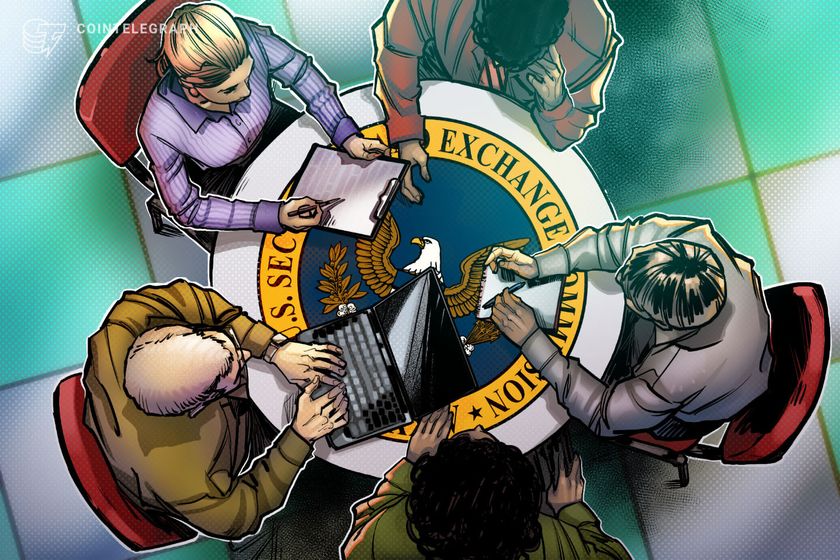
John Reed Stark opposes regulatory reform at SEC crypto roundtable

John Reed Stark, the former director of the Office of Internet Enforcement at the United States Securities and Exchange Commission (SEC), pushed back against the idea of regulatory reform at the first SEC crypto roundtable.

The former regulator said the Securities Act of 1933 and 1934 should not be changed to accommodate digital assets and urged that digital assets do not escape the definition of securities under the current laws.

SEC, US Government, United States

The first-ever SEC crypto roundtable. Source: SEC

“The people buying crypto are not collectors. We all know that they are investors, and the mission of the SEC is to protect investors,” Stark said. The former official added:

“The volume of case law has developed so quickly because of all these crypto firms. They went for this sort of delay, delay, delay, idea, and they hired the best law firms in the world, and these law firms all fought the SEC with incredible briefs.”

“I have read every single one of them. And they lost just about, I would argue, every single time,” he continued.

Stark concluded that he saw no innovation in digital assets or cryptocurrencies compared to previous online revolutions, such as the debut of the iPhone.

SEC, US Government, United States

John Reed Stark, pictured far right, arguing against comprehensive regulatory reform. Source: SEC

Related: SEC’s deadline extension is a ‘fork’ in case against Coinbase — John Reed Stark

John Reed Stark: One of crypto’s staunchest critics

Stark has been one of the most vocal opponents of cryptocurrencies and the digital asset industry, often criticizing the industry for a lack of transparency and accountability.

In February 2024, the former SEC official characterized a sponsorship deal between the Dallas Mavericks — a National Basketball Association (NBA) team — and crypto firm Voyager as an agreement with a “heroin manufacturing firm.”

Stark later said that the government agency’s regulation by enforcement under former chairman Gary Gensler was warranted and added that cryptocurrency must conform to existing laws rather than the law evolving to embrace the future of money.

Stark’s anti-crypto stance has been criticized by industry executives and investors as unhinged. In June 2023, notable investor Mark Cuban called out Reed’s views as “crypto derangement syndrome.”

Magazine: SEC’s U-turn on crypto leaves key questions unanswered

Read more at cointelegraph.com

John Reed Stark opposes regulatory reform at SEC crypto roundtable

John Reed Stark, the former director of the Office of Internet Enforcement at the United States Securities and Exchange Commission (SEC), pushed back against the idea of regulatory reform at the first SEC crypto roundtable.

The former regulator said the Securities Act of 1933 and 1934 should not be changed to accommodate digital assets and urged that digital assets do not escape the definition of securities under the current laws.

SEC, US Government, United States

The first-ever SEC crypto roundtable. Source: SEC

“The people buying crypto are not collectors. We all know that they are investors, and the mission of the SEC is to protect investors,” Stark said. The former official added:

“The volume of case law has developed so quickly because of all these crypto firms. They went for this sort of delay, delay, delay, idea, and they hired the best law firms in the world, and these law firms all fought the SEC with incredible briefs.”

“I have read every single one of them. And they lost just about, I would argue, every single time,” he continued.

Stark concluded that he saw no innovation in digital assets or cryptocurrencies compared to previous online revolutions, such as the debut of the iPhone.

SEC, US Government, United States

John Reed Stark, pictured on the far right, arguing against comprehensive regulatory reform. Source: SEC

Related: SEC’s deadline extension is a ‘fork’ in case against Coinbase — John Reed Stark

John Reed Stark: one of crypto’s staunchest critics

Stark has been one of the most vocal opponents of cryptocurrencies and the digital asset industry, often criticizing the industry for a lack of transparency and accountability.

In February 2024, the former SEC official characterized a sponsorship deal between the Dallas Mavericks — a National Basketball Association (NBA) team — and crypto firm Voyager as an agreement with a “heroin manufacturing firm.”

Stark later said that the government agency’s regulation by enforcement under former chairman Gary Gensler was warranted and added that cryptocurrency must conform to existing laws rather than the law evolving to embrace the future of money.

Stark’s anti-crypto stance has been criticized by industry executives and investors as unhinged. In June 2023, notable investor Mark Cuban called out Reed’s views as “crypto derangement syndrome.”

Magazine: SEC’s U-turn on crypto leaves key questions unanswered

Read more at cointelegraph.com

Crypto super PAC network to back GOP House candidates in Florida

A Super PAC network funded by the crypto industry is poised to back two Republican candidates for the United States House of Representatives in Florida’s April 1 special elections, according to a March 21 report by Politico. The network includes Fairshake, Defend American Jobs and Protect Progress.Defend American Jobs will start the spending by airing a $1.2 million ad for Florida State Senator Randy Fine, who aims to replace former representative Michael Waltz, who resigned his House seat to become US President Donald Trump’s national security adviser. “Floridians want crypto innovation!” Fine posted on X on Jan. 14, while also highlighting the need for “clear rules of the road.”

Defend American Jobs is also spending $345,000 to support Florida Chief Financial Officer Jimmy Patronis in his quest to replace former representative Matt Gaetz. Gaetz resigned his House seat after Trump nominated him to become US attorney general, for which he later withdrew his name from consideration.

As Florida’s chief financial officer, Patronis wrote a letter to the State Board of Administration requesting a report on the feasibility of devoting part of the state’s retirement monies to investing in digital assets.

Overall, there are four vacancies in the US House of Representatives, with two of the vacancies in Florida. If the Democrats were to sweep all four spots, the result would be just a one-person advantage for the GOP in the House, a very slim margin.

Related: Crypto firms double down on influencing US elections via PACs in 2026

Defend American Jobs backed Fine and Patronis in primaries

As Cointelegraph reported in January, crypto-funded Defend American Jobs backed Fine and Patronis during the primaries to select the nominees in the special elections.

According to filings with the Federal Election Commission, Defend American Jobs spent more than $500,000 supporting Fine and $200,000 backing Patronis. The two candidates won their primaries in the state’s 6th and 1st congressional districts, respectively.

Crypto super PAC network to back GOP House candidates in Florida

Defend American Jobs expenditure report supporting Randy Fine. Source: FEC

While Fairshake gets much of the attention in the crypto PAC world, Defend American Jobs also spends millions of dollars supporting crypto candidates. According to OpenSecrets, the PAC raised and spent around $60 million from 2023 to 2024. The PAC’s location is listed as Alexandria, VA and it focuses on securities and investments, specifically crypto.

Unlike Fairshake, which has a tendency to support candidates from different political parties, Defend American Jobs spends almost entirely in support of Republicans, with no spending support listed for candidates belonging to the Democratic Party, according to OpenSecrets.

Magazine: Crypto exposes sudden rift among Democrats months ahead of election

Read more at cointelegraph.com

Crypto Biz: As crypto booms, recession looms

America’s pro-crypto policy shift has become a bipartisan commitment as Democrats and Republicans look to secure the US dollar’s influence as a global reserve currency. According to US Representative and California Democrat Ro Khanna, at least 70 of his fellow party members now understand the importance of stablecoin regulation. 

According to Khanna, Americans can expect sensible crypto market structure and stablecoin bills this year. Under normal circumstances, this news would send crypto prices soaring, but that’s not been the case as President Donald Trump’s trade policies stoke recession fears.

ARK Invest CEO Cathie Wood is the latest crypto industry executive to sound the recession alarm. While a recession is rarely a good thing, Wood said it could provide Trump and the Federal Reserve with leeway to enact pro-growth policies. 

“We are worried about a recession” — Cathie Wood

Although US Treasury Secretary Scott Bessent isn’t worried about a recession, Wood is certainly preparing for that possibility. 

Speaking virtually at the Digital Asset Summit in New York, Wood implied that the White House could be underestimating the recession risk facing the economy as a result of Trump’s latest tariff war. 

“We are worried about a recession,” Wood said. “We think the velocity of money is slowing down dramatically.”

A slowdown in the velocity of money means capital is changing hands less frequently as consumers and businesses reduce spending. Such conditions usually signify the onset of a recession.

However, recessionary forces could end up being a boon for risk assets like crypto as declining GDP should give “the president and the Fed many more degrees of freedom to do what they want in terms of tax cuts and monetary policy,” said Wood.

Crypto Biz: As crypto booms, recession looms

Cathie Wood tells the Digital Asset Summit that the threat of recession is building. Source: Cointelegraph

US stablecoin bill is “imminent” — Bo Hines

The US could have comprehensive stablecoin legislation in as little as two months, according to Bo Hines, the recently appointed executive director of Trump’s Presidential Council of Advisers on Digital Assets.

Speaking at the Digital Asset Summit in New York, Hines lauded the Senate Banking Committee’s bipartisan approval of the Guiding and Establishing National Innovation for US Stablecoins Act, also known as the GENIUS Act.

“We saw that vote come out of the Senate Banking Committee in extremely bipartisan fashion, […] which was fantastic to see,” Hines said.

The GENIUS Act seeks to establish clear guidelines for US stablecoin issuers, including collateralization requirements and compliance rules with Anti-Money Laundering laws. 

“I think our colleagues on the other side of the aisle also recognize the importance for US dominance in this space, and they’re willing to work with us here, and that’s what’s really exciting about this,” said Hines.

Crypto Biz: As crypto booms, recession looms

Bo Hines says US stablecoin legislation could arrive on President Donald Trump’s desk in two months. Source: Cointelegraph

Ethena Labs, Securitize launch DeFi-focused blockchain

Ethena Labs and Securitize are launching a new blockchain designed to boost retail and institutional adoption of DeFi products and tokenized assets.

The new blockchain, called Converge, is an Ethereum Virtual Machine that will offer retail investors access to “standard DeFi applications” and specialize in institutional-grade offerings to bridge traditional finance and decentralized applications. Converge will also allow users to stake Ethena’s native governance token, ENA. 

Converge will also leverage Securitize’s RWA infrastructure. The company has minted nearly $2 billion in tokenized RWAs across various blockchains, including the BlackRock USD Institutional Digital Liquidity Fund, which was initially launched on Ethereum and has since expanded to Aptos, Arbitrum, Avalanche, Optimism and Polygon.

Canary Capital files for Sui ETF

Canary Capital has submitted its Form S-1 filing to the US Securities and Exchange Commission (SEC) to list an exchange-traded fund tied to Sui (SUI), the native token of the layer-1 blockchain used for staking and fees.

The March 17 filing underscores the race to expand institutional access to digital assets following the overwhelming success of the spot Bitcoin (BTC) ETFs last year. Canary Capital has so far filed six crypto ETF proposals with the SEC.

Sui is the 22nd largest crypto asset by market capitalization, with a total value of $7.5 billion, according to CoinGecko. The Sui blockchain recently partnered with World Liberty Financial, the DeFi company backed by Trump’s family.

Crypto Biz is your weekly pulse on the business behind blockchain and crypto, delivered directly to your inbox every Thursday.

Read more at cointelegraph.com

Nigeria still open to crypto business despite rocky past: Report

The government of Nigeria is still open to crypto businesses operating in the country despite the ongoing lawsuit against crypto exchange Binance and the high-profile detention of Binance executive Tigran Gambaryan.

Nigerian Information Minister Mohammed Idris told Semafor that many crypto businesses operate inside the country that are not facing litigation or criminal prosecution.

“This is part of the effort to strengthen our laws, not to cripple anybody. We are ensuring that no one comes and operates without regulation,” Idris told the outlet.

Nigeria filed an $81.5 billion lawsuit against Binance in February, claiming the exchange crashed Nigeria’s local currency, the naira, and said that Binance owed $2 billion in back taxes as the Nigerian government continues to grapple with sensible crypto policy.

Law, Nigeria, Cryptocurrency Exchange

The naira M2 money supply has been rapidly increasing since March 2024. Source: Trading Economics

Related: Nigeria’s crypto future: Striking a balance between innovation and regulation

Nigerian regulations don’t give crypto investors hope

The Nigerian Securities and Exchange Commission overhauled its crypto regulations in December 2024, tightening laws around crypto marketing and advertising.

More specifically, the updated law requires digital asset providers operating in the country to obtain permission before third-party marketing firms can run advertisements on behalf of the firms.

In February, Nigerian regulators also announced a plan to tax crypto transactions for revenue generation.

According to Chainalysis “2024 Global Adoption Index” report, Nigeria ranks second globally for crypto adoption, while India claimed the top spot.

Law, Nigeria, Cryptocurrency Exchange

Nigeria ranks second globally for crypto adoption. Source: Chainalysis

Chainalysis also found that the African country received $59 billion in cryptocurrencies between July 2023 and June 2024.

Despite these impressive figures, taxing crypto transactions may not bring in the revenue desired by the Nigerian government.

Law, Nigeria, Cryptocurrency Exchange

Nigeria leads African countries in terms of cryptocurrency value received. Source: Chainalysis

Coin Bureau founder and market analyst Nic Puckrin said Nigeria has a robust over-the-counter market for retail crypto trading, which evades centralized exchanges and is difficult to track or tax.

Puckrin added that importers use crypto to circumvent the high volatility of the Nigerian naira and escape foreign exchange risk.

The rapidly depreciating value of the fiat currency makes it unlikely that the importers will stop using crypto, and these importers will be hard-pressed to report their crypto transactions, which can be conducted peer-to-peer, to the Nigerian government.

Magazine: How crypto laws are changing across the world in 2025

Read more at cointelegraph.com

Coinbase in talks to buy derivatives exchange Deribit: Report

Coinbase is in advanced talks to buy Deribit, a cryptocurrency derivatives exchange, according to a March 21 report by Bloomberg.

Acquiring Deribit — the world’s largest venue for trading Bitcoin (BTC) and Ether (ETH) options — would bolster Coinbase’s existing derivatives platform, which currently focuses on futures. 

Coinbase and Deribit have reportedly alerted regulators in Dubai to the deal talks. Deribit holds a license in Dubai, which would need to be transferred to Coinbase if a deal goes through, according to Bloomberg, which cited unnamed sources. 

In January, Bloomberg reported that a deal with Coinbase could value Deribit at between $4 billion and $5 billion. 

Deribit lists options, futures and spot cryptocurrencies. Its total trading volumes last year were around $1.2 trillion, Bloomberg said. 

On March 20, Kraken, a rival crypto exchange, announced plans to acquire derivatives trading platform NinjaTrader for around $1.5 billion.

Coinbase in talks to buy derivatives exchange Deribit: Report

Deribit is a popular crypto derivatives exchange. Source: Deribit

Related: Kraken to acquire NinjaTrader for $1.5B to offer US crypto futures

Red-hot market

Cryptocurrency derivatives, such as futures and options, are surging in popularity in the US.

Futures are standardized contracts allowing traders to buy or sell assets at a future date, often with leverage. Options are contracts granting the right to buy or sell — “call” or “put,” in trader parlance — an underlying asset at a certain price.

Both types of financial derivatives are popular among both retail and institutional investors for hedging and speculation. 

In December, Coinbase said derivatives trading volumes soared roughly 10,950% in 2024, Coinbase said. 

Coinbase lists derivatives tied to some 92 different assets on its international exchange and a smaller number in the US, according to its 2024 annual report.

In January, Robinhood rolled out cryptocurrency futures as the popular online brokerage redoubled its efforts to compete with Coinbase. 

In February, CME Group, the world’s largest derivatives exchange, said it clocked an average daily trading volume of approximately $10 billion for crypto derivatives in the fourth quarter of 2024 — a more than 300% increase from the year prior. 

Coinbase launched the US’ first Commodity Futures Trading Commission-regulated Solana (SOL) futures in February. CME launched its own SOL futures contracts the following month.

Magazine: 5 real use cases for useless memecoins

Read more at cointelegraph.com

Ethereum open interest hits new all-time high — Will ETH price follow?

Ether (ETH) price dropped 6% between March 19 and March 21 after failing to break the $2,050 resistance level. More notably, ETH has fallen 28% since Feb. 21, underperforming the broader crypto market, which declined 14% over the same period.

Despite ETH’s price struggles, Ether futures open interest hit a record high on March 21. This has led traders to question whether large investors are positioning for a potential rally toward $2,400 while also raising concerns about the risks of cascading liquidations due to heightened leverage.

Cryptocurrencies, DApps, Economy, Markets, Fees, Leverage, Futures, Market Analysis, Ether Price, Layer2, Ethereum ETF

Ether futures aggregate open interest, ETH. Source: CoinGlass

The aggregate open interest in Ether futures rose 15% over two weeks, hitting a record 10.23 million ETH on March 21. Binance, Gate.io, and Bitget collectively dominate 51% of the market, while the Chicago Mercantile Exchange (CME) holds 9% of ETH open interest, according to CoinGlass data. This contrasts with Bitcoin futures, where CME leads with a 24% market share.

Demand for leveraged ETH longs has declined

The increased activity in ETH futures contracts typically indicates institutional investors’ interest, as open interest measures the demand for leverage. However, buyers (longs) and sellers (shorts) are always matched, so an increase in open interest does not inherently indicate a positive outlook.

To gauge whether buyers are seeking more leverage, analysts should compare ETH futures monthly contract prices to spot exchange rates. In neutral markets, these derivatives typically trade 5% to 10% higher on an annualized basis to account for the extended settlement period. If traders turn bearish, this premium would likely drop below that range.

Cryptocurrencies, DApps, Economy, Markets, Fees, Leverage, Futures, Market Analysis, Ether Price, Layer2, Ethereum ETF

Ether futures 2-month annualized premium. Source: Laevitas

The annualized premium for ETH monthly futures dropped to below 4% on March 21, down from 5% two weeks earlier. This decline in the futures premium suggests reduced incentives for traders to use the “cash and carry” strategy, which involves selling futures contracts while simultaneously buying spot ETH to capture the premium as a fixed-income trade.

Spot ETF outflows and reduced network fees pressure ETH price

Part of Ether’s decline stems from weak demand for US-based Ether exchange-traded funds (ETFs), which saw $307 million in net outflows over the two weeks ending March 20. The macroeconomic environment has also dampened investor confidence, as economists warn of rising recession risks due to global tariff wars, inflationary pressures, and US government spending cuts, according to the Boston Globe.

However, some analysts argue that Ether’s recent price weakness stems from an imbalance between network fees—required to compensate validators—and the interests of decentralized applications (DApps) and layer-2 scaling solutions. This critique was perfectly summarized by Martin Köppelmann, co-founder of Gnosis.

Cryptocurrencies, DApps, Economy, Markets, Fees, Leverage, Futures, Market Analysis, Ether Price, Layer2, Ethereum ETF

Source: koeppelmann

In a sense, Ethereum’s successful shift to proof-of-stake and the introduction of blob space to enhance scalability through rollups—while significantly boosting the network’s capabilities—are also seen as factors limiting Ether’s price growth. Despite the low transaction costs of its layer-2 solutions, some ETH investors believe they are not being adequately rewarded.

Ether’s price has faced pressure from rising macroeconomic risks, while demand for DApps continues to decline—whether due to increased competition or waning investor interest. Ethereum’s 7-day base layer revenue fell to $605,000 on March 17, a sharp drop from $2.5 million just two weeks earlier.

There is no indication that the surge in ETH futures open interest is driven by bullish positioning. On the contrary, demand for leveraged long positions remains notably weak, suggesting cautious market sentiment.

This article is for general information purposes and is not intended to be and should not be taken as legal or investment advice. The views, thoughts, and opinions expressed here are the author’s alone and do not necessarily reflect or represent the views and opinions of Cointelegraph.

Read more at cointelegraph.com