cointelegraph.com

BlackRock launches Bitcoin ETP in Europe

BlackRock, the world’s largest asset manager, launched a Bitcoin exchange-traded product (ETP) on multiple European stock exchanges.

The iShares Bitcoin ETP began trading on March 25 on Xetra, Euronext Amsterdam and Euronext Paris, according to BlackRock’s product page. The launch follows the success of its iShares Bitcoin Trust exchange-traded fund (ETF), which dominates the US market with $50.7 billion of assets under management, accounting for about 2.73% of the total Bitcoin (BTC) supply.

Stephen Wundke, director of strategy and revenue at crypto investment firm Algoz, told Cointelegraph that “the availability of the iShares Bitcoin ETP may not have the same reaction across Europe” as it saw in the US:

“Quality investment products through regulated asset managers have been more available throughout Europe than in the US, and secondly, Bitcoin is also more easily purchased. […] However, the ability for traditional family offices across Europe to hold a small percentage of their asset base in ‘digital gold’ is no doubt a good thing. […] Just don’t expect $60 billion of purchases in the first quarter.”Product details and fee structure

The new ETP trades under the IB1T ticker on Xetra and Euronext Paris, while on Euronext Amsterdam it uses BTCN. Bloomberg previously reported that the company was preparing to launch the new product, which followed the firm’s launch of a Bitcoin ETF on CBOE Canada.

Europe, European Union, MiCA, Bitcoin ETF, BlackRock, ETF

BlackRock iShares Bitcoin ETP specifics. Source: BlackRock

According to Bloomberg, the product launched with a temporary fee waiver of 10 basis points, which decreases the expense ratio to 0.15% until the end of 2025. Europe’s top crypto ETP is the CoinShares Physical Bitcoin ETP, which currently charges 0.25%, making BlackRock’s offering considerably cheaper while the waiver is in place.

“There is no doubt BlackRock’s aggressive fee structure was designed to keep competitors out of the market and question the commitment of any new entrants,” Wundke said.

Wundke added that “this type of competition is good for investors and ultimately good for digital currencies,” highlighting that players in the market will have to compete to provide the best offering to investors.

Related: ‘Successful’ ETH ETF less perfect without staking — BlackRock

iShares expanding to Europe

This is BlackRock’s first issuance of a crypto ETP outside of North America. Manuela Sperandeo, BlackRock’s head of Europe and Middle East iShares Product, told Bloomberg:

“[This launch] reflects what really could be seen as a tipping point in the industry — the combination of established demand from retail investors with more professionals now really getting into the fold.”

Related: Bitcoin ETFs log first net inflows in weeks, while Ether outflows continue

Ajay Dhingra, head of research at decentralized exchange aggregator Unizen, told Cointelegraph that the move reflects BlackRock’s confidence in the European Union’s Markets in Crypto-Assets Regulation framework:

“From Trump to Biden and now Trump again, US digital asset policy has been largely inconsistent. In contrast, the EU has steadily embraced compliant blockchain adoption — offering the regulatory stability companies are looking for.”

A recent BlackRock earnings report showed that the firm managed over $11.55 trillion on average during the fourth quarter of 2024. Other than the top Bitcoin ETF, the firm also launched its Grayscale Ethereum Trust ETF — the top Ether (ETH) ETF, with $3.46 billion in assets under management.

Magazine: EU politician reveals her conversion to crypto — Eva Kaili

Read more at cointelegraph.com

Movement Network to buy back tokens with $38M recovered from rogue market maker

The organization behind the Movement Network said it will use $38 million recovered from a market maker to buy back MOVE tokens over the next three months.

On March 24, the Movement Network Foundation said it recovered about $38 million in assets from a market maker tasked with providing liquidity on buy and sell orders for the Movement (MOVE) token on Binance. 

Binance offboarded the market maker due to “market irregularities.” The exchange sanctioned the market maker, freezing its proceeds and forbidding it from further market-making activities.  

Market makers provide liquidity to crypto tokens to attract traders and stabilize their prices. These entities are tasked with providing liquidity on both buy and sell orders to ensure the smooth operation of crypto exchanges. 

Movement Network commits $38 million to token buyback

According to Binance, the market maker sold 66 million MOVE tokens after the token was listed, while placing “little” in buy orders. These trades netted the market maker $38 million in Tether (USDT) from their trades. 

Binance said it froze the profits and informed the Movement Network Foundation of the incident.

The foundation said it had “severed all relationships” with the market maker and had recovered the frozen funds from the market maker’s rogue actions, which it said it would use in a buyback program: 

“All cash proceeds recovered from the Market Maker will be used by the Movement Network Foundation to establish the Movement Strategic Reserve: a 38M $USDT buyback program to purchase $MOVE for long-term use and to return the USDT liquidity to the Movement ecosystem.”

The organization also shared a wallet address for its “Movement Strategic Reserve,” to which the purchased MOVE tokens will be transferred periodically. 

Related: Binance is not ‘dumping’ Solana and other token holdings — Spokesperson

Binance investigates market irregularities

The incident follows another Binance action against an affiliated market maker on the exchange. On March 9, Binance announced that it had offboarded market makers for projects GoPlus Security and MyShell. The exchange said it had confiscated the project’s proceeds and would make a compensation plan for its users. 

Apart from market makers, the exchange recently suspended a staff member for alleged insider trading. On March 25, Binance launched an investigation on a member of its Binance Wallet team after receiving a complaint that the employee had been front-running trades. 

Magazine: Ridiculous ‘Chinese Mint’ crypto scam, Japan dives into stablecoins: Asia Express

Read more at cointelegraph.com

Bitcoin flips ‘macro bullish’ amid first Hash Ribbon buy signal in 8 months

Bitcoin (BTC) traders are celebrating as one of the best-known BTC price metrics finally flipped bullish again.

The popular Hash Ribbon tool, created by quantitative Bitcoin and digital asset fund Capriole Investments, printed a first buy signal in a “macro bullish” event.

Hash Ribbon sparks $100,000 Q2 BTC price target

Bitcoin miners look set to make a comeback as the Hash Ribbon metric marks the end of their latest “capitulation” phase.

The Hash Ribbon tracks potential long-term buy opportunities using hashrate; when miner profitability is at risk and network participants retire, this forms the capitulation which in turn leads to long-term price reversals.

These are monitored using two moving averages of hashrate: the 30-day and 60-day. Capitulations correspond to the former crossing below the latter, while the reverse is true for buy signals.

According to data from Cointelegraph Markets Pro and TradingView, the Hash Ribbon put in its latest buy signal on March 24. It is visible on both daily and weekly timeframes.

“This is macro Bullish,” trader Titan of Crypto wrote on X.

Bitcoin flips ‘macro bullish’ amid first Hash Ribbon buy signal in 8 months

BTC/USD 1-week chart with Hash Ribbon data. Source: Cointelegraph/TradingView

The previous Hash Ribbon buy signal came in July 2024. At the time, BTC/USD had yet to bottom out, and it took several months before a wave of upside began.

A similar scenario happened after a buy signal printed in August 2023.

Optimism over the latest development seemed tangible after much of Q1 2025 was marred by disappointing BTC price action.

“One of the most accurate mid-term indicators is bullish now,” fellow trader Robert Mercer added.

“Expecting $BTC to go back above $100,000 in Q2 of 2025!”Bitcoin ends “multimonth RSI downtrend”

As Cointelegraph reported, Bitcoin has already begun to tease a bullish market turnaround as March nears a close.

Related: Bitcoin must reclaim this key 2025 level to avoid new lows — Research

Chief among the signs is the relative strength index (RSI) indicator, which, like the Hash Ribbon, is in the process of returning to form after months of suppression.

On weekly timeframes, RSI has confirmed a bullish divergence for the first time since September, while the daily chart is showing a support retest after breaking through a downward trend line in place since November.

“The multimonth RSI Downtrend is over,” trader and analyst Rekt Capital confirmed to X followers this week.

Bitcoin flips ‘macro bullish’ amid first Hash Ribbon buy signal in 8 months

BTC/USD 1-day chart with RSI data. Source: Rekt Capital/X

This article does not contain investment advice or recommendations. Every investment and trading move involves risk, and readers should conduct their own research when making a decision.

Read more at cointelegraph.com

Security concerns slow crypto payment adoption worldwide — Survey

Security concerns remain the biggest obstacle to the mainstream adoption of cryptocurrency payments, as hacks and phishing scams continue to damage the industry’s legitimacy.

More than 37% of investors identified security risks as the main barrier to using cryptocurrency for payments, according to a survey of 4,599 users conducted by Bitget Wallet as part of its latest Onchain Report shared with Cointelegraph.

Still, 46% of users said they preferred crypto payments over fiat for their speed and efficiency.

Security concerns slow crypto payment adoption worldwide — Survey

Source: Bitget Wallet Onchain Report

Bitget Wallet has implemented multi-layered protection mechanisms to make security a “top priority” and inspire more confidence in crypto payments, according to Alvin Kan, chief operating officer of Bitget Wallet:

“This includes MEV protection, which is now enabled by default across major chains like Ethereum, BNB Chain, and Solana, helping users avoid common risks like front-running and sandwich attacks. “

“We also introduced smart authorization detection via our GetShield engine, which actively scans smart contracts, DApps, and URLs to flag malicious behavior before users sign anything,” he told Cointelegraph.

Bitget Wallet’s operations are backed by a $300 million user protection fund as an additional layer of assurance in case of an “asset loss due to platform-level issues.”

Security concerns slow crypto payment adoption worldwide — Survey

Concerns over crypto payment security by region. Source: Bitget Wallet Onchain Report

Security concerns have plagued the industry, especially since the emergence of a new type of phishing attack known as address poisoning or wallet poisoning scams, which involve tricking victims into sending their digital assets to fraudulent addresses belonging to scammers.

Victims of address poisoning scams were tricked into willingly sending over $1.2 million worth of funds to scammers in the first three weeks of March.

While Gen X users cite security as their top concern, Gen Z users prioritize usability and cost-efficiency, Kan said.

Related: DWF Labs launches $250M fund for mainstream crypto adoption

Africa and Southeast Asia lead in crypto payment adoption

Bitget Wallet’s report found that 52% of African respondents and 51% of Southeast Asian respondents showed interest in crypto payments, driven by high remittance costs and limited banking access.

Security concerns slow crypto payment adoption worldwide — Survey

Interest in crypto payments by region. Source: Bitget Wallet Onchain Report

To help the world’s unbanked regions, Bitget Wallet offers simplified onboarding with non-custodial wallets that don’t require a traditional bank account, Kan said, adding:

“With support for over 130 blockchains and stablecoins, users can easily send and receive value globally, using assets that maintain purchasing power.”

“Local fiat on-ramps and multichain support ensure that users can tap into crypto without needing deep technical knowledge or centralized platforms,” he added.

Related: Crypto security will always be a game of ‘cat and mouse’ — Wallet exec

In Latin America, high transaction costs associated with traditional wire transfers are the main factor driving users to adopt crypto payments, Kan said.

Such remittance fees averaged 7.34% during 2024 if they involved bank account transfers, according to Statista.

Magazine: Fake Rabby Wallet scam linked to Dubai crypto CEO and many more victims

Read more at cointelegraph.com

Arbitrum DAO mulls winding down ‘unsustainable’ Web3 gaming fund

Members of Arbitrum’s decentralized autonomous organization (DAO) are discussing a potential clawback of funds allocated to build a gaming ecosystem on the network, citing a lack of progress and transparency. 

On March 24, DAO member Nathan van der Heyden submitted a proposal calling for the recovery of unused funds allocated to the Arbitrum Gaming Catalyst Program (GCP). The program, launched in 2024, aimed to position Arbitrum as a leading platform for onchain gaming development.

Van der Hayden said that the GCP was approved when projections were “exceptionally optimistic.” He added that this had “proved unsustainable.”  

“We must wind down GCP activities and secure all possible funds in order to safeguard the DAO’s funds and restore investor confidence in the ability of this DAO to allocate capital,” van der Heyden wrote in the governance forum post.

The community member also said the GCP had been reluctant to document its activities and that the program was not delivering on its promises. 

Arbitrum DAO mulls winding down ‘unsustainable’ Web3 gaming fund

Source: Nathan van der Heyden

Arbitrum proposal splits DAO sentiment 

Another DAO member seconded the proposal, saying the community must secure what is left of the funds:

“The DAO should step in now and secure what is there and then think about a good and meaningful way of going forward.” 

While many others agreed to an immediate clawback of the funds, some said it may be counterproductive. One DAO member said that while the motivation may be valid, they favored a more constructive approach.

“The desire to protect DAO funds and ensure transparency is valid, but immediately resorting to a complete clawback seems overly harsh and potentially counterproductive,” they wrote

The DAO member suggested phased clawbacks instead of immediately taking the program’s funding back and proposed flexible reporting standards to allow a more streamlined approach for the GCP. 

Arbitrum token declined 81% since the GCP launch 

The GCP was introduced on March 12, 2024, as a way to fuel the growth of Web3 gaming within the Arbitrum ecosystem.

It allocated about 225 Arbitrum (ARB) tokens worth roughly $468 million. The funds went to investing in promising studios and games for network development and establishing Arbitrum as a leader for onchain gaming. 

However, the program coincided with a $2.2 billion token unlock, which may have caused the token’s price to drop. By June 2024, the tokens allocated to the program were only worth about $215 million, more than 50% less than their original value. 

At the time of writing, ARB tokens are trading at $0.38, 81% down from its price during the GCP launch. 

Arbitrum DAO mulls winding down ‘unsustainable’ Web3 gaming fund

Arbitrum token’s decline since the GCP launch. Source: CoinGecko

Another project has also begun implementing a plan to navigate the bearish market. On March 14, ZKsync sunset its liquidity rewards program ZKsync Ignite, saying that current market conditions had influenced the decision to end the program. 

Related: Axie Infinity teases new Web3 game as NFT outlook turns positive

Broader decline Web3 gaming funding 

The Arbitrum DAO proposal also comes amid a decline in Web3 gaming investments. Toshiyuki Otsuka, the founder of GameFi platform Snpit, told Cointelegraph that factors like market volatility and oversaturation of low-quality projects are slowing investment in Web3 gaming. 

“Many investors are taking a more cautious approach, waiting to see which projects can demonstrate long-term viability before committing capital,” Otsuka said. 

Otsuka added that the speculative rush of the past few years has given way to a more sustainable investment landscape for Web3 gaming, where only the most promising players are able to secure funding. 

Magazine: Meebits and CryptoPunks are like Hot Wheels for adults: New MeebCo owner Sergito

Read more at cointelegraph.com

Onchain sleuth ZachXBT accuses Crypto.com of CRO supply manipulation

Crypto.com is facing criticism from the crypto community after reissuing 70 billion Cronos tokens burned in 2021. Critics said the move undermines the principles of decentralization and transparency in the cryptocurrency space.

The controversy erupted on March 25 after onchain investigator ZachXBT posted on X, accusing Crypto.com of reissuing Cronos (CRO) tokens that had been declared permanently removed from circulation. “CRO is no different from a scam,” ZachXBT said, claiming the reissued amount represented 70% of the total supply and contradicted the community’s expectations.

“Your team just reissued 70B CRO a week ago that was previously burned ‘forever’ in 2021 (70% total supply) and went against the community wishes as you control majority of the supply,” he added.

The reissuance followed news that Trump Media had signed a non-binding agreement with Crypto.com to launch US crypto exchange-traded funds (ETFs) through Crypto.com’s broker-dealer, Foris Capital US.

Onchain sleuth ZachXBT accuses Crypto.com of CRO supply manipulation

Source: ZachXBT

“Unsure why Truth would choose a partnership with your exchange over Coinbase, Kraken, Gemini, etc, after this move by your team,” ZachXBT added.

Suddenly increasing a token’s circulating supply may dilute the value of existing tokens, leading to a price decrease due to supply and demand mechanics.

Crypto.com CEO responds to backlash

In response, Crypto.com CEO Kris Marszalek said the move was necessary to support investment growth under the new political climate in the US. “Cronos and Crypto.com have been running separately for years,” Marszalek said during a March 25 AMA on X, adding:

“The original token burn from Q1 2021 was a defensive move. At that point in time, it made a lot of sense. Now we have strong support from the new administration, the war on crypto is over […] There’s a need for an aggressive investment to win.” Onchain sleuth ZachXBT accuses Crypto.com of CRO supply manipulation

Source: Crypto.com

“This is what the community wants, it’s like thinking cents when we should be thinking dollars,” he added.

Related: Bitcoin ‘more likely’ to hit $110K before $76.5K — Arthur Hayes

Concerns about governance and decentralization

Critics have also raised concerns that the voting process allowing the reissuance may have been manipulated.

On March 19, Cointelegraph reported that GitHub users claimed the exchange’s validators control up to 70% of the voting power on the blockchain, giving them the ability to overturn community votes.

According to Laura Shin’s Unchained sources, Crypto.com allegedly controls 70%–80% of the total voting power, essentially removing the need for any governance vote.

Marszalek took to X on March 19 to highlight the firm’s financial and regulatory stability amid the ongoing controversy over the 70 billion Cronos token re-issuance.

Onchain sleuth ZachXBT accuses Crypto.com of CRO supply manipulation

Source: Kris Marszalek

Related: Michael Saylor’s Strategy surpasses 500,000 Bitcoin with latest purchase

Crypto.com originally disclosed the 70-billion-CRO token burn in a now-deleted February 2021 blog post, referring to it as the “largest token burn in history” with a goal to “fully decentralize the network” at the CRO mainnet launch.

Onchain sleuth ZachXBT accuses Crypto.com of CRO supply manipulation

A screenshot from a now-deleted Crypto.com blog post on the 70-billion-CRO token burn. Source: Archive.today

“Aligned with our belief, and with the CRO chain mainnet launch just around the corner, we are fully decentralizing the chain network,” the blog post stated, announcing an immediate burn of 59.6 billion tokens.

Magazine: Bitcoin’s odds of June highs, SOL’s $485M outflows, and more: Hodler’s Digest, March 2 – 8

Read more at cointelegraph.com

How to bridge to Solana

Key takeaways

Bridging assets to Solana allows you to diversify digital assets across chains and access Solana’s Web3 benefits, which include DApps, DeFi and NFTs.

Decentralized bridging platforms like Portal provide an efficient way to bridge to Solana from multiple blockchains. You can connect your wallets and transfer in minutes.

Centralized platforms like OKX and Binance offer an alternative method linked to your exchange account and wallet for those nervous about decentralized mechanisms.

The Solana bridging process involves connecting your source and destination wallets to a bridging platform, inputting the transaction details, and confirming the transfer. 

The world of digital assets is filled with opportunity. Once you understand the basics of blockchains and Web3, it’s natural to start looking for new ways to diversify your portfolio, whether through trading new tokens, trying out different decentralized applications (DApps), or earning from decentralized finance (DeFi) infrastructure. 

To get the most out of your digital assets, you’ll need to learn how to transfer assets between various blockchains, such as how to bridge to Solana from Ethereum. The only problem is that moving assets between blockchains can feel like a complex, daunting task, especially for those who are not tech-savvy. 

Bridging assets can seem fraught with risks, such as losing funds due to transaction mistakes or security vulnerabilities. But the good news is that bridging to Solana doesn’t have to be a stressful experience. 

This Solana token bridge guide offers a step-by-step process, including explanations and images. So, in just a few minutes, you’ll know how to bridge to Solana safely and securely. 

What is a Solana bridge?

Crypto bridges are now a core part of the blockchain industry, enabling interoperability between multiple networks. As the name suggests, a bridge is a way to transfer assets and information from one blockchain to another. 

Solana is one of the busiest blockchain networks, and it uses bridges to interact with other chains. This allows users and developers to build a flow of crypto tokens and data between Solana and other networks. 

For example, people regularly transfer stablecoins between Ethereum and Solana using crosschain bridges, meaning a bridge can be used to transfer Tether’s USDt (USDT) from Ethereum to Solana and vice versa. The precise process required to bridge can vary depending on the assets, chains and bridge platform used. 

Most commonly, the Solana bridging mechanism will lock the collateral assets to the source chain. Then, it will mint the equivalent value of the mirrored asset on the destination chain. This is known as a lock-and-mint system.

While the circulating supply of the original asset remains unaffected, the process effectively creates a wrapped version of the asset on the destination chain, which has its own supply metrics.

In the reverse process, called burning and minting, the system burns (destroys) the wrapped asset and mints (releases) the locked token, putting it back into circulation on the native blockchain.

Did you know? The process of transferring tokens between different blockchains, commonly known as “wrapping,” is facilitated by Wormhole, one of the bridging solutions for Solana. Wormhole securely enables cross-chain asset transfers, making tokens from one blockchain usable on another.

Preparing for a crosschain bridge to Solana

Before jumping into the Solana bridging process, there’s a bit of housekeeping to attend to.

Firstly, you’ll need to ensure you have the correct wallets for the process. Presumably, you already have a crypto wallet with existing funds that is compatible with the current chain your assets are sitting on, such as Ethereum or BNB Chain.

You’ll also need a Solana-compatible wallet, as this will be the destination for your newly bridged tokens. Phantom and Solflare are two such examples of Solana wallets, while hardware options like Ledger offer an alternative, security-focused option.

You’ll need to have enough funds to cover your transactions, so ensure you have a little extra in your wallet, as you’ll need this to cover gas and transaction fees along the way.

With your wallets and funds ready, it’s time to start bridging to Solana. First, you’ll learn how to use a decentralized Solana bridge. 

Did you know? Hackers involved in the $625 million Ronin Bridge hack (linked to North Korea’s Lazarus Group) moved stolen Ether across blockchain bridges, swapping it into other cryptocurrencies and using mixers like Tornado Cash to obscure the funds’ origin.

Step-by-step guide to bridge to Solana

To bridge to Solana, follow these general steps, after which your assets will have been transferred from another blockchain (like Ethereum or BNB Smart Chain) to Solana. The specific steps can vary depending on the bridging service used, but here’s a common approach:

Step 1: Choose a bridge platform

First, select a trusted bridge that supports Solana, such as:

Wormhole (Ethereum to Solana, BNB Smart Chain to Solana)

Allbridge (Multichain support)

Portal (powered by Wormhole)

Step 2: Connect your wallet

To interact with the bridge, you will need a cryptocurrency wallet that supports Solana, such as:

Phantom

Sollet Wallet

Solflare

Ensure your wallet is set up and has the necessary tokens for the transaction.

Step 3: Select the asset to bridge

On the bridge platform, choose the token you want to transfer. Most bridges support popular assets like USDC (USDC), Ether (ETH) and Bitcoin (BTC), but you might need to check whether the token is supported on both the originating and destination blockchains.

Step 4: Specify the source chain and target chain

Select the blockchain you’re transferring from (for example, Ethereum or BNB Smart Chain) and put the destination as Solana.

Step 5: Initiate the transfer

Follow the platform’s instructions to initiate the transfer. This typically involves:

Approving the transaction in your wallet.

Paying any required network fees (for both the source and destination chains).

Confirming the transfer details.

Step 6: Wait for confirmation

Once you approve the transaction, the bridge will handle the transfer process. Depending on the bridge service, it may take anywhere from a few minutes to an hour for the transfer to be completed.

Step 7: Check your Solana wallet

After the transfer is confirmed, check your Solana wallet for the received assets. They should appear as Solana-compatible tokens in your wallet.

How to bridge to Solana using the Portal decentralized bridge platform

Portal is a multichain app enabling fast, secure token transfers between numerous networks. Powered by Wormhole, it allows users to easily move tokens and non-fungible tokens (NFTs) across blockchains, including transfers to and from Solana. 

Here’s how to transfer tokens to Solana:

Step 1: Select the blockchains

Head to portalbridge.com, and select your source blockchain (the chain the assets are coming from) and the target blockchain (Solana).

Select network. asset, amountStep 2: Connect the wallet

Next, connect your crypto wallets to the platform using the “Connect” button for both the “from” and “to” wallet. A prompt will appear asking you to select from an array of supported wallet providers and connect the wallet to the bridge.

Connect your wallet to the platformStep 3: Select an asset to transfer

After a wallet is connected to the bridge, select an asset from the “Select a Token” drop-down menu. Click any one from the list of supported assets or search for the asset you want to transfer.

Usually, the interface displays the balance for the selected asset, enabling you to identify the correct token. After that, you’ll need to enter the amount you wish to transfer.

Select the assets you want to transferStep 4: Connect your Solana wallet

Next, click the “Connect Destination Wallet” button. The interface displays an array of supported Solana wallets, and you can select from the options presented.

How to bridge to Solana

Click on the relevant option and follow the prompts in the wallet to connect to the bridge.

Step 5: Create associated token account

Once the origin and target wallets are linked, you need to create a token account in the Solana wallet by clicking the “Create Associated Token Account” button to receive the tokens. If you already have an associated token account, you can move to the next step.

Click the Associated Token Account Button for your Solana walletStep 6: Bridge the funds

Now you’re ready to approve the token transfer through the bridge interface and confirm the transaction in the connected wallet. You can send assets to the bridge using the “Approve Tokens” button. Portal then processes the bridging of funds between chains.

Click the Approve Token Button to begin the processStep 7: Claim the funds

When the bridging of funds is complete, you can use the “Redeem” button to claim the tokens from the bridge using your Solana wallet.

Complete bridging process and redeem tokens

Did you know? Solana has a vibrant ecosystem with a wide range of DApps covering DeFi, NFTs, gaming and memecoins. Thanks to its high throughput and smart contract functions, it has become popular among developers and users, making it one of the most commonly bridged blockchains.

How to bridge to Solana using a centralized platform

If you’re uncomfortable using a decentralized bridge, several centralized exchange platforms have Web3 and bridging features built in. There are a number of reputable operators to choose from, including exchanges like OKX and Binance. 

This example will show how to use OKX to bridge to Solana:

Step 1: Transfer the funds to centralized wallet

Start by setting up an OKX exchange account at okx.com. You’ll need to submit and verify your identity to abide by Know Your Customer (KYC) regulations along the way. Once set up, you can transfer the tokens you want to bridge to your OKX wallet. Then, head over to the section called “Bridge.”

Heade over to 'bridge' sectionStep 2: Connect wallet

Click “Connect wallet” and scan the QR code to link to OKX Wallet. To add the wallet extension to your browser, select “OKX Wallet extension.” If you are using another wallet, such as MetaMask, select “Other.” You’ll need to enter your OKX Wallet password and select “Confirm” to link the wallet with OKX Swap.

Scan the QR code to link tot he OKX walletStep 3: Bridge your assets

Now you can select the source blockchain and destination Solana wallet. You’ll also need to choose the source and destination tokens you wish to bridge. OKX Bridge will then show you the number of tokens you will receive. If satisfied, click “Swap across chains,” and confirm the transaction to complete the transfer.

Potential risks of using blockchain bridges

While bridging tokens between blockchains offers exciting opportunities — such as accessing different ecosystems, DApps, and DeFi protocols — it also comes with risks that users should understand before initiating a transfer. Below are the primary factors to keep in mind:

1. Smart contract vulnerabilities

Bridge exploits: Bridges have been a prime target for hackers, leading to high-profile exploits in the past (e.g., Wormhole and Ronin). Attackers often exploit bugs in bridge smart contracts or associated platforms, resulting in large-scale fund losses.

Audits and trust: Look for well-audited bridges with a proven track record. Even audited platforms can be compromised, but a strong security record and a reputable team are good indicators of safety.

2. Counterparty risk (centralized exchanges)

Dependency on custody: When using a CEX, you temporarily hand over control of your funds. If there are technical issues, hacks or policy changes, access to your tokens could be delayed or restricted.

KYC and privacy concerns: Many CEXs require identity verification. This may be a dealbreaker for users concerned about privacy or regulations.

3. Incorrect address or chain selection

Loss of funds due to mistakes: Sending assets to the wrong chain or an incompatible address can result in permanent loss. Double-check wallet addresses and network selections to avoid errors.

Associated token accounts: On Solana, you often need an associated token account to receive bridged tokens. Forgetting to create it can delay or confuse the process.

4. Network congestion and fees

Gas fees: Busy networks (like Ethereum) can have high gas fees during peak usage. This can make bridging unexpectedly expensive.

Transaction delays: Network congestion could cause longer confirmation times, meaning your assets may appear “in transit” for an extended period.

5. Liquidity constraints and slippage

Wrapped asset liquidity: Once you bridge tokens, you end up with a wrapped version of the token on the destination chain. If there’s insufficient liquidity for that wrapped token in DeFi pools, you may face slippage (unfavorable price changes) when trading.

Volatility: If the token is volatile, rapid price fluctuations can affect the value of your assets mid-transfer.

6. Operational and technical risks

Platform downtime or upgrades: Decentralized bridges occasionally undergo maintenance or upgrades. If the bridge goes down mid-transaction, you may need support to finalize the transfer.

Phishing attacks: Always ensure you’re using the correct URL and interacting with the legitimate bridge contract or CEX. Phishing sites can mimic authentic interfaces and steal funds.

7. Regulatory environment

Compliance issues: Some jurisdictions may restrict crosschain activity, especially via centralized exchanges that enforce specific user policies.

Evolving regulations: Crypto regulations vary by region and frequently change, potentially impacting bridging services and the availability of certain networks or tokens.

To mitigate the risks associated with bridging assets from one blockchain to another, you should take a cautious and well-informed approach. Start by researching and selecting reputable bridging platforms with strong security records and community trust. Before committing to a large transfer, test the process with a small amount to ensure smooth execution. 

Keeping wallet software and bridging interfaces updated is crucial, as updates often include security patches that protect against vulnerabilities. For enhanced security, consider using a hardware wallet and enabling two-factor authentication (2FA) on centralized exchange accounts. 

Always double-check wallet addresses and ensure you are selecting the correct blockchain network before submitting a transaction to prevent irreversible losses. Additionally, staying informed by following a bridge project’s official channels — such as X, Telegram and Discord — can help you stay aware of potential downtime, security patches or known vulnerabilities.
Read more at cointelegraph.com

Why is Dogecoin (DOGE) price up today?

Dogecoin (DOGE) price has jumped by approximately 7% in the last 24 hours to reach $0.181 on March 25. The memecoin was trading for $0.189 at its intraday top, its highest level in almost two weeks.Dogecoin, Cryptocurrencies, Markets, Elon Musk, Tech Analysis, Market Analysis, Altcoin Watch, Memecoin

DOGE/USD four-hour price chart. Source: TradingView

Key factors driving the DOGE prices higher today include:

A DOGE reserve initiative undertaken by the Dogecoin Foundation

Risk appetitive recovery on easing trade war fears.

A classic flag pattern on the DOGE price chart.

Dogecoin Foundation buys 10 million DOGE

DOGE’s ongoing price rise coincides with the launch of the Official Dogecoin Reserve, a move designed to stabilize the memecoin and boost institutional confidence.

Key points:

On March 24, the Dogecoin Foundation revealed the creation of the “Official Dogecoin Reserve” aimed at supporting DOGE’s long-term price stability and credibility.

As part of the initiative, the foundation has purchased 10 million DOGE worth around $1.80 million.

The Foundation’s strategic DOGE purchase occurs at a time when traders are closely watching signs of institutional entry into the memecoin sector, particularly with the potential launch of spot Dogecoin ETFs in the US.

Dogecoin, Cryptocurrencies, Markets, Elon Musk, Tech Analysis, Market Analysis, Altcoin Watch, Memecoin

Source: @CryptoWizardd

As of March 25, crypto betting platform Polymarket was showing 72% odds in favor of a Dogecoin ETF launch by the year’s end, up from 27% on Jan. 1.

Altcoins are outperforming Bitcoin amid risk rally

Dogecoin’s gains today appear alongside a broader altcoin market rally led by easing trade war tensions.

Key takeaways:

The altcoin market capitalization (TOTAL2) has climbed 1.60% in the past 24 hours to reach 1.08 trillion on March 25.

Dogecoin, Cryptocurrencies, Markets, Elon Musk, Tech Analysis, Market Analysis, Altcoin Watch, Memecoin

Bitcoin and TOTAL2 market capitalization performance in the last five days. Source: TradingView

Meanwhile, Bitcoin’s market cap has declined 0.61% in the same period.

It shows that traders are rotating capital from Bitcoin into altcoins like Dogecoin.

The divergence appears amid signs of easing trade war tensions.

On March 24, US President Donald Trump signaled twice that trading partners would receive possible exemptions or reductions.

Investors embraced higher-risk assets amid improving macro sentiment, favoring riskier altcoins over safer bets like Bitcoin.

Memecoins often attract retail-driven hype during altcoin rallies, as shown below via the performance of top-ranking joke cryptocurrencies on a 24-hour adjusted timeframe.

Dogecoin, Cryptocurrencies, Markets, Elon Musk, Tech Analysis, Market Analysis, Altcoin Watch, Memecoin

Top memecoin performance on March 25, 2025. Source: CoinMarketCap

The combination of macro optimism and DOGE-specific news boosted upside sentiment in the Dogecoin market.

Related: Dogecoin millionaires are buying dips as DOGE price eyes 30% rally

Relatively higher speculation is also visible in the Dogecoin Futures market, wherein DOGE open interest (OI) and funding rates are climbing.

What to know:

As of March 25, DOGE’s OI in the futures market was around $1.80 billion, up from the March 11 low of $1.33 billion, the lowest in four months at the time.

Dogecoin, Cryptocurrencies, Markets, Elon Musk, Tech Analysis, Market Analysis, Altcoin Watch, Memecoin

Dogecoin OI, funding rates. Source: Coinglass

DOGE’s weekly funding rates at the same time have climbed to 0.157% from negative levels on March 21.

Rising DOGE open interest and positive funding rates indicate growing demand for leveraged long positions, reflecting bullish sentiment.

Dogecoin is bouncing with a bear flag channel

Dogecoin’s price gains today appear to be a part of its prevailing bear flag pattern.

Key takeaways:

A bear flag pattern forms when the price consolidates higher inside a rising parallel channel after undergoing strong declines.

As a technical rule, the pattern resolves when the price breaks below the lower trendline and falls by as much as the previous downtrend’s height.

As of March 25, Dogecoin was consolidating inside the flag channel, with its recent bounce occurring after testing the lowest trendline as support.

Dogecoin, Cryptocurrencies, Markets, Elon Musk, Tech Analysis, Market Analysis, Altcoin Watch, Memecoin

DOGE/USD daily price chart. Source: TradingView

However, its overall bias remains skewed to the downside, providing it breaks below the flag’s lower trendline next.

Should it happen, DOGE price can decline toward the technical downside target at around $0.117—down approximately 35% from the current price levels—by April.

Conversely, a breakout above the flag’s upper trendline will likely invalidate the bearish setup, sending DOGE’s price toward the 50-day EMA (the red wave near $0.214) instead.

This article does not contain investment advice or recommendations. Every investment and trading move involves risk, and readers should conduct their own research when making a decision.

Read more at cointelegraph.com

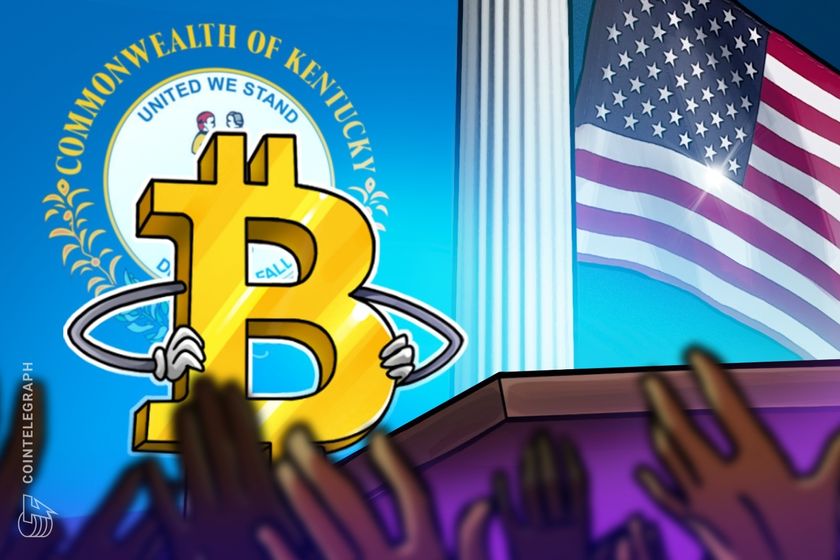
Kentucky governor signs ‘Bitcoin Rights’ bill into law

Kentucky governor Andy Beshear has signed a measure known as the “Bitcoin Rights” bill, into law, enshrining protections for crypto users, as two other US states’ Bitcoin reserve legislation advanced.

Crypto advocacy group the Satoshi Action Fund said in a March 24 statement to X that House Bill 701 protects the “right to self-custody, run a node, and use of digital assets” without “fear of discrimination.” 

First introduced to the Kentucky House by Rep Adam Bowling on Feb. 19, HB701’s description says it safeguards the right to use digital assets and self-custody wallets and bans local zoning changes that discriminate against crypto mining

Senate, Legislation, United States

Source: Satoshi Action Fund

At the same time, the legislation provides guidelines for running a crypto node, excludes crypto mining from money transmitter license requirements, and specifies that mining and staking are not considered offering or selling a security.

The bill passed Kentucky’s House of Representatives on Feb. 28, with all 91 representatives voting in favor, and passed the state Senate on March 13, with all 37 senators voting in favor. It was then signed into law by Beshear on March 24. 

The legislation mirrors similar legislation signed into law by Oklahoma Governor Kevin Stitt in May 2024. 

Senate, Legislation, United States

Kentucky’s Bitcoin Rights bill enshrines protections for crypto users in the state. Source: Kentucky General Assembly

Kentucky has also introduced a bill to establish a Bitcoin reserve, allowing the State Investment Commission to allocate up to 10% of excess state reserves into digital assets, including Bitcoin (BTC); the bill is still under review. 

Other Bitcoin reserve bills move forward

Meanwhile, Oklahoma’s House Bill 1203 (HB 1203), known as the Strategic Bitcoin Reserve Act, has passed the State House of Representatives 77 to 15, according to the crypto advocacy group, the Oklahoma Bitcoin Association.

The bill was introduced to the Oklahoma House of Representatives on Jan. 15 by state Representative Cody Maynard and passed the Government Oversight Committee with a 12–2 vote on Feb. 25. 

Related: Crypto bills stack up across the US, from Bitcoin reserves to task forces

It must now pass through the Senate before the Oklahoma governor can veto or sign the bill into law. Oklahoma State Senator Dusty Deevers also filed legislation on Jan. 8 that would allow residents in the state to receive salaries in Bitcoin

Bitcoin legislation tracker group Bitcoin Laws said in a March 24 X post that Oklahoma has now moved into equal second place with Texas in the State Bitcoin reserve race.

Senate, Legislation, United States

Oklahoma has now moved into equal second place in the State Bitcoin reserve race. Source: Bitcoin Laws

Arizona remains in the lead after two strategic digital asset reserve bills cleared Arizona’s House Rules Committee on March 24 and headed to the House floor for a full vote.

Bitcoin Laws speculates that because Republicans dominate the Oklahoma Senate and the governor is Republican, the bill “has a good chance to pass into law.” 

Missouri’s Special Committee on Intergovernmental Affairs is also in the process of evaluating the state’s Bitcoin reserve bill, according to Bitcoin Laws.

Magazine: How crypto laws are changing across the world in 2025

Read more at cointelegraph.com

Binance suspends staffer after internal investigation into insider trading

Crypto exchange Binance has suspended a member of its Binance Wallet team, adding it could take further legal action after launching an internal investigation over allegations of insider trading.

The exchange’s crypto wallet business, Binance Wallet, launched an investigation on March 23 after it “received a complaint alleging that one of our staff members engaged in front-running trades using insider information to gain improper profits,” it said in a March 25 X post.

It claimed a preliminary investigation found a Binance Wallet staffer who joined the team last month was suspected of using information from a former position in a business development role at BNB Chain to “front-run” trades of a project token. 

“The employee was aware the project was planning a Token Generation Event (TGE) and anticipated it would generate significant community interest,” Binance Wallet wrote.

It claimed the staffer “used multiple linked wallet addresses to purchase a large volume of the project’s tokens” before it publicly announced the token launch and then, after the announcement, “quickly sold part of his holdings to realize significant profits.”

Binance Wallet accused the staff member of front-running trades based on non-public information gained from a previous role in breach of company policy. 

It added the staff member was “suspended immediately and pending further disciplinary action,” and the company would cooperate with authorities in the relevant jurisdiction to take legal action.

The company did not name the staff member but noted the allegations circulating on X prompted the investigation.

Earlier this week, multiple X users pointed to a former operations manager at BNB Chain — Freddie Ng — whose LinkedIn shows he joined Binance Wallet’s business development team last month.

As noted by X user “py,” one of the wallets that DEX Screener shows has profited $82,400 from the token in question, U DEX Platform (UUU), is a wallet that received UUU tokens from another wallet initially funded by the address “freddieng.bnb” — which Ng had shared on his X account.

Binance suspends staffer after internal investigation into insider trading

A wallet allegedly linked to a Binance staffer sold holdings of a token just minutes after it debuted on March 23 and hit a peak value of $31.5 million. Source: DEX Screener

Binance did not immediately respond to a request for comment. Ng was contacted for comment.

Related: BNB Chain launches $100M liquidity program 

Binance Wallet said it appreciated the public efforts, but it would only reward those who submitted reports to a whistleblowing email “to protect whistleblowers’ interests.”

It said it would hand out $100,000 equally distributed among four anonymous whistleblowers who emailed the exchange.

Magazine: What are native rollups? Full guide to Ethereum’s latest innovation 

Read more at cointelegraph.com