cointelegraph.com

DoubleZero protocol announces validator token sale

The DoubleZero Protocol, a blockchain infrastructure network aiming to multiply speeds and efficiency for distributed networks, announced a validator token sale to sell token-purchase agreements for its native token to prospective validators.

Applications for the sale will be accepted April 2-10 through the CoinList platform, marking its first public token sale in the United States since 2019. The round is only available to accredited investors.

According to the protocol, only validators currently serving the high-throughput Solana, Celestia, Sui, Aptos, and Avalanche networks are eligible to apply.

Interested parties are invited to submit bids declaring a per-unit token price and maximum budgets, which will be aggregated to determine the final sale price offered to the participating validators.

Funding

A diagram of the DoubleZero validator funding round process. Source: CoinList

In a statement to Cointelegraph, Austin Federa, co-founder of the Double Zero protocol and former Strategy lead at the Solana Foundation, said:

“The DoubleZero CoinList sale is a first-of-its-kind opportunity for the validators who are already securing the most performant and distributed blockchains. It opens access to infrastructure that will power the next generation of distributed systems.”

“This industry has seen huge investment and innovation at the top of the stack — it is time to revolutionize the physical infrastructure layer powering high-performance distributed systems,” Federa said in the statement.

The token-purchase agreement comes amid a recent uptick in capital fundraising from crypto firms and crypto venture capitalists — suggesting that the market has room to grow in 2025.

Related: Crypto VC giant targets $1B for new funds, expects oversubscription — Report

DoubleZero protocol targets mainnet launch in the second half of 2025

The DoubleZero Protocol is aiming to launch its mainnet during the second half of 2025 following a successful $28 million fundraising round completed in March.

Crypto venture capital firms Multicoin Capital and Dragonfly Capital led the most recent fundraising round.

Funding

First page of the DoubleZero Protocol white paper. Source: DoubleZero

DoubleZero aims to increase the speed and communication of blockchain networks by using a dedicated network of fiber optics to provide the physical infrastructure for high-speed, low-latency blockchain connectivity.

The focus on a dedicated fiber optic network for higher speeds is similar to the shift from dial-up internet that used 56K modems operating through 20th-century telecommunication infrastructure to broadband systems in the early 2000s.

Magazine: Is measuring blockchain transactions per second (TPS) stupid in 2024? Big Questions
Read more at cointelegraph.com

DoubleZero protocol announces validator token sale

The DoubleZero Protocol, a blockchain infrastructure network aiming to multiply speeds and efficiency for distributed networks, announced a validator token sale to sell token-purchase agreements for its native token to prospective validators.

Applications for the sale will be accepted April 2-10 through the CoinList platform, marking its first public token sale in the United States since 2019. The round is only available to accredited investors.

According to the protocol, only validators currently serving the high-throughput Solana, Celestia, Sui, Aptos, and Avalanche networks are eligible to apply.

Interested parties are invited to submit bids declaring a per-unit token price and maximum budgets, which will be aggregated to determine the final sale price offered to the participating validators.

Funding

A diagram of the DoubleZero validator funding round process. Source: CoinList

In a statement to Cointelegraph, Austin Federa, co-founder of the Double Zero protocol and former Strategy lead at the Solana Foundation, said:

“The DoubleZero CoinList sale is a first-of-its-kind opportunity for the validators who are already securing the most performant and distributed blockchains. It opens access to infrastructure that will power the next generation of distributed systems.”

“This industry has seen huge investment and innovation at the top of the stack — it is time to revolutionize the physical infrastructure layer powering high-performance distributed systems,” Federa said in the statement.

The token-purchase agreement comes amid a recent uptick in capital fundraising from crypto firms and crypto venture capitalists — suggesting that the market has room to grow in 2025.

Related: Crypto VC giant targets $1B for new funds, expects oversubscription — Report

DoubleZero protocol targets mainnet launch in the second half of 2025

The DoubleZero Protocol is aiming to launch its mainnet during the second half of 2025 following a successful $28 million fundraising round completed in March.

Crypto venture capital firms Multicoin Capital and Dragonfly Capital led the most recent fundraising round.

Funding

First page of the DoubleZero Protocol white paper. Source: DoubleZero

DoubleZero aims to increase the speed and communication of blockchain networks by using a dedicated network of fiber optics to provide the physical infrastructure for high-speed, low-latency blockchain connectivity.

The focus on a dedicated fiber optic network for higher speeds is similar to the shift from dial-up internet that used 56K modems operating through 20th-century telecommunication infrastructure to broadband systems in the early 2000s.

Magazine: Is measuring blockchain transactions per second (TPS) stupid in 2024? Big Questions

Read more at cointelegraph.com

DoubleZero protocol announces validator token sale

The DoubleZero Protocol, a blockchain infrastructure network aiming to multiply speeds and efficiency for distributed networks, announced a validator token sale to sell token-purchase agreements for its native token to prospective validators.

Applications for the sale will be accepted April 2-10 through the CoinList platform, marking its first public token sale in the United States since 2019. The round is only available to accredited investors.

According to the protocol, only validators currently serving the high-throughput Solana, Celestia, Sui, Aptos, and Avalanche networks are eligible to apply.

Interested parties are invited to submit bids declaring a per-unit token price and maximum budgets, which will be aggregated to determine the final sale price offered to the participating validators.

Funding

A diagram of the DoubleZero validator funding round process. Source: CoinList

In a statement to Cointelegraph, Austin Federa, co-founder of the Double Zero protocol and former Strategy lead at the Solana Foundation, said:

“The DoubleZero CoinList sale is a first-of-its-kind opportunity for the validators who are already securing the most performant and distributed blockchains. It opens access to infrastructure that will power the next generation of distributed systems.”

“This industry has seen huge investment and innovation at the top of the stack — it is time to revolutionize the physical infrastructure layer powering high-performance distributed systems,” Federa said in the statement.

The token-purchase agreement comes amid a recent uptick in capital fundraising from crypto firms and crypto venture capitalists — suggesting that the market has room to grow in 2025.

Related: Crypto VC giant targets $1B for new funds, expects oversubscription — Report

DoubleZero protocol targets mainnet launch in the second half of 2025

The DoubleZero Protocol is aiming to launch its mainnet during the second half of 2025 following a successful $28 million fundraising round completed in March.

Crypto venture capital firms Multicoin Capital and Dragonfly Capital led the most recent fundraising round.

Funding

First page of the DoubleZero Protocol white paper. Source: DoubleZero

DoubleZero aims to increase the speed and communication of blockchain networks by using a dedicated network of fiber optics to provide the physical infrastructure for high-speed, low-latency blockchain connectivity.

The focus on a dedicated fiber optic network for higher speeds is similar to the shift from dial-up internet that used 56K modems operating through 20th-century telecommunication infrastructure to broadband systems in the early 2000s.

Magazine: Is measuring blockchain transactions per second (TPS) stupid in 2024? Big Questions

Read more at cointelegraph.com

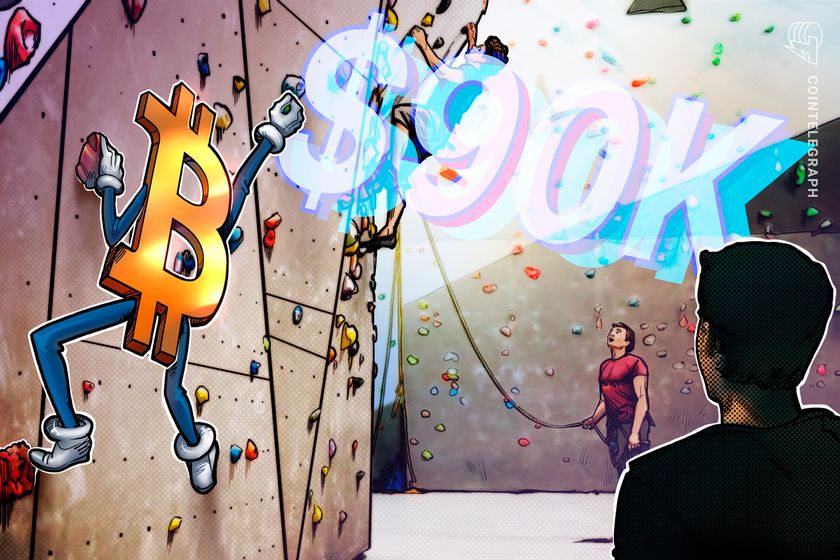
Bitcoin price on verge of breaking 10-week downtrend — Is $90K BTC next?

Bitcoin’s (BTC) price is off to a swift start in Q2, rallying by 5.53% to an intraday high of $87,333 on April 2. Currently, Bitcoin is emerging from a ten-week downtrend that began on Jan. 20 when the price peaked at $110,000.

A decisive close above the trendline might lead to continued bullish momentum for Bitcoin in the coming days.

Bitcoin price on verge of breaking 10-week downtrend — Is $90K BTC next?

Bitcoin 1-day chart. Source: Cointelegraph/TradingView

Bitcoin spot traders drive the rally

Throughout March, spot traders on Binance and Coinbase held opposite stances in the market. Binance traders were aggressive BTC sellers, while Coinbase showed significant spot bids around the $80,000 price level. This dynamic contributed to the sideways price action during the majority of March.

Fast forward to April, and spot traders on major exchanges have collectively turned bullish over the past three days.

Bitcoin price on verge of breaking 10-week downtrend — Is $90K BTC next?

Binance, Coinbase spot buyers data. Source: Aggr.trade

Data from aggr.trade highlights that Coinbase and Binance spot bids are driving positive action for BTC. The buying pressure is particularly high on Coinbase, with spot bids increasing as high as $7.98 million over the past few hours.

Likewise, Dom, a crypto markets analyst, pointed out that Bitcoin’s current rally is possibly due to Binance sellers tapering off. The analyst said,

“BTC has been able to breathe ever since the Binance selling tapered off. We are even seeing some spot buying from them for the first time in over a week.”

Related: Bitcoin breaks $86K as US tariff ‘Liberation Day’ risks 11% BTC price dip

Bitcoin flips key resistance at $84,000 to $85,000

From a technical perspective, Bitcoin has flipped an important resistance range between $84,000 and $85,000 into support. Likewise, the cryptocurrency has attained a bullish position above the 50-day, 100-day and 200-day exponentially moving averages (EMAs).

Bitcoin price on verge of breaking 10-week downtrend — Is $90K BTC next?

Bitcoin 4-hour chart. Source: Cointelegraph/TradingView

However, based on the external liquidity levels between $87,700 and $88,700, which formed the previous highs, BTC prices might struggle to break this range immediately. Consolidation between the green box (as illustrated in the chart) is likely a net positive, which might fuel BTC’s $90,000 retest for the first time since March 7.

On the flip side, an immediate correction to the current support at $84,000 and $85,000 could possibly discourage bulls, and short sellers might take control of price action.

Bullish invalidation could be on the cards if BTC price closes below $85,000 over the next few days.

With markets bracing for further market volatility ahead of President Trump’s “Liberation Day” tariffs, Bitcoin price is expected to react further during today’s White House press conference at 4 pm Eastern Time.

Related: Bitcoin price can hit $250K in 2025 if Fed shifts to QE: Arthur Hayes

This article does not contain investment advice or recommendations. Every investment and trading move involves risk, and readers should conduct their own research when making a decision.

Read more at cointelegraph.com

HBAR Foundation joins OnlyFans founder startup to bid on TikTok

Zoop, the social app created by OnlyFans founder Tim Stokely, and the HBAR Foundation have reportedly submitted a bid to purchase the video-sharing app TikTok in the United States.

According to an April 2 Reuters report, the HBAR Foundation and Zoop filed an intent to bid on TikTok with the Trump administration. The bid will follow others from major technology companies, including Amazon, Oracle, Microsoft, and Rumble, in an attempt to keep the video-sharing app’s services alive for US users.

“Our bid for TikTok isn’t just about changing ownership, it’s about creating a new paradigm where both creators and their communities benefit directly from the value they generate,” Zoop co-founder RJ Phillips reportedly said.

China, Video, United States, Social Media

Posting the TikTok logo on its X account on April 2, hinting at a bid to purchase the company. Source: HBAR Foundation

In 2024, the US Congress passed, and former President Joe Biden signed a bill into law that could potentially ban TikTok if the firm’s operations weren’t separated from its Chinese parent company, ByteDance.

The initial deadline for the sale of the company under the law was Jan. 19. After assuming office, President Donald Trump signed a 75-day extension for enforcement, pushing the potential TikTok sale to April 5.

The HBAR Foundation is an organization working with Hedera (HBAR), which had a market capitalization of more than $7.3 billion at the time of publication. Cointelegraph reached out to the foundation and Zoop regarding the TikTok deal but did not receive a response by the time of publication.

Related: Reddit co-founder trying to buy TikTok and bring it ‘on chain’

It’s unclear how Trump intends to proceed with the sale or ban of TikTok. He could sign another extension to delay enforcement of the law, but only an act of Congress could countermand it.

The US president planned to announce sweeping tariffs against unnamed countries at 4:00 pm ET, shaking up markets. Since Trump took office on Jan. 20, the price of Bitcoin (BTC) has dropped under $100,000 to reach $86,927 at the time of publication.

Magazine: Dorsey’s ‘marketplace of algorithms’ could fix social media… so why hasn’t it?

Read more at cointelegraph.com

HBAR Foundation joins OnlyFans founder startup to bid on TikTok

Zoop, the social app created by OnlyFans founder Tim Stokely, and the HBAR Foundation have reportedly submitted a bid to purchase the video-sharing app TikTok in the United States.

According to an April 2 Reuters report, the HBAR Foundation and Zoop filed an intent to bid on TikTok with the Trump administration the previous week. The bid will follow others from major technology companies, including Amazon, Oracle, Microsoft, and Rumble, in an attempt to keep the video-sharing app’s services alive for US users.

“Our bid for TikTok isn’t just about changing ownership, it’s about creating a new paradigm where both creators and their communities benefit directly from the value they generate,” Zoop co-founder RJ Phillips reportedly said.

In 2024, the US Congress passed, and former President Joe Biden signed a bill into law that could potentially ban TikTok if the firm’s operations weren’t separated from its Chinese parent company, ByteDance. The initial deadline for the sale of the company under the law was Jan. 19. After assuming office, President Donald Trump signed a 75-day extension for enforcement, pushing the potential TikTok sale until April 5.

Cointelegraph reached out to the HBAR Foundation and Zoop but did not receive a response at the time of publication.

This is a developing story, and further information will be added as it becomes available.

Read more at cointelegraph.com

Pump.fun launches lending platform to finance memecoin buys

Pump.fun is launching a lending platform to enable users to buy memecoins and non-fungible tokens (NFTs) with borrowed cryptocurrency, the Solana-based memecoin launchpad said. 

Dubbed Pump.Fi, the onchain lending protocol provides “immediate… financing for [any] digital asset,” Pump.fun said in an April 1 X post.

According to Pump.fun, borrowers pay one-third up front and the rest over 60 days. In addition, Pump.Fi will create a marketplace for lenders to buy debt. The protocol did not specify how Pump.Fi — which doesn’t do credit checks — plans to ensure repayment of undercollateralized onchain loans. 

Pump.fun launches lending platform to finance memecoin buys

Pump.Fi will let users borrow to buy memecoins. Source: Pump.fun

Related: Pump.fun launches own DEX, drops Raydium

Competitive market

Pump.fun has been grappling with a sharp drawdown in memecoin trading activity on Solana after several high-profile scandals — such as the LIBRA token’s disastrous launch — soured sentiment on memecoins among retail traders. 

Adding onchain lending has the potential to draw more liquidity into the space, which has seen trading volumes stabilize in recent weeks, according to data from Dune Analytics.

Pump.fun has also been expanding its offerings to stay ahead of mounting competition from rival platforms.

Raydium, Solana’s largest decentralized exchange (DEX) by volume, plans to roll out its own memecoin launchpad, LaunchLab. 

Other rival protocols — including Daos.fun, GoFundMeme, and Pumpkin — are also vying for a share of Solana’s memecoin market. 

Cryptocurrencies, Markets, Cryptocurrency Exchange, Lending, Decentralized Exchange, Solana, DEX, Memecoin

Number of tokens successfully “bonding” on Pump.fun each day. Source: Dune Analytics

On March 20, Pump.fun launched its own DEX — known as PumpSwap — to replace Raydium as the final home for tokens that successfully bootstrap liquidity on Pump.fun.

Switching to PumpSwap has streamlined PumpFun’s process for listing new tokens and cut costs for users, it said.

PumpSwap also plans to start distributing a portion of trading fees to coin creators, according to Pump.fun co-founder Alon.

The newly launched DEX has already captured a more than 10% share of Solana’s trading volumes and even overtaken Raydium — along with every other Solana app — in 24-hour fees, according to data from Dune Analytics and DefiLlama. On April 1, PumpSwap generated nearly $4 million in fees.

Magazine: Help! My parents are addicted to Pi Network crypto tapper

Read more at cointelegraph.com

Lawmaker alleges Trump wants to replace US dollar with his stablecoin

California Representative Maxine Waters, ranking member of the US House Financial Services Committee, used her opening statement at a markup hearing to criticize President Donald Trump’s business and ethical entanglements with the crypto industry, including the launch of a stablecoin by a family-backed company.

Addressing lawmakers at an April 2 hearing, Waters said Trump had used his position as president to leverage “multiple crypto schemes” for profit, including a US dollar-pegged stablecoin launched by World Liberty Financial (WLFI) — the firm backed by his family.

The California lawmaker pointed to Trump’s memecoin launched in January, his plans to establish a national cryptocurrency stockpile, and “his own stablecoin,” referring to WLFI’s USD1 token launched in March.

Politics, Congress, Donald Trump, Stablecoin

Rep. Maxine Waters addressing the House Financial Services Committee on April 2. Source: GOP Financial Services

“With this stablecoin bill, this committee is setting an unacceptable and dangerous precedent, validating the president and his insiders’ efforts to write rules of the road that will enrich themselves at the expense of everyone else,” said Waters, adding:

“Trump likely wants the entire government to use stablecoins from payments made by the Department of Housing and Urban Development, to Social Security payments, to paying taxes. And which coin do you think Trump would replace the dollar with? His own, of course.”

Waters does not stand alone in her criticism of Trump’s crypto ventures, with many lawmakers and experts across the political spectrum suggesting potential conflicts of interest.

Committee Chair French Hill, who spoke on stablecoins before Waters, also reportedly said that the Trump family’s involvement in the industry makes legislation “more complicated.”

“If there is no effort to block the President of the United States of America from owning his stablecoin business […] I will never be able to agree on supporting this bill, and I would ask other members not to be enablers,” said Waters. 

Related: Crypto has a regulatory capture problem in Washington — Or does it?

Representative Bryan Steil, who introduced the Stablecoin Transparency and Accountability for a Better Ledger Economy, or STABLE Act, did not immediately address Waters’ concerns about Trump’s stablecoin but referred to establishing safeguards for consumers.

Hill did not mention Trump in his opening statement but said there needed to be a “clear federal framework” for payment stablecoins.

Crypto legislation moving through Congress

The committee will consider amendments to the STABLE Act, as well as bills to combat illicit finance using emerging financial technologies and blocking the US government from issuing a central bank digital currency, or CBDC.

The markup hearing was a necessary step before the committee could vote on whether to advance the bills to the House of Representatives.

Magazine: Trump’s crypto ventures raise conflict of interest, insider trading questions

Read more at cointelegraph.com

FDUSD stableboin depegs following claims made by Justin Sun

The First Digital US-dollar pegged stablecoin (FDUSD) depegged on April 2 following claims of insolvency from Tron network founder Justin Sun, who said that the issuer of the tokenized fiat equivalent, First Digital, is insolvent.

First Digital responded to the claims by assuring users that the issuer is completely solvent and said that the dispute is with TrueUSD (TUSD), another stablecoin. The firm wrote in an April 2 X post:

“Every dollar backing FDUSD is completely, secure, safe and accounted for with US backed T-Bills. The exact ISIN numbers of all of the reserves of FDUSD are set out in our attestation report and clearly accounted for.”

First Digital also indicated they would be taking legal action against Sun for making the claims on social media.

Stablecoin, Justin Sun

FDUSD loses its dollar peg following online claims. Source: CoinMarketCap

This is a developing story, and further information will be added as it becomes available.

Read more at cointelegraph.com

FDUSD stablecoin depegs following claims made by Justin Sun

The First Digital US-dollar pegged stablecoin (FDUSD) depegged on April 2 following claims of insolvency from Tron network founder Justin Sun, who said that the issuer of the tokenized fiat equivalent, First Digital, is insolvent.

First Digital responded to the claims by assuring users that the issuer is completely solvent and said that the dispute is with TrueUSD (TUSD), another stablecoin. The firm wrote in an April 2 X post:

“Every dollar backing FDUSD is completely secure, safe and accounted for with US-backed Treasury Bills. The exact ISIN numbers of all of the reserves of FDUSD are set out in our attestation report and clearly accounted for.”

First Digital also indicated they would be taking legal action against Sun for making the claims on social media.

Stablecoin, Justin Sun

FDUSD loses its dollar peg following online claims. Source: CoinMarketCap

This is a developing story, and further information will be added as it becomes available.

Read more at cointelegraph.com