cointelegraph.com

Crypto fintech Taurus launches interbank network for digital assets

Swiss cryptocurrency fintech Taurus has launched an interbank network that is purpose-built for regulated institutions involved in digital asset operations.

On April 9, Taurus said in an announcement shared with Cointelegraph that it had launched Taurus-Network (TN), an interbank network designed to simplify and improve digital asset transactions between regulated financial institutions worldwide.

The network aims to improve collateral mobility, optimize settlement speed and reduce counterparty risk while benefiting capital and liquidity management in digital assets.

Among the key benefits of the network is the ability for participants to retain full sovereignty over assets, direct interaction with counterparties and automated compliance without third-party intervention, Taurus SA’s head of product infrastructure, Vassili Lavrov, told Cointelegraph.

Multiple banks already involved

The Taurus-Network launches with participation from several banks worldwide, including Arab Bank Switzerland, Capital Union Bank, Flowdesk, ISP Group, Misyon Bank and Swissquote.

According to Lavrov, all of those banks have taken meaningful steps to integrate digital asset capabilities within their operations, with most of them already offering custody of cryptocurrencies to their clients.

Cryptocurrencies, Switzerland, Banks, Payments

Source: Taurus

“By building on Taurus’ relationships with over 35 banking clients across four continents, the network is positioned to become the default infrastructure layer for compliant, high-trust digital asset activity,” he said.

A blockchain-agnostic network

As Taurus expects to tap major global regulated financial institutions for its network, the firm ensures that interoperability is among its core strengths.

Taurus-Network is blockchain-agnostic and supports both public and permissioned distributed ledger technologies, Lavrov said, adding:

“It’s engineered to enable seamless interaction across different digital asset types, whether cryptocurrencies, tokenized securities, or digital currencies.”

He added that the network is designed to interoperate across public and permissioned blockchains, so institutions “aren’t locked into one system.”

Why is Taurus bullish on institutional Bitcoin adoption in 2025?

As some crypto industry execs have expressed confidence in the global push into Bitcoin (BTC) by banks in 2025, Taurus shares the sentiment.

“We agree that 2025 will mark a pivotal year in the institutional adoption of Bitcoin and digital assets more broadly,” Taurus’ head of product infrastructure said, adding that maturing regulations increasingly enable trust by banks.

Addressing market turbulence associated with geopolitical issues, such as concerns over tariffs by the administration of the United States, Lavrov suggested that such developments would only eventually contribute to a higher demand for digital assets.

“Geopolitical uncertainty, including the risk of trade wars, only reinforces the value of programmable, borderless financial instruments,” he stated, adding:

“Digital assets […] offer transparency, speed, and sovereignty in a way that traditional rails cannot. We believe this shift is not only coming but accelerating.”

Magazine: XRP win leaves Ripple and industry with no crypto legal precedent set

Read more at cointelegraph.com

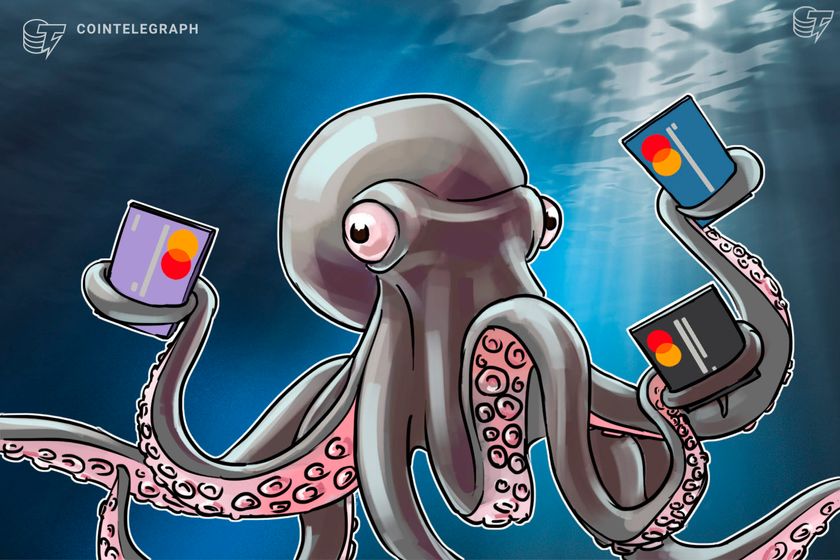
Kraken taps Mastercard to launch crypto debit cards in Europe, UK

Cryptocurrency exchange Kraken has partnered with Mastercard to issue crypto debit cards across the United Kingdom and Europe, the company announced on April 8.

The partnership will enable the crypto exchange to expand its payment offerings by launching physical crypto debit cards.

The partnership comes as Kraken continues to pursue a license under the European Union’s regulatory framework, the Markets in Crypto-Assets Regulation (MiCA).

The debit card will allow users to spend cryptocurrencies and stablecoins directly. Kraken said the rollout will begin in the coming weeks, with a waitlist now open to customers.

This partnership builds on Kraken Pay’s growth

Kraken said its partnership with Mastercard builds on the rapid growth of Kraken Pay, a new tool that enables customers to send money from their Kraken account.

Launched in January 2025, Kraken Pay allows users to send more than 300 crypto assets to multiple countries worldwide. It also introduces a paylink feature that enables users to send payments through a simple URL.

Since launching the service, Kraken has seen more than 200,000 customers out of its 15 million user base activate Kraktag, a unique user identifier allowing owners to receive money without exposing full bank account details.

Crypto payments on the rise

“Crypto is evolving the payments industry, and we see a future where global commerce and everyday payments are underpinned by crypto,” Kraken co-CEO David Ripley said in a statement shared with Cointelegraph.

“Our clients want to be able to seamlessly pay for real-world goods and services with their crypto or stablecoins,” he said, adding:

“Partnering with Mastercard is a major step toward us bringing that vision to life. Together, we will unlock crypto’s true everyday utility, ensuring it remains undeniably relevant and usable long-term.”Mastercard committed to crypto

Mastercard’s partnership with Kraken is another milestone for the company in cryptocurrency-related efforts.

The company has collaborated with diverse crypto service providers, such as the self-custodial crypto wallet MetaMask and the European crypto payments infrastructure provider Mercuryo.

Related: Hodlers on edge: Trump’s tariffs shake Bitcoin, but some are buying the dip

“Mastercard is committed to driving innovation and expanding the possibilities of digital payments,” Mastercard executive vice president of global partnerships, Scott Abrahams, said.

“Our latest partnership with Kraken is a testament to that as we work together to unlock the true potential of crypto assets for everyday use,” he added.

Magazine: 3 reasons Ethereum could turn a corner: Kain Warwick, X Hall of Flame

Read more at cointelegraph.com

Kraken taps Mastercard to launch crypto debit cards in Europe, UK

Cryptocurrency exchange Kraken has partnered with Mastercard to issue crypto debit cards across the United Kingdom and Europe, the company announced on April 8.

The new partnership enables the crypto exchange to expand its payment offering in Europe and the United Kingdom by launching physical crypto debit cards.

The partnership comes as Kraken continues to pursue a license under the European Union’s regulatory framework, the Markets in Crypto-Assets Regulation (MiCA).

The new debit card will allow users to spend cryptocurrencies and stablecoins directly. Kraken said the rollout will begin in the coming weeks, with a waitlist now open to customers.

This partnership builds on Kraken Pay’s growth

Kraken said its partnership with Mastercard builds on the rapid growth of Kraken Pay, a new tool that enables customers to send money from their Kraken account.

Launched in January 2025, Kraken Pay allows users to send more than 300 crypto assets to multiple countries worldwide. It also introduces a paylink feature, which allows users to send payments through a simple URL.

Since launching the service, Kraken saw more than 200,000 customers out of its 15 million user base activate Kraktag, a unique user identifier allowing owners to receive money without exposing full bank account details.

Crypto payments on the rise

“Crypto is evolving the payments industry, and we see a future where global commerce and everyday payments are underpinned by crypto,” Kraken co-CEO David Ripley said in a statement shared with Cointelegraph.

“Our clients want to be able to seamlessly pay for real-world goods and services with their crypto or stablecoins,” he said, adding:

“Partnering with Mastercard is a major step toward us bringing that vision to life. Together, we will unlock crypto’s true everyday utility, ensuring it remains undeniably relevant and usable long-term.”

This is a developing story, and further information will be added as it becomes available.

Magazine: 3 reasons Ethereum could turn a corner: Kain Warwick, X Hall of Flame

Read more at cointelegraph.com

US gov’t actions give clue about upcoming crypto regulation

The early days of the Trump administration saw a flurry of activity that could give the crypto industry an idea of forthcoming crypto regulations, namely that they may not be regulated as securities. 

Practitioners have decried a lack of concrete change in the form of new rules and guidance. The skeptics have their reasons. The formation of the crypto task force, President Donald Trump’s crypto executive order, crypto czar David Sacks’ lone press conference and the digital asset reserve have been criticized as mere theater.

The real work of regulating comes not in press conferences but in the guidance, enforcement and rulemaking that support the structure of rules-based systems.

A faithful account of all of the cryptocurrency decisions from the Trump administration reveals a new approach to enforcement and regulation that could meaningfully affect the rights of operators in the United States. 

Trump’s regulatory approach opens up banking to crypto

In the dog days of the Biden administration, a policy known as “Operation Chokepoint 2.0” became a major scandal in certain crypto media channels. The allegations were that, during the Obama administration, the Justice Department developed a program called Operation Choke Point that it used to surveil and curtail certain disfavored businesses like payday lenders and firearms dealers. 

Some speculated that the Biden administration adopted the same policies for cryptocurrency companies. There was a lot of back and forth over this issue — some denied it ever happened, but many cryptocurrency firms and individuals lost access to banking services.

Whether this was a directive or simply an unforeseen consequence of other policies, many in the industry were incensed; the issue became politically charged. 

US gov’t actions give clue about upcoming crypto regulation

Crypto execs went on popular shows and podcasts like The Joe Rogan Experience to discuss debanking. Source: Nic Carter

As a result, one of the first steps the Trump administration took regarding crypto was to fix the industry’s debanking problem. This began only two days after Trump took office with Staff Accounting Bulletin 122 (SAB 122), a directive that repealed the Securities and Exchange Commission’s SAB 121 — which had effectively prohibited banks from holding cryptocurrencies by making it difficult and inefficient to do so. 

On March 7, the Office of the Comptroller of the Currency (OCC) released its own interpretive guidance, Letter 1183, itself undoing Letter 1179. The latter required banks to ask OCC’s permission to participate in certain crypto-native activities like custodying cryptocurrency, holding stablecoin reserve deposits and functioning as validation nodes.

On March 28, the Federal Deposit Insurance Corporation (FDIC) followed up with its own guidance. It rescinded the Biden-era FIL-16-2022, which required FDIC-supervised institutions to notify the FDIC of their intent to dabble in crypto and provide information on possible risks. 

Acting FDIC Chair Travis Hill also signaled that “banking regulators should not use reputational risk as a basis for supervisory criticisms” at all.

It may be difficult to separate the effects of these policies so early in the administration because banks are large institutions and move slowly. But across three agencies, the rules have changed substantially and dramatically, which could have major effects on cryptocurrency access to banking services in the medium to long term. 

Fully dismissed crypto cases 

Virtually every pending SEC matter with a cryptocurrency defendant has been dropped. While nice for the targets, it doesn’t create much precedent that anyone can build off of. That said, the result does suggest that the underlying activities in those dropped cases won’t be pursued for enforcement, at least for the immediate future.

Related: Ripple celebrates SEC’s dropped appeal, but crypto rules still not set

It’s helpful, then, to consider what activities have received implied license through this campaign of dropped enforcement.

There are a number of cases in which the SEC filed a complaint and litigated to varying degrees of resolution, which the commission either fully dropped or settled without admissions of wrongdoing on the part of the targets:

Feb. 27, 2025 — Coinbase Inc 

March 3, 2025 — Payward, Inc (Kraken)

March 25, 2025 — Ripple Labs, Inc

March 27, 2025 — Cumberland DRW LLC 

March 27, 2025 — Consensys Software, Inc

These cases revolved around the unregistered sale and offer of securities under the Securities Act of 1933 and acting unregistered as a broker, dealer, clearing agency and exchange. While the allegations and actors are different, the common thread between them is that none would be subject to the laws in question if the underlying assets were not themselves securities.

The sole exception is Consensys, which was accused of providing staking as a service without first registering it as a security. While the texture of this claim is familiar, the activity is somewhat different than the pure offer and sale of securities. 

This dismissal, along with the related guidance concerning mining pools, suggests that the current SEC does not consider most token-generating activities to be investment contracts, either. 

US gov’t actions give clue about upcoming crypto regulation

Crypto firms were quick to celebrate after the SEC dropped cases against them. Source: Bill Hughes

Stayed pending resolution

Other cases have been filed in court and halted through joint motions to pause the suits. This is presumably in anticipation of eventually dismissing them, but since they have not yet been dismissed, it is hard to say for sure. 

Feb. 11, 2025 — Binance and Changpeng Zhao

Feb. 25, 2025 — Tron Foundation and Justin Sun

April 2, 2025 — Gemini Trust Company, LLC 

These cases mostly differ from the ones that have already been dropped in that, in the case of Binance and Tron, the government brought allegations not just of unregistered operation but of actual fraud as well. The pause indicates the government may be conciliatory, but the aggravating nature of these allegations is stalling resolution. 

Gemini fits more naturally into the category above, and it is not clear why that case has not yet been dropped.

SEC drops investigations into crypto firms

There are other cases where the SEC opened investigations and even issued Wells notices indicating potential enforcement; however, the commission has reportedly ceased investigations after Trump’s inauguration. 

Feb. 21, 2025 — Robinhood Crypto, LLC

Feb. 21, 2025 — Ozone Networks, Inc (OpenSea)

Feb. 25, 2025 — Universal Navigation Inc (Uniswap Labs)

March 3, 2025 — Yuga Labs

The investigations were focused around allegations that non-fungible tokens (NFTs) were securities or that intermediaries like Robinhood or Uniswap were operating as unregistered brokers.

While little has come of these actions, on balance, they match the trend suggested above.

What the dismissals say quietly

None of the dismissals could be considered an SEC edict that certain crypto activities are legal. But taken together, these dismissals, pauses and dropped investigations paint a clear picture of how the current SEC thinks about cryptocurrency’s place in securities regimes. 

The SEC dropped charges where allegations revolved around operating as a broker, dealer, clearinghouse or exchange. This is consistent with the position that the underlying assets themselves are not securities. 

The same is true about cases of issuance. The commission dropped charges alleging that an entity issued securities in the form of cryptocurrency tokens.

Still, claims of fraud and market manipulation have not yet been dropped. This might indicate a reticence among commission attorneys to let these claims go. Still, if the assets at hand are not securities, the SEC will not be the correct agency to bring those claims, and so, if the SEC is consistent, then it will likely drop these cases, too.

Furthermore, in three official statements, the SEC notified the public that traditional memecoins, proof-of-work mining, including pooled mining, and traditional “covered” or asset-backed stablecoins denominated in dollars are not subject to securities laws.

Related: Crypto has a regulatory capture problem in Washington — or does it?

This, alongside the chain of dismissals, suggests that secondary market sales of fungible cryptocurrency tokens, NFTs and staking-as-a-service products are also outside of the scope of traditional securities law. 

Some might argue that this is more confusing than clarifying, but applying the principle of Occam’s Razor would suggest the SEC simply does not consider cryptocurrency assets to be subject to securities laws as currently construed.

But what does it all mean?

“Flood the Zone” is a tactic that Trump strategist Steve Bannon made famous during the president’s first term, and it might now apply to the manic flurry of policy and dismissals over the past few months. 

Take any one at face value, and it would be easy to discount the project as insubstantial, but together, they arguably represent a sea change in the crypto policy of the US government. 

Banks, once effectively prohibited from holding cryptocurrencies, are now unrestrained. Companies once bogged down in litigation are now free. They may well be followed by new entrants comforted by their survival. 

At a biweekly clip, the SEC is releasing new guidance as to what products exist outside its remit. And Trump nominee Paul Atkins isn’t even in the door yet. 

This is a dramatically improved regulatory environment, and there are now affirmatively legal paths through which industry participants can do business onchain. 

Magazine: 3 reasons Ethereum could turn a corner: Kain Warwick, X Hall of Flame

Read more at cointelegraph.com

US gov’t actions give clue about upcoming crypto regulation

The early days of the Trump administration saw a flurry of activity that could give the crypto industry an idea of forthcoming crypto regulations, namely that they may not be regulated as securities. 

Practitioners have decried a lack of concrete change in the form of new rules and guidance. The skeptics have their reasons. The formation of the crypto task force, Trump’s crypto executive order, crypto czar David Sacks’ lone press conference, and the digital asset reserve has been criticized as mere theater.

The real work of regulating comes not in press conferences but in the guidance, enforcement, and rulemaking that support the structure of rules-based systems.

A faithful account of all of the cryptocurrency decisions from the Trump administration reveals a new approach to enforcement and regulation that could meaningfully affect the rights of operators in the United States. 

Trump’s regulatory approach opens up banking to crypto

In the dog days of the Biden administration, a policy known as “Operation Chokepoint 2.0” became a major scandal in certain crypto media channels. The allegations were that, during the Obama administration, the Justice Department developed a program called Operation Choke Point that it used to surveil and curtail certain disfavored businesses like payday lenders and firearms dealers. 

Some speculated that the Biden administration adopted the same policies for cryptocurrency companies. There was a lot of back and forth over this issue — some denied it ever happened, but many cryptocurrency firms and individuals lost access to banking services.

Whether this was a directive or simply an unforeseen consequence of other policies, many in the industry were incensed; the issue became politically charged. 

US gov’t actions give clue about upcoming crypto regulation

Crypto execs went on popular shows and podcasts like The Joe Rogan Experience to discuss debanking. Source: Nic Carter

As a result, one of the first steps the Trump administration took regarding crypto was to fix the industry’s debanking problem. This began only two days after Trump took office with Staff Accounting Bulletin 122 (SAB 122), a directive that repealed the Securities and Exchange Commission’s (SEC) SAB 121 — which had effectively prohibited banks from holding cryptocurrencies by making it difficult and inefficient to do so. 

On March 7, the Office of the Comptroller of the Currency (OCC) released its own interpretive guidance, Letter 1183, itself undoing Letter 1179. The latter required banks to ask OCC’s permission to participate in certain crypto-native activities like custodying cryptocurrency, holding stablecoin reserve deposits and functioning as validation nodes.

On March 28, the Federal Deposit Insurance Corporation (FDIC) followed up with its own guidance. It rescinded the Biden era FIL-16-2022, which required FDIC-supervised institutions to notify the FDIC of their intent to dabble in crypto and provide information on possible risks. 

Acting FDIC Chair Travis Hill also signaled that “banking regulators should not use reputational risk as a basis for supervisory criticisms” at all.

It may be difficult to separate the effects of these policies so early in the administration because banks are large institutions and move slowly. But across three agencies the rules have changed substantially and dramatically, which could have major effects on cryptocurrency access to banking services in the medium to long term. 

Fully dismissed crypto cases 

Virtually every pending SEC matter with a cryptocurrency defendant has been dropped. While nice for the targets, it doesn’t create much precedent that anyone can build off of. That said, the result does suggest that the underlying activities in those dropped cases won’t be pursued for enforcement, at least for the immediate future.

Related: Ripple celebrates SEC’s dropped appeal, but crypto rules still not set

It’s helpful, then, to consider what activities have received implied license through this campaign of dropped enforcement.

There are a number of cases in which the SEC filed a complaint and litigated to varying degrees of resolution, which the commission either fully dropped or settled without admissions of wrongdoing on the part of the targets:

Feb. 27, 2025 — Coinbase Inc. 

March 3, 2025 — Payward, Inc. (Kraken)

March 25, 2025 — Ripple Labs, Inc.

March 27, 2025 — Cumberland DRW LLC 

March 27, 2025 — Consensys Software, Inc.

These cases revolved around the unregistered sale and offer of securities under the Securities Act of 1933, and acting unregistered as a broker, dealer, clearing agency and exchange. While the allegations and actors are different, the common thread between them is that none would be subject to the laws in question if the underlying assets were not themselves securities.

The sole exception is Consensys, which was accused of providing staking as a service without first registering it as a security. While the texture of this claim is familiar, the activity is somewhat different than the pure offer and sale of securities. 

This dismissal, along with the related guidance concerning mining pools, suggests that the current SEC does not consider most token-generating activities to be investment contracts, either. 

US gov’t actions give clue about upcoming crypto regulation

Crypto firms were quick to celebrate after the SEC dropped cases against them. Source: Bill Hughes

Stayed pending resolution

Other cases have been filed in court and halted through joint motions to pause the suits. This is presumably in anticipation of eventually dismissing them, but since they have not yet been dismissed, it is hard to say for sure. 

Feb. 11, 2025 — Binance and Changpeng Zhao (CZ)

Feb. 25, 2025 — Tron Foundation and Justin Sun

April 2, 2025 — Gemini Trust Company, LLC 

These cases mostly differ from the ones that have already been dropped in that, in the case of Binance and Tron, the government brought allegations not just of unregistered operation but of actual fraud as well. The pause indicates the government may be conciliatory, but the aggravating nature of these allegations is stalling resolution. 

Gemini fits more naturally into the category above, and it is not clear why that case has not yet been dropped.

SEC drops investigations into crypto firms

There are other cases where the SEC opened investigations and even issued Wells notices indicating potential enforcement. However, the commission has reportedly ceased investigations after Trump’s inauguration. 

Feb. 21, 2025 — Robinhood Crypto, LLC

Feb. 21, 2025 — Ozone Networks, Inc. (OpenSea)

Feb. 25, 2025 — Universal Navigation Inc. (Uniswap Labs)

March 3, 2025 — Yuga Labs

The investigations were focused around allegations that non-fungible tokens (NFTs) were securities, or that intermediaries like Robinhood or Uniswap were operating as unregistered brokers.  

While little has come of these actions, on balance they match the trend suggested above.

What the dismissals say quietly

None of the dismissals could be considered an SEC edict that certain crypto activities are legal. But taken together, these dismissals, pauses and dropped investigations paint a clear picture of how the current SEC thinks about cryptocurrency’s place in securities regimes. 

The SEC dropped charges where allegations revolved around operating as a broker, dealer, clearing house or exchange. This is consistent with the position that the underlying assets themselves are not securities. 

The same is true about cases of issuance. The commission dropped charges alleging that an entity issued securities in the form of cryptocurrency tokens.

Still, claims of fraud and market manipulation have not yet been dropped. This might indicate a reticence among commission attorneys to let these claims go. Still, if the assets at hand are not securities, the SEC will not be the correct agency to bring those claims, and so, if the SEC is consistent, then it will likely drop these cases too.

Furthermore, in three official statements, the SEC notified the public that traditional memecoins, proof-of-work mining, including pooled mining, and traditional “covered” or asset-backed stablecoins denominated in dollars are not subject to securities laws.

Related: Crypto has a regulatory capture problem in Washington — or does it?

This, alongside the chain of dismissals, suggests that secondary market sales of fungible cryptocurrency tokens, NFTs, and staking-as-a-service products are also outside of the scope of traditional securities law. 

Some might argue that this is more confusing than clarifying, but applying the principle of Occam’s Razor would suggest the SEC simply does not consider cryptocurrency assets to be subject to securities laws as currently construed.

But what does it all mean?

“Flood the Zone” is a tactic that Trump strategist Steve Bannon made famous during the president’s first term, and it might now apply to the manic flurry of policy and dismissals over the past few months. 

Take any one at face value and it would be easy to discount the project as insubstantial, but together they arguably represent a sea change in the crypto policy of the United States government. 

Banks, once effectively prohibited from holding cryptocurrencies, are now unrestrained. Companies once bogged down in litigation are now free. They may well be followed by new entrants comforted by their survival. 

At a biweekly clip, the SEC is releasing new guidance as to which products exist outside its remit. And Trump nominee Paul Atkins isn’t even in the door yet. 

This is a dramatically improved regulatory environment, and there are now affirmatively legal paths through which industry participants can do business onchain. 

Magazine: 3 reasons Ethereum could turn a corner: Kain Warwick, X Hall of Flame

Read more at cointelegraph.com

Thailand targets foreign crypto P2P services in new anti-crime laws

Thailand is beefing up measures to combat online crimes involving digital assets by passing new amendments to several national laws.

Thailand’s cabinet on April 8 passed a resolution approving amendments to emergency decrees on digital asset businesses and on measures for cybercrime prevention, the Thai Securities and Exchange Commission (SEC) announced.

As part of the new laws, Thai regulators aim to strengthen measures for combating digital asset mule accounts in banks, restrict foreign cryptocurrency peer-to-peer (P2P) platforms and introduce strict financial penalties of as much as $8,700 and imprisonment of up to three years.

The new laws are expected to be enforced in the near future, and will take effect after being published in the Royal Thai Government Gazette, the announcement stated.

Key measures to combat mule accounts and money laundering

The new regulations include stringent measures for crypto asset service providers (CASPs), requiring them to collect and report information on transactions linked to online scams and suspend them.

The amendments also empower Thai authorities to block foreign CASPs from providing services to local users, further tightening controls against money laundering activities.

Related: Zhao pledges BNB for Thailand, Myanmar disaster relief

The new laws also have significant implications for non-crypto businesses in Thailand, imposing additional joint responsibilities on commercial banks, telecom providers and social media service providers. The SEC stated:

“Requiring commercial banks, telephone and telecommunications network providers, social media service providers and digital asset business operators to take joint responsibilities for damages caused by cybercrimes if they fail to comply with the standards or measures for preventing cybercrimes as specified by regulatory authorities.”Restrictions for foreign crypto P2P services 

The new laws explicitly aim to “deter and prevent” foreign crypto P2P service providers, which are “qualified as digital asset exchanges under the Digital Asset Business Law,” according to the SEC.

Additionally, the laws intended to restrict other types of foreign CASPs from providing services to investors in Thailand, the announcement said.

Thailand targets foreign crypto P2P services in new anti-crime laws

Source: ChartNerd

Thailand’s latest regulatory developments apparently aim to restrict crypto P2P transactions to only local P2P providers in an effort to avoid additional risks potentially stemming from foreign CASPs.

Cointelegraph approached the Thai SEC and crypto exchange Binance for comments regarding the restrictions but did not receive a response by the time of publication.

Meanwhile, local regulators have expressed interest in growing cryptocurrency adoption by approving crypto payment trials in certain cities like Phuket and considering approvals of crypto exchange-traded funds.

Magazine: New ‘MemeStrategy’ Bitcoin firm by 9GAG, jailed CEO’s $3.5M bonus: Asia Express

Read more at cointelegraph.com

4th gen crypto needs collaborative tokenomics against tech giants — Hoskinson

The next generation of cryptocurrency projects must embrace a more collaborative approach to compete with major centralized tech companies entering the Web3 space, according to Cardano founder Charles Hoskinson.

Speaking at Paris Blockchain Week 2025, Hoskinson said one of the main criticisms of the crypto and decentralized finance (DeFi) space is its “circular economy,” which often means that the rally of a specific cryptocurrency is bolstered by funds exiting another token, limiting the growth of the industry.

Hoskinsin said that to have a chance against the centralized technology giants joining the Web3 industry, cryptocurrency projects need more collaborative tokenomics and market structure.

Cryptocurrencies, Facebook, Investments, Bitcoin Regulation, United States, Cryptocurrency Exchange, Developers, Charles Hoskinson, Cardano, Tokenomics

Charles Hoskinson. Source: Cointelegraph

“The problem right now, with the way we’ve done things in the cryptocurrency space, is the tokenomics and the market structure are intrinsically adversarial. It’s sum 0,” said Hoskinson. “Instead of picking a fight, what you have to do is you have to find tokenomics and market structure that allows you to be in a cooperative equilibrium.”

He argued that the current environment often sees one crypto project’s growth come at the expense of another rather than contributing to the sector’s overall health. He added that this is not sustainable in the face of trillion-dollar firms like Apple, Google, and Microsoft, which may soon join the Web3 race amid clearer US regulations.

“You can’t build a global ecosystem this way, and you can’t win this way,” he said. “Because here’s the thing. The incumbents are much larger.”

Related: Bitcoin ETFs lose $326M amid ‘evolving’ dynamic with TradFi markets

Hoskinson’s comments came as the industry awaits progress on US stablecoin legislation, which may come in the next two months.

A secondary bill, the GENIUS Act — an acronym for Guiding and Establishing National Innovation for US Stablecoins — would establish collateralization guidelines for stablecoin issuers while requiring full compliance with Anti-Money Laundering laws.

Related: Cardano’s Plomin hard fork sets stage for full decentralized governance

Crypto faces Big Tech’s regulatory tailwind

More participation from tech giants is likely after the stablecoin bill is passed. The markets structure bill may pass by September, Hoskinson said, adding:

“These are the barriers that, once removed, mean that Facebook, Microsoft, Amazon, Google, Apple and others enter the cryptocurrency space and tell me who owns their platforms. They do. That’s three billion users.”

“So if those barriers are removed, how do we, as an industry, compete against the wallet that Apple built in bundles with the iPhone,” he said, adding that crypto also needs to build infrastructure that the incoming tech giants can leverage.

Aiming to align blockchain network incentives, Cardano has been working on “Minotaur,” a multi-resource consensus protocol that combines multiple consensus mechanisms and networks to pay a unified block reward to multiple networks at the same time.

“You pay in the currency you want, and multiple networks are involved in securing the system and have a financial incentive to keep the system around,” Hoskinson said.

Magazine: Charles Hoskinson, Cardano and Ethereum – for the record

Read more at cointelegraph.com

Argentine lawmakers back Milei probe in Libra crypto scandal

Lawmakers in Argentina’s Chamber of Deputies backed an investigation into President Javier Milei’s alleged involvement in the Libra (LIBRA) cryptocurrency scandal.

According to an April 8 report by local news outlet Buenos Aires Times, deputies in the lower house voted 128 to 93 in favor, with seven abstentions. The same proposal previously failed to move forward in the Senate.

The news follows Milei promoting the LIBRA memecoin on social media. With the Argentine president leveraging his credibility as a government official and his 3.8 million followers, the token quickly reached $5, briefly touching a market cap of $4 billion.

Milei has since faced accusations of wrongdoing, with critics claiming that LIBRA was a rug-pull scam and that he lured investors in. Lawyer Jonatan Baldiviezo, alongside Marcos Zelaya, engineer María Eva Koutsovitis and economist Claudio Lozano, a former head of Argentina’s central bank, filed a lawsuit against Milei, accusing him of fraud.

Related: KIP Protocol reveals involvement in Javier Milei-endorsed Libra rug pull

A presidential-scale disaster

According to Baldiviezo, Milei’s promotion was instrumental in an “illicit association” with the promoters of the cryptocurrency. The non-governmental organization Observatorio del Derecho a la Ciudad shared the concerns and filed a case that accused the president of promoting a scheme that reportedly resulted in over 40,000 investors losing more than $4 billion.

February onchain data showed that the hardest hit investors of the LIBRA memecoin pump and dump scheme lost a combined $251 million. Blockchain data shows that of the 15,430 wallets that sold at a profit or loss of more than $1,000, over 86% of those sold at a loss, resulting in a total of $251 million lost.

Despite numerous sources showing his social media posts, in mid-February, Milei denied claims that he promoted LIBRA. He said at the time:

“I did not promote that. What I did, I spread the word.”

Related: Javier Milei risks impeachment after endorsing $107M Libra rug pull

A reported family business

One of the creators behind the controversial Libra crypto token reportedly sent a text message bragging about being able to pay Argentine President Javier Milei’s sister in exchange for the president sharing the memecoin’s details on social media. According to February reports, Hayden Davis — a person connected to the project — sent a message to a crypto investment firm executive saying that he could pay Karina Milei for “control” over the Argentine president:

“We can also have Milei tweet and meet in person and do promo. […] I send $$ to his sister and he does whatever I say and does what I want.”

Magazine: Memecoins are ded — But Solana ‘100x better’ despite revenue plunge

Read more at cointelegraph.com

Builders beware — The UK's 2026 crypto regime is coming

Opinion by: Katherine Kirkpatrick Bos, general counsel at StarkWare

As Washington takes a softer stance on crypto, regulators are counting down to even stricter regulations in the UK. The United Kingdom’s Financial Conduct Authority (FCA) is working on plans for a new “gateway” authorization regime by 2026, targeting a broader spectrum of crypto activities. 

It is easy to disregard this if you aren’t in the UK, but as frameworks are formed, regulators may look to other jurisdictions for lessons and inspiration. Crypto is global, and one of the challenges and opportunities is the need to pay careful attention to many jurisdictions at once.

Bigger net than Anti-Money Laundering

For some time, the FCA’s crypto focus was primarily on Anti-Money Laundering (AML) checks. Even that was no walk in the park — only around 14% of firms seeking mandatory registration have made the cut since 2020.

The AML register was essentially a narrow lens; it was not a licensing or supervisory regime. Now, the FCA wants to go further. According to Matthew Long, the director of payments and digital assets at the FCA, by 2026, the regulator plans to regulate a broader range of crypto activities — possibly including stablecoin issuance, payment services, lending, exchanges, and more.

Does that sound like a significant leap beyond AML? It is. Although AML or broader anti-fraud measures, as appropriate, are important things to consider for any centralized crypto company, a more sophisticated regulatory regime may offer opportunities or pitfalls depending on the sophistication of the company. And here’s the real kicker: The shape of these rules remains in flux, meaning that what’s “in scope” can still shift. 

What does this mean for builders? Anyone building layer 2 (L2) or other structures that could theoretically touch financial flows — like bridging or crosschain swaps — could find themselves in the crosshairs.

Borderless implications

“That’s the UK; I’m in the US (or Singapore, or Cayman, somewhere else).” Just as the FCA looks at international models to inform its path forward, these frameworks have a knack for going global. Consider how quickly ideas around data protection spread after the European Union’s General Data Protection Regulation (GDPR) proliferated. Crypto is similarly borderless.

Recent: UK trade bodies ask government to make crypto a ‘strategic priority’

If the UK crafts a robust enough regime, other jurisdictions could borrow from it. If a business serve users outside its home turf, its user base is global, so ignoring the UK’s rules won’t be justifiable. 

Take stablecoins: If the FCA mandates strict reserve disclosures or near-real-time audits, stablecoin issuers may need to apply those standards across the board. Uniformity is easier than fragmentation, and that’s how local UK rules become the de facto global baseline.

No more snooze button for builders

Developer teams may see these headlines and assume: “Custodians, fiat on-ramps — that’s not me; I just deploy contracts.” Tempting but short-sighted. Many apps now host lending pools, stablecoin liquidity, and staking services. Those are precisely the kinds of activities regulators might categorize as “payment services” or “lending.” 

If a protocol is a key piece of that puzzle, it may be in line for questions from regulators. FCA may not knock on your door tomorrow, but builders should be consider:

Control and custody: If an infra manages users’ funds — even briefly — that could be considered “custodial,” then that risk should be factored into the overall product design.

Payment-like functionality: Depending on the overall architecture and centralization, a license may be required, if a DApp mimics or facilitates payments, stable transfers, or lending.

Geographic scope: You may not have a UK entity but consider your user base. Does your front end target UK customers? If yes, you can’t just opt out of the rules. We cannot forget the FCA’s stringent marketing rules for crypto, introduced in 2023.

The compliance silver lining 

We always talk about regulation like it’s a four-letter word, but building with regulation – either current or future – in mind, can give you a head start. Teams that develop features like appropriate and rigorous geofencing, Know Your Customer (KYC) plug-ins, or risk analytics stand to gain if key markets insist on specific layers of user protection. 

If you’re creating an app, L2, bridging service, or other protocol, offering optional compliance toggles can be a competitive advantage. Consider telling institutional partners you’ve already built the necessary guardrails. Yes, it’s extra effort, and you must balance community optics, mission, UX, and other primary product considerations. Still, it also means you won’t need to scramble to retrofit everything when the final rulebook lands.

Frantic code rewrites are no fun. If you know the rules might change, it is better to build a flexible architecture now.

Convergence or patchwork?

Here’s the big question: Will we see global convergence or a messy patchwork of contradictory rules?

The FCA has hinted at coordination with other bodies (like the International Organization of Securities Commissions, or IOSCO) and is watching the law that instituted uniform EU rules for crypto, Markets in Crypto-Assets Regulation (MiCA) across the EU. That suggests some appetite for alignment. 

A “worst-case scenario” is a total balkanization that forces developers to run region-specific versions of their apps or builders to leverage confusing and inefficient jurisdictional arbitrage. The implications will be felt throughout crypto, especially for smaller teams that can’t afford to code half a dozen separate compliance modules. 

We can’t say yet which outcome is more likely. Still, we can be sure larger economies (including the EU) will continue to progressively shape the crypto legal environment they deem fit for their purposes. And yes, they’ll undoubtedly swap notes on what seems to work (and what doesn’t).

Don’t wait for 2026

Whether or not this new impending gateway regime directly affects devs, it’s a wake-up call that purely permissionless, unregulated innovation might give way to a more structured future where oversight rules. If 14% AML approval rates were onerous, imagine how difficult it would get when regulators expand into stablecoins, payment services, crypto lending, and beyond.

The upside is that crypto has grown enough to command the attention of the highest levels of TradFi. That growth is being used to fuel mainstream adoption, which is excellent for builders serious about the space and their goals. If you want to be a part of that future, don’t ignore the FCA’s plans and the broader regulatory development globally.

Watch the consultations, read the draft proposals, and open lines of communication with qualified counsel. By the time 2026 arrives you’ll be a step ahead of the curve and not blindsided. 

The message is clear: Build preemptively, not retrospectively. Be proactive, not reactive.

Opinion by: Katherine Kirkpatrick Bos, general counsel at StarkWare.

This article is for general information purposes and is not intended to be and should not be taken as legal or investment advice. The views, thoughts, and opinions expressed here are the author’s alone and do not necessarily reflect or represent the views and opinions of Cointelegraph.

Read more at cointelegraph.com

Bitcoin ETFs lose $326M amid ‘evolving’ dynamic with TradFi markets

The evolving relationship between Bitcoin and traditional financial markets is under renewed pressure as global investors flee risk assets amid intensifying US trade tensions.

US-listed spot Bitcoin (BTC) exchange-traded funds (ETFs) recorded their fourth consecutive day of outflows on April 8, with more than $326 million in net redemptions across products, according to data from Farside Investors.

BlackRock’s iShares Bitcoin Trust ETF (IBIT) saw the largest sell-off of over $252 million, its biggest daily outflow since Feb. 26.

Bitcoin ETFs lose $326M amid ‘evolving’ dynamic with TradFi markets

Bitcoin ETF flows, US dollars, millions. Source: Farside Investors

The selling pressure follows US President Donald Trump’s April 2 announcement of sweeping reciprocal import tariffs, which triggered a historic $5 trillion wipeout in the S&P 500 over two days.

Related: Bitcoin may rival gold as inflation hedge over next decade — Adam Back

The delayed crypto market turbulence after the tariff-related sell-off in traditional markets highlights Bitcoin’s “evolving relationship with traditional markets,” according to Lennix Lai, global chief commercial officer at OKX exchange.

Lai told Cointelegraph:

“While falling 26% since January’s inauguration, Bitcoin’s relative resilience in the first two days following the tariff announcement — dropping 6% compared to Nasdaq’s 11% decline — suggests a nuanced dynamic emerging between crypto and conventional assets.”

Bitcoin initially remained firmly above the $82,000 support level but plummeted below $75,000 on Sunday, April 6.

Bitcoin ETFs lose $326M amid ‘evolving’ dynamic with TradFi markets

BTC/USD, 1-year chart. Source: Cointelegraph Markets Pro

Some industry leaders attributed Sunday’s sell-off to Bitcoin’s 24/7 liquidity mechanics, which made BTC the only large liquid asset available for de-risking over the weekend.

Related: Bitcoin price can hit $250K in 2025 if Fed shifts to QE: Arthur Hayes

Bitcoin remains tied to global liquidity conditions

While there is an “encouraging sign” of a weakening correlation between Bitcoin and equities, Bitcoin’s price trajectory remains tied to global liquidity conditions, Lai said, adding:

“Though I see early signs of divergence, I believe Bitcoin remains fundamentally tied to global liquidity conditions, warranting caution amid potential market stresses — whilst gold remains as a hedge against geopolitical instability.”

“What’s most significant here isn’t just price action but Bitcoin’s growing conceptual influence — people increasingly view it as a valid strategic reserve asset for diversification in chaotic traditional markets,” Lai added.

Other analysts also see the growing money supply as Bitcoin’s main catalyst.

“Bitcoin trades solely based on the market expectation for the future supply of fiat,” according to Arthur Hayes, co-founder of BitMEX and chief investment officer of Maelstrom.

Magazine: Bitcoin ATH sooner than expected? XRP may drop 40%, and more: Hodler’s Digest, March 23 – 29

Read more at cointelegraph.com