cointelegraph.com

Fed’s Kashkari hints at liquidity support — Is $100K Bitcoin back on the table?

Neel Kashkari, President of the Minneapolis Federal Reserve, addressed the issue of rising Treasury yields on April 11, suggesting that they might indicate a shift in investor sentiment away from United States government debt. Kashkari highlighted that the Federal Reserve has tools to provide more liquidity if necessary.

While underscoring the importance of maintaining a strong commitment to reducing inflation, Kashkari’s remarks signal a possible turning point for Bitcoin (BTC) investors amid growing economic uncertainty. 

Fed’s Kashkari hints at liquidity support — Is $100K Bitcoin back on the table?

US Treasury 10-year yields. Source: TradingView / Cointelegraph

The current 10-year US government bond yield of 4.5% is not unusual. Even if it approaches 5%, a level last seen in October 2023, this does not necessarily mean investors have lost confidence in the Treasury’s ability to meet its debt obligations. For example, gold prices only surpassed $2,000 in late November 2023, after yields had already decreased to 4.5%.

Will the Fed inject liquidity, and is this positive for Bitcoin?

Rising Treasury yields often signal concerns about inflation or economic uncertainty. This is crucial for Bitcoin traders because higher yields tend to make fixed-income investments more appealing. However, if these rising yields are perceived as a sign of deeper systemic issues—such as waning confidence in government fiscal policies—investors may turn to alternative hedges like Bitcoin.

Fed’s Kashkari hints at liquidity support — Is $100K Bitcoin back on the table?

Bitcoin/USD (left) vs. M2 global money supply. Source: BitcoinCounterFlow

Bitcoin’s trajectory will largely depend on how the Federal Reserve responds. Liquidity injection strategies typically boost Bitcoin prices while allowing higher yields could increase borrowing costs for businesses and consumers, potentially slowing economic growth and negatively impacting Bitcoin’s price in the short term.

One strategy the Federal Reserve could use is purchasing long-term Treasurys to reduce yields. To offset the liquidity added through bond purchases, the Fed might simultaneously conduct reverse repos—borrowing cash from banks overnight in exchange for securities. 

A weak US dollar and banking risks could pump Bitcoin price

While this approach could temporarily stabilize yields, aggressive bond purchases might signal desperation to control rates. Such a signal could raise concerns about the Fed’s ability to manage inflation effectively. These concerns often weaken confidence in the dollar’s purchasing power and may push investors toward Bitcoin as a hedge.

Another potential strategy involves providing low-interest loans through the discount window to give banks immediate liquidity, reducing their need to sell long-term bonds. To counterbalance this liquidity injection, the Fed could impose stricter collateral requirements, such as valuing pledged bonds at 90% of their market price.

Fed’s Kashkari hints at liquidity support — Is $100K Bitcoin back on the table?

Systemic risk in the US financial services industry. Source: Cleveland Fed

This alternative approach limits banks’ access to cash while ensuring borrowed funds remain tied to collateralized loans. However, if collateral requirements are too restrictive, banks might struggle to obtain sufficient liquidity even with access to discount window loans. 

Related: Bitcoiners’ ‘bullish impulse’ on recession may be premature: 10x Research

Although it is too early to predict which path the Fed will take, given the recent weakness in the US dollar alongside a 4.5% Treasury yield, investors might not place full trust in the Fed’s actions. Instead, they may turn to safe-haven assets such as gold or Bitcoin for protection.

Ultimately, rather than focusing solely on the US Dollar Index (DXY) or the US 10-year Treasury yield, traders should pay closer attention to systemic risks in financial markets and the spreads on corporate bonds. As these indicators rise, confidence in the traditional financial systems weakens, potentially setting the stage for Bitcoin to reclaim the psychological $100,000 price level.

This article is for general information purposes and is not intended to be and should not be taken as legal or investment advice. The views, thoughts, and opinions expressed here are the author’s alone and do not necessarily reflect or represent the views and opinions of Cointelegraph.
Read more at cointelegraph.com

Fed’s Kashkari hints at liquidity support — Is $100K Bitcoin back on the table?

Neel Kashkari, President of the Minneapolis Federal Reserve, addressed the issue of rising Treasury yields on April 11, suggesting that they might indicate a shift in investor sentiment away from United States government debt. Kashkari highlighted that the Federal Reserve has tools to provide more liquidity if necessary.

While underscoring the importance of maintaining a strong commitment to reducing inflation, Kashkari’s remarks signal a possible turning point for Bitcoin (BTC) investors amid growing economic uncertainty. 

Fed’s Kashkari hints at liquidity support — Is $100K Bitcoin back on the table?

US Treasury 10-year yields. Source: TradingView / Cointelegraph

The current 10-year US government bond yield of 4.5% is not unusual. Even if it approaches 5%, a level last seen in October 2023, this does not necessarily mean investors have lost confidence in the Treasury’s ability to meet its debt obligations. For example, gold prices only surpassed $2,000 in late November 2023, after yields had already decreased to 4.5%.

Will the Fed inject liquidity, and is this positive for Bitcoin?

Rising Treasury yields often signal concerns about inflation or economic uncertainty. This is crucial for Bitcoin traders because higher yields tend to make fixed-income investments more appealing. However, if these rising yields are perceived as a sign of deeper systemic issues—such as waning confidence in government fiscal policies—investors may turn to alternative hedges like Bitcoin.

Fed’s Kashkari hints at liquidity support — Is $100K Bitcoin back on the table?

Bitcoin/USD (left) vs. M2 global money supply. Source: BitcoinCounterFlow

Bitcoin’s trajectory will largely depend on how the Federal Reserve responds. Liquidity injection strategies typically boost Bitcoin prices while allowing higher yields could increase borrowing costs for businesses and consumers, potentially slowing economic growth and negatively impacting Bitcoin’s price in the short term.

One strategy the Federal Reserve could use is purchasing long-term Treasurys to reduce yields. To offset the liquidity added through bond purchases, the Fed might simultaneously conduct reverse repos—borrowing cash from banks overnight in exchange for securities. 

A weak US dollar and banking risks could pump Bitcoin price

While this approach could temporarily stabilize yields, aggressive bond purchases might signal desperation to control rates. Such a signal could raise concerns about the Fed’s ability to manage inflation effectively. These concerns often weaken confidence in the dollar’s purchasing power and may push investors toward Bitcoin as a hedge.

Another potential strategy involves providing low-interest loans through the discount window to give banks immediate liquidity, reducing their need to sell long-term bonds. To counterbalance this liquidity injection, the Fed could impose stricter collateral requirements, such as valuing pledged bonds at 90% of their market price.

Fed’s Kashkari hints at liquidity support — Is $100K Bitcoin back on the table?

Systemic risk in the US financial services industry. Source: Cleveland Fed

This alternative approach limits banks’ access to cash while ensuring borrowed funds remain tied to collateralized loans. However, if collateral requirements are too restrictive, banks might struggle to obtain sufficient liquidity even with access to discount window loans. 

Related: Bitcoiners’ ‘bullish impulse’ on recession may be premature: 10x Research

Although it is too early to predict which path the Fed will take, given the recent weakness in the US dollar alongside a 4.5% Treasury yield, investors might not place full trust in the Fed’s actions. Instead, they may turn to safe-haven assets such as gold or Bitcoin for protection.

Ultimately, rather than focusing solely on the US Dollar Index (DXY) or the US 10-year Treasury yield, traders should pay closer attention to systemic risks in financial markets and the spreads on corporate bonds. As these indicators rise, confidence in the traditional financial systems weakens, potentially setting the stage for Bitcoin to reclaim the psychological $100,000 price level.

This article is for general information purposes and is not intended to be and should not be taken as legal or investment advice. The views, thoughts, and opinions expressed here are the author’s alone and do not necessarily reflect or represent the views and opinions of Cointelegraph.

Read more at cointelegraph.com

Fed’s Kashkari hints at liquidity support — Is $100K Bitcoin back on the table?

Neel Kashkari, President of the Minneapolis Federal Reserve, addressed the issue of rising Treasury yields on April 11, suggesting that they might indicate a shift in investor sentiment away from United States government debt. Kashkari highlighted that the Federal Reserve has tools to provide more liquidity if necessary.

While underscoring the importance of maintaining a strong commitment to reducing inflation, Kashkari’s remarks signal a possible turning point for Bitcoin (BTC) investors amid growing economic uncertainty. 

Fed’s Kashkari hints at liquidity support — Is $100K Bitcoin back on the table?

US Treasury 10-year yields. Source: TradingView / Cointelegraph

The current 10-year US government bond yield of 4.5% is not unusual. Even if it approaches 5%, a level last seen in October 2023, this does not necessarily mean investors have lost confidence in the Treasury’s ability to meet its debt obligations. For example, gold prices only surpassed $2,000 in late November 2023, after yields had already decreased to 4.5%.

Will the Fed inject liquidity, and is this positive for Bitcoin?

Rising Treasury yields often signal concerns about inflation or economic uncertainty. This is crucial for Bitcoin traders because higher yields tend to make fixed-income investments more appealing. However, if these rising yields are perceived as a sign of deeper systemic issues—such as waning confidence in government fiscal policies—investors may turn to alternative hedges like Bitcoin.

Fed’s Kashkari hints at liquidity support — Is $100K Bitcoin back on the table?

Bitcoin/USD (left) vs. M2 global money supply. Source: BitcoinCounterFlow

Bitcoin’s trajectory will largely depend on how the Federal Reserve responds. Liquidity injection strategies typically boost Bitcoin prices while allowing higher yields could increase borrowing costs for businesses and consumers, potentially slowing economic growth and negatively impacting Bitcoin’s price in the short term.

One strategy the Federal Reserve could use is purchasing long-term Treasurys to reduce yields. To offset the liquidity added through bond purchases, the Fed might simultaneously conduct reverse repos—borrowing cash from banks overnight in exchange for securities. 

A weak US dollar and banking risks could pump Bitcoin price

While this approach could temporarily stabilize yields, aggressive bond purchases might signal desperation to control rates. Such a signal could raise concerns about the Fed’s ability to manage inflation effectively. These concerns often weaken confidence in the dollar’s purchasing power and may push investors toward Bitcoin as a hedge.

Another potential strategy involves providing low-interest loans through the discount window to give banks immediate liquidity, reducing their need to sell long-term bonds. To counterbalance this liquidity injection, the Fed could impose stricter collateral requirements, such as valuing pledged bonds at 90% of their market price.

Fed’s Kashkari hints at liquidity support — Is $100K Bitcoin back on the table?

Systemic risk in the US financial services industry. Source: Cleveland Fed

This alternative approach limits banks’ access to cash while ensuring borrowed funds remain tied to collateralized loans. However, if collateral requirements are too restrictive, banks might struggle to obtain sufficient liquidity even with access to discount window loans. 

Related: Bitcoiners’ ‘bullish impulse’ on recession may be premature: 10x Research

Although it is too early to predict which path the Fed will take, given the recent weakness in the US dollar alongside a 4.5% Treasury yield, investors might not place full trust in the Fed’s actions. Instead, they may turn to safe-haven assets such as gold or Bitcoin for protection.

Ultimately, rather than focusing solely on the US Dollar Index (DXY) or the US 10-year Treasury yield, traders should pay closer attention to systemic risks in financial markets and the spreads on corporate bonds. As these indicators rise, confidence in the traditional financial systems weakens, potentially setting the stage for Bitcoin to reclaim the psychological $100,000 price level.

This article is for general information purposes and is not intended to be and should not be taken as legal or investment advice. The views, thoughts, and opinions expressed here are the author’s alone and do not necessarily reflect or represent the views and opinions of Cointelegraph.

Read more at cointelegraph.com

Fed’s Kashkari hints at liquidity support — Is $100K Bitcoin back on the table?

Neel Kashkari, President of the Minneapolis Federal Reserve, addressed the issue of rising Treasury yields on April 11, suggesting that they might indicate a shift in investor sentiment away from United States government debt. Kashkari highlighted that the Federal Reserve has tools to provide more liquidity if necessary.

While underscoring the importance of maintaining a strong commitment to reducing inflation, Kashkari’s remarks signal a possible turning point for Bitcoin (BTC) investors amid growing economic uncertainty. 

Fed’s Kashkari hints at liquidity support — Is $100K Bitcoin back on the table?

US Treasury 10-year yields. Source: TradingView / Cointelegraph

The current 10-year US government bond yield of 4.5% is not unusual. Even if it approaches 5%, a level last seen in October 2023, this does not necessarily mean investors have lost confidence in the Treasury’s ability to meet its debt obligations. For example, gold prices only surpassed $2,000 in late November 2023, after yields had already decreased to 4.5%.

Will the Fed inject liquidity, and is this positive for Bitcoin?

Rising Treasury yields often signal concerns about inflation or economic uncertainty. This is crucial for Bitcoin traders because higher yields tend to make fixed-income investments more appealing. However, if these rising yields are perceived as a sign of deeper systemic issues—such as waning confidence in government fiscal policies—investors may turn to alternative hedges like Bitcoin.

Fed’s Kashkari hints at liquidity support — Is $100K Bitcoin back on the table?

Bitcoin/USD (left) vs. M2 global money supply. Source: BitcoinCounterFlow

Bitcoin’s trajectory will largely depend on how the Federal Reserve responds. Liquidity injection strategies typically boost Bitcoin prices while allowing higher yields could increase borrowing costs for businesses and consumers, potentially slowing economic growth and negatively impacting Bitcoin’s price in the short term.

One strategy the Federal Reserve could use is purchasing long-term Treasurys to reduce yields. To offset the liquidity added through bond purchases, the Fed might simultaneously conduct reverse repos—borrowing cash from banks overnight in exchange for securities. 

A weak US dollar and banking risks could pump Bitcoin price

While this approach could temporarily stabilize yields, aggressive bond purchases might signal desperation to control rates. Such a signal could raise concerns about the Fed’s ability to manage inflation effectively. These concerns often weaken confidence in the dollar’s purchasing power and may push investors toward Bitcoin as a hedge.

Another potential strategy involves providing low-interest loans through the discount window to give banks immediate liquidity, reducing their need to sell long-term bonds. To counterbalance this liquidity injection, the Fed could impose stricter collateral requirements, such as valuing pledged bonds at 90% of their market price.

Fed’s Kashkari hints at liquidity support — Is $100K Bitcoin back on the table?

Systemic risk in the US financial services industry. Source: Cleveland Fed

This alternative approach limits banks’ access to cash while ensuring borrowed funds remain tied to collateralized loans. However, if collateral requirements are too restrictive, banks might struggle to obtain sufficient liquidity even with access to discount window loans. 

Related: Bitcoiners’ ‘bullish impulse’ on recession may be premature: 10x Research

Although it is too early to predict which path the Fed will take, given the recent weakness in the US dollar alongside a 4.5% Treasury yield, investors might not place full trust in the Fed’s actions. Instead, they may turn to safe-haven assets such as gold or Bitcoin for protection.

Ultimately, rather than focusing solely on the US Dollar Index (DXY) or the US 10-year Treasury yield, traders should pay closer attention to systemic risks in financial markets and the spreads on corporate bonds. As these indicators rise, confidence in the traditional financial systems weakens, potentially setting the stage for Bitcoin to reclaim the psychological $100,000 price level.

This article is for general information purposes and is not intended to be and should not be taken as legal or investment advice. The views, thoughts, and opinions expressed here are the author’s alone and do not necessarily reflect or represent the views and opinions of Cointelegraph.

Read more at cointelegraph.com

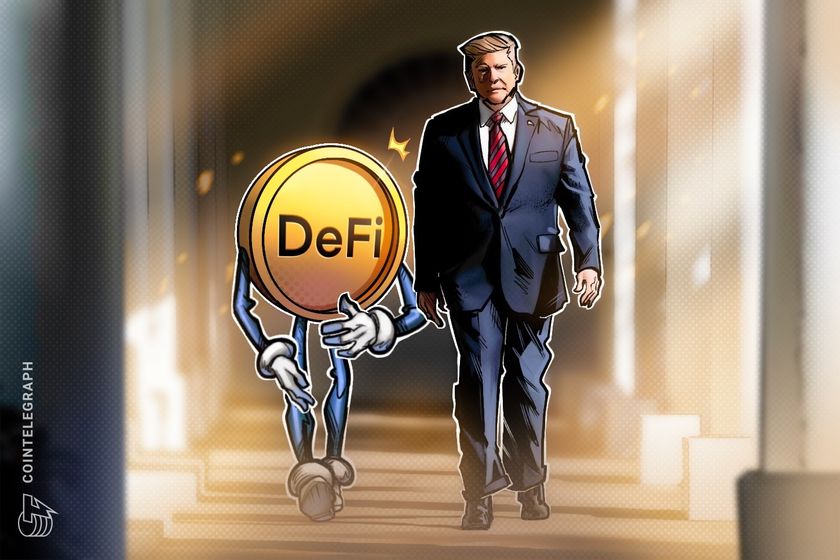
Trump kills DeFi broker rule in major crypto win: Finance Redefined

Trump kills DeFi broker rule in major crypto win: Finance Redefined, April 4–11

In a significant win for decentralized finance (DeFi) protocols, US President Donald Trump overturned the Internal Revenue Service’s DeFi broker rule, which would have expanded existing reporting requirements to include DeFi platforms.

Increasing US crypto regulatory clarity will attract more tech giants to the space, requiring existing crypto projects to focus on more collaborative tokenomics to survive, according to Cardano founder Charles Hoskinson.

Trump signs resolution killing IRS DeFi broker rule

Trump signed a joint congressional resolution overturning a Biden administration-era rule that would have required DeFi protocols to report transactions to the Internal Revenue Service.

Set to take effect in 2027, the IRS DeFi broker rule would have expanded the tax authority’s existing reporting requirements to include DeFi platforms, requiring them to disclose gross proceeds from crypto sales, including information regarding taxpayers involved in the transactions.

Trump formally killed the measure by signing off on the resolution on April 10, marking the first time a crypto bill has been signed into US law, Representative Mike Carey, who backed the bill, said in a statement.

“The DeFi Broker Rule needlessly hindered American innovation, infringed on the privacy of everyday Americans, and was set to overwhelm the IRS with an overflow of new filings that it doesn’t have the infrastructure to handle during tax season,” he said.

Continue reading

Crypto needs collaborative tokenomics against tech giants — Hoskinson

The next generation of cryptocurrency projects must embrace a more collaborative approach to compete with major centralized tech companies entering the Web3 space, according to Cardano founder Charles Hoskinson.

Speaking at Paris Blockchain Week 2025, Hoskinson said one of the main criticisms of the crypto and DeFi space is its “circular economy,” which often means that the rally of a specific cryptocurrency is bolstered by funds exiting another token, limiting the growth of the whole industry.

Hoskinsin said that to have a chance against the centralized technology giants joining the Web3 industry, cryptocurrency projects need more collaborative tokenomics and market structure.

Cryptocurrencies, Facebook, Investments, Bitcoin Regulation, United States, Cryptocurrency Exchange, Developers, Charles Hoskinson, Cardano, Tokenomics

Hoskinson on stage at Paris Blockchain Week. Source: Cointelegraph

“The problem right now, with the way we’ve done things in the cryptocurrency space, is the tokenomics and the market structure are intrinsically adversarial. It’s sum 0,” said Hoskinson. “Instead of picking a fight, what you have to do is you have to find tokenomics and market structure that allows you to be in a cooperative equilibrium.”

He argued that the current environment often sees one crypto project’s growth come at the expense of another rather than contributing to the sector’s overall health. He added that this is not sustainable in the face of trillion-dollar firms like Apple, Google and Microsoft, which may soon join the Web3 race amid clearer US regulations.

Continue reading

Bitcoin’s 24/7 liquidity: Double-edged sword during global market turmoil

Bitcoin and other cryptocurrencies are often praised for offering around-the-clock trading access, but that constant availability may have contributed to a steep sell-off over the weekend following the latest US trade tariff announcement.

Unlike stocks and traditional financial instruments, Bitcoin (BTC) and other cryptocurrencies enable payments and trading opportunities 24/7 thanks to the accessibility of blockchain technology.

After a record-breaking $5 trillion was wiped from the S&P 500 over two days — the worst drop on record — Bitcoin remained above the $82,000 support level. But by Sunday, the asset had plummeted to under $75,000.

Sunday’s correction may have occurred due to Bitcoin being the only large tradable asset over the weekend, according to Lucas Outumuro, head of research at crypto intelligence platform IntoTheBlock. 

“There was a bit of optimism last week that Bitcoin might be uncorrelating and fairing better than traditional stocks, but the [correction] did accelerate over the weekend,” Outumuro said during Cointelegraph’s Chainreaction live show on X, adding:

“There’s very little people can sell on a Sunday because most markets are closed. That also enables the correlation because people are panicking and Bitcoin is the largest asset they can sell over the weekend.”

Outumuro noted that Bitcoin’s weekend trading can also have upside effects, as prices often rally in calmer conditions.

Continue reading

Bybit recovers market share to 7% after $1.4 billion hack

Bybit’s market share rebounded to pre-hack levels following a $1.4 billion exploit in February, as the crypto exchange implemented tighter security and improved liquidity options for retail traders.

The crypto industry was rocked by the largest hack in its history on Feb. 21, when Bybit lost over $1.4 billion in liquid-staked Ether (stETH), Mantle Staked ETH (mETH) and other digital assets.

Despite the scale of the exploit, Bybit has steadily regained market share, according to an April 9 report by crypto analytics firm Block Scholes.

“Since this initial decline, Bybit has steadily regained market share as it works to repair sentiment and as volumes return to the exchange,” the report stated.

Block Scholes said Bybit’s proportional share rose from a post-hack low of 4% to about 7%, reflecting a strong and stable recovery in spot market activity and trading volumes.

Trump kills DeFi broker rule in major crypto win: Finance Redefined

Bybit’s spot volume market share as a proportion of the market share of the top 20 CEXs. Source: Block Scholes

The hack occurred amid a “broader trend of macro de-risking that began prior to the event,” which signaled that Bybit’s initial decline in trading volume was not solely due to the exploit.

Continue reading

Nearly 400,000 FTX users risk losing $2.5 billion in repayments

Almost 400,000 creditors of the bankrupt cryptocurrency exchange FTX risk missing out on $2.5 billion in repayments after failing to begin the mandatory Know Your Customer (KYC) verification process.

About 392,000 FTX creditors have failed to complete or at least take the first steps of the mandatory Know Your Customer verification, according to an April 2 court filing in the US Bankruptcy Court for the District of Delaware.

FTX users originally had until March 3 to begin the verification process to collect their claims.

“If a holder of a claim listed on Schedule 1 attached thereto did not commence the KYC submission process with respect to such claim on or prior to March 3, 2025, at 4:00 pm (ET) (the “KYC Commencing Deadline”), 2 such claim shall be disallowed and expunged in its entirety,” the filing states.

Trump kills DeFi broker rule in major crypto win: Finance Redefined

FTX court filing. Source: Bloomberglaw.com

The KYC deadline has since been extended to June 1, giving users another chance to verify their identity and claim eligibility. Those who fail to meet the new deadline may have their claims permanently disqualified.

According to the court documents, claims under $50,000 may account for about $655 million in disallowed repayments, while claims over $50,000 could amount to $1.9 billion, bringing the total at-risk funds to more than $2.5 billion.

Continue reading

DeFi market overview

According to data from Cointelegraph Markets Pro and TradingView, most of the 100 largest cryptocurrencies by market capitalization ended the week in the red.

The EOS (EOS) token fell over 23%, marking the week’s biggest decline in the top 100, followed by the Near Protocol (NEAR) token, down over 19% on the weekly chart.

Trump kills DeFi broker rule in major crypto win: Finance Redefined

Total value locked in DeFi. Source: DefiLlama

Thanks for reading our summary of this week’s most impactful DeFi developments. Join us next Friday for more stories, insights and education regarding this dynamically advancing space.

Read more at cointelegraph.com

Bitcoin sellers tap out, clearing the path for a fresh run at new all-time highs

Bitcoin (BTC) price has rebounded by over 11% from the April. 7 low of $74,400, and analysts believe that onchain and technical indicators point to a sustained recovery.

According to popular analyst AlphaBTC, Bitcoin will see a sustained recovery if it holds above $81,500.

Bitcoin price reclaimed the $80,000 psychological level after retesting the “weekly open and filling in some of the inefficiency left by the Trump 90-day pause pump,” the analyst said in an April 10 post.

“I really want to see it back above 81.5k soon, and we may see a bit more sustained upside as shorts get squeezed.”Bitcoin sellers tap out, clearing the path for a fresh run at new all-time highs

BTC/USD four-hour chart. Source: AlphaBTC

Similar sentiments were shared by fellow analyst Rekt Capital, who said that Bitcoin needs to produce a weekly close above $80,500 to increase the chances of recovery.

“Bitcoin has recently lost the red Weekly level, just confirming BTC isn’t out of the woods yet,” Rekt Capital said in an April Post on X. 

“$BTC needs to stay above red until the Weekly Close for the price to reclaim this Weekly level as support.”Bitcoin sellers tap out, clearing the path for a fresh run at new all-time highs

BTC/USD weekly chart. Source: Rekt Capital

Bitcoin price recovery could be fueled by “seller exhaustion”

Bitcoin investors are approaching a degree of “near-term seller exhaustion,” as evidenced by the reduced magnitude of realized losses, according to onchain data from Glassnode. 

Looking at the 6-hour rolling window for realized losses, the market intelligence firm found that the magnitude of losses realized during these drawdowns has started to decrease with each successive price leg lower.

“Bear markets are typically initiated by periods of heightened fear and substantial losses,” Glassnode said in its latest Week On-chain report. 

“This suggests a form of near-term seller-exhaustion may be starting to develop within this price range.”Bitcoin sellers tap out, clearing the path for a fresh run at new all-time highs

Bitcoin: 6-hour rolling losses. Source: Glassnode

Related: Is Bitcoin price going to crash again?

Bollinger Bands and W bottom hint at new price highs

After hitting a five-month low of $74,400 on April 9, Bitcoin retested the lower boundary of the Bollinger Bands (BB) indicator, a line that has supported the price over the last five weeks, data from Cointelegraph Markets Pro and TradingView shows.

Bitcoin sellers tap out, clearing the path for a fresh run at new all-time highs

BTC/USD weekly chart with Bollinger Bands. Source: John Bollinger/TradingView

This is an encouraging sign from Bitcoin, according to the creator of the Bollinger Bands volatility indicator, John Bollinger. The Bollinger Bands indicator uses standard deviation around a simple moving average to determine both likely price ranges and volatility.

Bollinger said that Bitcoin price could be forming the second low of a W-shaped pattern formation — a double-pronged bottom followed by an exit to the upside — on the weekly chart.

“Classic Bollinger Band W bottom setting up in $BTCUSD,” Bollinger commented alongside a chart, adding that the pattern “still needs confirmation.”

In this situation, Bitcoin’s drop to $76,600 on March 11 was the first bottom, and the recent drop to $74,400 was the second.

If confirmed, BTC price could recover from the current levels first toward the neckline of the W-shaped pattern at $88,800 before rising toward the target of the prevailing chart pattern at $106,000.

This article does not contain investment advice or recommendations. Every investment and trading move involves risk, and readers should conduct their own research when making a decision.

Read more at cointelegraph.com

Pakistan proposes compliance-based crypto regulatory framework — Report

Regulators in Pakistan have proposed a regulatory framework for digital assets that is compliance-focused, in accordance with rules laid out by the Financial Action Task Force (FATF), the supranational organization that polices finance for money laundering, The Express Tribune reported.

According to the report, Pakistan’s Federal Investigation Agency (FIA) introduced the regulatory framework to address terrorism financing, money laundering provisions, and Know Your Customer (KYC) controls enforced by the supranational organization. The report cited FIA Director Sumera Azam as saying:

“This is a paradigm shift in how Pakistan views digital finance. The policy proposal seeks to strike a historic balance between technological advancement and national security imperatives.”

The proposed framework is subject to legislative approval and input from digital asset firms operating in the country, with an expected multi-phased rollout beginning in 2026.

Regulators in Pakistan recently spearheaded a regulatory pivot embracing cryptocurrencies after being explicitly anti-crypto for years. The government’s anti-crypto stance hit a crescendo in 2023 when Pakistani officials called for a country-wide ban on digital assets.

Pakistan, Bitcoin Regulation, FATF

Appointments to the Pakistan Crypto Council. Source: Bilal Bin-Saqib. Source: Bilal Bin-Saqib

Related: Pakistan eyes crypto legal framework to boost foreign investment

Pakistan embraces the future of money in regulatory shift

In May 2023, former minister of state for finance and revenue, Aisha Ghaus Pasha said that Pakistan would never legalize cryptocurrencies due to the potential for digital assets to circumvent FATF regulations.

Less than two years later in February 2025 the Finance Ministry of Pakistan signaled a seismic regulatory shift by forming the Pakistan Crypto Council to establish clear crypto regulations in the country and attract foreign investment.

“Pakistan is a low-cost, high-growth market, with 60% of the population under 30. We have a web3 native workforce ready to build,” CEO of the Pakistan Crypto Council Bilal bin Saqib said in a March 20 X post.

Pakistan, Bitcoin Regulation, FATF

Binance co-founder Changpeng Zhao meets with Pakistan foreign minister Ishaq Dar. Source: Pakistan’s Ministry of Foreign Affairs

The Council is exploring using excess energy to mine Bitcoin (BTC) as part of a broader effort to turn Pakistan into an international hub for crypto mining.

On April 7, the Council appointed Binance co-founder Changpeng Zhao as a crypto adviser to guide the organization’s policy efforts.

Magazine: How crypto laws are changing across the world in 2025

Read more at cointelegraph.com

S&P 500 briefly sees ‘Bitcoin-level’ volatility amid Trump tariff war

The S&P 500 Index briefly experienced Bitcoin-level volatility in the wake of US President Donald Trump’s April 2 “Liberation Day” tariff announcement, underscoring the panic and fear gripping traditional markets amid the ongoing trade war. 

Bloomberg analyst Eric Balchunas alerted his followers on X that the S&P 500’s volatility, as measured by the “SPY US Equity Hist Vol” chart, reached 74 in early April, exceeding Bitcoin’s (BTC) 71 level. 

S&P 500 briefly sees ‘Bitcoin-level’ volatility amid Trump tariff war

Source: Eric Balchunas

The increase marks a significant deviation from the S&P 500’s long-term volatility average, which is below 20. 

For Bitcoin though, extreme volatility has been a feature since the asset’s inception. 

“Bitcoin’s volatility remains elevated at 3.9 and 4.6 times that of gold and global equities, respectively,” according to BlackRock. 

S&P 500 briefly sees ‘Bitcoin-level’ volatility amid Trump tariff war

While Bitcoin’s average volatility has declined over time, it tends to experience much higher price swings than more established assets. Source: BlackRock

Stocks are experiencing crisis-level volatility due to Trump’s trade war, which threatened duties of anywhere from 10% to 50% on imports from America’s largest trading partners. While Trump has since paused some of his tariffs for 90 days, the administration has ratcheted up duties on Chinese imports to at least 145%. 

The volatility has also extended into other assets, most notably US Treasurys, which experienced a large sell-off this week. The yield on the 10-year Treasury bond is on track for its steepest rise since 2001.

Related: As Trump tanks Bitcoin, PMI offers a roadmap of what comes next

Despite “macro relief,” Bitcoin remains under pressure

US equity markets experienced a historic relief rally on April 9 after Trump’s tariff pause. However, the “macro relief” didn’t extend to Bitcoin or its spot exchange traded funds (ETFs) in any meaningful way, which is a sign that “institutional confidence remains cautious in the near term,” Bitfinex analysts told Cointelegraph in a note. 

“After January’s record inflows, ETF demand has cooled, with several products seeing net outflows in recent weeks,” the analysts said. “This reflects hesitation among large allocators who may be waiting for more favorable entry points or clearer regulatory guidance.” 

S&P 500 briefly sees ‘Bitcoin-level’ volatility amid Trump tariff war

The US spot Bitcoin ETFs have experienced six consecutive days of outflows. Source: Farside

Despite Bitcoin’s disappointing performance, Bitfinex said the second quarter through the end of 2025 is potentially bullish for the asset class as a whole as “new narratives take hold,” such as sovereign accumulation and growth in real-world asset tokenization.

Unchained’s director of market research, Joe Burnett, shared a similar view, arguing that Bitcoin has more attractive characteristics for long-term investors who are worried about government policy and fiat risk impacting their portfolios. 

While the S&P 500’s volatility spike is likely to be short-lived, Burnett said its recent performance “challenges the long-held belief that traditional markets are safer, less risky, or more stable.” 

Related: Weaker yuan is ‘bullish for BTC’ as Chinese capital flocks to crypto — Bybit CEO

Read more at cointelegraph.com

S&P 500 briefly sees ‘Bitcoin-level’ volatility amid Trump tariff war

The S&P 500 Index briefly experienced Bitcoin-level volatility in the wake of US President Donald Trump’s April 2 “Liberation Day” tariff announcement, underscoring the panic and fear gripping traditional markets amid the ongoing trade war. 

Bloomberg analyst Eric Balchunas alerted his followers on X that the S&P 500’s volatility, as measured by the “SPY US Equity Hist Vol” chart, reached 74 in early April, exceeding Bitcoin’s (BTC) 71 level. 

S&P 500 briefly sees ‘Bitcoin-level’ volatility amid Trump tariff war

Source: Eric Balchunas

The increase marks a significant deviation from the S&P 500’s long-term volatility average, which is below 20. 

For Bitcoin though, extreme volatility has been a feature since the asset’s inception. 

“Bitcoin’s volatility remains elevated at 3.9 and 4.6 times that of gold and global equities, respectively,” according to BlackRock. 

S&P 500 briefly sees ‘Bitcoin-level’ volatility amid Trump tariff war

While Bitcoin’s average volatility has declined over time, it tends to experience much higher price swings than more established assets. Source: BlackRock

Stocks are experiencing crisis-level volatility due to Trump’s trade war, which threatened duties of anywhere from 10% to 50% on imports from America’s largest trading partners. While Trump has since paused some of his tariffs for 90 days, the administration has ratcheted up duties on Chinese imports to at least 145%. 

The volatility has also extended into other assets, most notably US Treasurys, which experienced a large sell-off this week. The yield on the 10-year Treasury bond is on track for its steepest rise since 2001.

Related: As Trump tanks Bitcoin, PMI offers a roadmap of what comes next

Despite “macro relief,” Bitcoin remains under pressure

US equity markets experienced a historic relief rally on April 9 after Trump’s tariff pause. However, the “macro relief” didn’t extend to Bitcoin or its spot exchange traded funds (ETFs) in any meaningful way, which is a sign that “institutional confidence remains cautious in the near term,” Bitfinex analysts told Cointelegraph in a note. 

“After January’s record inflows, ETF demand has cooled, with several products seeing net outflows in recent weeks,” the analysts said. “This reflects hesitation among large allocators who may be waiting for more favorable entry points or clearer regulatory guidance.” 

S&P 500 briefly sees ‘Bitcoin-level’ volatility amid Trump tariff war

The US spot Bitcoin ETFs have experienced six consecutive days of outflows. Source: Farside

Despite Bitcoin’s disappointing performance, Bitfinex said the second quarter through the end of 2025 is potentially bullish for the asset class as a whole as “new narratives take hold,” such as sovereign accumulation and growth in real-world asset tokenization.

Unchained’s director of market research, Joe Burnett, shared a similar view, arguing that Bitcoin has more attractive characteristics for long-term investors who are worried about government policy and fiat risk impacting their portfolios. 

While the S&P 500’s volatility spike is likely to be short-lived, Burnett said its recent performance “challenges the long-held belief that traditional markets are safer, less risky, or more stable.” 

Related: Weaker yuan is ‘bullish for BTC’ as Chinese capital flocks to crypto — Bybit CEO

Read more at cointelegraph.com

Speculation is DeFi’s double-edged sword

Opinion by: Billy Campana, contract developer, Api3 

Speculation is a cornerstone of price discovery for traditional finance institutions like hedge funds and major banks and plays an essential role in their day-to-day operations. It is the mechanism by which they can establish reliable valuations for everything, ranging from simple stocks and bonds to complex derivatives and structured products. 

While decentralized finance (DeFi) is often criticized for its speculative “casino” nature, this is, in reality, one of its strengths: making practices like arbitrage more accessible to everyone and empowering individuals to participate in opportunities once out of reach

DeFi’s volatility

Critics have highlighted DeFi’s extreme volatility, a concern exemplified by Ether’s (ETH) recent 15% price drop that triggered over $100 million in long position liquidations. These dramatic market movements continually test market resilience and investor confidence in the ecosystem. 

The accusations that DeFi platforms function essentially as gambling venues persist throughout the industry. Such criticisms have gained further traction following several high-profile memecoin crashes that collectively erased over $46 billion in market value, revealing the systemic vulnerabilities that speculative activities can introduce to the broader ecosystem.

Additionally, the recent Bybit hack spotlighted the major security concerns, exposing critical vulnerabilities within DeFi infrastructure and triggering intense scrutiny of the sector’s security protocols. These systemic risks have only escalated institutional skepticism, resulting in increasingly vocal calls for greater transparency and comprehensive regulatory oversight. 

Simultaneously, the media narrative surrounding DeFi remains overwhelmingly focused on its spectacular failures, growing institutional skepticism and persistent market instability. This one-sided portrayal continues challenging DeFi’s credibility as a serious financial ecosystem capable of responsible innovation.

Evening the playing field

Critics consistently miss that DeFi democratizes the same speculative mechanisms that traditional finance has always employed for price discovery. The fundamental difference is that Wall Street gatekeepers no longer control who benefits from these opportunities. 

While traditional finance has historically restricted arbitrage opportunities to institutional players with privileged access, DeFi effectively removes these gatekeepers, allowing anyone with an internet connection to participate in the price discovery process that hedge funds and banks have monopolized for decades.

Smart contracts have revolutionized financial operations that once required privileged access and teams of highly paid professionals. Smart contracts effectively break down the artificial barriers that have systematically kept ordinary people out of sophisticated markets. 

Recent: Bitwise makes first institutional DeFi allocation

Leading financial institutions increasingly recognize this paradigm shift, with established businesses progressively adopting DeFi mechanisms to automate transactions and enhance operational efficiency. Institutional adoption validates speculation as a legitimate financial practice rather than dismissing it as mere gambling.

An arbitrage utopia

This unprecedented democratization manifests concretely in decentralized lending platforms that enable automated market makers (AMMs), enabling anyone to provide liquidity and earn fees previously reserved exclusively for institutional market makers with significant capital reserves. 

With unprecedented data transparency across blockchain networks, even uncollateralized crypto loans can enable capital-efficient arbitrage opportunities spanning multiple blockchain ecosystems without requiring the millions in upfront collateral that traditional finance demands from participants. 

As institutional involvement continues to grow and regulatory frameworks gradually mature, these speculative mechanisms steadily evolve toward the same legitimacy traditional finance instruments enjoy. This evolution reveals that speculation itself was never the problem — the exclusionary access to its benefits was. 

The practical execution of this democratized speculation includes cross-exchange arbitrage through DeFi aggregators, crosschain bridges that naturally equalize asset prices across different blockchains and automated liquidation mechanisms that maintain system solvency. 

All these components serve the same fundamental purpose as traditional financial instruments but with radically expanded access for participants worldwide.

As institutional investors and traditional financial markets return their gaze to the industry, with increased involvement from regulatory bodies and political figures in the US, DeFi must remember its core value proposition. 

The actual value of DeFi is not in recreating the current structures that allow the powerful to benefit from methods that regular people don’t have access to but in making these opaque systems transparent and open to everyone.

Rather than apologizing for speculation, the industry should embrace and refine it as its revolutionary tool — one that brings financial opportunities to billions systematically excluded from traditional markets. 

Innovation in DeFi isn’t just technological; it is also social, creating a financial system where opportunity isn’t determined by privilege but by insight, creativity and willingness to participate. The future belongs not to those who can eliminate speculation but to those who can make it fair, transparent and accessible to all.

Opinion by: Billy Campana, contract developer, Api3

This article is for general information purposes and is not intended to be and should not be taken as legal or investment advice. The views, thoughts, and opinions expressed here are the author’s alone and do not necessarily reflect or represent the views and opinions of Cointelegraph.

Read more at cointelegraph.com