cointelegraph.com

Crypto markets ‘relatively orderly’ despite Trump tariff chaos: NYDIG

Crypto markets have been fairly stable amid wider market panic caused by US President Donald Trump’s “on-again, off-again” sweeping global tariffs, according to a New York Digital Investment Group (NYDIG) analyst.

“Despite the carnage in traditional financial markets, the crypto markets have been relatively orderly,” NYDIG global head of research Greg Cipolaro said in an April 11 note. “Historically, in broad risk-off moves, we tend to see stresses show up in crypto markets. We have yet to see that.”

Cipolaro said crypto perpetual futures rates have “been persistently positive,” with liquidations spiking on April 6 and 7 in the days after Trump first announced the tariffs on April 2 but only to a total of $480 million, which he added “was well below other notable liquidation events.”

He noted that the price of Tether (USDT), a US dollar-tracking stablecoin widely used token in crypto trading, was below $1 but had “not experienced a sharp decline.” 

Trump unveiled a sweeping tariff regime on April 2 that lumped various levies on every country before pausing them for 90 days just hours after they came into effect on April 9 and instead charging a base tariff of 10%, besides China, which currently has tariffs of up to 145%.

Traditional and crypto markets tanked after Trump’s April 2 tariff announcement, and many assets haven’t recovered to the same level as before their unveiling.

Crypto markets ‘relatively orderly’ despite Trump tariff chaos: NYDIG

Stocks, bonds and foreign exchange volatility rates all rose after Trump’s tariffs announcement. Source: NYDIG

Over the weekend, the Trump administration caused more confusion with its tariffs, saying on April 13 that an April 11 decision to exempt many electronics from tariffs was temporary and they would still be hit with levies.

Bitcoin fares well, declining volatility to make it widely attractive

Cipolaro said that Bitcoin (BTC) didn’t escape the market volatility, “but at current prices has fared far better than many other asset classes.”

He added that Bitcoin’s volatility hasn’t risen to historic levels, unlike the traditional markets, and “has been relatively stable” despite instability instigated by the Trump administration.

“Perhaps investors are increasingly searching for stores of value not tied to sovereign countries and thus not affected by the trade turmoil.”

Bitcoin is down 22.5% from its mid-January peak of over $108,000 and has traded flat over the past 24 hours at $84,730, according to CoinGecko.

Cipolaro said the narrowing gap between Bitcoin’s volatility and other assets makes it “increasingly more appealing” to funds with risk parity portfolios — those that use risk to choose asset allocations.

He added that investors are likely reducing their risk exposure but “perhaps some reallocation of asset mix to Bitcoin is one of the reasons it has been more buoyant.”

Related: S&P 500 briefly sees ‘Bitcoin-level’ volatility amid Trump tariff war

“Risk parity funds allocating to Bitcoin can help dampen its volatility — making the asset more attractive and potentially reinforcing a virtuous cycle of increased adoption and stability,” Cipolaro said.

However, YouHodler chief of markets Ruslan Lienkha told Cointelegraph in an April 12 note that despite a wider market rebound, “technical indicators are painting a concerning picture.”

He said a “death cross,” when the 50-day moving average crosses below the 200-day moving average, is potentially forming on Bitcoin and the S&P 500.

Lienkha said the pattern is “generally considered a bearish signal for the medium term, suggesting that markets may struggle to sustain upward momentum without a clear catalyst or a stream of positive macroeconomic developments.” 

Magazine: Financial nihilism in crypto is over — It’s time to dream big again

Read more at cointelegraph.com

Vitalik Buterin says the app layer needs ‘good social philosophy’ most

Ethereum co-founder Vitalik Buterin argues it’s Ethereum’s application layer, not its infrastructure layer, where Ethereum needs “good social philosophy” the most.

The app layer is where developers build decentralized applications on top of Ethereum’s base infrastructure and where they make decisions about how these programs operate. 

In an April 12 post on the social media platform Warpcast, Buterin responded to a user’s argument that Ethereum needs a new generation of developers rooted in Ethereum’s core values to renew itself. He argued that it’s the app layer that needs this more.

“Apps are 80% special purpose. What apps you build depends heavily on what ideas you have of what Ethereum apps, and Ethereum as a whole, are there to do for the world. And so having good ideas on this topic out there becomes crucially important,” Buterin said. 

Vitalik Buterin says the app layer needs ‘good social philosophy’ most

Source: Vitalik Buterin

In comparison, Buterin says a programming language like C++ may not be as influenced by the creator’s ideology, as it is a general-purpose tool that doesn’t have much surface to be made worse or improved by social philosophy. 

“Imagine that C++ had been made by a totalitarian racist fascist. Would it be a worse language? Probably not,” he said.

Ethereum’s layer 1 is similar to an extent, argued Buterin, though it is more exposed to philosophical influence, citing its move to proof-of-stake (PoS) and supporting light clients as examples.  

“Someone who doesn’t believe in decentralization would not add light clients, or good forms of account abstraction,” he said. 

“Someone who doesn’t mind energy waste would not spend half a decade moving to PoS, but the Ethereum Virtual Machine opcodes might have been roughly the same either way. So Ethereum is perhaps 50% general-purpose,” Buterin added. 

Apps with good social philosophy vs bad  

In a follow-up post, Buterin told a user that, in his opinion, crypto privacy protocol Railgun, Web3 social protocol Farcaster, decentralized prediction market Polymarket and messenger app Signal are examples of apps with a good social philosophy. 

Vitalik Buterin says the app layer needs ‘good social philosophy’ most

Source: Vitalik Buterin

“You build apps that do the right thing behind the scenes by default. Signal is a reasonably good example of this, though it has significant flaws of its own. Farcaster is also a good example of this,” Buterin said.

Related: Vitalik Buterin criticizes crypto’s moral shift toward gambling

On the other hand, Buterin said the memecoin platform Pump.fun, the collapsed crypto ecosystem Terra, its native token Terra (LUNA), and the collapsed crypto exchange FTX are examples of bad social philosophy.

“The differences in what the app does stem from differences in beliefs in developers’ heads about what they are here to accomplish,” he said. 

Magazine: Bitcoin eyes $100K by June, Shaq to settle NFT lawsuit, and more: Hodler’s Digest, April 6 – 12

Read more at cointelegraph.com

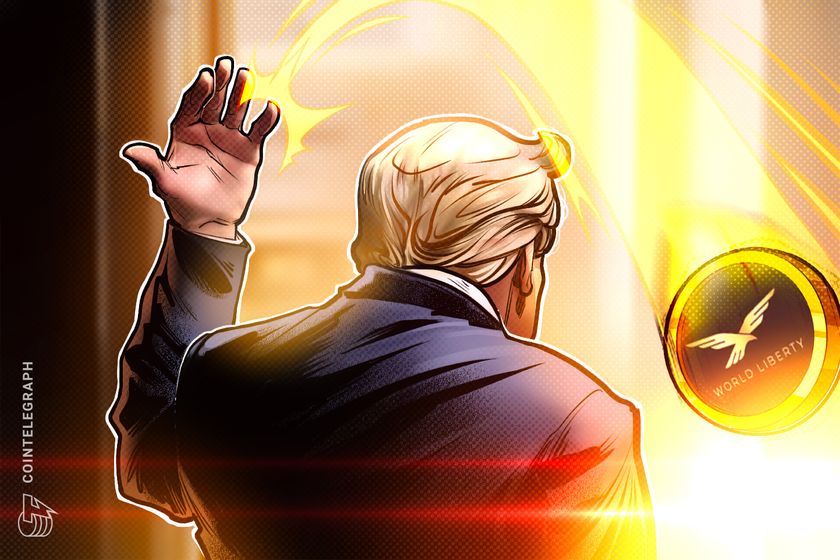
Trump’s World Liberty Financial buys $775K in SEI in altcoin buying spree

The Trump family-backed crypto project World Liberty Financial (WLFI) has added 4.89 million SEI tokens valued at $775,000 to its portfolio, according to onchain data.

Data from blockchain analytics firm Arkham Intelligence shows the purchase was made on April 12 by one of WLFI’s trading wallets using USDC transferred from the project’s main wallet. It’s the same trading wallet previously used by WLFI to accumulate other altcoins.

WLFI holds a diversified portfolio, including Bitcoin (BTC), Ether (ETH), and a larger number of altcoins, such as Tron (TRX), Ondo Finance (ONDO), Avalanche (AVAX) and now Sei (SEI).

According to blockchain researcher Lookonchain, WLFI has spent a total of $346.8 million accumulating 11 different tokens, but as of April 12, it has yet to see a profit on any of them. The project’s Ethereum investments alone are currently down over $114 million. 

Overall, Lookonchain says WLFI’s portfolio is down $145.8 million.

Trump’s World Liberty Financial buys $775K in SEI in altcoin buying spree

World Liberty Financial’s current on-paper profit/loss on its altcoins. Source: Lookonchain 

Only two months ago, in a Feb. 3 X post, Donald Trump’s son, Eric Trump, urged his followers to buy Ether, writing: “In my opinion, it’s a great time to add $ETH.” Originally, the tweet also included “you can thank me later,” but it was edited to remove those five words.

At the time of writing, data from CoinGecko showed ETH’s price had fallen 55% since Eric Trump’s tweet, currently trading at $1,611, down from the Feb. 3 close of $2,879.

Related: Democrats slam DOJ’s ‘grave mistake’ in disbanding crypto crime unit

WLFI’s USD1 logo appears on major exchanges

Meanwhile, an icon for WLFI’s stablecoin, USD1, has appeared on Coinbase, Binance and the crypto aggregator website CoinMarketCap in what appears to be the coin’s unofficial logo unveiling. 

WLFI has made no official announcement about USD1’s logo.

Trump’s World Liberty Financial buys $775K in SEI in altcoin buying spree

Observers speculate this is USD1’s new logo. Source: Binance 

Trump’s involvement with USD1 has attracted criticism from lawmakers on both sides of US politics. At an April 2 US House Financial Services Committee hearing on stablecoin legislation, Democratic Representative Maxine Waters suggested President Trump may be ultimately planning to use USD1 to replace the US dollar.

“Trump likely wants the entire government to use stablecoins, from payments made by the Department of Housing and Urban Development to Social Security payments to paying taxes. And which coin do you think Trump would replace the dollar with? His own, of course.”

The committee’s Republican chair, French Hill, aired similar concerns.

“If there is no effort to block the president of the United States of America from owning his stablecoin business […] I will never be able to agree on supporting this bill, and I would ask other members not to be enablers.”

Magazines: 3 reasons Ethereum could turn a corner: Kain Warwick, X Hall of Flame

Read more at cointelegraph.com

Commerce Secretary Lutnick walks back tariff relief on electronics

Commerce Secretary Howard Lutnick walked back the recent reciprocal tariff exemption on select electronics announced in an April 12 bulletin from the United States Customs and Border Protection.

On April 13, Lutnick told ABC News that the reciprocal tariff exemption was temporary until the administration established a sector tariff regime for semiconductor products, which includes phones, graphics processors, and computing chips in a “month or two.” Lutnick added:

“President Trump has called out pharmaceuticals, semiconductors, and autos. He called them sector tariffs, and those are not available for negotiation. They are just going to be part of making sure we ensure core national security items are made in this country.”

“We can’t be relying on China for fundamental things we need. Our medicines and our semiconductors need to be built in America,” Lutnick continued. The official also said he was confident that the US and China would arrive at a trade deal through negotiations.

The emphasis on national security and onshoring critical industries could signal that the trade tariffs will be a long-term geostrategic policy and not simply a short-term negotiation tactic to make US exports more attractive, as some analysts have suggested.

Economics, Economy, US Government, United States

The Volatility S&P Index (VIX), a measure of the S&P stock index’s volatility, remains elevated amid macroeconomic uncertainty. Source: TradingView

Related: Bitcoin ‘decouples,’ stocks lose $3.5T amid Trump tariff war and Fed warning of ‘higher inflation’

Trade war heightens volatility and sends markets tumbling

Trump’s trade tariffs crashed the stock and crypto markets, wiping away trillions in shareholder value as investors dumped riskier assets on fears of a lengthy trade war between the United States and its trading partners.

In an April 10 X Post, Bloomberg analyst Eric Balchunas cited the SPY US Equity History Volume chart as evidence that the S&P 500 stock market index is now more volatile than Bitcoin (BTC).

According to the analyst, the S&P 500 Index hit a volatility level of 74 in April, compared to Bitcoin’s 71.

Stocks and crypto pumped following rumors of the Trump administration initiating a 90-day reciprocal tariff pause. Approximately $2 trillion was pumped into stocks on rumors of softer trade policies.

Much of this value was then wiped away when Trump claimed that rumors of a 90-day pause were false and returned once the Trump administration did, in fact, issue a reciprocal tariff pause in the following days.

Magazine: Financial nihilism in crypto is over — It’s time to dream big again

Read more at cointelegraph.com

Mantra token price collapses by over 90% in 24 hours

Update (April 13, 10:02pm UTC): This article has been updated to provide updates from the Mantra team

The price of the Mantra (OM) token, the native cryptocurrency of the Mantra real-world tokenized asset blockchain, has collapsed by over 90% in the last 24 hours.

On April 13, Mantra fell from a price of approximately $6.3 to below $0.50 and shed over 90% of its $6 billion market cap.

Some traders characterized the token collapse as an apparent rug pull. Market investor Gordon wrote: “[The] team needs to address this or OM looks like it could head to zero, biggest rug pull since LUNA/FTX?”

However, the exact reason for the collapse of the OM token’s price is not clear at the time of this writing. Cointelegraph reached out to the Mantra team for comment on the OM token collapse but did not receive an answer by the time of publication.

The incident follows several high-profile token collapses and cybersecurity incidents, including the Libra memecoin implosion and the $1.4 billion Bybit hack, responsible for billions of dollars in investor losses during the first few months of 2025.

Mantra

Mantra token market cap and metrics. Source: CoinGecko

Related: Mantra unveils $108M fund to back real-world asset tokenization, DeFi

Mantra team and co-founder respond

Mantra co-founder JP Mullin responded to the OM token collapse and said that the project’s Telegram group is still online. Mullin added that the Mantra team’s tokens are still in the team’s custody.

“We are here and not going anywhere,” Mullin wrote in an X post, while providing a verification address for the Mantra team’s OM tokens.

Mantra

Source: Mantra

The Mantra Team also claimed that the OM price implosion was “triggered by reckless liquidations” and not related to actions undertaken by the team.

Mantra’s recent tokenization initiatives in the Middle East

In January 2025, Mantra and investment conglomerate DAMAC signed a $1 billion deal to tokenize the investment conglomerate’s various assets, which include real estate, data centers, and other physical properties on the Mantra blockchain.

Mantra obtained a virtual asset service provider license from Dubai’s Virtual Assets Regulatory Authority (VARA), in February 2025.

The license allows Mantra to operate as a digital asset service provider in the United Arab Emirates (UAE), running crypto exchanges, broker-dealer services, management, and investment consulting inside the Middle Eastern country.

The expansion of Mantra’s footprint in the United Arab Emirates was fueled by high demand for tokenized products from real estate investors and developers looking for new ways of funding projects and securing capital.

Near-instant finality times for tokenized real-world assets, reduced costs, and cross-border functionality are just some of the reasons investors cite for using blockchain to secure investments and aid in capital formation.

Magazine: DeFi’s billion-dollar secret: The insiders responsible for hacks

Read more at cointelegraph.com

Saylor signals Strategy is buying the dip amid macroeconomic turmoil

Strategy co-founder Michael Saylor has signaled that the company plans to acquire more Bitcoin (BTC) following a nearly two-week pause in purchases.

The company’s most recent acquisition of 22,048 Bitcoin on March 31 brought its total holdings to 528,185 BTC.

According to SaylorTracker, Strategy’s BTC investment is up by approximately 24%, representing over $8.6 billion in unrealized gains.

Strategy continues to accumulate BTC amid the recent market downturn that took Bitcoin’s price below the $80,000 level, and the company continues to be closely monitored by BTC investors as a barometer for institutional interest in BTC.

Bitcoin Price, MicroStrategy, Bitcoin Adoption, Michael Saylor

Strategy’s Bitcoin purchase history. Source: SaylorTracker

Related: Has Michael Saylor’s Strategy built a house of cards?

Bitcoin’s store-of-value narrative grows despite the recent price decline

The current macroeconomic uncertainty from the ongoing trade tensions between the United States and China has negatively impacted risk-on assets across the board.

Stock markets wiped away trillions in shareholder value in response to Trump’s sweeping tariff order, and crypto markets also experienced a deep sell-off.

Data from the Total3, an indicator that tracks the market capitalization of the entire crypto sector excluding BTC and Ether (ETH), shows that altcoins have collectively shed over 33% of their value since the market peak in December 2024.

By comparison, BTC is only down roughly 22% from its peak of over $109,000 in January 2025 and is currently rangebound, trading around the $84,000 level.

Bitcoin Price, MicroStrategy, Bitcoin Adoption, Michael Saylor

The Total3 crypto market cap, pictured in blue, compared to the price of Bitcoin. Source: TradingView

The price of Bitcoin remained relatively stable amid a $5 trillion sell-off in the stock market, lending credence to Bitcoin’s use case as a store-of-value asset as opposed to a risk-on investment.

Speaking with Cointelegraph at Paris Blockchain Week 2025, cypherpunk and CEO of digital asset infrastructure company Blockstream, Adam Back said the macroeconomic pressures from a prolonged trade war would make Bitcoin an increasingly attractive store of value.

Back forecasted inflation to surge to 10-15% in the next decade, making real investment returns on traditional asset classes such as stocks and real estate incredibly difficult for market participants.

“There is a real prospect of Bitcoin competing with gold and then starting to take some of the gold use cases,” Back told Cointelegraph managing editor Gareth Jenkinson.

Magazine: Bitcoiner sex trap extortion? BTS firm’s blockchain disaster: Asia Express

Read more at cointelegraph.com

Web3 needs to be more human, and emotional AI is the answer

Opinion by: Max Giammario, founder and CEO of Kindred

The interfaces and user experience in Web3 tools are terrible, even more so when compared to their Web2 counterparts. This lackluster experience for Web3 is losing the attention of as many users as desired, and with how fast the ecosystem moves, these shortcomings are rarely paid attention to.

AI agents can be an excellent tool to overcome these weaknesses. Their potential to improve development and user experience is remarkable, although it has yet to reach its real potential. Once combined with emotional AI, which will enable us to understand contexts beyond their programming, we will see a quantum leap from Web3 tools to ordinary users.

Web3’s learning curve is very steep

Consider your first interactions with a Web3 wallet — a scary, difficult experience. Many people fear that, at any moment, they could make a mistake, which could mean losing money. This situation can be less uncomfortable if we add agents with emotional AI that can guide new users and provide personalized support, keeping people at ease during their learning process.

If the first interaction with Web3 is seamless in this way, adoption could grow. A better user experience would be a win-win for the entire industry, which suffers from having few users. Reaching a level of adoption of a Web2 tool would be a win for the ecosystem.

Emotional AI companions would make everything easier

With the potential that emotional AI agents have, they would facilitate the experience of new users, and they could serve as personal assistants to interact with the rest of the Web3 tools in a more autonomous, personalized way.

Emotional AI agents could act as motivational coaches, providing continuous, personalized and empathetic accompaniment that enables them to connect deeply with their users and guide them in the best practices to avoid significant losses in Web3.

Recent: Inside an AI-powered Web3 game’s race to 100 million users

These are just some of the most evaluated uses of Web3 today. The more applications it has in the future, the more potential is unlocked. Combining so much state-of-the-art technology, however, entails significant risks that must be considered in its development.

Implementing emotional AI in Web3 carries risks

Integrating emotional AI within the Web3 ecosystem could be very beneficial. Still, it must be considered that it entails risks that any AI has, plus what the use of Web3 implies. One of the most significant risks would be using personal information because, as an emotional AI, it will require more information from its users, which increases the danger of data leakage.

This same personalization could generate an unhealthy dependence on its emotional AI partner, so safeguards against this would have to be implemented. Even being so personalized, it will generate biased information, which will close the scope of the AI agent.

Considering the risks mentioned above, while the technology is under development, by the time emotional AI agents launch, developers can forge the path to reduce these risks and implement all the benefits of this technology.

Emotional AI is the key to greater adoption of Web3

AI tools have become more widespread at a rate we have not seen since the launch of the internet. The speed of adoption is because AI tools have become straightforward tools to facilitate any task. The next step is emotional AI agents, which allow for closer AI companions who can provide better support.

As complicated as the Web3 industry is, if these emotional AI companions became the standard in the ecosystem, all these tools would be available to any user. The Web3 adoption it would facilitate would be enormous, and all this value would be worth the risks.

Opinion by: Max Giammario, founder and CEO of Kindred.

This article is for general information purposes and is not intended to be and should not be taken as legal or investment advice. The views, thoughts, and opinions expressed here are the author’s alone and do not necessarily reflect or represent the views and opinions of Cointelegraph.

Read more at cointelegraph.com

‘Bitcoin Standard’ author to develop Austrian economics curriculum for UK school

Lomond School, a private institution in Scotland, will begin accepting Bitcoin for tuition payments and is collaborating with Bitcoin author Saifedean Ammous to introduce a new curriculum focused on Bitcoin and Austrian economics.

Ammous, author of The Bitcoin Standard, is developing an educational curriculum combining the principles of Bitcoin (BTC) and Austrian economics.

“I’m going to be working with Lomond School to develop a curriculum for bitcoin and Austrian economics,” Ammous wrote in an April 12 X post, sharing his excitement for “making the material widely available worldwide.”

‘Bitcoin Standard’ author to develop Austrian economics curriculum for UK school

Source: Saifedean Ammous

Lomond School Principal Claire Chisholm confirmed the collaboration on April 12, writing that she was “thrilled to be working with Dr. Ammous” and appreciative of the “positivity of the Bitcoin community.”

The news comes a day after Lomond School announced it would accept BTC for tuition payments starting from the autumn semester of 2025, becoming the first school in the United Kingdom to adopt BTC payments.

‘Bitcoin Standard’ author to develop Austrian economics curriculum for UK school

Source: Saifedean Ammous

Ammous is best known for The Bitcoin Standard, which was first published in 2018. The book outlines the economic philosophy behind Bitcoin and contrasts it with fiat currency systems. It has sold more than one million copies and has been translated into 38 languages, according to Ammous.

Cointelegraph has contacted both Ammous and Lomond School for additional details regarding the upcoming curriculum.

Related: New York bill proposes legalizing Bitcoin, crypto for state payments

Bitcoin education is gaining momentum worldwide

Educational institutions around the world have increasingly embraced Bitcoin as both a subject of academic study and a financial tool.

Schools and universities have been launching Bitcoin-based courses since as early as 2013 when the University of Nicosia in Cyprus launched its Master’s in Digital Currency program, which is accessible both in-person and online.

New York University’s Stern School of Business launched “The Law and Business of Bitcoin and Other Cryptocurrencies” course in 2014 — one of the first Bitcoin-specific courses in the US.

Stanford University also launched its “Bitcoin and Cryptocurrencies” course in 2015, focused on the technological and economic aspects of the world’s first cryptocurrency.

Related: Swedish MP proposes Bitcoin reserve to finance minister

In February 2025, the University of Austin announced launching the first first-of-its-kind Bitcoin investment fund of over $5 million as part of the institution’s larger $200 million endowment fund.

Cryptocurrencies, Education, Funding, Bitcoin Price, Investments, Bitcoin Regulation, United States, Universities, Cryptocurrency Investment, Bitcoin Adoption, Bitcoin ETF

Source: Eric Balchunas

Three months before the University of Austin’s announcement, a regulatory filing revealed that Emory University accumulated over $15 million worth of Bitcoin via Grayscale’s spot Bitcoin exchange-traded fund, Cointelegraph reported on Oct. 28.

Magazine: SCB tips $500K BTC, SEC delays Ether ETF options, and more: Hodler’s Digest, Feb. 23 –March. 1

Read more at cointelegraph.com

NFT trader faces prison for $13M tax fraud on CryptoPunk profits

A non-fungible token (NFT) trader could face up to six years in prison after pleading guilty to underreporting nearly $13 million in profits from trading CryptoPunks, according to the US Attorney’s Office for the Middle District of Pennsylvania.

Waylon Wilcox, 45, admitted to filing false income tax returns for the 2021 and 2022 tax years. The former CryptoPunk investor pleaded guilty on April 9 to two counts of filing false individual income tax returns, federal prosecutors said in an April 11 press release.

Back in April 2022, Wilcox filed a false individual income tax return for the tax year 2021, which underreported his income tax by roughly $8.5 million and reduced his tax due by approximately $2.1 million.

In October 2023, Wilcox filed another false individual tax income return for the fiscal year of 2022, underreporting his income tax by an estimated $4.6 million and reducing his tax due by nearly $1.1 million.

NFT trader faces prison for $13M tax fraud on CryptoPunk profits

Wilcox pleads guilty to false tax filing, press release. Source: Attorney’s Office for the Middle District of Pennsylvania

“The total maximum penalty under federal law for these offenses is up to six years of imprisonment, a term of supervised release following imprisonment, and a fine,” according to the statement. However, the exact details and timing of his sentence remain unclear.

Related: NFT trader sells CryptoPunk after a year for nearly $10M loss

The trader bought and sold 97 pieces of the CryptoPunk NFT collection, the industry’s largest NFT collection, with a $687 million market capitalization.

Cryptocurrencies, IRS, Law, Taxes, Investments, Bitcoin Regulation, United States, Cryptocurrency Exchange, Court, return of investment, Legal Brief, Tax reduction

Source: CryptoPunks

In 2021, Wilcox sold 62 CryptoPunk NFTs for a gain of about $7.4 million but reported significantly less on his taxes. In 2022, he sold 35 more CryptoPunks for $4.9 million. The Department of Justice said Wilcox intentionally selected “no” when asked if he had engaged in digital asset transactions on both filings.

“IRS Criminal Investigation is committed to unraveling complex financial schemes involving virtual currencies and NFT transactions designed to conceal taxable income,” Philadelphia Field Office Special Agent in charge Yury Kruty said, adding: 

“In today’s economic environment, it’s more important than ever that the American people feel confident that everyone is playing by the rules and paying the taxes they owe.” 

The case was investigated by the Internal Revenue Service (IRS) and the Criminal Investigation Department.

Related: CZ claps back against ‘baseless’ US plea deal allegations

Crypto tax rules gain traction

Crypto tax laws attracted interest worldwide in June 2024 after the IRS issued a new crypto regulation making US crypto transactions subject to third-party tax reporting requirements for the first time.

Since January, centralized crypto exchanges (CEXs) and other brokers have been required to report the sales and exchanges of digital assets, including cryptocurrencies.

On April 10, US President Donald Trump signed a joint congressional resolution to overturn a Biden administration-era legislation that would have required decentralized finance (DeFi) protocols to also report transactions to the IRS.

Set to take effect in 2027, the so-called IRS DeFi broker rule would have expanded the tax authority’s existing reporting requirements to include DeFi platforms, requiring them to disclose gross proceeds from crypto sales, including information regarding taxpayers involved in the transactions.

However, some crypto regulatory advisers believe that stablecoin and crypto banking legislation should be a priority above new tax legislation in the US.

A “tailored regulatory approach” for areas including securities laws and removing “obstacles in banking” is a priority for US lawmakers with “more upside” for the industry, Mattan Erder, general counsel at layer-3 decentralized blockchain network Orbs, told Cointelegraph.

Magazine: SEC’s U-turn on crypto leaves key questions unanswered

Read more at cointelegraph.com

Senator Tim Scott is confident market structure bill passed by August

Senator Tim Scott, the chairman of the US Senate Committee on Banking, Housing, and Urban Affairs, recently said that he expects a crypto market bill to be passed into law by August 2025.

The chairman also noted the Senate Banking Committee’s advancement of the GENIUS Act, a comprehensive stablecoin regulatory bill, in March 2025, as evidence that the committee prioritizes crypto policy. In a statement to Fox News, Scott said:

“We must innovate before we regulate — allowing innovation in the digital asset space to happen here at home is critical to American economic dominance across the globe.”

Scott’s timeline for a crypto market structure bill lines up with expectations from Kristin Smith, CEO of the crypto industry advocacy group Blockchain Association, of market structure and stablecoin legislation being passed into law by August.

The Trump administration has emphasized that comprehensive crypto regulations are central to its plans for protecting the value of the US dollar and establishing the country as a global leader in digital assets by attracting investment into US-based crypto firms.

US Government, United States, Stablecoin

Senator Tim Scott highlights the Senate Banking Committee’s goals and accomplishments in 2025. Source: Fox News

Related: Atkins becomes next SEC chair: What’s next for the crypto industry

Support for comprehensive crypto regulations is bipartisan

US lawmakers and officials expect clear crypto policies to be established and signed into law sometime in 2025 with bipartisan support from Congress.

Speaking at the Digital Assets Summit in New York City, on March 18, Democrat Representative Ro Khanna said he expects both the market structure and stablecoin bills to pass this year.

The Democrat lawmaker added that there are about 70-80 other representatives in the party who understand the importance of passing clear digital asset regulations in the United States.

US Government, United States, Stablecoin

Treasury Secretary Scott Bessent, pictured left, President Donald Trump in the center, and crypto czar David Sacks, pictured right, at the White House Crypto Summit. Source: The White House

Khanna emphasized that fellow Democrats support dollar-pegged stablecoins due to the role of dollar tokens in expanding demand for the US dollar worldwide through the internet.

Bo Hines, the executive director of the President’s Council of Advisers on Digital Assets, also spoke at the conference and predicted that stablecoin legislation would be passed into law within 60 days.

Hines highlighted that establishing US dominance in the digital asset space is a goal with widespread bipartisan support in Washington DC.

Magazine: How crypto laws are changing across the world in 2025

Read more at cointelegraph.com