cointelegraph.com

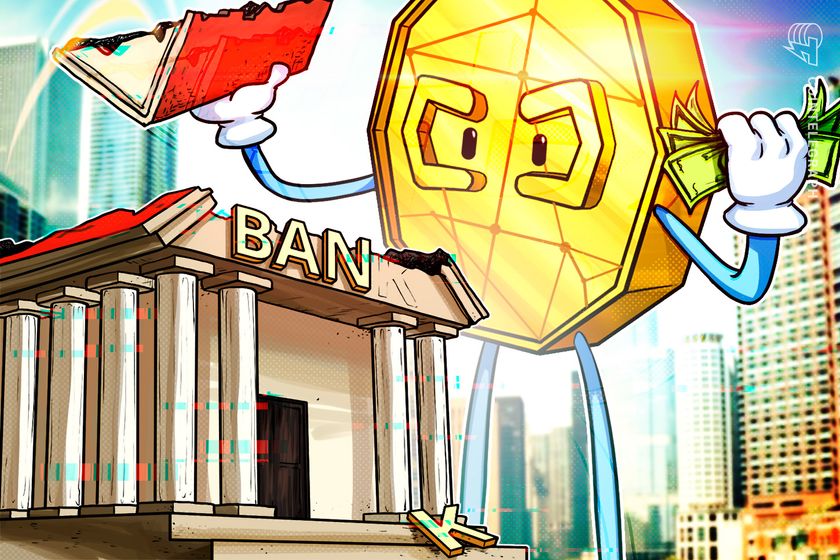
Crypto’s debanking problem persists despite new regulations

The crypto industry’s inability to access banking services still concerns many industry observers despite recent policy victories.

In past years, financial services firms and banks concerned about fiduciary risk, reporting liabilities and reputational risk often would refuse to offer service to crypto firms — i.e., “debanking” them. 

Legislative efforts in the United States and Australia are attempting to remove these barriers for the crypto industry. In the former, legislators repealed guidelines that made it difficult for banks to custody crypto assets, as well as those stating that crypto carried “reputational risk” for banks. In the latter, the Labor Party has introduced a bill to create a legal framework for crypto, giving banks the clarity they need to interact with the crypto industry.

Despite these tangible efforts, some crypto industry observers say that the crypto’s debanking problem is far from over. 

Crypto’s debanking problem persists despite new regulationsUS crypto execs say debanking is still an issue 

The crypto industry has long decried “Operation Chokepoint 2.0,” its nickname for a suite of policies that they claim constrained the crypto industry from growing under the administration of former President Joe Biden. Among these were measures making it more difficult for crypto firms to access banking services. 

The early days of the second administration of President Donald Trump have seen many of these repealed or changed. One of the first was the repeal of Staff Accounting Bulletin 121, which required banks offering custody for customers’ cryptocurrencies to list them as liabilities on their balance sheets — this made it very difficult for banks to justify offering such services.

The administration also appointed a new head of the Office of the Comptroller of the Currency (OCC), Rodney Hood. Dennis Porter, CEO of the Bitcoin-focused policy organization Satoshi Action, told Cointelegraph that under Hood’s tenure, the OCC has already said banks can offer crypto-related services like custody, stablecoin reserves and blockchain participation.

Related: Atkins becomes next SEC chair: What’s next for the crypto industry

“This opens the door for broader adoption of digital asset technology and custodial services by traditional financial institutions, signaling a major shift in how banks engage with crypto,” he said.

Despite these victories, Caitlin Long, founder and CEO of Custodia Bank, said on March 21 that debanking is likely to remain a problem for crypto firms into 2026.

Long said the non-partisan board of governors of the Federal Reserve is “still controlled by Democrats,” alluding to Democrats’ more skeptical stance on crypto. Long claimed that “there are two crypto-friendly banks under examination by the Fed right now, and an army of examiners was sent into these banks, including the examiners from Washington, a literal army just smothering the banks.”

Long noted that Trump won’t be able to appoint a new Fed governor until January, meaning that, while other agencies may be more crypto-friendly, there are still roadblocks. 

Australia’s Labor Party to create crypto framework

Stand With Crypto, the “grassroots” crypto advocacy organization started by Coinbase that has spread to the US, UK, Canada and Australia, said that “in Australia, debanking is quietly shutting out innovators and entrepreneurs — particularly in the crypto and blockchain space.”

In a post on X, the organization claimed that debanking results in “reputational damage, loss of revenue, increased operational costs, and inability to launch or sustain services.” It also claimed that it forces some companies to move offshore. 

In response to these concerns, the ruling center-left Labor Party in Australia has proposed a new set of laws for the cryptocurrency industry. The changes to current financial services law seek to tackle the issue of debanking in the country’s cryptocurrency industry.

Crypto’s debanking problem persists despite new regulations

Australia’s Treasury says its new crypto regulations have four priorities. Source: Australian Department of the Treasury

Edward Carroll, head of global markets and corporate finance at MHC Digital Group — an Australian crypto platform — told Cointelegraph that in Australia, debanking decisions were “not the result of regulatory directives.”

“Rather, they appear to stem from a more general sense of risk aversion due to the current lack of a clear regulatory framework.”

Related: US gov’t actions give clue about upcoming crypto regulation

Carroll was optimistic about the Labor Party’s proactive stance. The major political parties were “showing a shift in sentiment and a shared commitment to establishing formal crypto regulation.” 

“We are hopeful that this will give banks the confidence to reengage with crypto businesses that meet compliance standards,” he said.

Canada unlikely to relieve crypto firms

In Canada, “debanking remains a serious and ongoing challenge for the Canadian crypto industry,” according to Morva Rohani, executive director of the Canadian Web3 Council.

“While some firms have successfully established relationships with banking partners, many continue to face account closures or denials with little explanation or recourse,” she told Cointelegraph. 

While debanking actions aren’t explicit, financial institutions’ interpretation of Anti-Money Laundering and Know Your Customer regulations “creates a risk-averse environment where banks weigh compliance and reputational concerns against the relatively low revenue potential of crypto clients.”

The end result, per Rohani, is a systemic debanking problem for the digital assets industry.

But unlike in the US and Australia, the Canadian crypto industry may not find relief anytime soon. Prime Minister Mark Carney, whose more crypto-skeptic Liberal Party is surging in the polls ahead of the April 28 snap elections, is himself a crypto-skeptic.

Crypto’s debanking problem persists despite new regulations

Polls show Carney firmly in the lead. Source: Ipsos

Carney has stated that the future of money lies more in a “central bank stablecoin,” otherwise referred to as a central bank digital currency.

Rohani said that “no comprehensive legislative solution has been implemented” with regard to debanking. “A more structured approach, including mandated disclosure of reasons for account termination and regulatory oversight, is needed,” she said.

Critics claim crypto is “hijacking” the debanking issue

There is another side to the debanking debate, which claims that crypto’s debanking “problem” is a non-issue or a vehicle for crypto firms to get what they want in terms of regulation. 

Molly White, the author of Web3 Is Going Just Great and the “Citation Needed” newsletter, has noted that, in the US at least, crypto firms have claimed to be victims of debanking while lauding Trump’s efforts to end protections for debanking at the same time.

In a Feb. 14 post, White stated that the crypto industry had “hijacked” the discussion around debanking, which contains legitimate concerns regarding access to financial services — particularly regarding discrimination due to race, religious identity or industry affiliation. 

She claims the crypto industry has used debanking as a means to deflect legitimate regulatory inquiries into crypto companies’ compliance efforts. 

Further of note is the fact that Coinbase CEO Brian Armstrong has applauded the efforts of the Department of Government Efficiency (DOGE), with Elon Musk at the helm, to dismantle the Consumer Financial Protection Bureau (CFPB).

One of the CFPB’s responsibilities is to investigate claims of debanking. But when DOGE instructed the agency to halt all work, Armstrong said it was “100% the right call,” in addition to making dubious claims about the agency’s constitutionality. 

Crypto’s debanking problem persists despite new regulationsIn the meantime

Whether the industry’s debanking concerns stem from legitimate discrimination or an attempt at regulatory capture, crypto firms are developing solutions in the interim. 

Porter said that, as an alternative to banking services, “many crypto companies have leaned on stablecoins as a primary tool for managing finances,” while others have worked with “smaller regional banks or specialized trust companies open to digital assets.”

Rohani said that this kind of “patchwork of relationships” can increase operational costs and risks and are “not sustainable long-term solutions for growth or to build a competitive, regulated industry.”

Porter concluded that the banking workarounds could actually strengthen the industry’s position, stating that they may “continue evolving into fully integrated relationships with traditional financial institutions, further cementing crypto’s place in mainstream finance.”

Magazine: UK’s Orwellian AI murder prediction system, will AI take your job? AI Eye

Read more at cointelegraph.com

Is Bitcoin the new safe haven during trade wars?

Bitcoin joins the safe-haven debate as trade tensions rise

For decades, investors fled to gold and US Treasurys during crises, but in today’s digital, decentralized world, Bitcoin is starting to enter the safe-haven conversation. Despite its volatility, Bitcoin (BTC) has shown signs of resilience during global turbulence, including trade wars, prompting a fresh look at its role in preserving value.

Let’s rewind a bit to understand where this question comes from. 

For decades, whenever uncertainty rattled the global economy, be it war, inflation, or sudden political shifts, investors did what they always do — run to the safest hills. Historically, those hills were made of gold or filled with US Treasury bonds. But things are changing. 

In a world that’s more digital, decentralized, and volatile than ever, people are asking whether Bitcoin might now be part of the conversation as a modern safe-haven asset, especially during disruptive events like trade wars.

To get into this, you need to explore what makes an asset a safe haven in the first place, how Bitcoin has behaved during recent trade-related turbulence and whether it has earned its spot alongside more traditional defensive plays.

First, the concept of a “safe haven” isn’t about making a profit. It’s about preserving value. In times of crisis, investors want assets that hold up under pressure. Gold has done this for decades. The US dollar, despite being fiat, is often seen as a safe haven due to its global reserve status and the strength of US financial institutions. 

Treasury bonds are backed by the full faith and credit of the US government. All these assets are supposed to be relatively low in volatility and high in liquidity.

Now, here’s the twist: Bitcoin is not low in volatility. It’s notoriously wild. But despite that, you might have seen moments where it behaves like a safe haven. Not always, but sometimes, and that’s interesting.

Isn’t it?

The 2018-19 trade war vs Bitcoin’s role in times of turmoil

During the 2018–19 US-China trade war, Bitcoin surged as traditional markets faltered, hinting at its potential as a hedge in turbulent times. While its “digital gold” narrative gained traction, Bitcoin’s behavior often mirrors that of speculative tech stocks, keeping its safe-haven status an open question.

Take the 2018–19 US-China trade war, for example. As tariff threats escalated and tensions between the two economic giants intensified, global markets became increasingly jittery. Tech stocks took a hit. Commodities wavered. Amid all this, something strange happened. Bitcoin quietly surged. From April to July 2019, the price of Bitcoin climbed from about $5,000 to over $12,000. 

It wasn’t alone. Gold also rallied during that time. However, this was one of the earliest signs that Bitcoin might not be just a risk-on asset but could also serve as a hedge in turbulent times. That period sparked a new narrative: Bitcoin as “digital gold.”

The fixed supply of 21 million coins gave it scarcity. Its decentralized nature meant it wasn’t bound to any single government’s policies. And because it lived on a global, censorship-resistant network, it was insulated from the kind of capital controls that often follow during periods of financial stress. These qualities started to resonate with investors looking for alternatives to traditional safe havens.

To be fair, Bitcoin hasn’t always stuck to the script. While there are moments where it moves inversely to risk assets, more often than not, it behaves like a speculative tech stock, especially over short time frames. Historically, Bitcoin has had a strong correlation with the Nasdaq. So, while the “digital gold” narrative is growing, it still sits side-by-side with the idea of Bitcoin being a high-beta bet for risk-seeking investors.

Did you know? A 2025 study titled Institutional Adoption and Correlation Dynamics: Bitcoin’s Evolving Role in Financial Markets analyzed daily data from 2018 to 2025. The study found that Bitcoin’s correlation with the Nasdaq 100 intensified following key institutional milestones, with peaks reaching 0.87 in 2024. This suggests that Bitcoin has transitioned from an alternative asset toward a more integrated financial instrument.

Inside the Trump tariff wars of 2025: Markets rattle, Bitcoin rises

In early 2025, Trump’s sweeping tariffs triggered panic across financial markets, with the Nasdaq and S&P suffering historic drops. Within two days, US stock indexes lost trillions, reigniting the debate over Bitcoin’s role as a modern safe haven.

Fast forward to April 2025, and the question of whether Bitcoin can serve as a safe haven got tested again. This time, it was in a much more pronounced way. In February 2025, Trump, now in his second term as president, announced a fresh wave of aggressive tariffs aimed at revitalizing American manufacturing. 

Trump's 'Liberation Day' tariffs

This was the kind of headline that immediately spooks financial markets, especially when major trading partners began whispering about retaliation. By April 2, Trump had declared what he called “Liberation Day,” a sweeping set of tariffs covering nearly all imported goods. It was framed as economic patriotism, but to markets, it spelled chaos.

Chaos came quickly. On April 3, the Nasdaq Composite plunged by nearly 6%, losing over 1,000 points in one session. This was a record-setting drop in terms of raw numbers. The S&P 500 didn’t fare much better, falling close to 5%. Investors began to panic about supply chain disruptions, inflationary pressures and a possible global slowdown. 

Then came April 4, and the panic only deepened. The Nasdaq slid into official bear market territory, and the Dow lost over 2,200 points in a single day. Within 48 hours, America’s major stock indexes had lost trillions in value.

Did you know? Barry Bannister, chief equity strategist at Stifel, noted that Bitcoin and the Nasdaq 100 have been driven by speculative fervor fueled by lenient Fed policies. He highlighted that Bitcoin tends to trade in tandem with highly leveraged tech-focused ETFs, indicating a strong correlation between Bitcoin and tech stocks.

Bitcoin didn’t soar amid market crash, but It didn’t sink either

During the April 2025 market crash, Bitcoin held steady while stocks plunged, surprising many with its resilience. It didn’t surge, but its stability amid chaos hinted at its growing role as a value-preserving asset in turbulent times.

So, what did Bitcoin do? Surprisingly, nothing catastrophic, and that was the story. While nearly everything else was tanking during the tariff-fueled sell-off, Bitcoin didn’t crash. That alone turned heads.

Bitcoin's price chart, March-April

In a market where even the most established benchmarks were falling apart, Bitcoin’s relative stability stood out to portfolio managers and institutional watchers.

Long criticized as too volatile for serious portfolios, Bitcoin quietly weathered the storm better than many traditional assets. This wasn’t a moonshot moment. It was a resilience moment. Value preservation over value multiplication. And that’s what investors look for in a safe haven. Its ability to hold ground while the Nasdaq and S&P plunged gave more weight to the idea that Bitcoin might be evolving into something sturdier.

To be clear, Bitcoin hasn’t fully decoupled from risk assets. It still responds to liquidity flows, monetary policy and investor sentiment. But at times like April 2025, it showed something different. It didn’t break. It held! And for a growing number of investors, that’s starting to matter.

Bitcoin isn’t the new gold, but it’s not the old BTC either

Bitcoin’s growing resilience stems from a maturing market, rising institutional adoption and its appeal as a non-sovereign, portable hedge in times of financial or geopolitical stress. While not yet the ultimate safe haven, it’s clearly moved beyond its speculative roots and is earning a seat at the table.

Part of this growing strength is structural. Over the past few years, the Bitcoin market has matured. Institutional adoption has risen. Spot Bitcoin ETFs now live in major markets. Custody solutions are better. And perhaps most importantly, there’s a broader understanding of what Bitcoin represents. 

Bitcoin is not just a speculative coin anymore. It’s a tool for financial sovereignty, for hedging against fiat depreciation and for stepping outside the boundaries of politicized financial infrastructure.

There’s also the fact that Bitcoin is entirely non-sovereign. In a trade war scenario, where fiat currencies can be weaponized, and capital controls are deployed, Bitcoin becomes very attractive to people who want to move money across borders without interference. It’s portable, permissionless and increasingly liquid. These are three attributes of an asset you want in a crisis.

Of course, none of this means Bitcoin is now the undisputed king of safe havens. Gold still plays that role for most of the world’s conservative investors. The US dollar is still the default when people want liquidity in a crunch. And Bitcoin’s price swings can still make people nervous. But you are seeing it graduate amid the market chaos. It’s no longer the outsider it once was.

Bitcoin in times of crisis, safe haven 2.0?

In both 2019 and 2025, Bitcoin showed flashes of safe-haven behavior, proving it can act as a hedge in times of geopolitical stress. While it’s not gold just yet, its unique properties make it an increasingly serious contender in the global financial playbook.

During both the 2019 trade tensions and the 2025 tariff escalation, Bitcoin acted more like a hedge than it did in earlier cycles. And that’s noteworthy. Even if Bitcoin doesn’t yet consistently play the safe-haven role, it’s starting to show it can, at least in specific contexts.

There’s a bigger question brewing here, too. What does it mean for financial markets if Bitcoin does become a mainstream safe-haven asset? How does that change portfolio construction, risk models or even geopolitical strategy? After all, Bitcoin isn’t gold. It plays by entirely different rules.

Bitcoin is programmable. It can be moved across the world instantly. It can be sliced into satoshis and embedded into smart contracts. If it becomes part of the global toolkit for navigating crises, that changes the game. 

So, is Bitcoin the new safe haven during trade wars? Not quite, at least not in the traditional sense. But it has undoubtedly earned a seat at the table. 

Bitcoin may not be the asset your grandparents bought to protect themselves in uncertain times, but for a growing number of investors, especially in the digital age, it’s becoming their version of safety. As geopolitical tensions rise and confidence in traditional financial systems erodes, Bitcoin is positioning itself as a potential hedge for the future.

Read more at cointelegraph.com

Can you really buy anything with Pi coin? Find out here!

Key takeaways

Pi coin finally went live on open mainnet in February 2025, unlocking real-world use cases after years in closed beta.

You can spend Pi coin, but mostly within P2P communities and KYC-verified Pi apps — mainstream adoption is still in its early stages.

Pi is now tradable on several CEXs, such as OKX, Bitget and MEXC, but Binance still hasn’t listed it despite 2 million+ user voters lobbying for the listing.

Merchant adoption is growing slowly, with real goods and services being exchanged for Pi in localized markets and app-based ecosystems.

Often described as a crypto for the people, Pi is a decentralized project that runs without the need for GPUs or gas fees. But five years since its closed mainnet launch in 2021, the million-dollar question still hangs in the air: Can you actually buy anything with Pi coin in 2025?

Let’s dive into the Pi Network’s real-world usability and answer what every Pi miner and curious crypto observer is wondering: Does Pi coin work in real life, or is it still just theoretical digital dust?

What is Pi coin, and what’s driving the attention around it in 2025? 

Launched in March 2019 by a trio of Stanford Ph.D.s — Nicolas Kokkalis, Chengdiao Fan and Vincent McPhillip — the Pi Network set out to solve one of crypto’s core problems: accessibility. 

Unlike Bitcoin or Ethereum, which require specialized hardware to mine, Pi coin was designed to be mined directly from a smartphone, without draining battery or data. The idea? Democratize crypto from the palm of your hand.

Pi Network introducing mining crypto from app

The Pi Network quickly went viral, spreading through invitation-only mining that created a sense of exclusivity and social virality. By 2021, the app had surpassed 20 million engaged users, or “Pioneers,” and by late 2023, that number had reportedly hit 47 million, making it one of the largest pre-mainnet crypto communities in the world.

Here’s a quick timeline of key moments:

March 2019: The Pi Network launches a beta version of its app on Android and iOS.

2020–2021: User growth accelerates through referrals; Pi phases move toward testnet. 

December 2021: Closed mainnet goes live; Pi transactions remain within the ecosystem. 

2022–2024: Over 100 Pi apps are built for testing in the closed economy.

February 2025: Pi Network officially launches its open mainnet, enabling blockchain interaction with the outside world. 

This long-awaited mainnet move opened the doors for Pi (PI) coin to be listed on centralized exchanges (CEXs) and used outside its sandbox — finally bringing the project closer to its goal of becoming a real digital currency for everyday use.

From an ambitious student project to one of the most downloaded crypto apps ever, Pi Network’s journey has been anything but ordinary. But now that the tech is live and tradable, the big question is: Can you actually use Pi coin to buy things?

Did you know? Over 2 million users voted for Binance to list Pi coin — and yet, Binance has remained completely silent. Despite Pi Network boasting 47 million users and a fully launched mainnet, the world’s biggest exchange hasn’t budged. Why? Some say it’s a lack of decentralization. Others point to the controlled KYC rollout. Either way, it’s a reminder that in crypto, even a viral army can’t force the gatekeepers to open the doors.

Where can you buy Pi coin in 2025?

Following the launch of Pi Network’s open mainnet in February 2025, Pi coin has become available for trading on several cryptocurrency exchanges. As of April 2025, Pi coin is listed on the following exchanges:​

OKX: One of the first to list PI, offering trading pairs such as PI/USDT.​

Bitget: Provides PI trading with liquidity and user-friendly interfaces.​

MEXC: Another early adopter, supporting PI trading pairs.​

BitMart: Supports PI trading, though some listings may be IOUs.​

HTX (formerly Huobi): Has listed PI, though it’s based on IOU listings.

Despite community efforts, including over 2 million votes in favor, Binance has not listed Pi coin as of April 2025. Concerns over blockchain compatibility, transparency and regulatory issues have been touted as reasons for the hesitation.

Did you know? Many Pi coin listings on exchanges are actually IOUs, which is not the real deal. These “I Owe You” tokens are speculative placeholders that aren’t backed by mainnet Pi, meaning you can’t withdraw or use them within the Pi Network ecosystem. It’s like trading a movie ticket for a film that hasn’t even premiered yet. Always check whether you’re buying the actual PI token or just a promise.

What can you actually buy with Pi coin?

Here’s where things get real (or not so real). While you might not be buying a Tesla with Pi (yet), the Pi community has been documenting purchases such as:

T-shirts, mugs and phone accessories

Freelance graphic design services

Basic electronics and gadgets

Food, drinks and small restaurant meals (in localized Pi events)

Handmade crafts and collectibles.

The catch? Most of these transactions happen via social media groups, Telegram chats or Pi’s own ecosystem apps such as Pi Browser and Pi Chat. These platforms act as informal marketplaces, often relying on trust and reputation rather than formal escrow systems.

So, while Pi isn’t quite ready for prime time in major retail environments, it is functioning — in a grassroots, community-driven way. Think of it more as a barter system with crypto flair than a fully integrated payment network. For now, at least.

Pi Network merchant list — fact or fiction?

If you search “Pi coin accepted stores” on Google, hoping for a list of your favorite retailers, you’ll be disappointed.

There is no official Pi Network merchant list that guarantees where Pi is accepted. Instead, adoption is grassroots and highly localized. One group of Pi Pioneers in Indonesia might be able to buy food with Pi, while another in Vietnam uses it for mobile data top-ups. But it’s hard to track, standardize or verify.

Merchant adoption is still early — but gaining traction.

Now that Pi Network’s open mainnet is live, the conversation is no longer about “if” Pi will integrate with the broader crypto ecosystem — it’s about how fast it can onboard real merchants and use cases.

One promising trend is the rise of Know Your Customer (KYC)-verified Pi apps, platforms that require users and businesses to complete identity verification before participating in the Pi economy. This layer of trust helps Pi Network build a more legitimate commercial environment, where merchants feel more confident accepting Pi coin as payment.

In the months following the open mainnet launch, Pi Network’s developers and community have focused on scaling real-world integrations, which include:

Local businesses in countries such as Nigeria, Vietnam, Indonesia and the Philippines accept Pi for goods and services. 

Pi Chain Mall and other marketplaces are enabling digital commerce in Pi. 

Pi Chain Mall to use Pi Coin in real-world

Third-party integrations are being tested to connect Pi with decentralized finance (DeFi) protocols, crosschain bridges and non-fungible token (NFT) platforms. 

Pi Browser and Pi Apps allow decentralized application (DApp) developers to launch new payment-enabled services using mainnet Pi.

With over 100 Pi apps already built during the testnet phase — and a global army of KYC-verified users — Pi Network now has the tools to grow a real, scalable economy. Whether that turns into a bustling merchant network or a niche payment layer depends on what the community builds next.

With that said, there’s growing interest in onboarding merchants through KYC-verified Pi apps, hinting at a slow but potentially scalable adoption model.

Now with the open mainnet live, Pi is also expected to launch integrated DeFi protocols, decentralized exchanges (DEXs) and NFT marketplaces. If these integrations succeed, serious use cases beyond the Pi bubble could be unlocked.

Did you know? During PiFest 2025, over 1.8 million users engaged in transactions using Pi coin across 58,000 active merchants worldwide. This event showcased Pi Network’s growing real-world adoption and its potential to facilitate everyday commerce.

Is Pi coin ready for real-world payments?

Let’s be honest: Pi coin isn’t a Visa killer at the moment. It’s not ready to power global commerce or even compete with Bitcoin in El Salvador. However, it serves as a testbed for what crypto payments might look like when driven by community trust rather than institutional backing.

Think of it less like a universal payment tool and more like a local barter system on crypto steroids.

If the Pi Network nails its open mainnet rollout and expands merchant onboarding with real compliance and liquidity support, 2025 could mark the moment Pi goes from playful experiment to actual contender.

Final verdict: Can you buy stuff with Pi coin?

Yes — but with limitations.

You can spend Pi coin, but only in select peer-to-peer (P2P) markets, community-driven stores or pilot programs run by Pi Pioneers. Most of it is still happening in closed circuits, with no large-scale merchant integration yet.

But is that really a problem?

Maybe not. After all, the early days of Bitcoin weren’t much different — experimental, niche and often dismissed.

Back then, buying a pizza with Bitcoin (BTC) was groundbreaking. Now, BTC sits in exchange-traded fund (ETF) portfolios and corporate treasuries.

Whether Pi Network breaks through or fades into obscurity depends on what happens next: regulatory clarity and whether the network can scale beyond its internal community.

Believer or skeptic, one thing’s certain: The real-world test of the Pi Network economy is just getting started — and the world is watching.

Read more at cointelegraph.com

Crypto ‘uninvestable’ if exchanges ignore manipulation: DeFiance CEO

A crypto investment executive said the biggest problem with digital asset markets is price manipulation, claiming that collusion between market makers and exchanges distorts token prices. 

Arthur Cheong, founder of crypto investment firm DeFiance Capital, said in an X post that market makers and crypto projects work together to create artificial prices that can be sustained for long periods. Cheong wrote: 

“You don’t know whether the price is a result of organic demand & supply or simply due to projects and market makers colluding to fix the price to achieve other objectives.”

He added that if the industry’s players don’t step up and improve the situation, a big part of the crypto market will remain “uninvestable for the foreseeable future.”

Centralized exchanges turning a “blind eye” 

Cheong said it was strange that centralized exchanges (CEXs) are “turning an absolute blind eye” to the issue. He described the altcoin market as a “lemon’s market,” a term in economics that describes a market where low-quality products drive out the good due to information asymmetry.

In addition, Cheong described most token generation event pricing in 2025 as an “absolute joke” where the assets’ prices went down by 70% to 90% a few months after listing. “Anyone that bought is down massively,” Cheong added. 

Related: Binance, KuCoin, MEXC report service issues due to AWS network interruption

88% of crypto tokens listed on Binance in 2025 declined after listing 

Data compiled by crypto analyst Miles Deutscher showed that among crypto tokens listed this year on the trading platform Binance, only 3 out of 27 are performing well. This means that 88% of the tokens have declined since listing. 

The price drops ranged from 19% up to 90%. Deutscher said this was the reason why retail investors were quitting. 

Cryptocurrency Exchange, Binance

Only 3 out of 27 tokens listed in Binance in 2025 are in the green. Source: Miles Deutscher 

A community member responded to the data saying that this is where the industry is currently at. The X user added that they hoped Binance would realize starting at a high valuation wasn’t good for users. 

Binance co-founder Changpeng Zhao previously admitted that Binance’s listing process needs reform. On Feb. 10, the former Binance CEO said that the current system is flawed and suggested that CEXs should automate listings similar to how decentralized exchanges (DEXs) work. 

Magazine: New ‘MemeStrategy’ Bitcoin firm by 9GAG, jailed CEO’s $3.5M bonus: Asia Express

Read more at cointelegraph.com

Only 11% of El Salvador’s registered Bitcoin firms operational

Only 20 of the 181 Bitcoin service providers registered with El Salvador’s central bank are operational, with the rest failing to meet the country’s requirements under its Bitcoin Law. 

Local media outlet El Mundo cited data from the Central Reserve Bank of El Salvador, showing that 11% of the service providers are operational. According to the central bank’s database, the rest of the providers are classified as non-operational. 

The data showed that at least 22 non-operational providers have failed to meet most of the country’s Bitcoin Law requirements, which mandate that providers implement stringent supervision of their financial systems. 

Most of El Salvador’s Bitcoin service providers are non-operational

El Salvador’s Bitcoin Law requires providers to maintain an Anti-Money Laundering (AML) program, keep records that accurately reflect the company’s assets, liabilities and equity and have a tailored cybersecurity program depending on the nature of its services. 

The data showed that 89% of the registered providers have failed to meet some of these obligations to be classified as operational. 

Still, a few firms have satisfied the legal criteria, including the state-backed Chivo Wallet and companies including Crypto Trading & Investment and Fintech Américas.

Related: Cathie Wood to kick off El Salvador’s AI public education program

El Salvador’s Bitcoin experiment

In 2021, El Salvador became the first country to accept Bitcoin as legal tender along with the US dollar. This move made Bitcoin integral to El Salvador President Nayib Bukele’s economic strategy. 

However, the Central American country recently signed a deal with the International Monetary Fund (IMF) on a $1.4 billion loan in exchange for rolling back some of its Bitcoin-related efforts. Under the agreement, taxes will be paid in US dollars and public institutions will limit their use of Bitcoin.

On March 3, the IMF asked the country to stop its public sector Bitcoin buys. Still, Bukele said the government will continue to purchase Bitcoin, seemingly contradicting its IMF deal.

The IMF deal prompted speculation about whether the country would rescind Bitcoin’s status as legal tender. John Dennehy, an El Salvador-based Bitcoin activist and educator, said in an X Space with Cointelegraph that a rollback law changing Bitcoin’s legal status is set to take effect on April 30.

Magazine: Memecoin degeneracy is funding groundbreaking anti-aging research

Read more at cointelegraph.com

Binance, KuCoin, MEXC report service issues due to AWS network interruption

Update April 15, 9:17 am in UTC: This article has been updated with information throughout.

Binance, KuCoin, MEXC and other exchanges and wallet providers have been experiencing service issues due to a significant network interruption by Amazon Web Services (AWS).

Centralized cryptocurrency exchanges (CEXs) were hit by an AWS data center outage, which reported “connectivity issues” that affected at least 12 of its services on April 15.

Binance, KuCoin, MEXC report service issues due to AWS network interruption

AWS Service health. Source: Health.aws.amazon

“We are seeing initial signs of recovery but continue to monitor and work toward full recovery. Other AWS services are also impacted by this issue, and are also observing recovery. We will provide another update within the next 30-60 minutes,” AWS said in an April 15 update.

Binance was among the first to report issues with its services.

“We are aware of an issue impacting some services on the #Binance platform due to a temporary network interruption in the AWS data center,” wrote Binance in an April 15 X post, adding that “some orders are still successful, but some are failing. If users failed, they may keep retrying.”

Binance, KuCoin, MEXC report service issues due to AWS network interruption

Source: Binance

Binance has restored services, including user withdrawals, following technical support from AWS, a spokesperson told Cointelegraph

Related: Kraken rolls out ETF and stock access for US crypto traders

Other large exchanges, including KuCoin and MEXC, also reported service interruptions.

“Due to a large-scale network outage with AWS services, our platform is currently experiencing temporary disruptions,” KuCoin said in an April 15 X post.

Binance, KuCoin, MEXC report service issues due to AWS network interruption

Source: MEXC

On MEXC, mobile app and web platform users were warned of “abnormal candlestick charts, failed order cancellations,” and asset transfer delays. However, users’ assets “remain fully secure,” the exchange said in an April 15 X post.

At least eight exchanges reported AWS-related issues as of 9:30 am UTC, including Coinstore, Gate.io, DeBank, Rabby Wallet and Weex. All the affected platforms have confirmed the restoration of their services as of 1:50 pm UTC, with the exception of DeBank.

Related: Google to enforce MiCA rules for crypto ads in Europe starting April 23

AWS provides cloud infrastructure for centralized exchanges that can handle high transaction volumes with low latency in trading orders. AWS is used by some of the biggest crypto exchanges, including Coinbase, Crypto.com, Huobi, BitMEX and Kraken.

The effect of the AWS outage may be perceived as another signal of the vulnerability of centralized infrastructure providers, which may suffer cascading effects due to a single point of failure.

AWS failure highlights need for decentralized alternatives

The wide-reaching impact of the AWS service disruption may highlight the need for more decentralized alternatives, eliminating single points of failure.

“AWS down and 90% of crypto is down. Decentralization is a meme,” Edmund Chua, the head of mETH Protocol, said in an April 15 X post.

Binance, KuCoin, MEXC report service issues due to AWS network interruption

Source: Gracy Chen

“AWS data center issues impacted several CEXs — no need to panic,” wrote Gracy Chen, the CEO of Bitget exchange, adding that “it’s a solid reminder: Maybe it’s time to explore decentralized cloud services.”

Decentralized alternatives include Filecoin for storage, decentralized computing marketplace Akash Network, and decentralized graphics processing unit compute service Render Network.

Additional reporting by Helen Partz.

Magazine: Crypto market is ‘not playing ball’ so far in 2025: Jason Pizzino, X Hall of Flame

Read more at cointelegraph.com

Northern Marianas vetoes bill for Tinian to launch its own USD stablecoin

Update (April 15, 10:47 am UTC): This article has been updated with comments from Marianas Rai Corp. co-founder Vin Armani.

The governor of the Northern Mariana Islands, a small Pacific US territory just north of Guam, has killed the legislation that would have allowed one of the territory’s local governments to launch a fully backed US dollar-pegged stablecoin.

In an April 11 letter seen by Cointelegraph, Northern Mariana Islands Governor Arnold Palacios said he vetoed the bill as it “presents several legal issues and may be unconstitutional.”

Palacios’ letter said the bill, which largely dealt with issuing licenses to internet casinos, would regulate an activity that could not “be clearly restricted” to Tinian, a small island forming part of the territory that was hoping to launch a stablecoin.

Tinian, which has just over 2,000 residents and a largely tourism-based economy, is governed by the local government, the Municipality of Tinian and Aguiguan, one of four municipalities in the Commonwealth of the Northern Mariana Islands.

In February, Republican Northern Marianas Senator Jude Hofschneider led the introduction of the bill to amend a local Tinian law to allow internet-only casino licenses, which tacked on a provision allowing the Tinian treasurer to issue, manage and redeem a “Tinian Stable Token.” 

The four-member Tinian delegation to the Marianas legislature passed the bill in a unanimous vote on March 12.

In vetoing the bill, Palacios didn’t comment on the proposed stablecoin, instead taking issue with its aim to police an industry that can cross jurisdictional boundaries, and said the measure lacked “robust enforcement measures to prevent illegal gaming activities.”

Northern Marianas vetoes bill for Tinian to launch its own USD stablecoin

A highlighted excerpt of Governer Palacios’ letter noting his reasons for vetoing the stablecoin and internet gambling bill Source: Northern Mariana Islands Governor’s Office

The stablecoin, called the Marianas US Dollar (MUSD), was to be fully backed by cash and US Treasury bills held in reserve by the Tinian Municipal Treasury, according to statements shared with Cointelegraph last month.

The Tinian government chose tech services firm Marianas Rai Corporation, based in the Commonwealth’s capital of Saipan, to exclusively provide the infrastructure to issue and redeem MUSD and develop its ecosystem.

Marianas Rai Corp. co-founder and technology chief Vin Armani told Cointelegraph that the company doesn’t see a chance for a stablecoin bill to pass on its own and added that “the legal opinions noted are deeply flawed and do not reflect the actual contents of the bill.”

“It is unfortunate, at a time when our Commonwealth is severely struggling financially due to decades of decline in and dependency on tourism, that this opportunity to launch the first fully-reserved, fiat-backed stable token issued by a public entity in the United States has not been achieved for the people of the Commonwealth,” he added.

Tinian misses chance at beating Wyoming

The bill’s passage could have seen Tinian’s government be the first US government entity to issue a stablecoin ahead of Wyoming, whose Governor Mark Gordon said in March that the state’s stablecoin could be ready for a launch in July.

Armani said the bill “would have been an incredible accomplishment for a small self-funded company based in a small island nation in the middle of the Pacific, beating Wyoming to the finish line, given the resources [the state has] invested.”

Related: The GENIUS stablecoin bill is a CBDC trojan horse — DeFi exec 

He said Marianas Rai Corp. fully owns the technology behind MUSD, which is built on the eCash blockchain, a network that rebranded from Bitcoin Cash ABC in 2021 and is a fork of Bitcoin Cash — a blockchain that split off from Bitcoin in 2017.

Armani added that the company was “in active discussions with potential partners” about launching the token and was “poised to act quickly” as US Congress is looking to pass stablecoin laws.

The Senate Banking Committee passed the stablecoin-regulating Guiding and Establishing National Innovation for US Stablecoins (GENIUS) Act in mid-March, while the US House Financial Services Committee passed the Stablecoin Transparency and Accountability for a Better Ledger Economy (STABLE) Act in early April.

Magazine: Elon Musk’s plan to run government on blockchain faces uphill battle 

Read more at cointelegraph.com

Northern Marianas vetoes bill for Tinian to launch its own USD stablecoin

The governor of the Northern Mariana Islands, a small Pacific US territory just north of Guam, has killed the legislation that would have allowed one of the territory’s local governments to launch a fully backed US dollar-pegged stablecoin.

In an April 11 letter seen by Cointelegraph, Northern Mariana Islands Governor Arnold Palacios said he vetoed the bill as it “presents several legal issues and may be unconstitutional.”

Palacios’ letter said the bill, which largely dealt with issuing licenses to internet casinos, would regulate an activity that could not “be clearly restricted” to Tinian, a small island forming part of the territory that was hoping to launch a stablecoin.

Tinian, which has just over 2,000 residents and a largely tourism-based economy, is governed by the local government, the Municipality of Tinian and Aguiguan, one of four municipalities in the Commonwealth of the Northern Mariana Islands.

In February, Republican Northern Marianas Senator Jude Hofschneider led the introduction of the bill to amend a local Tinian law to allow internet-only casino licenses, which tacked on a provision allowing the Tinian treasurer to issue, manage and redeem a “Tinian Stable Token.” 

The four-member Tinian delegation to the Marianas legislature passed the bill in a unanimous vote on March 12.

In vetoing the bill, Palacios didn’t comment on the proposed stablecoin, instead taking issue with its aim to police an industry that can cross jurisdictional boundaries, and said the measure lacked “robust enforcement measures to prevent illegal gaming activities.”

Northern Marianas vetoes bill for Tinian to launch its own USD stablecoin

A highlighted excerpt of Governer Palacios’ letter noting his reasons for vetoing the stablecoin and internet gambling bill Source: Northern Mariana Islands Governor’s Office

Tinian misses chance at beating Wyoming

The bill’s passage could have seen Tinian’s government be the first US government entity to issue a stablecoin ahead of Wyoming, whose Governor Mark Gordon said in March that the state’s stablecoin could be ready for a launch in July.

The stablecoin was to be known as the Marianas US Dollar (MUSD), which was to be fully backed by cash and US Treasury bills held in reserve by the Tinian Municipal Treasury, according to statements shared with Cointelegraph last month.

Related: The GENIUS stablecoin bill is a CBDC trojan horse — DeFi exec

The Tinian local government chose tech services firm Marianas Rai Corporation, based in the Commonwealth’s capital of Saipan, to exclusively provide the infrastructure to issue and redeem MUSD and develop its ecosystem.

The token was slated to launch on the eCash blockchain, a network that rebranded from Bitcoin Cash ABC in 2021 and is a fork of Bitcoin Cash — a blockchain that split off from Bitcoin in 2017.

The launch of MUSD was meant to coincide with Google’s $1 billion plan announced in April to route fiber-optic subsea cables from the mainland US through Tinian and onto Japan to improve internet connectivity.

Magazine: Elon Musk’s plan to run government on blockchain faces uphill battle 

Read more at cointelegraph.com

Northern Marianas vetoes bill for Tinian to launch its own USD stablecoin

The governor of the Northern Mariana Islands, a small Pacific US territory just north of Guam, has killed the legislation that would have allowed one of the territory’s local governments to launch a fully backed US dollar-pegged stablecoin.

In an April 11 letter seen by Cointelegraph, Northern Mariana Islands Governor Arnold Palacios said he vetoed the bill as it “presents several legal issues and may be unconstitutional.”

Palacios’ letter said the bill, which largely dealt with issuing licenses to internet casinos, would regulate an activity that could not “be clearly restricted” to Tinian, a small island forming part of the territory that was hoping to launch a stablecoin.

Tinian, which has just over 2,000 residents and a largely tourism-based economy, is governed by the local government, the Municipality of Tinian and Aguiguan, one of four municipalities in the Commonwealth of the Northern Mariana Islands.

In February, Republican Northern Marianas Senator Jude Hofschneider led the introduction of the bill to amend a local Tinian law to allow internet-only casino licenses, which tacked on a provision allowing the Tinian treasurer to issue, manage and redeem a “Tinian Stable Token.” 

The four-member Tinian delegation to the Marianas legislature passed the bill in a unanimous vote on March 12.

In vetoing the bill, Palacios didn’t comment on the proposed stablecoin, instead taking issue with its aim to police an industry that can cross jurisdictional boundaries, and said the measure lacked “robust enforcement measures to prevent illegal gaming activities.”

Northern Marianas vetoes bill for Tinian to launch its own USD stablecoin

A highlighted excerpt of Governer Palacios’ letter noting his reasons for vetoing the stablecoin and internet gambling bill Source: Northern Mariana Islands Governor’s Office

Tinian misses chance at beating Wyoming

The bill’s passage could have seen Tinian’s government be the first US government entity to issue a stablecoin ahead of Wyoming, whose Governor Mark Gordon said in March that the state’s stablecoin could be ready for a launch in July.

The stablecoin was to be known as the Marianas US Dollar (MUSD), which was to be fully backed by cash and US Treasury bills held in reserve by the Tinian Municipal Treasury, according to statements shared with Cointelegraph last month.

Related: The GENIUS stablecoin bill is a CBDC trojan horse — DeFi exec

The Tinian local government chose tech services firm Marianas Rai Corporation, based in the Commonwealth’s capital of Saipan, to exclusively provide the infrastructure to issue and redeem MUSD and develop its ecosystem.

The token was slated to launch on the eCash blockchain, a network that rebranded from Bitcoin Cash ABC in 2021 and is a fork of Bitcoin Cash — a blockchain that split off from Bitcoin in 2017.

The launch of MUSD was meant to coincide with Google’s $1 billion plan announced in April to route fiber-optic subsea cables from the mainland US through Tinian and onto Japan to improve internet connectivity.

Magazine: Elon Musk’s plan to run government on blockchain faces uphill battle 

Read more at cointelegraph.com

Meta gets EU regulator nod to train AI with social media content

Tech giant Meta has been given the green light from the European Union’s data regulator to train its artificial intelligence models using publicly shared content across its social media platforms.

Posts and comments from adult users across Meta’s stable of platforms, including Facebook, Instagram, WhatsApp and Messenger, along with questions and queries to the company’s AI assistant, will now be used to improve its AI models, Meta said in an April 14 blog post.

The company said it’s “important for our generative AI models to be trained on a variety of data so they can understand the incredible and diverse nuances and complexities that make up European communities.”

Technology, European Union, Social Media, Data, Meta

Meta has a green light from data regulators in the EU to train its AI models using publicly shared content on social media. Source: Meta

“That means everything from dialects and colloquialisms, to hyper-local knowledge and the distinct ways different countries use humor and sarcasm on our products,” it added.

However, people’s private messages with friends, family and public data from EU account holders under the age of 18 are still off limits, according to Meta.

People can also opt out of having their data used for AI training through a form that Meta says will be sent in-app, via email and “easy to find, read, and use.”

EU regulators paused tech firms’ AI training plans

Last July, Meta delayed training its AI using public content across its platforms after privacy advocacy group None of Your Business filed complaints in 11 European countries, which saw the Irish Data Protection Commission (IDPC) request a rollout pause until a review was conducted.

The complaints claimed Meta’s privacy policy changes would have allowed the company to use years of personal posts, private images, and online tracking data to train its AI products.  

Meta says it has now received permission from the EU’s data protection regulator, the European Data Protection Commission, that its AI training approach meets legal obligations, and the company continues to engage “constructively with the IDPC.”

“This is how we have been training our generative AI models for other regions since launch,” Meta said.

“We’re following the example set by others, including Google and OpenAI, both of which have already used data from European users to train their AI models.”

Related: EU could fine Elon Musk’s X $1B over illicit content, disinformation

An Irish data regulator opened a cross-border investigation into Google Ireland Limited last September to determine whether the tech giant followed EU data protection laws while developing its AI models.

X faced similar scrutiny and agreed to stop using personal data from users in the EU and European Economic Area last September. Previously, X used this data to train its artificial intelligence chatbot Grok. 

The EU launched its AI Act in August 2024, establishing a legal framework for the technology that included data quality, security and privacy provisions. 

Magazine: XRP win leaves Ripple a ‘bad actor’ with no crypto legal precedent set

Read more at cointelegraph.com