cointelegraph.com

New Hampshire Bitcoin reserve bill heads to full Senate vote

A bill that would allow New Hampshire to invest a portion of its state funds in digital assets and precious metals has advanced to a full Senate vote after passing a second committee.

On April 23, House Bill 302 (HB 302) was reviewed in the second Senate committee and passed in a 4-1 vote.

The legislation, introduced in January, cleared the New Hampshire House earlier this month in a 192–179 vote. It now faces a vote by the full Senate and, if approved, will require the governor’s signature to become law.

Once enacted, it would allow the New Hampshire treasury to use 10% of the state’s general funds to invest in crypto with a market cap of over $500 billion — a threshold currently met only by Bitcoin (BTC).

New Hampshire Bitcoin reserve bill heads to full Senate voteSource: Bitcoin LawsDemocratic representative opposes New Hampshire’s crypto reserve bill  

During a debate before the full House vote, Democratic Representative Terry Spahr argued that the bill is unnecessary. 

The lawmaker said it could undermine the future security of the state’s digital asset stockpile. Spahr argued that the state treasurer already has the authority to manage investments without the bill.

Others said that it could earn the state good returns for its investment. Republican Representative Jordan Ulery said the investments could net the state a “large amount of money.”

Related: US federal agencies to report crypto holdings to Treasury by April 7

Bitcoin Laws, which tracks the progress of digital asset legislation, shows that New Hampshire also has two more blockchain-related bills going through its legislature. 

HB 639 addresses blockchain dispute resolution and regulatory frameworks, while HB 310 focuses on real-world asset tokenization and stablecoin usage.

New Hampshire’s progress comes as Arizona pursues a more aggressive approach by exploring the creation of a strategic Bitcoin reserve, aiming to become the first US state to implement the policy.

Magazine: Ethereum maxis should become ‘assholes’ to win TradFi tokenization race

Read more at cointelegraph.com

Helium partners with AT&T to bring WiFi to thousands of US locations

The telecommunications decentralized physical infrastructure network (DePIN) project, Helium, partnered with US telcom giant AT&T to bring WiFi to its users.

According to an April 24 announcement shared with Cointelegraph, as part of the partnership, AT&T customers can now connect to Helium’s community-built WiFi network. Helium Mobile data shows that the network includes over 93,500 hotspots, most of which are in the United States.

Helium partners with AT&T to bring WiFi to thousands of US locationsHelium Network nodes map. Source: Helium World

The Helium Network is run by individuals and businesses that acquire and operate small cell towers that act as hotspots. Those individuals are rewarded with digital assets for their help in developing the network and providing coverage.

Related: VC Roundup: Investors continue to back DePIN, Web3 gaming, layer-1 RWAs

Helium Mobile (Helium’s mobile network division) co-founder and CEO Amir Haleem said that partnering with an industry leader such as AT&T will “rapidly accelerate the adoption of Helium and provide real-world value” to both network participants and the partner’s customers. He also hinted that “this is only the beginning” and that more announcements are to come.

Centralized and decentralized, now united

The integration with AT&T enables WiFi authentication via AT&T’s Passpoint WiFi roaming service that allows customers to automatically connect to WiFi networks when participating networks are available. With this system, decentralized nodes are integrated into a traditional service network.

Helium claims that its decentralized network already has over 800,000 daily users leveraging it for connection. The firm has signed agreements with Telefónica’s Movistar in Mexico and is working with other unspecified mobile network operators that leverage the network to enhance their coverage. The deal follows Helium Mobile’s announcement of a free plan in February, which the company claims is the first free phone plan in the US.

Related: DePIN ecosystem tackles file-sharing challenges, proceeds to offer a new solution

A storied company

In January, the United States Securities and Exchange Commission (SEC) filed a lawsuit against Helium developer Nova Labs. The lawsuit was filed just days before the previous SEC chair, Gary Gensler, stepped down, and alleged that the company sold unregistered investment products.

Earlier in April, the SEC settled with Nova Labs and dismissed the lawsuit after payment of a $200,000 civil penalty. A company representative said at the time:

“[T]he outcome establishes that selling hardware and distributing tokens for network growth does not automatically make them securities in the eyes of the SEC [and] that the SEC cannot bring these charges against Helium again.”

Magazine: Most DePIN projects barely even use blockchain: True or false?

Read more at cointelegraph.com

Asian firms ramp up Bitcoin buys: Metaplanet, HK Asia lead charge

Asian investment firms are stepping up their Bitcoin accumulation strategies, with Japan’s Metaplanet and Hong Kong’s HK Asia Holdings leading the way.

Tokyo-based Metaplanet disclosed on April 24 that it acquired an additional 145 Bitcoin (BTC) for 1.9 billion Japanese yen (around $13.4 million), boosting its total holdings to 5,000 BTC.

Metaplanet CEO Simon Gerovich confirmed the company had reached 50% of its initial goal of amassing 10,000 BTC by the end of 2025.

Cryptocurrencies, Hong Kong, Bitcoin Price, Buy, MicroStrategy, Michael SaylorMetaplanet CEO Simon Gerovich announcing Bitcoin purchase. Source: Simon Gerovich

The firm has been aggressive in its Bitcoin treasury operations, using bond issuances and Bitcoin income strategies such as selling cash-secured BTC put options to finance its acquisitions.

Since initiating its Bitcoin strategy, Metaplanet’s stock has surged over 3,000%. The company aims to hold 21,000 BTC by the close of 2026.

Related: Strike’s Mallers to head firm seeking superior Bitcoin play to MSTR

HK Asia Holdings to raise $8.35 million for BTC purchases

HK Asia Holdings has also announced plans to raise about $65 million Hong Kong dollars ($8.35 million) by issuing new shares and convertible notes to potentially buy more BTC.

According to an April 23 filing, the company entered into share subscription and convertible note (CN) subscription agreements after trading hours.

The deal includes issuing 3,272,000 new shares at a subscription price of HK$4.01 per share, alongside convertible notes valued at HK$52.38 million in aggregate principal amount. The newly issued shares will represent about 0.82% of HK Asia Holdings’ total shares in circulation.

While the filing does not mention that HK Asia Holdings intends to use the funds to buy Bitcoin, many in the crypto community speculated that the capital raise is expected to fund further Bitcoin acquisitions.

Cryptocurrencies, Hong Kong, Bitcoin Price, Buy, MicroStrategy, Michael SaylorSource: Cointelegraph

The speculation follows HK Asia’s February decision to step into Bitcoin markets. After buying its first BTC on Feb. 16, the firm doubled its share price within a day.

By Feb. 20, HK Asia expanded its holdings by purchasing an additional 7.88 BTC, bringing its total to nearly 9 BTC at an average price of $97,021 per coin.

Shares in HK Asia were up by around 5.4% on April 24 at the Hong Kong stock market closing, according to Google Finance.

Related: Bitcoin exchange buying is back as ‘Spoofy the Whale’ lifts $90K asks

Saylor’s Strategy champions Bitcoin strategy

Michael Saylor’s Strategy, the world’s largest publicly listed corporate Bitcoin holder, has championed the Bitcoin accumulation strategy by consistently issuing convertible notes and at-the-market (ATM) equity offerings to fund aggressive Bitcoin purchases.

In February, Strategy announced plans to raise another $2 billion through 0% senior convertible notes to purchase more Bitcoin.

As of April 20, Strategy held 538,200 BTC on its balance sheet. The figure includes the company’s most recent acquisition of 6,556 BTC for about $555.8 million.

Magazine: Bitcoin ATH sooner than expected? XRP may drop 40%, and more: Hodler’s Digest, March 23–29

Read more at cointelegraph.com

Trump fought the bond market, and the bond market won: Saifedean Ammous

Analysts are criticizing the financial implications of US President Donald Trump’s import tariffs, a development that some say highlights Bitcoin’s unique economic properties during times of global uncertainty.

Trump’s 90-day pause on higher reciprocal tariffs, reverting them to a 10% baseline for most countries except China, has exposed vulnerabilities in the US bond market, according to critics.

Economist and author of The Bitcoin Standard, Saifedean Ammous, said Trump’s decision to reverse the higher tariffs was likely a reaction to rising bond yields, suggesting the administration’s hand was forced.

“Trump fought the bond market and the bond market won,” Ammous said in an April 23 X post. “The gambit seemed to work for the first day, and the huge crash in the stock market was presented as a small price to pay for fiscal sustainability.”

“But then the bonds began to crash, and it became clear how disastrous the tariffs were, and how wrong it was to expect that deliberately crashing the stock market would boost the bond market,” he added.

Trump fought the bond market, and the bond market won: Saifedean AmmousSource: Saifedean Ammous

Related: Trump’s tariff escalation exposes ‘deeper fractures’ in global financial system

Treasury yields spike after tariff move

Following Trump’s tariff announcement, the 10-year Treasury yield surged from under 4% to 4.5%, CNBC data shows, amid a sell-off driven by inflation and recession concerns.

Trump fought the bond market, and the bond market won: Saifedean Ammous10-year bond yield, 1-year chart. Source: CNBC

“The rise in yields was the exact opposite of what the administration wanted, and reversing course on the tariffs half a day after they go into effect was absolutely devastating for Trump’s negotiating position,” Ammous said.

Some analysts, including Global Macro Investor founder Raoul Pal, have suggested the tariff maneuvering may only be “posturing” for the US to reach a trade agreement with China.

“All of the talk about China buckling under the threat of Trump now sounds hilarious in retrospect, when Trump could not keep his tariffs in place for 2 days,” Ammous said, adding that China “showed absolutely no inclination” to reach out and strike a deal.

Delays in reaching a trade agreement may limit the recovery of both equity and cryptocurrency markets, which hinge on the outcomes of the trade negotiations, according to Nansen analysts.

Meanwhile, Bitcoin (BTC) is acting “less like a tech stock and more like a hedge against economic uncertainty,” after Trump signaled a “substantial reduction in tariffs on Chinese goods,” Nexo dispatch analyst Iliya Kalchev told Cointelegraph.

Related: Crypto, stocks enter ‘new phase of trade war’ as US-China tensions rise

Trade wars reignite the need for a Bitcoin standard

The situation has revived long-standing proposals to back the US dollar with Bitcoin.

Ammous said the US should keep buying BTC until the government holds enough to fully back the dollar supply, ultimately switching to a Bitcoin standard:

“Keep buying bitcoin until the value of the bitcoin held by the US government is enough to back the entire US dollar supply, then go on a bitcoin standard where dollars are redeemable for bitcoin, and have the government never spend more than it earns.”

Historically, the dollar was backed by gold and redeemable for a fixed amount of the precious metal until 1933, when US President Franklin D. Roosevelt suspended gold convertibility in response to the Great Depression.

In 1971, President Richard Nixon halted the dollar’s convertibility into gold, aiming to protect the US gold reserves and to stabilize the economy, marking the beginning of the fiat currency system, which remains in place today.

Bitcoin’s fixed supply, which is hard-coded in its tokenomics, makes it a popular digital competitor to gold. 

Joe Burnett, director of market research at Unchained, predicted that Bitcoin may rival or surpass gold’s market capitalization in the next decade, projecting the Bitcoin price will surpass $1.8 million by 2035.

Magazine: Bitcoin ATH sooner than expected? XRP may drop 40%, and more: Hodler’s Digest, March 23–29

Read more at cointelegraph.com

Trump fought the bond market, the bond market won: Saifedean Ammous

Analysts are criticizing the financial implications of US President Donald Trump’s import tariffs, a development that some say highlights Bitcoin’s unique economic properties during times of global uncertainty.

Trump’s 90-day pause on higher reciprocal tariffs, reverting them to a 10% baseline for most countries except China, has exposed vulnerabilities in the US bond market, according to critics.

Economist and author of The Bitcoin Standard, Saifedean Ammous, said Trump’s decision to reverse the higher tariffs was likely a reaction to rising bond yields, suggesting the administration’s hand was forced.

“Trump fought the bond market and the bond market won,” Ammous said in an April 23 X post. “The gambit seemed to work for the first day, and the huge crash in the stock market was presented as a small price to pay for fiscal sustainability.

“But then the bonds began to crash, and it became clear how disastrous the tariffs were, and how wrong it was to expect that deliberately crashing the stock market would boost the bond market,” he added.

Trump fought the bond market, the bond market won: Saifedean AmmousSource: Saifedean Ammous

Related: Trump’s tariff escalation exposes ‘deeper fractures’ in global financial system

Treasury yields spike after tariff move

Following Trump’s tariff announcement, CNBC data shows that the 10-year Treasury yield surged from under 4% to 4.5% amid a sell-off driven by inflation and recession concerns.

Trump fought the bond market, the bond market won: Saifedean Ammous10-year bond yield, 1-year chart. Source: CNBC

“The rise in yields was the exact opposite of what the administration wanted, and reversing course on the tariffs half a day after they go into effect was absolutely devastating for Trump’s negotiating position,” Ammous said.

Some analysts, including Global Macro Investor founder Raoul Pal, have suggested the tariff maneuvering may only be “posturing” for the US to reach a trade agreement with China.

“All of the talk about China buckling under the threat of Trump now sounds hilarious in retrospect, when Trump could not keep his tariffs in place for two days,” Ammous said, adding that China “showed absolutely no inclination” to reach out and strike a deal.

Delays in reaching a trade agreement may limit the recovery of both equity and cryptocurrency markets, which hinge on the outcomes of the trade negotiations, according to Nansen analysts.

Meanwhile, Bitcoin (BTC) is acting “less like a tech stock and more like a hedge against economic uncertainty,” after Trump signaled a “substantial reduction in tariffs on Chinese goods,” Nexo dispatch analyst Iliya Kalchev told Cointelegraph.

Related: Crypto, stocks enter ‘new phase of trade war’ as US-China tensions rise

Trade wars reignite the need for a Bitcoin standard

The situation has revived long-standing proposals to back the US dollar with Bitcoin.

Ammous said the US should keep buying BTC until the government holds enough to fully back the dollar supply, ultimately switching to a Bitcoin standard:

“Keep buying bitcoin until the value of the bitcoin held by the US government is enough to back the entire US dollar supply, then go on a bitcoin standard where dollars are redeemable for bitcoin, and have the government never spend more than it earns.”

Historically, the dollar was backed by gold and redeemable for a fixed amount of the precious metal until 1933, when President Franklin D. Roosevelt suspended gold convertibility in response to the Great Depression.

In 1971, President Richard Nixon halted the dollar’s convertibility into gold, aiming to protect the US gold reserves and stabilize the economy, marking the beginning of the fiat currency system that remains in place today.

Bitcoin’s fixed supply, which is hard-coded in its tokenomics, makes it a popular digital competitor to gold. 

Joe Burnett, director of market research at Unchained, predicted that Bitcoin may rival or surpass gold’s market capitalization in the next decade, projecting that the Bitcoin price will surpass $1.8 million by 2035.

Magazine: Bitcoin ATH sooner than expected? XRP may drop 40%, and more: Hodler’s Digest, March 23–29

Read more at cointelegraph.com

Upbit and Bithumb suspend Synthetix token deposits, citing sUSD risks

South Korean exchanges Upbit and Bithumb have suspended deposits for Synthetix (SNX) tokens after it was flagged by the Digital Asset Exchange Alliance (DAXA) for potential risks.

DAXA, the self-regulatory organization establishing industry standards for South Korean exchanges, designated SNX as a cautionary item. 

Assets receiving this designation typically undergo rigorous evaluations to determine whether trading can continue or if delisting is necessary.

Exchanges may take action, such as adding a warning tag to the asset and urging investors to take caution when engaging with it. Trading platforms can also perform additional measures, like blocking deposits or suspending trading support temporarily. 

Upbit and Bithumb block SNX deposits

In response to the designation, the biggest exchanges in South Korea said they are blocking deposits for SNX tokens on their platforms. 

Upbit announced that it had added a trading caution ticker and suspended token deposits. The exchange said it had been monitoring the developments related to the Synthetix USD (sUSD) depegging. It added that this event may damage investors through potential volatility, as SNX is used as collateral for sUSD. 

The exchange added that it had determined a lack of use cases for the asset, which may cause investors to suffer losses. Upbit said it would conduct a comprehensive review to decide whether to delist the asset or resume normal operations for the token. 

Bithumb has also blocked deposits for SNX and added a cautionary tag for the token. However, the exchange said this decision could be overturned depending on internal circumstances. If the reason for the designation is resolved, Bithumb said it would lift the restrictions. 

Korbit and Coinone also published investor alerts to caution traders. The two exchanges added cautionary tags to SNX tokens to alert investors who may want to trade the token. 

Cointelegraph reached out to Synthetix for comment but did not get a response by publication. 

Related: South Korean crypto emerges from failed coup into crackdown season

sUSD struggles to recover dollar peg

On April 10, the sUSD stablecoin dropped to a five-year low of $0.83 after struggling to maintain its dollar peg in the first quarter of 2025. With the stablecoin being collateralized by the project’s native asset, Cork Protocol co-founder Rob Schmitt compared the token to Terra USD (UST), which collapsed in 2022. However, Schmitt said that sUSD has a “more manageable” debt system. 

On April 18, the stablecoin dipped further to $0.68, with SNX falling by 26% in a 30-day period. A Synthetix spokesperson told Cointelegraph that their team has short, medium and long-term plans to mitigate the risks. 

On April 21, Synthetix founder Kain Warwick threatened SNX stakers with “the stick” if they didn’t take up a newly launched staking mechanism to fix the sUSD depeg. The executive said they may put extra pressure on stakers if they don’t see enough momentum on the newly implemented mechanism. 

Since the warning, sUSD prices increased by 27%. On April 24, the stablecoin briefly reached $0.87. However, the token has still failed to recover its dollar peg. 

Magazine: Uni students crypto ‘grooming’ scandal, 67K scammed by fake women: Asia Express

Read more at cointelegraph.com

Shaquille O’Neal reaches settlement in FTX lawsuit, terms remain secret

Shaquille O’Neal has settled with investors who claim losses from the collapse of cryptocurrency exchange FTX, according to an April 23 filing in the US District Court for the Southern District of Florida.

The settlement amount remains confidential, with terms expected to be disclosed after investors formally request preliminary court approval, according to court documents.

O’Neal and other celebrities and athletes were accused of promoting FTX and allegedly contributing to investor losses by endorsing the now-bankrupt exchange.

Shaquille O’Neal reaches settlement in FTX lawsuit, terms remain secretSource: Court Listener

The case is part of a broader multidistrict litigation effort, where investors are seeking up to $21 billion in damages from FTX insiders, advisers and promoters, far exceeding the $9.2 billion available through bankruptcy proceedings.

Other celebrities embroiled in similar legal troubles for their roles in FTX include NFL quarterback Tom Brady, supermodel Gisele Bündchen, billionaire investor Kevin O’Leary, former NBA player Udonis Haslem, David Ortiz, Naomi Osaka and others. 

Notably, FTX investors faced challenges in serving O’Neal with legal papers during the early stages of the lawsuit over his promotion of the collapsed exchange.

Lawyers representing the victims described O’Neal as “running from the lawsuit,” after multiple failed attempts to deliver court documents. Legal teams reportedly spent months trying to reach the NBA legend, resorting to creative methods, including attempting service during NBA games and at his residences.

Related: FTX former execs and promoters to settle class-action lawsuit for $1.3M

O’Neal finalizes $11 million settlement over Astrals NFT project

The settlement with FTX investors comes as O’Neal recently agreed to pay $11 million to resolve a class-action lawsuit tied to his involvement in the Solana-based Astrals NFT project.

In May 2023, O’Neal was served with the Astral NFT lawsuit during an NBA game at Miami’s Kaseya Center, formerly the FTX Arena. The class-action lawsuit involved his promotion of the Astrals NFT project, alleging that the NFTs promoted by O’Neal were unregistered securities.

In August 2024, a Miami federal court judge ruled that O’Neal would need to defend some of the claims brought against him in the case. 

Astrals is a Solana-based project featuring 10,000 NFTs, a metaverse called Astralworld and a decentralized autonomous organization (DAO) with a governance token called Galaxy.

Magazine: Ethereum maxis should become ‘assholes’ to win TradFi tokenization race

Read more at cointelegraph.com

DeFi platform KiloEx to compensate users impacted by $7.5M hack

Decentralized exchange (DEX) KiloEx said it will compensate traders and stakers hurt by a $7.5 million exploit that temporarily shut down the platform earlier in April.

In an April 24 announcement, KiloEx said traders who had positions open while the platform was suspended would get full compensation if their losses increased or profits decreased. The platform said it would pay the difference. 

KiloEx urged traders to close their positions immediately once the platform resumes operations, as delaying could affect their profit and losses, which may then impact the compensation amount.

“Please close your position as soon as possible after the platform resumes. Compensation will be calculated based on the platform’s resume time,” KiloEx stated. 

DeFi platform KiloEx to compensate users impacted by $7.5M hackSource: KiloExStakers’ principal and earnings remain unaffected

For the platform’s Hybrid Vault stakers, KiloEx said that the stolen funds were fully reinjected into the vault. As a result, staker earnings and principal will remain unaffected. However, KiloEx said it will still provide an additional 10% annual percentage yield (APY) as a bonus for eligible stakers.

The bonus APY will be awarded to users who had funds in the vault prior to the platform’s resumption.

On April 15, KiloEx offered a 10% bounty to the hacker who stole the funds from the platform. The DEX said that the hacker could keep $750,000 as a white hat bounty if they decided to return 90% of the stolen funds. The platform threatened to expose the hacker’s identity and take legal action if they did not comply. 

Shortly after, security platforms flagged transactions indicating that the KiloEx hacker returned the stolen funds. On April 18, the DEX said it would withdraw all legal action against the hacker and reward them with a 10% white hat bounty. 

Related: Mantra OM token crash exposes ‘critical’ liquidity issues in crypto

KiloEx hacker exploited a price oracle vulnerability

On April 14, KiloEx suspended its platform after containing the exploit that led to the $7.5 million in losses. Security firm PeckShield said the attacker likely exploited a price oracle vulnerability that allowed them to inflate the prices to gain more profit than they should have. 

In a post-mortem published by KiloEx, the platform confirmed that the attacker exploited a permissionless function. The DEX said the attacker crafted a request that only authorized entities should have been able to do. 

Using this, the attacker opened a position at an “artificially low price.” This was followed by closing the position at a higher price, providing illegitimate profit to the attacker. 

Magazine: Ethereum maxis should become ‘assholes’ to win TradFi tokenization race

Read more at cointelegraph.com

DeFi platform KiloEx to compensate users impacted by $7.5M hack

Decentralized exchange (DEX) KiloEx announced that it will compensate traders and stakers affected by a $7.5 million exploit that temporarily shut down the platform earlier in April.

In an April 24 announcement, KiloEx said traders who had positions open while the platform was suspended would get full compensation if their losses increased or profits decreased. The platform said it would pay the difference. 

KiloEx urged traders to close their positions immediately once the platform resumes operations, as delaying could affect their profit and losses, which may then impact the compensation amount.

“Please close your position as soon as possible after the platform resumes. Compensation will be calculated based on the platform’s resume time,” KiloEx stated. 

DeFi platform KiloEx to compensate users impacted by $7.5M hackSource: KiloExStakers’ principal and earnings remain unaffected

For the platform’s Hybrid Vault stakers, KiloEx said that the stolen funds were fully reinjected into the vault. As a result, staker earnings and principal will remain unaffected. However, KiloEx said it will still provide an additional 10% annual percentage yield (APY) as a bonus for eligible stakers.

The bonus APY will be awarded to users who had funds in the vault prior to the platform’s resumption.

On April 15, KiloEx offered a 10% bounty to the hacker who stole the funds from the platform. The DEX said that the hacker could keep $750,000 as a white hat bounty if they decide to return 90% of the stolen funds. The platform threatened to expose the hacker’s identity and take legal action if they did not comply. 

Shortly after, security platforms flagged transactions indicating that the KiloEx hacker returned the stolen funds. On April 18, the DEX said it would withdraw all legal action against the hacker and reward them with a 10% white hat bounty. 

Related: Mantra OM token crash exposes ‘critical’ liquidity issues in crypto

KiloEx hacker exploited a price oracle vulnerability

On April 14, KiloEx suspended its platform after containing the exploit that led to $7.5 million in losses. Security firm PeckShield said the attacker likely exploited a price oracle vulnerability that allowed them to inflate the prices to gain more profit than they should have. 

In a post-mortem published by KiloEx, the platform confirmed that the attacker exploited a permissionless function. The DEX said the attacker crafted a request that only authorized entities should have been able to do. 

Using this, the attacker opened a position at an “artificially low price.” This was followed by closing the position at a higher price, providing illegitimate profits to the attacker. 

Magazine: Ethereum maxis should become ‘assholes’ to win TradFi tokenization race

Read more at cointelegraph.com

Revolut doubles profits to $1.3B on user growth, crypto trading boom

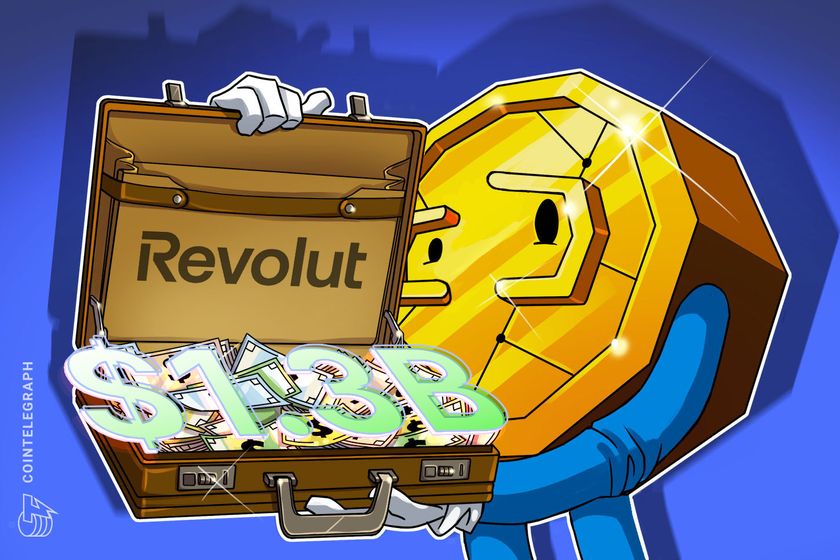
Fintech giant Revolut reported a record-breaking year, doubling its pre-tax profit to 1 billion British pounds ($1.3 billion) in 2024, driven by rapid customer growth and a resurgence in cryptocurrency trading.

According to its annual report published on Thursday, April 24, Revolut’s profit soared from 438 million pounds in 2023, while revenue jumped to 3.1 billion pounds from 1.8 billion pounds.

A key contributor to Revolut’s strong performance was its wealth division, which includes stock and digital asset trading. The segment generated 506 million pounds in revenue — nearly four times higher than in 2023 — as crypto trading activity rebounded.

Revolut doubles profits to $1.3B on user growth, crypto trading boomRevolut’s increasing profit. Source: Revolut

Revolut added nearly 15 million new users in 2024, pushing its total customer base past 50 million. This expansion boosted revenue from card payment fees and interest on deposits, the fintech’s two largest income streams.

Founder and CEO Nik Storonsky said in the report that “2024 was another landmark year for Revolut, with continued growth across all key business areas.”

Related: Pyth partners with Revolut for real-time digital asset data

Revolut receives long-awaited UK banking license

Storonsky noted that the company obtained a long-awaited UK banking license in 2024, which was secured in July after a three-year regulatory process.

The license paved the way for Revolut to expand its lending services, including credit cards, buy-now-pay-later products and potentially mortgages, which the company confirmed are currently in testing.

“We received a UK banking license (with restrictions), paving the way for future product enhancements in our home market,” Storonsky said.

In May 2024, Revolut introduced Revolut X, a dedicated desktop crypto exchange targeting experienced traders. The platform offers trading for 100 tokens with low fees and real-time on/off-ramp capabilities, with plans to expand to mobile in 2025.

In November, Revolut expanded its crypto exchange in Europe, rolling out Revolut X in 30 markets across the European Economic Area (EEA), including Belgium, Cyprus, Denmark and others.

Revolut doubles profits to $1.3B on user growth, crypto trading boomRevolut launches new products. Source: Revolut.

Revolut continued to expand its digital asset services during the year, offering customers access to cryptocurrencies alongside other investment options like stocks, ETFs, bonds and commodities within its app ecosystem, per the annual report.

Related: Revolut and Ledger wallet enable new crypto rails in EEA

Revolut struggles to attract banking customers

Despite its growth, Revolut faces challenges in converting users of its popular app into primary banking customers.

Growing deposit volumes remain critical for funding future lending operations and competing with established retail banks. In 2024, total customer balances rose to $39.8 billion from $23.9 billion.

Revolut is also focusing on expanding its premium subscription base, with revenue from paid plans climbing 74% year-on-year to 423 million pounds, per the report.

Additionally, its business services arm now accounts for 15% of total revenue, reflecting efforts to diversify income streams beyond retail banking.

Looking ahead, Storonsky said Revolut intends to reach 100 million daily active users across 100 countries.

Magazine: Ethereum maxis should become ‘assholes’ to win TradFi tokenization race

Read more at cointelegraph.com