
cointelegraph.com

Your digital identity got stolen — Now what?

What is digital identity?

Your digital identity is the fingerprint you leave across the internet, a living map of who you are.

Your digital identity is more than just your name or email; it stretches from your social media profiles and crypto wallet addresses to your device fingerprints and even the rhythms of your daily browsing habits. In the fast-moving world of cryptocurrency, where identity and financial access often overlap, digital identity theft isn’t just a nuisance; it’s an open door to your assets. 
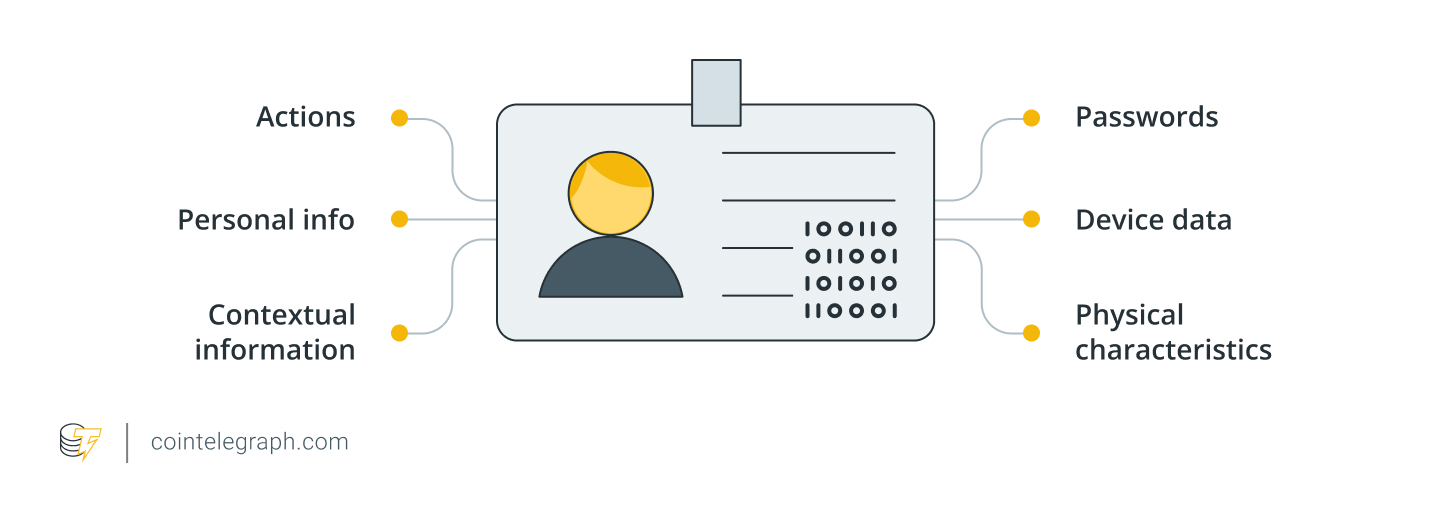
What is digital identity

Without strong protection, even small pieces of stolen information can be stitched into a full profile, giving cybercriminals everything they need to impersonate you, seize your funds or lock you out of your accounts.

What many don’t realize is how quickly this exposure happens. Every new wallet connection, exchange login, or saved payment method quietly expands your digital surface area. With each step, your data becomes more valuable and more vulnerable. In a landscape where information is currency, your cyber identity can become a jackpot for hackers who know how to cash it out.

Did you know? In 2025, experts estimate that over 50 billion digital identities could be compromised worldwide, a 22% jump from last year. Crypto users are among the biggest targets, especially on decentralized finance (DeFi) platforms without strong identity checks. Synthetic identity fraud is also exploding, hitting new crypto lending services the hardest.

How cybercriminals steal your digital identity

Cybercriminals blend technology and manipulation to pry open digital identities.

Phishing remains a common entry point, where fake websites or emails trick users into revealing passwords or seed phrases. Large personal data breaches leak databases of usernames, emails and credentials, fueling account takeover attacks across different services.

Hackers also exploit:

Synthetic identity fraud: combining real and fake data to create new identities.Social engineering attacks: manipulating users emotionally to voluntarily reveal sensitive information.Credential stuffing: using leaked passwords on other platforms, hoping users reused them.

Knowing how criminals exploit crypto markets and digital ecosystems can make it much harder to be tricked.

Stolen identity, sold forever on the dark web

Once your data is stolen, it often ends up for sale on the dark web, multiplying the threat.

Dark web identity theft is a thriving economy. Full identity profiles, including names, emails, Social Security Numbers (SSNs) and crypto keys can fetch high prices. Buyers may use the stolen identity immediately or resell it repeatedly, creating multiple waves of attacks months or even years later.

Even after you lock down your accounts, your leaked data can keep circulating in dark corners of the web. That’s why tools like dark web monitoring and breach alerts aren’t optional; they’re your long-term defense. Recovery isn’t a one-time fix. It’s a habit of staying alert and adapting.

Signs your digital identity has been stolen

Spotting the signs of identity theft early can stop criminals before they cause major damage.

Victims of cyber identity theft may notice strange transactions, denied logins or devices appearing that they don’t recognize. Sometimes the signs are financial — unauthorized credit card charges, changes in your crypto balances or unexpected loans under your name.

Key warning signs include:

Password reset requests you didn’t initiate.Locked-out accounts or sudden logouts across devices.New accounts or credit lines appearing on your financial history.Unexpected withdrawals or transfers from crypto wallets.

By catching the signs of identity theft early, you can shut down fraud before it spirals, and protect your money and your name.

What to do if your identity is stolen

Fast, clear action gives you the best chance to limit the damage from identity theft.

If you realize your identity has been stolen, the first priority is locking down access. Update your passwords across all platforms, enable two-factor authentication (2FA) protection, and revoke access to any suspicious sessions or devices. Most major exchanges, banks and crypto services allow you to temporarily freeze your accounts while you investigate.

Beyond immediate security steps, you should report the incident to authorities and file a case with your local cybercrime unit or financial protection agency. 

Using online help services can speed up your response plan. These initial moves through clear recovery steps are critical to regaining control before criminals spread the attack further.

Recovery steps after digital identity theft

Recovering from identity theft involves more than just securing your passwords; it’s a complete rebuild of your digital trust.

After locking down your accounts and alerting key institutions, you need to start active monitoring. This means regularly reviewing your bank statements, checking your crypto wallets for unauthorized transactions and inspecting your credit report for any new activity.

Some victims also pursue:

Filing fraud alerts or credit freezes with major credit agencies.Hiring professional identity recovery services.Exploring identity theft insurance to cover legal and investigative costs.

Full recovery can take months, but a systematic approach reduces financial and emotional damage.

How to protect your digital identity

Good security habits are the strongest defense against cybercriminals.

Crypto platforms and companies should adopt decentralized blockchain-based identity solutions. These systems ensure that your data remains secure, transparent and in your control, making it much harder for hackers to manipulate or steal your personal information.

Unlike centralized systems, blockchain-based identities are stored on a distributed ledger, reducing single points of failure and making it significantly more difficult for cybercriminals to gain unauthorized access. Furthermore, decentralized identity systems enable users to verify their identities without exposing sensitive personal data, allowing for more privacy and control over who sees their information.

Your digital identity got stolen — Now what?

For users, fortifying their digital identity isn’t about ticking boxes; it’s about building sharp habits that evolve with the risks. Here’s how to stay ahead:

Treat passwords like armor: Use strong, unique combinations for every account. A password manager can forge and guard them better than memory ever could.Double down with 2FA: One password isn’t enough, so add an extra lock on every door worth protecting, especially your finances and crypto.Practice digital minimalism: Every birthday, pet name or photo shared online can become ammo for hackers. Choose smart allies: Stick with crypto platforms that prioritize decentralized digital identity verification and real security, not just flashy promises.Watch, detect, respond: Set alerts and monitor your accounts. Spotting strange activity early can turn a disaster into a close call.Be stingy with your data: Only trust platforms that collect the bare minimum. If a site asks for too much, walk away.Avoid easy mistakes: Public WiFi is a hacker’s playground. Use a VPN when you connect, and regularly check if your credentials have leaked.

The less you reveal, the safer you stay. 

Update, review, repeat: Your digital identity depends on it

Maintaining your digital identity is a daily practice, not a one-time setup.

Regularly update your passwords and security settings. Review app permissions, device authorizations and wallet connections at least every few months. Incorporating biometric authentication (fingerprints or facial scans) adds a critical physical layer of protection beyond passwords.

Understanding how hackers manipulate crypto — from phishing for private keys to setting traps with fake decentralized applications (DApps) — is what keeps you a step ahead. In today’s world, staying sharp about cybersecurity isn’t optional. It’s a basic survival skill, right up there with managing your money or protecting your home.

The future will only become more digital and more decentralized. Defending your digital identity today means preserving your independence tomorrow.

Read more at cointelegraph.com

US DOJ requests 20-year sentence for Celsius founder Alex Mashinsky

Alex Mashinsky, the founder and former CEO of the now-defunct cryptocurrency lending platform Celsius, faces a 20-year prison sentence as the US Department of Justice (DOJ) seeks a severe penalty for his role in a multibillion-dollar fraud.

The DOJ on April 28 filed the government’s sentencing memorandum against Mashinsky, recommending a 20-year prison sentence for his fraudulent actions, which led to billions of dollars in losses for Celsius customers.

The 97-page memo mentioned that Celsius users were unable to access approximately $4.7 billion in crypto assets after the platform halted withdrawals on June 12, 2022.

“The Court should sentence Alexander Mashinsky to twenty years’ imprisonment as just punishment for his years-long campaign of lies and self-dealing that left in its wake billions in losses and thousands of victimized customers,” the DOJ stated.

Mashinsky’s personal benefit was $48 million

In addition to the investor losses, the DOJ noted that Mashinsky has personally profited from the fraudulent schemes in his role.

As part of his guilty plea in December 2024, Mashinsky admitted that he was the leader of the criminal activity at Celsius, that his crimes resulted in losses in excess of $550 million, and that he personally benefited more than $48 million, the DOJ said.

US DOJ requests 20-year sentence for Celsius founder Alex MashinskyAn excerpt from the government’s sentencing memorandum against Celsius founder Alex Mashinsky. Source: CourtListener

The DOJ highlighted that Mashinsky’s guilty plea showed that his crimes were “not the product of negligence, naivete, or bad luck,” but rather the result of “deliberate, calculated decisions to lie, deceive, and steal in pursuit of personal fortune.”

Related: Prosecutors seek over 6 years prison for Mango Markets exploiter

The memorandum came days before Mashinsky’s sentencing hearing, which is scheduled for May 8, and will be presided over by US District Judge John Koeltl in the Southern District of New York.

Previously, former SEC Chair Jay Clayton, who was sworn in as interim US Attorney for Manhattan last week, shared in an April 23 letter that at least 200 victims filed statements in the case against Mashinsky.

Other Celsius co-founders

While Mashinsky emerged as a key figure in the Celsius fraud, others were involved in the massive cryptocurrency scam, including Shlomi Daniel Leon, who co-founded Celsius with Mashinsky in 2017.

Formerly the chief strategy officer (CSO) of Celsius, Leon quit his job in October 2022, months after Celsius’ collapse in June.

Cryptocurrencies, Fraud, Law, United States, Lending, Court, Celsius, PolicyCelsius CSO Shlomi Daniel Leon (left) and Celsius co-founder Alex Mashinsky. Source: Calcalistech 

In July 2023, the Federal Trade Commission charged Leon, along with Mashinsky and another co-founder, Hanoch Goldstein, and issued a $4.7 billion fine against the bankrupt lender.

Magazine: Bitcoin $100K hopes on ice, SBF’s mysterious prison move: Hodler’s Digest, April 20 – 26

Read more at cointelegraph.com

1inch launches on Solana with crosschain swaps in the pipeline

Decentralized exchange (DEX) aggregator 1inch has launched on Solana, marking a significant step toward its vision of a “unified multichain” decentralized finance (DeFi) ecosystem.

According to a press release shared with Cointelegraph, the integration enables users to trade over 1 million Solana-based tokens directly through the 1inch decentralized application (DApp), benefiting from maximal extractable value-protected swaps, optimized rates and open-source smart contract infrastructure.

The move brings 1inch’s Fusion protocol to Solana for the first time. Fusion enables users to define their ideal swap parameters, which are then executed by competing professional market makers, or “resolvers,” using Dutch auction mechanics.

Combined with Solana’s ultra-fast block times, the setup promises more efficient and seamless trading execution than other networks.

A 1inch representative told Cointelegraph that users could expect “minimal fees” when executing swaps on Solana. “Users may expect costs of less than one cent,” they said.

Related: Solana’s Loopscale pauses lending after $5.8M hack

1inch to launch crosschain swaps for Solana

In addition to enabling Solana-based swaps, 1inch revealed plans to roll out crosschain functionality in the coming months, aiming to allow swaps between Solana and more than 10 other blockchains already supported by 1inch.

“At this stage, there is no fixed launch date,” the 1inch representative said. “However, development is progressing well, and we expect the feature to go live in the coming months.”

1inch launches on Solana with crosschain swaps in the pipeline1inch’s crosschain swaps functionality. Source: 1inch
The representative said that crosschain swaps will initially support the 10 blockchains already integrated into 1inch’s crosschain swap ecosystem. The final list will be confirmed closer to launch.

1inch’s expansion into Solana comes as the blockchain has outperformed Ethereum and layer-2 networks in several key DeFi metrics.

Over the past three months, it posted a 33% higher DEX trading volume ($539 billion), handled 400% more transactions, and hosted 180% more active addresses than its rivals, according to data from Dune Analytics.

Related: Solana whale sits on $153M profit after 4-year staking play

“Both Solana and Ethereum play critical roles in the evolving DeFi landscape,” the 1inch representative said.

They said that while Ethereum’s network effects and liquidity depth continue to dominate today, Solana’s performance improvements and growing adoption make it a serious contender.

The integration also includes access to six APIs through the 1inch Developer Portal, giving builders tools to create new DApps and services on top of the 1inch-Solana infrastructure.

On Sept. 12, 2024, 1inch first revealed the details of its solution to crosschain interoperability issues when it published a white paper about the intent-based, crosschain interoperability protocol it was developing. 

On Sept. 18, 2024, the DEX aggregator revealed “Fusion+” to allow users to swap their digital assets crosschain while retaining self-custody of the assets. 

Magazine: Ethereum is destroying the competition in the $16.1T TradFi tokenization race

Read more at cointelegraph.com

Russian ruble stablecoin: Exec lists 7 ‘Tether replica’ features

The concept of a Russian ruble stablecoin received special attention at a major local crypto event, the Blockchain Forum in Moscow, with key industry executives reflecting on some of the core features a ruble-backed stablecoin might require.

Sergey Mendeleev, founder of the digital settlement exchange Exved and inactive founder of the sanctioned Garantex exchange, put forward seven key criteria for a potential “replica of Tether” in a keynote at the Blockchain Forum on April 23.

Mendeleev said a potential ruble stablecoin must have untraceable transactions and allow transfers without Know Your Customer (KYC) checks.

However, because one of the criteria also requires the stablecoin to comply with Russian regulations, he expressed skepticism that such a product could emerge soon.

The DAI model praised 

Mendeleev proposed that a potential Russian “Tether replica” must be overcollateralized similarly to the Dai (DAI) stablecoin model, a decentralized algorithmic stablecoin that maintains its one-to-one peg with the US dollar using smart contracts.

“So, any person who buys it will understand that the contract is based on the assets that super-securitize it, not somewhere on some unknown accounts, but free to be checked by simple crypto methods,” he said.

Russian ruble stablecoin: Exec lists 7 ‘Tether replica’ featuresSource: Cointelegraph

Another must-have feature should be excess liquidity on both centralized and decentralized exchanges, Mendeleev said, adding that users must be able to exchange the stablecoin at any time they need.

According to Mendeleev, a viable ruble-pegged stablecoin also needs to offer non-KYC transactions, so users are not required to pass their data to start using it.

“The Russian ruble stablecoin should have the opportunity where people use it without disclosing their data,” he stated.

Related: Russia’s central bank, finance ministry to launch crypto exchange

In the meantime, users should be able to earn interest on holding the stablecoin, Mendelev continued, adding that offering this feature is available via smart contracts.

Russia opts for centralization

Mendeleev also suggested that a potential Russian version of Tether’s USDt (USDT) would need to feature untraceable and cheap transactions, while its smart contracts should not enable blocks or freezes.

The final criterion is that a potential ruble stablecoin would have to be regulated in accordance with the Russian legislation, which currently doesn’t look promising, according to Mendeleev.

Russia, KYC, Fiat Money, Tether, Stablecoin, PolicySergey Mendeleev at the Blockchain Forum in Moscow. Source: Bits.Media

“Once we put these seven points together […] then it would be a real alternative, which would help us at least compete with the solutions that are currently on the market,” he stated at the conference, adding:

“Unfortunately, from the point of view of regulation, we are currently going in the absolutely opposite direction […] We are going in the direction of absolute centralization, not in the direction of liberalization of laws, but consolidation of prohibitions.”Possible solutions

While the regulatory side is not looking good, a potential Russian version of USDT is technically feasible, Mendeleev told Cointelegraph.

“Except for anonymous transactions, everything is easy to implement and has already been deployed by several projects, but it’s just not unified in one project yet,” he said.

The crypto advocate specifically referred to interesting opportunities by projects like the ruble-pegged A7A5 stablecoin, unblockable contracts at DAI, and others.

Related: Russian crypto exchange Mosca raided amid cash-to-crypto ban talks

Regulation is necessary but not enough, Mendeleev said, adding that the most difficult part is the trust of users who must see the ruble stablecoin as a viable alternative to major alternatives like USDT.

Recent reports suggest that the deputy head of Russia’s Finance Ministry’s financial policy department urged the government to develop ruble stablecoins.

Elsewhere, the Bank of Russia has continued to progress its central bank digital currency project, the digital ruble. According to Finance Minister Anton Siluanov, the digital ruble is scheduled to be rolled out for commercial banks in the second half of 2025.

Magazine: Bitcoin $100K hopes on ice, SBF’s mysterious prison move: Hodler’s Digest, April 20 – 26

Read more at cointelegraph.com

Abu Dhabi institutional giants team up for dirham stablecoin

A trio of major Abu Dhabi institutions, including the Emirate’s sovereign wealth fund, have teamed up to launch a new dirham-pegged stablecoin.

Abu Dhabi’s sovereign wealth fund ADQ, the United Arab Emirates’ largest bank, First Abu Dhabi Bank (FAB), and the massive conglomerate the International Holding Company, have partnered to launch the stablecoin, pending regulatory approval, the three companies said on April 28.

The trio said the stablecoin would be regulated by the UAE’s central bank and backed by the country’s currency, the dirham. It will also support use cases such as machine-to-machine and artificial intelligence.

Payments, StablecoinSource: IHC

The goal is to place the UAE at the “forefront of global blockchain innovation,” while also strengthening the digital infrastructure, according to ADQ.

If it gets the nod from regulators, the new stablecoin will operate on the ADI blockchain, created by the ADI Foundation, a nonprofit organization dedicated to helping established financial systems and governments advance and adopt blockchain technology.

Established in 2018, ADQ is a sovereign wealth fund focused on critical infrastructure and global supply chains. Meanwhile, IHC is one of the UAE’s largest investment firms and conglomerates with a market value of over $243 billion that has ties to the ruling family of Abu Dhabi, the country’s capital.

FAB is the largest bank in the UAE, formed in 2017 through a merger between First Gulf Bank and National Bank of Abu Dhabi.

Countries line up to challenge US dollar stablecoins

Other countries have also announced plans to launch stablecoins backed by currencies other than the US dollar.

The market cap of US dollar-denominated stablecoins crossed $230 billion in April, an increase of 54% since last year, with Tether (USDT) and USDC (USDC) dominating 90% of the market.

Related: UAE stablecoin issuer gets nod from central bank

A Russian finance ministry official has floated a plan for the country to develop its own stablecoin after a freeze on wallets linked to the sanctioned Russian exchange Garantex by US authorities and stablecoin issuer Tether. 

However, an April 23 report from investment banking giant Citigroup predicts the stablecoin supply will remain US dollar-denominated, with non-US countries promoting national or central bank digital currency.

Magazine: DeFi will rise again after memecoins die down: Sasha Ivanov, X Hall of Flame

Read more at cointelegraph.com

Bankera founders used ICO funds on global property buys: Report

The founders of the crypto fintech firm Bankera used funds from the project’s 2018 initial coin offering to purchase luxury properties worldwide, according to a report by the Organized Crime and Corruption Reporting Project.

The OCCRP reported on April 28, citing leaked company records and bank statements, that nearly half of the funds from Bankera’s 100 million euro ($114 million) ICO were transferred to a bank in the Pacific Island country of Vanuatu that was purchased by the project’s founders, Vytautas Karalevičius, Justas Dobiliauskas and Mantas Mockevičius.

Soon after, the Vanuatu bank reportedly began issuing millions of euros in loans to companies owned by the trio to build a luxury real estate portfolio — including a villa in the French Riviera and high-end property in Lithuania, where the project was founded.

Bankera founders used ICO funds on global property buys: ReportBankera’s three founders. Source: Bankera

The leaked records and statements reportedly show that the funds were used to underwrite loans to other companies, which were then used to purchase high-end real estate. 

The Vanuatu bank also loaned millions more directly to the three founders for “personal use,” according to the OCCRP report.

Lawyers representing the founders reportedly denied that the ICO was fraudulent but declined to comment on specific transactions. 

Cointelegraph contacted Bankera for comment but did not receive an immediate response.

Bankera over-promised, under-delivered

Bankera pledged to become the “bank for the blockchain era,” offering a suite of retail and institutional investment services while holding and exchanging most of the largest cryptocurrencies.

Many investors were attracted to the Bankera (BNK) token ICO by the promise of discounted rates on Bankera’s services and products, along with the opportunity to earn weekly BNK payouts.

However, an investor in Bankera’s ICO told the OCCRP that those weekly payouts began to “drop significantly below the promised amount.”

The revenue-sharing scheme was reportedly halted in 2022.

Related: Tether scales crypto payments in Eastern Europe with new investment

Bankera also reportedly promised to obtain a European Union banking license, which is yet to materialize.

Despite the 100 million euro ICO raise, the fully diluted value of the BNK token is currently at $975,710, CoinGecko data shows.

Bankera continues to provide crypto-related banking services and maintains an active social media presence on LinkedIn and, to a lesser extent, X.

Magazine: Financial nihilism in crypto is over — It’s time to dream big again

Read more at cointelegraph.com

Zurich Uni’s secret AI experiment manipulated Redditors’ opinions

Researchers at the University of Zurich have been accused of undertaking an unauthorized four-month-long experiment on a Reddit board using artificial intelligence-generated comments to test whether AI could alter people’s opinions. 

As part of the experiment, AI-powered accounts faked a variety of personas, including a rape victim, a person opposed to specific social movements and a trauma counselor specializing in abuse, moderators of the r/changemyview subreddit said in an April 26 post.

“Our sub is a decidedly human space that rejects undisclosed AI as a core value,” the moderators said. “People do not come here to discuss their views with AI or to be experimented upon.” 

The researchers used AI to generate responses but attempted to personalize the replies based on information from the original posters’ prior Reddit history, such as political orientation, gender, age, and ethnicity, according to a draft of the paper.

Zurich Uni’s secret AI experiment manipulated Redditors’ opinionsModerators of the r/changemyview subreddit say researchers at the University of Zurich conducted an unauthorized experiment within their community. Source: Reddit

Over the four-month experiment, Zurich University’s fake AI accounts posted 1,783 comments and received 137 deltas — a mark showing when another Reddit user acknowledged the account had persuaded them to change their opinion on an issue. 

The researchers said in a post to the subreddit that all comments were manually reviewed before posting to ensure they met the community guidelines and to “minimize potential harm.”

Social MediaThe university team argued that the potential benefits of this research substantially outweigh its risks. Source: Reddit

The university team argued that the “potential benefits of this research substantially outweigh its risks” because they have found that the large language models used in the experiment can be highly persuasive, surpassing all “previously known benchmarks of human persuasiveness.”

“Our controlled, low-risk study provided valuable insight into the real-world persuasive capabilities of LLMs — capabilities that are already easily accessible to anyone and that malicious actors could already exploit at scale for far more dangerous reasons,” the researchers said. 

At the same time, the researchers said the experiment shows that distinguishing humans from AI still faces significant challenges because nobody in the subreddit discovered the AI bots during the entire experiment. 

The r/changemyview board has 3.8 million members and ranks among the top 1% of subreddits by size.

Reddit considers legal options 

The Reddit board’s moderators said they were unaware of the experiment and have asked the university for an apology and to block the publication of the research. 

Reddit might also be considering legal action, as the platform’s chief legal officer, Ben Lee, said in a follow-up April 28 post that the experiment broke the site’s user agreement and rules, and all known accounts associated with the University of Zurich research effort were now banned. 

“We are in the process of reaching out to the University of Zurich and this particular research team with formal legal demands,” Lee said. 

“We want to do everything we can to support the community and ensure that the researchers are held accountable for their misdeeds here,” he added. 

Related: White House receives over 10,000 comments on AI development plan

In its response to the subreddit, the University of Zurich’s Faculty of Arts and Sciences Ethics Commission said it had investigated the incident and promised to coordinate better with test subjects in the future. The lead investigator for the project was also issued a formal warning.

“This project yields important insights, and the risks are minimal. This means that suppressing publication is not proportionate to the importance of the insights the study yields,” the ethics commission said. 

The University of Zurich did not immediately respond to a request for comment. Cointelegraph did not immediately receive a response to questions sent to an email address associated with the experiment.

Magazine: Bitcoin $100K hopes on ice, SBF’s mysterious prison move: Hodler’s Digest

Read more at cointelegraph.com

Samourai Wallet, feds ask for time to mull dropping crypto mixer case

US federal prosecutors and the co-founders of the crypto mixer Samourai Wallet have asked a court for more time to consider potentially dismissing the case after the Justice Department rolled back its crypto enforcement.

Lawyers for Samourai Wallet CEO Keonne Rodriguez and chief technology officer William Hill said in an April 28 letter to Manhattan federal judge Richard Berman that they jointly requested with the government “for a continuance of the pretrial motions schedule by 16 days.”

The Samourai executives’ lawyers said on April 10 that they wrote to Acting Manhattan US Attorney Jay Clayton to request the dismissal of the case after an April 7 memo from Deputy Attorney General Todd Blanche shuttered the Justice Department’s crypto team.

“On April 24, 2025, defense counsel met with the prosecutors and their supervisors in person at the U.S. Attorney’s Office to discuss this request,” the lawyers said.

“The Defendants believe that a continuance of the pretrial motions schedule is warranted to permit Defendants to avoid the significant expense of preparing their motions while the Government determines its position,” the letter stated.

It added that prosecutors agreed to adjourn “without expressing any views on the merits.”

Samourai Wallet’s Rodriguez and Hill were charged with conspiracy to commit money laundering and operating an unlicensed money transmitting business in April 2024, to which they both pleaded not guilty.

Blanche’s memo said, “The Department of Justice is not a digital assets regulator,” and it would abandon enforcement and investigations besides those which “focus on prosecuting individuals who victimize digital asset investors, or those who use digital assets in furtherance of criminal offenses.”

Samourai Wallet, feds ask for time to mull dropping crypto mixer caseAn excerpt of the letter to Judge Berman. Source: PACER

Currently, motions in the Samourai executives’ case are due May 13, responses are due on June 10, and replies on June 24. The letter proposes to put this back to May 29 for motions, June 26 for responses, and July 10 for replies.

The continuance would not affect the trial date, which is slated for early November. 

Quashing crypto litigation list lengthens 

The move is the latest in a long list of court actions to have prosecutors’ crypto cases quashed under the Trump administration’s favorable stance toward the industry. 

Related: SEC says it won’t re-file fraud case against Hex’s Richard Heart 

On April 9, SafeMoon CEO Braden John Karony, who is charged with wire fraud and money laundering, cited Blanche’s directive in a bid to get his case dismissed. 

Meanwhile, on April 28, the DeFi Education Fund petitioned the White House to drop charges against Tornado Cash co-founder Roman Storm and requested immediate action to “discontinue the Biden-era Department of Justice’s lawless campaign to criminalize open-source software development.” 

Magazine: Bitcoin $100K hopes on ice, SBF’s mysterious prison move: Hodler’s Digest

Read more at cointelegraph.com

US dollar to face growing competition for stablecoin dominance: Tether co-founder

While United States dollar-denominated stablecoins dominate the stablecoin and real-world asset (RWA) tokenization game, other competitors are coming into play, according to Tether co-founder Reeve Collins. 

Speaking to Cointelegraph in Dubai, Collins said that while USD-backed stablecoins may currently dominate, other currencies and assets may compete to back stablecoins. He said: 

“The stablecoin definitely helps preserve the dollar dominance, especially in the crypto space. The dollar is kind of the reserve currency of crypto. But now there are other currencies coming into play. But more importantly, it’s not currencies. It’s other types of backing.”

Collins said that these other assets used to back stablecoins may compete with US dollars by bringing a higher yield to users. 

US dollar to face growing competition for stablecoin dominance: Tether co-founderInterview with Tether co-founder Reeve Collins in Dubai, UAE. Source: Cointelegraph Tether co-founder says tokenized assets can back stablecoins

Collins, who works bringing stablecoin yield for users through Pi Protocol, told Cointelegraph that apart from currencies, money-market funds, other commodities and gold could back stablecoins in the future. 

“When you can back it with money market funds, for instance, that generate a higher yield than T-bills and other things like that that are coming onchain, where there’s a lot of yield that will be generated. Those will take precedence,” Collins said. 

Collins said these will “start winning” because they bring higher user returns. Furthermore, the executive also said RWA tokenization could play a role in stablecoin backing. 

The executive told Cointelegraph that since all types of assets can be tokenized, these can be used to back stablecoins in the future. “You’re going to have a lot of choices other than just dollars,” he added. 

Related: Tether boosts Juventus stake to 10% in latest strategic buy

Trump-linked stablecoin lays foundation for the rest of the world

In March, the World Liberty Financial (WLFI) project, backed by US President Donald Trump, launched its stablecoin on BNB Chain and Ethereum. However, the project said that the tokens were not tradable yet. 

According to Collins, the stablecoin entry of a Trump-backed project means that stablecoins are now “fully accepted.” The executive believes everyone will get involved in stablecoins because of the move. This includes institutions, governments and financial technology companies. 

“The President of the United States launched a stablecoin. It’s impressive. It lays the foundation for the rest of the world to do it as well,” he said. 

Magazine: Ethereum is destroying the competition in the $16.1T TradFi tokenization race

Read more at cointelegraph.com

US dollar facing growing competition for stablecoin dominance: Tether co-founder

While United States dollar-denominated stablecoins dominate the stablecoin and real-world asset (RWA) tokenization game, other competitors are coming into play, according to Tether co-founder Reeve Collins. 

Speaking to Cointelegraph in Dubai, Collins said that while dollar-backed stablecoins may be dominant, other currencies and assets may compete to back stablecoins.

“The stablecoin definitely helps preserve the dollar dominance, especially in the crypto space,” Collins said. “The dollar is kind of the reserve currency of crypto. But now there are other currencies coming into play. But more importantly, it’s not currencies. It’s other types of backing,” he added.

Collins said that other assets used to back stablecoins may compete with US dollars by bringing a higher yield to users. 

US dollar facing growing competition for stablecoin dominance: Tether co-founderInterview with Tether co-founder Reeve Collins in Dubai, UAE. Source: Cointelegraph Tether co-founder says tokenized assets can back stablecoins

Collins, who works bringing stablecoin yield for users through Pi Protocol, told Cointelegraph that apart from currencies, money-market funds, other commodities and gold could back stablecoins in the future. 

“When you can back it with money market funds, for instance, that generate a higher yield than T-bills and other things like that that are coming onchain, where there’s a lot of yield that will be generated. Those will take precedence,” Collins said. 

Collins said these will “start winning” because they bring higher user returns. Furthermore, the executive also said RWA tokenization could play a role in stablecoin backing. 

The executive told Cointelegraph that since all types of assets can be tokenized, these can be used to back stablecoins in the future. “You’re going to have a lot of choices other than just dollars,” he added. 

Related: Tether boosts Juventus stake to 10% in latest strategic buy

Trump-linked stablecoin lays foundation for the rest of the world

In March, the World Liberty Financial (WLFI) project, backed by US President Donald Trump, launched its stablecoin on BNB Chain and Ethereum. However, the project said that the tokens were not tradable yet. 

According to Collins, the stablecoin entry of a Trump-backed project means that stablecoins are now “fully accepted.” The executive believes everyone will get involved in stablecoins because of the move. This includes institutions, governments and financial technology companies. 

“The President of the United States launched a stablecoin. It’s impressive. It lays the foundation for the rest of the world to do it as well,” he said. 

Magazine: Ethereum is destroying the competition in the $16.1T TradFi tokenization race

Read more at cointelegraph.com