cointelegraph.com

Crypto execs beef up security following string of kidnappings: Report

Crypto industry executives are beefing up personal security and demanding more bodyguard services in response to a recent string of kidnapping and ransom attempts worldwide — particularly in France — targeting investors and professionals in the sector.

According to a Bloomberg report, Infinite Risks International, a private security firm based in Amsterdam, Netherlands, is seeing more inquiries into bodyguard services and more long-term clients signing up for a private security detail.

Additionally, French law enforcement officials recently announced enhanced security measures for crypto entrepreneurs and investors, following at least three separate kidnapping incidents so far in 2025.

The measures include security briefings and expedited access to police lines in the case of emergencies for the entrepreneurs and their families.

French law enforcement authorities also advised crypto investors not to advertise their wealth or wear crypto-branded clothing, lessening their chances of becoming targets. The disturbing string of incidents highlights the need for proactive safety measures and vigilance for crypto investors and industry professionals.

Related: Violent crypto robberies on the rise: Six attacks that targeted investors

Recent string of kidnappings and ransom attempts impacts France

David Balland, the co-founder of hardware wallet company Ledger, was kidnapped in January 2025 and held for ransom for several days before being rescued by French police.

In May 2024, the father of an unnamed crypto entrepreneur was freed from a ransom attempt after French law enforcement officials raided the location in a Paris suburb where the individual was being held hostage by organized criminals.

According to Le Parisien, the suspects severed one of the victim’s fingers — bearing a disturbing similarity to other crypto-related kidnapping cases in France where the victim was mutilated by the suspects.

Security, CrimesMasked assailants attempt to abduct the family of Pierre Noizat, co-founder of French crypto exchange Paymium. Source: Le Figaro

Shortly after, On May 13, the family of Pierre Noizat, the co-founder and CEO of French crypto exchange Paymium, was targeted in an attempted kidnapping.

Several masked assailants physically assaulted the family on the street and attempted to force Noizat’s daughter and grandson into a van in broad daylight.

The daughter and another pedestrian managed to fight off the attackers and force them into retreat, preventing the family from being abducted.

The high visibility and brazenness of the crime sent shockwaves through the crypto world, leading French interior minister Bruno Retailleau to call for a meeting with industry executives to discuss the incidents and propose enhanced security measures for at-risk crypto professionals and high net worth investors.

Magazine: Bitcoiner sex trap extortion? BTS firm’s blockchain disaster: Asia Express

Read more at cointelegraph.com

Ethereum back to $3K in May? Latest rebound says ETH price 'still has more gas'

Key points:

Ether price rose 3% to $2,550 on May 18, triggering $22 million in short ETH liquidations.

A bull flag on the chart suggests a $3,700 target, with analysts predicting Bitcoin’s price to go as high as $5,000 in May.

Ether’s (ETH) price was up on May 18, rising more than 2.5% over the last 24 hours to trade at $2,536. This recovery reinforces the optimism among traders that ETH price could hit $3,000 in May, citing strong technicals.

Ether wipes out $7.5 million shorts in an hour

Data from Cointelegraph Markets Pro and Bitsamp shows that ETH rose by more than 4.5% to an intraday high of $2,551 on May 18 from a low of $2,440 the previous day.

Cryptocurrencies, Markets, Market Analysis, Ether Price, Ethereum PriceETH/USD daily chart. Source: Cointelegraph/TradingView

Accompanying Ether’s losses today are significant liquidations across the crypto market. According to data from CoinGlass, more than $158 million leveraged crypto positions have been liquidated over the last 24 hours, with $95 million representing long liquidations.

Short Ether liquidations amounted to $22.25 million, with the $7.5 million being wiped out in the last hour alone.

Cryptocurrencies, Markets, Market Analysis, Ether Price, Ethereum PriceTotal liquidations across the crypto market. Source: CoinGlass

This means that short traders were caught off guard by Ether’s return to $2,500.

Additional CoinGlass data showed several bands of seller interest above the spot price, with ask orders worth over $384 million building up all the way up to $3,000. This suggested that the ongoing recovery might be capped at this level.

Cryptocurrencies, Markets, Market Analysis, Ether Price, Ethereum PriceETH liquidation heatmap. Source: CoinGlassIs Ether’s recovery back?

Market analysts believe Ether’s recent drop was a technical correction to retest key support levels before continuing its uptrend toward $3,000 and beyond. 

Titan of Crypto said that the weekly Stochastic RSI’s value at 79 suggests that ETH “still has more gas in the tank” to move higher.

#Ethereum might still have more gas in the tank ⛽️The weekly Stochastic RSI suggests there’s still room before reaching extreme overbought territory, possibly a few more weeks to go. #ETH pic.twitter.com/atCm93napO

— Titan of Crypto (@Washigorira) May 17, 2025

Ether’s downside may be capped at $2,400, according to pseudonymous analyst Chimp of the North. 

The analyst shared a chart suggesting that the altcoin could continue its retracement to retest $2,400 support before launching another rally toward the $3,000-$3,300 range.

Ethereum back to $3K in May? Latest rebound says ETH price 'still has more gas'ETH/USD chart. Source: Chimp of the North

Fellow analyst Crypto Patel projected a deeper retracement for Ether, saying that ETH price could potentially drop $1,800 before launching a move higher.

“This area is a high-probability zone for bullish re-entry if price shows support,” the analyst wrote as part of a May 17 post of X, adding:

“If demand holds here, the next leg up toward $4,000–$5,000 could follow.”Ethereum back to $3K in May? Latest rebound says ETH price 'still has more gas'ETH/USD daily chart. Source: Crypto Patel

As Cointelegraph reported, ETH could hit new all-time highs around $5,000, fueled by AI adoption, spot ETF inflows, and the latest improvements through the Pectra upgrade.

Related: Price predictions 5/16: BTC, ETH, XRP, BNB, SOL, DOGE, ADA, SUI, LINK, AVAX

Ether price bull flag is still in play

From a technical perspective, ETH price is still trading above a bull flag pattern in the four-hour timeframe, a bullish setup that forms after the price consolidates inside a down-sloping range following a sharp price rise.

The bull flag was confirmed on May 13 when the price broke above the upper trendline at $2,550. Ether is now retesting the upper boundary of the flag, currently at $2,470, which is acting as immediate support. 

A daily candlestick close above this level could see the asset resume its uptrend toward the technical target of the bull flag at $3,720, up 50% from the current price.

Ethereum back to $3K in May? Latest rebound says ETH price 'still has more gas'ETH/USD four-hour chart. Source: Cointelegraph/TradingView

Conversely, the RSI has dropped from 60 to 42 over the last 24 hours, suggesting that the ongoing correction may continue if profit-taking intensifies.

A daily candlestick close below the support level at $2,470 will increase the chances of a price drop to $2,400 and then to the flag’s lower boundary at $2,300. 

This article does not contain investment advice or recommendations. Every investment and trading move involves risk, and readers should conduct their own research when making a decision.

Read more at cointelegraph.com

Ethereum back to $3K in May? Latest rebound says ETH price 'still has more gas'

Key points:

Ether price rose 3% to $2,550 on May 18, triggering $22 million in short ETH liquidations.

A bull flag on the chart suggests a $3,700 target, with analysts predicting Bitcoin’s price to go as high as $5,000 in May.

Ether’s (ETH) price was up on May 18, rising more than 2.5% over the last 24 hours to trade at $2,536. This recovery reinforces the optimism among traders that ETH price could hit $3,000 in May, citing strong technicals.

Ether wipes out $7.5 million shorts in an hour

Data from Cointelegraph Markets Pro and Bitsamp shows that ETH rose by more than 4.5% to an intraday high of $2,551 on May 18 from a low of $2,440 the previous day.

Cryptocurrencies, Markets, Market Analysis, Ether Price, Ethereum PriceETH/USD daily chart. Source: Cointelegraph/TradingView

Accompanying Ether’s losses today are significant liquidations across the crypto market. According to data from CoinGlass, more than $158 million leveraged crypto positions have been liquidated over the last 24 hours, with $95 million representing long liquidations.

Short Ether liquidations amounted to $22.25 million, with the $7.5 million being wiped out in the last hour alone.

Cryptocurrencies, Markets, Market Analysis, Ether Price, Ethereum PriceTotal liquidations across the crypto market. Source: CoinGlass

This means that short traders were caught off guard by Ether’s return to $2,500.

Additional CoinGlass data showed several bands of seller interest above the spot price, with ask orders worth over $384 million building up all the way up to $3,000. This suggested that the ongoing recovery might be capped at this level.

Cryptocurrencies, Markets, Market Analysis, Ether Price, Ethereum PriceETH liquidation heatmap. Source: CoinGlassIs Ether’s recovery back?

Market analysts believe Ether’s recent drop was a technical correction to retest key support levels before continuing its uptrend toward $3,000 and beyond. 

Titan of Crypto said that the weekly Stochastic RSI’s value at 79 suggests that ETH “still has more gas in the tank” to move higher.

#Ethereum might still have more gas in the tank ⛽️The weekly Stochastic RSI suggests there’s still room before reaching extreme overbought territory, possibly a few more weeks to go. #ETH pic.twitter.com/atCm93napO

— Titan of Crypto (@Washigorira) May 17, 2025

Ether’s downside may be capped at $2,400, according to pseudonymous analyst Chimp of the North. 

The analyst shared a chart suggesting that the altcoin could continue its retracement to retest $2,400 support before launching another rally toward the $3,000-$3,300 range.

Ethereum back to $3K in May? Latest rebound says ETH price 'still has more gas'ETH/USD chart. Source: Chimp of the North

Fellow analyst Crypto Patel projected a deeper retracement for Ether, saying that ETH price could potentially drop $1,800 before launching a move higher.

“This area is a high-probability zone for bullish re-entry if price shows support,” the analyst wrote as part of a May 17 post of X, adding:

“If demand holds here, the next leg up toward $4,000–$5,000 could follow.”Ethereum back to $3K in May? Latest rebound says ETH price 'still has more gas'ETH/USD daily chart. Source: Crypto Patel

As Cointelegraph reported, ETH could hit new all-time highs around $5,000, fueled by AI adoption, spot ETF inflows, and the latest improvements through the Pectra upgrade.

Related: Price predictions 5/16: BTC, ETH, XRP, BNB, SOL, DOGE, ADA, SUI, LINK, AVAX

Ether price bull flag is still in play

From a technical perspective, ETH price is still trading above a bull flag pattern in the four-hour timeframe, a bullish setup that forms after the price consolidates inside a down-sloping range following a sharp price rise.

The bull flag was confirmed on May 13 when the price broke above the upper trendline at $2,550. Ether is now retesting the upper boundary of the flag, currently at $2,470, which is acting as immediate support. 

A daily candlestick close above this level could see the asset resume its uptrend toward the technical target of the bull flag at $3,720, up 50% from the current price.

Ethereum back to $3K in May? Latest rebound says ETH price 'still has more gas'ETH/USD four-hour chart. Source: Cointelegraph/TradingView

Conversely, the RSI has dropped from 60 to 42 over the last 24 hours, suggesting that the ongoing correction may continue if profit-taking intensifies.

A daily candlestick close below the support level at $2,470 will increase the chances of a price drop to $2,400 and then to the flag’s lower boundary at $2,300. 

This article does not contain investment advice or recommendations. Every investment and trading move involves risk, and readers should conduct their own research when making a decision.

Read more at cointelegraph.com

Don’t believe the noise: There can never be too many L2s

Opinion by: Igor Mandrigin, co-founder and CTPO of Gateway.fm

Every couple of weeks, it seems another layer 2 rolls out, much to the chagrin of some Web3 industry commentators who are concerned about fragmentation. A recent Gemini Institutional Insights report actually noted how a new Ethereum L2 solution is launched approximately every 19 days. In response to the seemingly endless conveyor belt of new zkEVMs and optimistic rollups coming to market, the chorus of criticism continues to grow louder: “This is definitely the saturation point, no more chains are needed.”

Some of the most outspoken critics of L2s argue that L2s are redundant, but this is narrow thinking. In many ways, the idea that creating new L2s should be slowed down is like arguing that there were too many websites in 1998. The proliferation of L2s is not causing the Web3 space to become overly bloated or fragmented at all. The number of chains today isn’t too many. It’s laughably few, and right now is the early innings of a multi-decade explosion in specialized, modular blockchain infrastructure.

The rise of L2s is far from a passing fad

While some contend that this L2 surge we’ve been experiencing is merely a temporary frenzy led by DeFi degenerates, it’s really an enterprise-grade infrastructure expansion, as banks (including Deutsche Bank), game studios (gaming activity on some L2 blockchains rose by over 20,000% in February 2025), logistics networks and global manufacturers get on board. 

Industries like banking and logistics, which are typically risk-averse, don’t make major tech pivots lightly. They do so because they have to, and in many cases, public blockchains do not meet their needs. Returning to their inherent risk-averse DNA, large enterprises and institutions in these sectors generally won’t want to build on shared, general-purpose L1s. Instead, they’ll want to deploy their own chains where they can enjoy custom performance, predictable costs, jurisdictional compliance and granular-level privacy.

This focus on proprietary networks isn’t solely a Web3 thing. Let’s think about it. Did Facebook, Netflix and JPMorgan co-host on GeoCities? Of course not, so why would Web3 be any different? Shared L1s and monolithic architectures might have worked for early token experiments and composable DeFi primitives. Still, realistically, they can’t support real-world businesses’ complexity, regulatory burden or contractual requirements.

The growing viability of L2s

Thanks to modular stacks, rollup-as-a-service platforms and breakthrough zero-knowledge proof technology, spinning up a dedicated chain is becoming increasingly viable and accessible to a wide range of enterprises across the industry spectrum. As the infrastructure improves, the cost of launching and maintaining specialized chains will also reduce, so a substantial rise in the number of L2s can be expected as time goes on.

Recent: Devs introduce Ethereum R1 layer-2 scaling solution

Some onlookers will argue that this future will be convoluted for users forced to hop between chains while voicing concerns about liquidity fragmentation and the dispersal of tradable assets across multiple platforms. These are short-sighted concerns. We’re building toward seamless interoperability through shared settlement layers, trust-minimized bridges and unified account abstraction. Ultimately, the end-user won’t care whether they’re on rollup #4,318 or chain #9,072; they’ll just transact with ease and be happy with that. 

In the same way that cloud computing unlocked hyper scale by abstracting the hardware layer, modular blockchains are unlocking hyperscale for value transfer, asset issuance and programmable trust. Irrespective of what the doubters say, specialized L2s won’t cannibalize each other. They’ll serve different verticals, jurisdictions and use cases. There is no reason why an L2 for high-frequency trading can’t easily coexist with an L2 for national land registries.

We’re not drowning in chains — we’re barely ankle-deep in the grand scheme of things. Anyone seriously betting on consolidation or some magical “winner-take-all” chain is just betting against scale and sovereignty. The real bet is hundreds of L2s and thousands of use cases as part of one modular, scalable future.

Opinion by: Igor Mandrigin, co-founder and CTPO of Gateway.fm.

This article is for general information purposes and is not intended to be and should not be taken as legal or investment advice. The views, thoughts, and opinions expressed here are the author’s alone and do not necessarily reflect or represent the views and opinions of Cointelegraph.

Read more at cointelegraph.com

BTC price to $116K next? Bitcoin trader sees 'early week' all-time high

Key points:

Bitcoin is convincing traders that an upside breakout is around the corner, with all-time highs in sight.

One target demands $116,000 next week, moving BTC/USD firmly out of its narrow range.

A quick dip before continuing higher is among the options for BTC price action into the new week.

Bitcoin (BTC) reduced volatility to a minimum into the May 18 weekly close as traders bet on a fresh breakout.

BTC price to $116K next? Bitcoin trader sees 'early week' all-time highBTC/USD 4-hour chart. Source: Cointelegraph/TradingViewBTC price brews classic breakout signal

Data from Cointelegraph Markets Pro and TradingView showed the area around $103,000 acting as a BTC price magnet throughout the weekend.

Now barely fluctuating up or down, BTC/USD was primed for a liquidity grab, with $105,000 and $103,000 both targets, data from monitoring resource CoinGlass confirmed.

BTC price to $116K next? Bitcoin trader sees 'early week' all-time highBTC liquidation heatmap. Source: CoinGlass

Commenting on the current market structure, traders remained broadly bullish, anticipating a rematch with all-time highs and the return of price discovery.

“Next early week Bitcoin target: $116,000,” popular trader Alan summarized in his latest short-term prediction on X.

An accompanying chart underscored the lack of volatility characterizing BTC/USD over the past week.

“$BTC is brewing within this converging triangle with decreasing volume, which is a common indicator of potential for a Breakout,” Alan added.

BTC price to $116K next? Bitcoin trader sees 'early week' all-time highBTC/USD 4-hour chart. Source: Trader Tardigrade/X

Fellow trader Mikybull Crypto described the market structure as an “intraday diamond pattern breakout.”

$BTC INTRADAY DIAMOND PATTERN BREAKOUT pic.twitter.com/gMGMub7nTt

— Mikybull 🐂Crypto (@MikybullCrypto) May 18, 2025

“With the recent run up we’ve seen a consistent Coinbase spot premium. This is good and show there’s solid demand,” trader Daan Crypto Trades continued, referring to promising US buyer support fueling Bitcoin’s return to six figures.

Qualms over outstanding resistance

More conservative perspectives were confined to a temporary pullback before the upside resumed.

Related: Bitcoin hitting $220K ‘reasonable’ in 2025, says gold-based forecast

“Slow week and Bitcoin hasn’t been able to break resistance so far, which still makes me think that this scenario might be possibly in play,” trader CrypNuevo suggested.

BTC price to $116K next? Bitcoin trader sees 'early week' all-time highBTC/USDT 1-day chart. Source: CrypNuevo/X

Daan Crypto Trades added that against stocks, Bitcoin had yet to beat out final resistance.

$BTC Has failed to push higher relative to stocks.The recent relative weakness has come after the US has made a “Deal” with China.This does show that BTC has turned into this asset which gets interesting for investors when outflows and uncertainty happens elsewhere.So while… https://t.co/hShAZxGM21 pic.twitter.com/UEPZNGWjff

— Daan Crypto Trades (@DaanCrypto) May 17, 2025

As Cointelegraph reported, longer-term concerns include a full retrace of the relief bounce, which rescued BTC/USD from multimonth lows near $75,000 in April.

A sweep of levels closer to $90,000 is also on the radar.

This article does not contain investment advice or recommendations. Every investment and trading move involves risk, and readers should conduct their own research when making a decision.

Read more at cointelegraph.com

‘Bitcoin Standard’ author backs funding dev to make spamming Bitcoin costly

Economist and author of The Bitcoin Standard, Saifedean Ammous, has weighed in on the ongoing debate over spam inscriptions on the Bitcoin network, suggesting he would “throw in a few sats” to fund a full-time developer focused on making Bitcoin spamming more difficult and expensive.

Ammous made the remarks in response to a thread initiated by the pseudonymous developer GrassFedBitcoin, who called for Bitcoin Core to merge pull request #28408, which would enable node operators to filter inscriptions more easily.

According to GrassFedBitcoin, the lack of inscription filtering tools contributes to unnecessary blockchain bloat and undermines Bitcoin (BTC)’s role as a monetary protocol.

“No one running a node wants to relay inscriptions,” he wrote, arguing that the OP_RETURN limit increases were justified in the past under false assumptions. He pushed for a configurable, default policy discouraging the use of Bitcoin for storing JPEGs rather than monetary data.

Blockstream CEO Adam Back challenged the proposal, describing inscription filtering as an “arms race.” He noted that spam data embedded in Bitcoin transactions can be endlessly modified using code structures, requiring constant updates to filtering tools.

Cryptocurrencies, Bitcoin Price, Bitcoin Regulation, Lightning Network, Bitcoin OrdinalsSource: Adam Back

Related: Bitcoin Ordinals vs. Ethereum NFTs: A comparative overview

Ammous compares Bitcoin spam to email

Ammous compared the Bitcoin spam issue to email spam — another arms race society continues to fight without abandoning the system.

“It’s not easy, but it’s worth trying to help bankrupt the spammers faster,” Ammous said. He argued that fighting spam is not censorship, noting that node operators already reject invalid transactions.

“So a node runner looking to remove retards’ spam is no less valid than retards’ spam,” he added.

The debate drew commentary from other users. One participant suggested Core developers treat spam-coding employees at certain startups as “unwilling QA engineers” and simply unstandardize every trick they deploy.

Ammous took it further, proposing to “deprecate” the work of developers building spam tools and even hiring outside coders to overwhelm their systems.

Cryptocurrencies, Bitcoin Price, Bitcoin Regulation, Lightning Network, Bitcoin OrdinalsSource: Saifedean Ammous

The conversation reflects ongoing tensions in the Bitcoin community over the network’s intended use. With inscriptions continuing to congest the network, calls for technical countermeasures — and pointed critiques of those defending spam — are growing louder.

In a Feb. 4 report, Mempool Research said the adoption of inscriptions could drive the Bitcoin network’s average block size as high as 4 megabytes (MB) per block, far higher than current averages.

Bitcoin’s average block size — the amount of data in each block posted to the network’s public ledger — is currently around 1.5 MB.

Magazine: Arthur Hayes $1M Bitcoin tip, altcoins’ powerful rally’ looms: Hodler’s Digest, May 11 – 17

Read more at cointelegraph.com

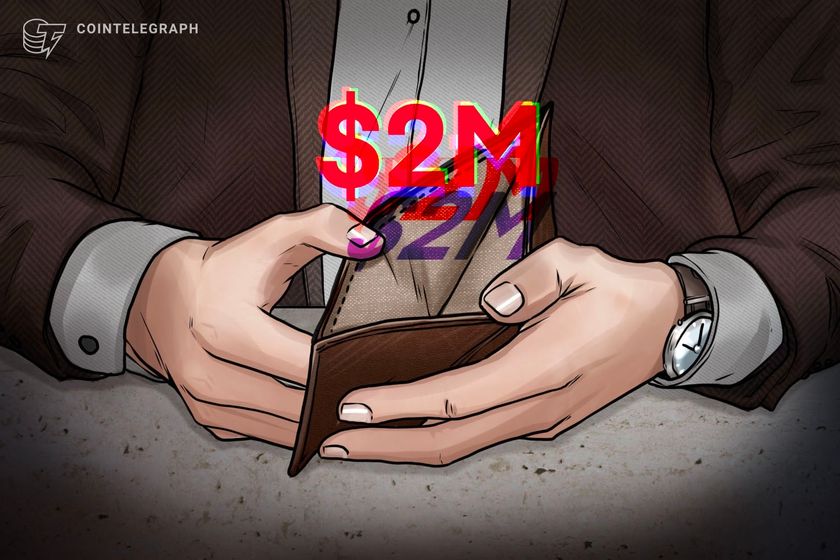
Retired artist loses $2M in crypto to Coinbase impersonator

Retired artist Ed Suman lost over $2 million in cryptocurrency earlier this year after falling victim to a scam involving someone posing as a Coinbase support representative.

Suman, 67, spent nearly two decades as a fabricator in the art world, helping build high-profile works such as Jeff Koons’ Balloon Dog sculptures, according to a May 17 report by Bloomberg.

After retiring, he turned to cryptocurrency investing, eventually accumulating 17.5 Bitcoin (BTC) and 225 Ether (ETH) — a portfolio that comprised most of his retirement savings.

He stored the funds in a Trezor Model One, a hardware wallet commonly used by crypto holders to avoid the risks of exchange hacks. But in March, Suman received a text message appearing to be from Coinbase, warning him of unauthorized account access.

After responding, he got a phone call from a man identifying himself as a Coinbase security staffer named Brett Miller. The caller appeared knowledgeable, correctly stating that Suman’s funds were stored in a hardware wallet.

He then convinced Suman that his wallet could still be vulnerable and walked him through a “security procedure” that involved entering his seed phrase into a website mimicking Coinbase’s interface.

Nine days later, a second caller claiming to be from Coinbase repeated the process. By the end of that call, all of Suman’s crypto holdings were gone.

Retired artist loses $2M in crypto to Coinbase impersonatorCrypto scammers impersonate Coinbase support. Source: NanoBaiter

Related: Bitcoin breaks out while Coinbase breaks down: Finance Redefined

Coinbase suffers major data breach

The scam followed a data breach at Coinbase disclosed this week, in which attackers bribed customer support staff in India to access sensitive user information.

Stolen data included customer names, account balances, and transaction histories. Coinbase confirmed the breach impacted roughly 1% of its monthly transacting users.

Among those affected was venture capitalist Roelof Botha, managing partner at Sequoia Capital. There is no indication that his funds were accessed, and Botha declined to comment.

Coinbase’s chief security officer, Philip Martin, reportedly said the contracted customer service agents at the center of the controversy were based in India and had been fired following the breach.

The exchange has also said it plans to pay between $180 million and $400 million in remediation and reimbursement to affected users.

Magazine: Arthur Hayes $1M Bitcoin tip, altcoins’ powerful rally’ looms: Hodler’s Digest, May 11 – 17

Read more at cointelegraph.com

UK to require crypto firms to report every customer transaction

United Kingdom crypto companies will need to collect and report data from every customer trade and transfer beginning Jan. 1, 2026 as part of a broader effort to improve crypto tax reporting, the UK government said.

Everything from the user’s full name, home address and tax identification number will need to be collected and reported for every transaction, including the cryptocurrency used and the amount moved, the UK Revenue and Customs department said in a May 14 statement.Details of companies, trusts and charities transacting on crypto platforms will also need to be reported.

Failure to comply or inaccurate reporting may incur penalties of up to 300 British pounds ($398.4) per user. The UK Revenue and Customs department said it would inform companies on how to comply with the incoming measures in due course.

However, UK authorities are encouraging crypto firms to start collecting data now to ensure compliance readiness.

The new rule is part of the UK’s integration of the Organisation for Economic Development’s Cryptoasset Reporting Framework to improve transparency in crypto tax reporting.

The changes reflect the UK government’s aim to establish a more robust regulatory framework that supports industry growth while ensuring consumer protection.

Related: Bitwise lists four crypto ETPs on London Stock Exchange

UK Chancellor Rachel Reeves also introduced a draft bill in late April to bring crypto exchanges, custodians and broker-dealers within its regulatory reach to combat scams and fraud.

“Today’s announcement sends a clear signal: Britain is open for business — but closed to fraud, abuse, and instability,” Reeves said at the time.

A study from the UK’s Financial Conduct Authority last November found that 12% of UK adults owned crypto in 2024 — a significant increase from the 4% reported in 2021.

UK’s approach contrasts with EU’s MiCA

The UK’s move to integrate the crypto rules into its existing financial framework contrasts with the European Union’s approach, which introduced the new Markets in Crypto-Assets Regulation framework last year.

According to the MiCA Crypto Alliance, one key difference is that the UK will allow foreign stablecoin issuers to operate in the UK without needing to register.

There will also be no cap on stablecoin volumes, unlike the EU’s approach, which may impose controls on stablecoin issuers to manage systemic risks.

UK to require crypto firms to report every customer transactionSource: MiCA Crypto Alliance

Magazine: Crypto wanted to overthrow banks, now it’s becoming them in stablecoin fight

Read more at cointelegraph.com

Hong Kong police busts $15M laundering ring that used crypto, 500 bank accounts

Hong Kong police arrested 12 people involved in a cross-border money laundering scheme that relied on crypto and over 500 stooge bank accounts to launder HK$118 million ($15 million), local news outlets reported.

The syndicate was dismantled on May 15, resulting in the arrest of nine men and three women in mainland China and Hong Kong.

The suspects allegedly recruited others to open bank accounts to receive proceeds from fraud cases, which were then converted into crypto at crypto exchange shops to launder the illicit funds, Hong Kong Commercial Daily reported on May 17.

The criminal organization rented a residential unit in the Hong Kong neighborhood of Mong Kok to plan and carry out its money laundering activities. Of the $15 million laundered, more than $1.2 million was linked to 58 reported fraud cases.

Caught in action

The bust followed police surveillance on May 15, when two recruits left the syndicate’s Mong Kok base — one visiting a bank, the other an ATM — before both went to convert the cash into crypto at a crypto exchange shop in the neighborhood of Tsim Sha Tsui.

Police arrested both individuals on the spot, seizing around HK$770,000 ($98,540) in cash before the funds could be laundered. The other 10 individuals, aged between 20 and 41, were arrested soon after.

Police seized approximately HK$1.05 million ($134,370) in cash, over 560 ATM cards, multiple mobile phones, bank documents and records related to crypto transactions.

Senior Inspector Tse Ka-lun of Hong Kong’s Commercial Crime Bureau claimed that the individuals often used bank accounts from their friends and family to launder the stolen funds. 

Hong Kong reported a 12% year-on-year increase in fraud reports in 2024, with authorities making more than 10,000 fraud-related arrests. Of those arrests, around 73% involved individuals who held stooge bank accounts.

Related: DOJ charges 12 more gamer-turned $263M Bitcoin robbers

The crackdown comes as Hong Kong continues to roll out its crypto regulatory framework to support local innovation, protect consumers and establish itself as a crypto hub.

Hong Kong’s Securities and Futures Commission introduced new rules for crypto exchanges offering staking services in April. Two months earlier, the securities regulator rolled out a roadmap to improve market access, optimize compliance, expand product offerings, strengthen crypto infrastructure and foster relationships with industry players. 

Magazine: Crypto wanted to overthrow banks, now it’s becoming them in stablecoin fight

Read more at cointelegraph.com

Moody's downgrades US credit rating due to rising debt

Moody’s credit rating agency downgraded the credit rating of the United States government from Aaa to Aa1, citing the rising national debt as the primary driver behind the reduction in creditworthiness.

According to the May 16 announcement from the rating agency, US lawmakers have failed to stem annual deficits or reduce spending over the years, leading to a growing national debt. The rating agency wrote:

“We do not believe that material multi-year reductions in mandatory spending and deficits will result from the current fiscal proposals under consideration. Over the next decade, we expect larger deficits as entitlement spending rises while government revenue remains broadly flat.”

The credit downgrade is only one degree out of the 21-notch rating scale used by the company to assess the credit health of an entity.

Economy, US Government, United States, National DebtAn overview of the US national debt. Source: US National Debt Clock

Despite the negative short to medium-term credit outlook, Moody’s maintained a positive outlook on the long-term health of the United States, citing its robust economy and the status of the US dollar as the global reserve currency as strengths, reflecting “balanced” lending risks.

Related: Asia’s wealthy shifting from US dollar to crypto, gold, China: UBS

Investors react to Moody’s US credit revision

Moody’s announcement drew mixed reactions from investors and market participants, leaving many unconvinced by the agency’s revised outlook.

Gabor Gurbacs, CEO and founder of crypto loyalty rewards company Pointsville, cited the rating agency’s previous credit assessments during times of financial stress as unreliable, signaling that the outlook was too optimistic.

“This is the same Moody’s that gave Aaa ratings to sub-prime mortgage-backed securities that led to the 2007-2008 financial crisis,” the executive wrote in a May 17 X post.

However, macroeconomic investor Jim Bianco argued that the recent Moody’s credit outlook does not reflect a real downgrade in the perception of US government creditworthiness and characterized the announcement as a “nothing burger.”

Economy, US Government, United States, National DebtInterest rates on the 30-year US Treasury Bond spiked to nearly 5% in May 2025, signaling reduced long-term investor confidence in US debt. Source: TradingView

US government debt surpassed $36 trillion in January 2025 and shows no signs of slowing, despite recent efforts by Elon Musk and others to reduce federal spending and curtail the national debt.

As the debt climbs and investors lose faith in US government securities, bond yields will spike, causing the debt service payments to go up, further inflating the national debt.

This creates a vicious cycle as the government will have to entice investors with ever-greater yields to incentivize them to purchase government debt.

Magazine: Elon Musk’s plan to run government on blockchain faces uphill battle

Read more at cointelegraph.com