cointelegraph.com

Blackstone buys $1M worth of Bitcoin ETF in first crypto bet

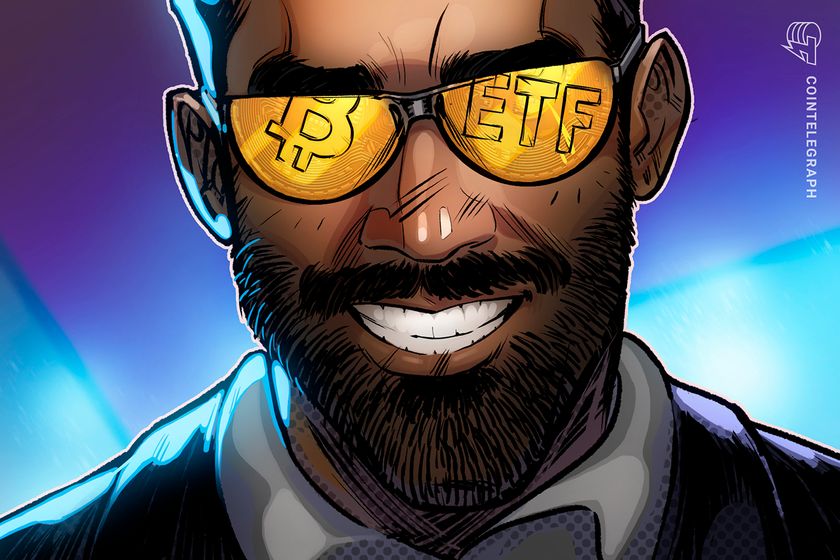
Blackstone, which bills itself as the “the world’s largest alternative asset manager,” disclosed its first-ever crypto-related purchase, buying shares in BlackRock’s spot Bitcoin exchange-traded fund.

However, Blackstone’s investment, reported in a May 20 filing with the US Securities and Exchange Commission, only totaled around $1.08 million — a fraction of the asset manager’s $1.2 trillion portfolio.

Blackstone reported holding 23,094 shares of BlackRock’s iShares Bitcoin Trust ETF (IBIT) as of March 31.

The IBIT shares were added to Blackstone’s Alternative Multi-Strategy Fund (BTMIX), which holds $2.63 billion worth of assets, Google Finance data shows.

The filing shows Blackstone also bought 4,300 shares in crypto ATM operator Bitcoin Depot Inc. (BTM) for a total cost of $6,300 and spent $181,166 scooping up 9,889 shares of the ProShares Bitcoin ETF (BITO).Despite its claim as an “alternative asset manager,” Blackstone has largely stayed away from crypto. In September 2019, Blackstone CEO Steve Schwarzman said he liked the concept of blockchain but thought its use for money was “pretty odd.”

“[I was] raised in a world where someone needs to control currencies,” he said at the time.

He admitted he didn’t have much interest in crypto, citing difficulties understanding the technology.

Related: Bitcoin is signaling a golden cross — What does it mean for BTC price?

Blackstone invests in everything from private equity, real estate and credit to infrastructure, hedge funds and insurance solutions.

According to Blackstone’s website, it had $37 billion worth of investable capital as of March 31.

Meanwhile, the state of Wisconsin Investment Board — one of the first state investment funds to provide Bitcoin exposure to US retirees — reported on May 15 that it liquidated all 6,060,351 of its IBIT shares worth $3.7 billion during the first quarter.

Flows keep coming in for BlackRock’s IBIT

BlackRock’s Bitcoin fund has not recorded an outflow in six weeks, since April 9, Farside Investors data shows.

It has seen a 20-trading-day streak of inflows during that time, bringing its total net inflows to over $46.1 billion since it launched in January 2024.

The Fidelity Wise Origin Bitcoin Fund (FBTC) and the ARK 21Shares Bitcoin ETF (ARK) trail IBIT in all-time net inflows at $11.8 billion and $2.8 billion, respectively.

Blackstone buys $1M worth of Bitcoin ETF in first crypto betFlow data of the 11 US-based spot Bitcoin ETFs since May 2. Source: Farside Investors

Magazine: NBA star Tristan Thompson misses $32B in Bitcoin by taking $82M contract in cash

Read more at cointelegraph.com

‘Hawk tuah girl’ Haliey Welch says FBI probed her ‘memecoin disaster’

Haliey Welch, better known as the “Hawk tuah girl,” says the Federal Bureau of Investigation briefly probed her after her “memecoin disaster” — the failed launch of a token in her image that she promoted. 

Welch said in a May 21 episode of her “Talk Tuah” podcast that the FBI showed up at her grandmother’s house looking to speak to her over the Hawk Tuah (HAWK) crypto token, which many crypto commentators have called an exit scam.

“After the coin launch, the feds came to granny’s house and knocked on her door, and she called me, having a heart attack, saying: ‘The FBI is here after you, what have you done?’”

Welch said she handed over her phone to the FBI and met with agents who “interrogated me, asking me questions and everything else related to crypto.”

“They cleared me, I was good to go,” Welch said. 

Welch went viral for her response about an oral sex technique in a vox pop interview posted to YouTube in June. 

The HAWK memecoin, based on her viral catchphrase, launched in early December and almost immediately lost 90% of its value and blockchain analytics firm Bubblemaps’ alleged insider wallets and snipers bought up and dumped massive quantities of the token at launch.

‘Hawk tuah girl’ Haliey Welch says FBI probed her ‘memecoin disaster’Haliey Welch speaking on her Talk Tuah podcast about the HAWK memecoin. Source: YouTube

Welch said on her podcast that the Securities and Exchange Commission also asked for her phone, and she sent it off “for two or three days” before she was cleared.

Welch’s lawyer James Sallah told TMZ in March that the SEC “closed the investigation without making any findings against, or seeking any monetary sanctions from, Haliey.”

“I trusted the wrong people”

Welch admitted knowing very little about crypto before the HAWK memecoin and said she “trusted the wrong people” for the launch.

She claimed a company, which she said she couldn’t name for legal reasons, was in full control of her X account, which posted videos of her promoting the memecoin.

Welch said she was sent lines to record on video, which were then posted on her X account by someone she trusted but could also not legally name.

She added that on the day of HAWK’s launch, she “kind of knew something was up” and was pulled into a room where a team of people told her to talk on a livestream with YouTuber Stephen Findeisen, better known as Coffeezilla.

“Coffeezilla got on there and they’re like ‘Mute it, mute it,’” Welch said. “Nobody warned me about this guy at all, like nobody at all, they didn’t tell me he was like a crypto wizard, that’s exactly what he is — he ate me the fuck up.”

Related: Justin Sun to attend Trump’s dinner with memecoin backers

Welch said she was only paid a marketing fee and “did not make a dime from the coin itself,” which she said had been totally spent on legal and public relations fees.

‘Hawk tuah girl’ Haliey Welch says FBI probed her ‘memecoin disaster’A now-deleted post where Welch shared the HAWK token’s tokenomics before it launched. Source: X
Despite being cleared of any legal wrongdoing, Welch took some accountability, admitting that she let many of her fans down who invested in the coin:

“It makes me feel really bad that they trusted me, and I led them to something that I did not have enough knowledge about. I did not have enough knowledge about crypto to be getting involved with it. And I knew that, but I got talked into it, and I trusted the wrong people.”

A group of HAWK buyers sued the alleged creators of the token in December, claiming Alex Schultz, the token’s backing Tuah the Moon Foundation, the token launchpad overHere Limited, and its founder Clinton So promoted and sold HAWK as an unregistered security.

Welch wasn’t named as a defendant.

Magazine: ‘Normie degens’ go all in on sports fan crypto tokens for the rewards

Read more at cointelegraph.com

NYC Mayor Eric Adams launches crypto advisory council

New York City Mayor Eric Adams says he will create a digital advisory council to attract jobs and investment to the Big Apple and position it as the “crypto capital of the globe.”

“This is not about chasing memes or trends,” Adams told the inaugural New York City Crypto Summit on May 20. “We want to use the technology of tomorrow to better serve New Yorkers today.”

“We have experts right here, and they are going to help us navigate solutions that serve our city,” he added. “The age of tokenization, which includes crypto and blockchain and other fintech innovations, that age is here, and we’re going to continue to move forward with it.”

Adams didn’t share further details on the advisory group, but said a council chair and key policy recommendations would follow in the next few weeks.

We’re taking the next step in becoming the Crypto Capitol of the WORLD, hosting our city’s first-ever Crypto and Digital Assets Summit! Join us LIVE as we get started: https://t.co/iwO6ThkaSB

— Mayor Eric Adams (@NYCMayor) May 20, 2025

On May 12, Adams announced financial services company Figure and private equity firms Traction and Scale would be assisting the city in its crypto efforts.

New York City will also be exploring whether certain services and taxes can be paid via crypto, according to Adams, along with using blockchain tech to manage sensitive information such as birth certificates and death records.

“Bringing blockchain security capabilities to the city means that birth certificates and death records can remain private but accessible to New Yorkers and their next of kin,” Adams said.

“We want to bring jobs of the future to our city today. That means supporting the development of a more diverse, equitable, inclusive tech ecosystem. We must embrace this emerging technology and build on the success of our economy,” he added.

Crypto legislation proposed in New York 

New York State lawmakers have already introduced several bills to regulate crypto. In April, Assemblyman Clyde Vanel introduced a bill to amend the state’s financial law to allow New York State agencies to accept crypto as payment. 

However, the legislation is yet to reach the state’s full House or Senate.

New York state Senator James Sanders Jr proposed the Blockchain Study Act in February, which would create a crypto task force to investigate the current state of crypto in the State. It has yet to advance past the House. 

Related: Wintermute opens New York office, citing improved US crypto rules

Adams made digital assets a large part of his policy platform after assuming office in January 2022 and announced a plan to accept his first three paychecks in Bitcoin (BTC).

He was indicted on corruption charges over alleged illegal donations from the Turkish government, but Justice Department officials stepped in and directed local authorities to intervene. The case was dismissed with prejudice on April 2, meaning it can’t be reopened.

An increasing number of US states are also working on crypto-related legislation, with at least 18 considering bills to establish a strategic Bitcoin Reserve. Two states, New Hampshire and Arizona, have successfully passed the legislation, according to Bitcoin Reserve Monitor.

Magazine: Crypto City: Guide to New York

Read more at cointelegraph.com

SEC charges Unicoin and executives for alleged $100 million fraud

The US Securities and Exchange Commission has charged crypto platform Unicoin and three of its executives, alleging they made false and misleading statements about its crypto assets that raised $100 million from investors.

The SEC said on May 20 that it charged Unicoin CEO Alex Konanykhin, board member Silvina Moschini, and former investment chief Alex Dominguez with misleading investors about certificates that conveyed rights to receive Unicoin tokens and stock.

Mark Cave, associate director in the SEC’s Division of Enforcement, claimed the trio “exploited thousands of investors with fictitious promises that its tokens, when issued, would be backed by real-world assets including an international portfolio of valuable real estate holdings.” 

Related: SEC crypto task force to release first report ‘in the next few months’

“The real estate assets were worth a mere fraction of what the company claimed, and the majority of the company’s sales of rights certificates were illusory,” Cave added.

The SEC’s complaint, filed in a Manhattan federal court, charged Unicoin and the three executives with various securities laws violations and asks for permanent injunctive relief, along with paying back the allegedly ill-gotten gains.

Magazine: SEC’s U-turn on crypto leaves key questions unanswered

Read more at cointelegraph.com

SEC charges Unicoin and executives for alleged $100 million fraud

The US Securities and Exchange Commission has charged crypto platform Unicoin and three of its executives, alleging they made false and misleading statements about its crypto assets that raised $100 million from investors.

The SEC said on May 20 that it charged Unicoin CEO Alex Konanykhin, board member Silvina Moschini, and former investment chief Alex Dominguez with misleading investors about certificates that conveyed rights to receive Unicoin tokens and stock.

Mark Cave, associate director in the SEC’s Division of Enforcement, claimed the trio “exploited thousands of investors with fictitious promises that its tokens, when issued, would be backed by real-world assets including an international portfolio of valuable real estate holdings.” 

Related: SEC crypto task force to release first report ‘in the next few months’

“The real estate assets were worth a mere fraction of what the company claimed, and the majority of the company’s sales of rights certificates were illusory,” Cave added.

The SEC’s complaint, filed in a Manhattan federal court, charged Unicoin and the three executives with various securities laws violations and asks for permanent injunctive relief, along with paying back the allegedly ill-gotten gains.

Magazine: SEC’s U-turn on crypto leaves key questions unanswered

Read more at cointelegraph.com

SEC charges Unicoin crypto platform over alleged $100 million fraud

Update May 21, 4:32 am UTC: This article has been updated to add more information from the SEC’s complaint.

The US Securities and Exchange Commission has sued crypto investment platform Unicoin and three of its executives, alleging they made false and misleading statements about their crypto assets that raised over $100 million from investors.

The SEC said on May 20 that it charged Unicoin CEO Alex Konanykhin, board member Silvina Moschini and former investment chief Alex Dominguez with misleading over 5,000 investors about certificates that conveyed rights to receive Unicoin tokens and stock.

SEC Division of Enforcement associate director Mark Cave claimed that starting in 2022, the trio “exploited thousands of investors with fictitious promises that its tokens, when issued, would be backed by real-world assets including an international portfolio of valuable real estate holdings.”

“The real estate assets were worth a mere fraction of what the company claimed, and the majority of the company’s sales of rights certificates were illusory,” Cave added.

Law, SEC, United StatesA highlighted excerpt of the SEC complaint claims Unicoin and its executives misled customers in multiple aspects of the business. Source: SEC
The SEC’s complaint, filed in a Manhattan federal court, charged Unicoin and the three executives with various securities laws violations and asks for permanent injunctive relief, along with paying back the allegedly ill-gotten gains.

Unicoin accused of misrepresenting finances and sales 

Among the SEC’s allegations, the agency alleged Unicoin misrepresented its financial situation and told investors it had decades of financial runway when it was generally under a year and, at some points, was “no more than four months.”

The SEC alleged that Unicoin claimed to have sold more than $3 billion in rights certificates when the company had only sold $110 million, and that the tokens and certificates were falsely advertised as SEC-registered.

The SEC also charged Unicoin’s general counsel, Richard Devlin, with violating federal securities laws. Devlin paid a $37,500 civil penalty without admitting or denying the agency’s claim.

Related: SEC crypto task force to release first report ‘in the next few months’

Unicoin, Konanykhin and Moschini did not immediately respond to a request for comment. Dominguez could not immediately be reached for comment.

Former FOX Business reporter Eleanor Terrett reported on April 21 that Unicoin received an SEC Wells notice in December over a token airdrop and was asked to attend a settlement negotiation with the SEC on April 18.

Konanykhin told Terrett that his company declined the meeting on the grounds that some of the regulator’s requests for the meeting were unacceptable and would fight the case in court.

Magazine: SEC’s U-turn on crypto leaves key questions unanswered 

Read more at cointelegraph.com

SEC charges Unicoin crypto platform over alleged $100 million fraud

Update May 21, 4:32 am UTC: This article has been updated to add more information from the SEC’s complaint.

The US Securities and Exchange Commission has sued crypto investment platform Unicoin and three of its executives, alleging they made false and misleading statements about their crypto assets that raised over $100 million from investors.

The SEC said on May 20 that it charged Unicoin CEO Alex Konanykhin, board member Silvina Moschini and former investment chief Alex Dominguez with misleading over 5,000 investors about certificates that conveyed rights to receive Unicoin tokens and stock.

SEC Division of Enforcement associate director Mark Cave claimed that starting in 2022, the trio “exploited thousands of investors with fictitious promises that its tokens, when issued, would be backed by real-world assets including an international portfolio of valuable real estate holdings.”

“The real estate assets were worth a mere fraction of what the company claimed, and the majority of the company’s sales of rights certificates were illusory,” Cave added.

Law, SEC, United StatesA highlighted excerpt of the SEC complaint claims Unicoin and its executives misled customers in multiple aspects of the business. Source: SEC

The SEC’s complaint, filed in a Manhattan federal court, charged Unicoin and the three executives with various securities laws violations and asks for permanent injunctive relief, along with paying back the allegedly ill-gotten gains.

Unicoin accused of misrepresenting finances and sales 

Among the SEC’s allegations, the agency alleged Unicoin misrepresented its financial situation and told investors it had decades of financial runway when it was generally under a year and, at some points, was “no more than four months.”

The SEC alleged that Unicoin claimed to have sold more than $3 billion in rights certificates when the company had only sold $110 million, and that the tokens and certificates were falsely advertised as SEC-registered.

The SEC also charged Unicoin’s general counsel, Richard Devlin, with violating federal securities laws. Devlin paid a $37,500 civil penalty without admitting or denying the agency’s claim.

Related: SEC crypto task force to release first report ‘in the next few months’

Unicoin, Konanykhin and Moschini did not immediately respond to a request for comment. Dominguez could not immediately be reached for comment.

Former FOX Business reporter Eleanor Terrett reported on April 21 that Unicoin received an SEC Wells notice in December over a token airdrop and was asked to attend a settlement negotiation with the SEC on April 18.

Konanykhin told Terrett that his company declined the meeting on the grounds that some of the regulator’s requests for the meeting were unacceptable and would fight the case in court.

Magazine: SEC’s U-turn on crypto leaves key questions unanswered 

Read more at cointelegraph.com

Strive targets 75,000 Bitcoin from Mt. Gox claims to build Bitcoin treasury

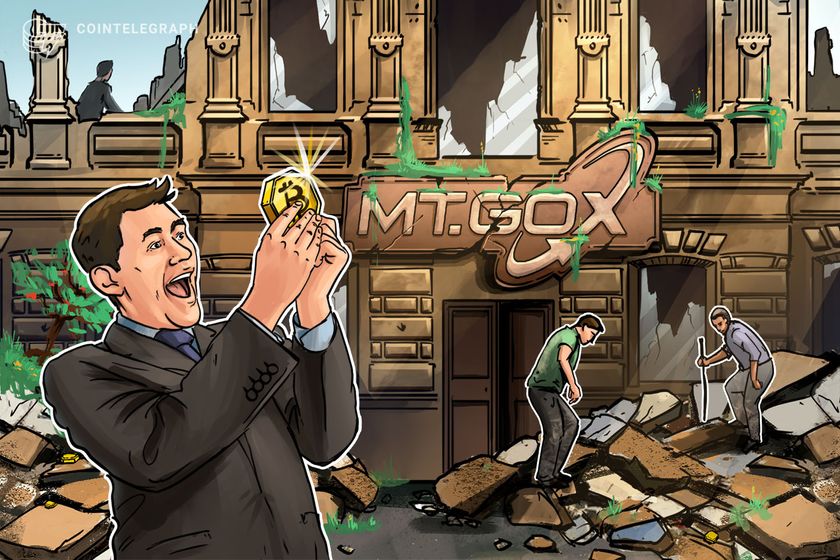
Vivek Ramaswamy’s Strive is looking to build its Bitcoin holdings by purchasing distressed Bitcoin claims at a discount, starting with claims tied to 75,000 Bitcoin at the bankrupt crypto exchange Mt. Gox.

Strive said in a May 20 regulatory filing that it partnered with 117 Castell Advisory Group LLC to target claims to Bitcoin (BTC) that have received definitive legal rulings but are still awaiting distribution.

The company said buying the claims would allow it to purchase Bitcoin at a discount and grow its Bitcoin per share ratio ahead of its planned reverse merger with Asset Entities — which is expected to be completed sometime mid this year.

Strive hasn’t disclosed any Bitcoin holdings but claims it will face fewer restrictions on purchasing Bitcoin than companies going public through Special Purpose Acquisition Company mergers.

Strive targets 75,000 Bitcoin from Mt. Gox claims to build Bitcoin treasuryAdvantages of going public via a reverse merger compared with a SPAC merger. Source: Strive

Strive said it would need shareholder approval to pursue Mt. Gox claims. The company said it intends to lodge a filing with the Securities and Exchange Commission to outline the full terms of the proposed transaction. A proxy statement would then be sent to shareholders to seek their approval.

Strive would need to obtain shareholder approval relatively soon, as Mt. Gox is expected to fully repay its creditors by Oct. 31.

The Japan-based Mt. Gox was the largest Bitcoin exchange before it collapsed in 2014 from a security breach that resulted in the theft of approximately 750,000 Bitcoin.

Strive’s pivot to become a Bitcoin treasury company reflects a broader industry trend as more firms look to hold Bitcoin on their balance sheets as a long-term strategic asset.

Related: Bitcoin ETFs bought 6x more than BTC miners produced last week

Twenty One Capital is another newly launched Bitcoin treasury firm that has received backing from the likes of Tether, SoftBank and Cantor Fitzgerald. The Jack Mallers-led firm plans to launch with 42,000 Bitcoin once it completes a blank-check merger with Cantor Equity Partners.

Asset Entities shares rise again on Mt. Gox plans

Asset Entities (ASST), a social media marketing company that Strive announced it would merge with on May 7 to create a Bitcoin investment company, has seen its shares close May 20 trading up 18.2% to $7.74, Google Finance data shows.

The latest share price bump brings its market cap to $122.1 million, and ASST is now up 1,170% since Strive announced its merger plan.

Strive is expected to own 94.2% of the combined entity once the reverse merger is complete, while Asset Entities will hold the remaining 5.8%.

The merged companies will be named Strive and Asset Entities, and will still trade under the ASST ticker.

Magazine: Danger signs for Bitcoin as retail abandons it to institutions: Sky Wee

Read more at cointelegraph.com

Justin Sun to attend Trump's dinner with memecoin backers

After weeks of speculation among crypto enthusiasts and news outlets, Tron founder Justin Sun has claimed he owns the wallet that purchased the largest amount of Donald Trump’s memecoin, allowing him to qualify for a dinner and reception with the US president.

In a May 19 X post, Sun said he had received an invitation to attend Trump’s dinner at his golf club outside Washington, DC, as part of a reward for the top 220 memecoin holders. The Tron founder claimed he controlled the top wallet on the TRUMP token leaderboard under the username “Sun,” which held roughly $19 million worth of the memecoin at a price of $13.20.

According to Sun, he plans to network at the May 22 memecoin dinner, “talk crypto,” and “discuss the future” of the industry. It’s unclear why the Tron founder chose to announce his planned presence at the event now, when the leaderboard was finalized on May 12.

Cointelegraph reached out to a spokesperson for Sun for comment, but had not received a response at the time of publication.

Politics, Donald Trump, Corruption, Justin Sun, MemecoinSource: Justin Sun

Though not a surprise to many who speculated that Sun was the individual behind the memecoin purchases, his attendance at the dinner only deepens his ties to the Trump administration and the president’s family. In addition to the dinner for the 220 tokenholders, Trump said he would hold a reception and “VIP tour” for the top 25 wallets on the leaderboard.

Related: What to expect at Trump’s memecoin dinner

Sun spent $75 million on tokens through World Liberty Financial, the crypto platform backed by Trump’s three sons, including a $30 million investment a few weeks after the 2024 election. The Tron founder is also an adviser to the company.

Before Trump won the November election, Sun had been facing a lawsuit from the US Securities and Exchange Commission (SEC) filed in 2023 over the alleged “orchestration of the unregistered offer and sale, manipulative trading, and unlawful touting of crypto asset securities.” In February, roughly a month after Trump took office and appointed Commissioner Mark Uyeda as acting chair of the SEC, the regulator and Sun jointly filed a motion for a federal judge to stay the case, which was granted.

Memecoin’s potential conflicts of interest are affecting Congress

Sun’s and others’ involvement in Trump’s crypto ventures has prompted calls for investigations and oversight among many Democratic lawmakers, who argued that some individuals could use digital assets to essentially purchase influence with the president. The concerns initially slowed progress on a bill to regulate stablecoins in the Senate, the GENIUS Act, complicated by World Liberty Financial’s own stablecoin, USD1. The chamber voted to move forward on the bill on May 19, a few hours before Sun’s announcement.

“How convenient: the day after the Senate advances the GENIUS Act, Justin Sun — a major investor in the Trump family crypto venture — announces he’s getting a private dinner as the president’s top crypto buyer,” said Massachusetts Senator Elizabeth Warren, according to Bloomberg. “It’s critical that everyone understands the GENIUS Act doesn’t stop this type of corruption — it greenlights it.”

At a May 20 oversight hearing, Maryland Representative Glenn Ivey questioned SEC Chair Paul Atkins on Sun’s case being stayed, as well as his investments in World Liberty Financial and Trump’s memecoin. Though the case was stayed before Atkins was sworn in as chair, Ivey expressed concern about the timeline between Sun’s investments and the SEC not pursuing its own enforcement action.

The memecoin dinner applicants are likely still subject to background checks before meeting Trump in person. As of May 20, those planning to attend included Kronos Research chief investment officer Vincent Liu, Hyperithm co-CEO Oh Sangrok, Synthetix founder Kain Warwick, a consultant named Vincent Deriu, crypto user Morten Christensen, a World Liberty Financial adviser going by the pseudonym “Ogle,” and a representative from the startup MemeCore.

Magazine: Trump’s crypto ventures raise conflict of interest, insider trading questions

Read more at cointelegraph.com

Bitcoin open interest hits record high as bulls stampede toward new BTC price highs

Key takeaways:

Bitcoin futures open interest hit a record $72 billion, signaling rising use of leverage among institutional investors.

$1.2 billion in shorts at $107,000 to $108,000 are at risk of liquidation, boosting BTC’s breakout odds.

The aggregate open interest in Bitcoin (BTC) futures surged to a record high on May 20, raising questions about whether bearish positions are now at risk. Despite repeated failures to break above the $107,000 level since May 18, the sheer volume of leveraged positions could propel Bitcoin to a new all-time high.

Bitcoin open interest hits record high as bulls stampede toward new BTC price highsBitcoin futures aggregate open interest, USD. Source: CoinGlass

The total open interest in BTC futures climbed to $72 billion on May 20, marking an 8% increase from $66.6 billion just a week earlier. Institutional demand continues to be a major driver of this leverage, with the Chicago Mercantile Exchange (CME) leading at $16.9 billion in BTC futures, followed by Binance, which holds $12 billion in open interest.

$1.2 billion in bearish BTC liquidations cluster at $107,000–$108,000

According to CoinGlass estimates, the largest concentration of bearish BTC futures liquidations is clustered between $107,000 and $108,000, amounting to approximately $1.2 billion.

Bitcoin open interest hits record high as bulls stampede toward new BTC price highsBitcoin futures leverage heatmap, USD million. Source: CoinGlass

While it’s impossible to predict what could spark a breakout above $108,000 to force those leveraged shorts to unwind, there is growing optimism tied to rising concerns over United States fiscal debt. Uncertainty remains about how the government plans to achieve economic growth while reducing spending, especially in light of ongoing disagreement between Democratic and Republican lawmakers.

More importantly, yields on the 20-year US Treasury remain close to 5%, up from 4.82% two weeks earlier. Weak demand for long-term government debt may compel the US Federal Reserve to step in as the buyer of last resort to maintain market stability, reversing a 26-month trend. This approach puts downward pressure on the US dollar and drives investors to seek alternative hedging strategies, including Bitcoin.

Gold dominates, but Bitcoin absorbs flow amid reserve reallocations

Gold remains the dominant alternative asset, but its 24% year-to-date gains in 2025 and $22 trillion market capitalization make it less attractive to many investors. For context, the entire S&P 500 index is valued at $53 trillion, while US bank deposits and Treasury bills (M1) amount to $18.6 trillion. In contrast, Bitcoin currently represents a $2.1 trillion asset class, roughly equivalent in size to silver.

Meanwhile, some regions, notably the US, have begun laying the groundwork to shift portions of their gold reserves into Bitcoin — an action that could easily propel BTC to a new all-time high. A modest 5% reallocation from gold into Bitcoin by those nations would translate into a $105 billion inflow, equivalent to 1 million BTC at a price of $105,000. 

Related: Bitcoin ready to ‘vaporize’ shorts once price discovery above $110K begins

For perspective, Strategy, the US-listed firm led by Michael Saylor, currently holds 576,230 BTC. There is little doubt that institutional buying remains the primary catalyst for Bitcoin to break above the $108,000 level. Such a move would trigger the liquidation of heavily leveraged bearish positions, likely accelerating the push to a new all-time high. However, persistent macroeconomic uncertainty continues to weigh on overall investor sentiment.

As Bitcoin flirts with the $107,000 mark, those holding short positions face heightened risk of forced liquidations — an outcome that could further fuel upward momentum in price.

This article is for general information purposes and is not intended to be and should not be taken as legal or investment advice. The views, thoughts, and opinions expressed here are the author’s alone and do not necessarily reflect or represent the views and opinions of Cointelegraph.

Read more at cointelegraph.com