cointelegraph.com

ZKPs can prove I'm old enough without telling you my age

Opinion by: Andre Omietanski, General Counsel, and Amal Ibraymi, Legal Counsel at Aztec Labs

What if you could prove you’re over 18, without revealing your birthday, name, or anything else at all? Zero-knowledge proofs (ZKPs) make this hypothetical a reality and solve one of the key challenges online: verifying age without sacrificing privacy. 

The need for better age verification today

We’re witnessing an uptick in laws being proposed restricting minors’ access to social media and the internet, including in Australia, Florida, and China. To protect minors from inappropriate adult content, platform owners and governments often walk a tightrope between inaction and overreach. 

For example, the state of Louisiana in the US recently enacted a law meant to block minors from viewing porn. Sites required users to upload an ID before viewing content. The Free Speech Coalition challenged the law as unconstitutional, making the case that it infringed on First Amendment rights.

The lawsuit was eventually dismissed on procedural grounds. The reaction, however, highlights the dilemma facing policymakers and platforms: how to block minors without violating adults’ rights or creating new privacy risks.

Traditional age verification fails

Current age verification tools are either ineffective or invasive. Self-declaration is meaningless, since users can simply lie about their age. ID-based verification is overly invasive. No one should be required to upload their most sensitive documents, putting themselves at risk of data breaches and identity theft. 

Biometric solutions like fingerprints and face scans are convenient for users but raise important ethical, privacy, and security concerns. Biometric systems are not always accurate and may generate false positives and negatives. The irreversible nature of the data, which can’t be changed like a regular password can, is also less than ideal. 

Other methods, like behavioral tracking and AI-driven verification of browser patterns, are also problematic, using machine learning to analyze user interactions and identify patterns and anomalies, raising concerns of a surveillance culture.

ZKPs as the privacy-preserving solution

Zero-knowledge proofs present a compelling solution. Like a government ID provider, a trusted entity verifies the user’s age and generates a cryptographic proof confirming they are over the required age.

Websites only need to check the proof, not the excess personal data, ensuring privacy while keeping minors at the gates. No centralized data storage is required, alleviating the burden on platforms such as Google, Meta, and WhatsApp and eliminating the risk of data breaches. 

Recent: How zero-knowledge proofs can make AI fairer

Adopting and enforcing ZKPs at scale

ZKPs aren’t a silver bullet. They can be complex to implement. The notion of “don’t trust, verify,” proven by indisputable mathematics, may cause some regulatory skepticism. Policymakers may hesitate to trust cryptographic proofs over visible ID verification. 

There are occasions when companies may need to disclose personal information to authorities, such as during an investigation into financial crimes or government inquiries. This would challenge ZKPs, whose very intention is for platforms not to hold this data in the first place.

ZKPs also struggle with scalability and performance, being somewhat computationally intensive and tricky to program. Efficient implementation techniques are being explored, and breakthroughs, such as the Noir programming language, are making ZKPs more accessible to developers, driving the adoption of secure, privacy-first solutions. 

A safer, smarter future for age verification

Google’s move to adopt ZKPs for age verification is a promising signal that mainstream platforms are beginning to embrace privacy-preserving technologies. But to fully realize the potential of ZKPs, we need more than isolated solutions locked into proprietary ecosystems. 

Crypto-native wallets can go further. Open-source and permissionless blockchain-based systems offer interoperability, composability, and programmable identity. With a single proof, users can access a range of services across the open web — no need to start from scratch every time, or trust a single provider (Google) with their credentials.

ZKPs flip the script on online identity — proving what matters, without exposing anything else. They protect user privacy, help platforms stay compliant, and block minors from restricted content, all without creating new honeypots of sensitive data.

Google’s adoption of ZKPs shows mainstream momentum is building. But to truly transform digital identity, we must embrace crypto-native, decentralized systems that give users control over what they share and who they are online.

In an era defined by surveillance, ZKPs offer a better path forward — one that’s secure, private, and built for the future.

Opinion by: Andre Omietanski, General Counsel, and Amal Ibraymi, Legal Counsel at Aztec Labs.

This article is for general information purposes and is not intended to be and should not be taken as legal or investment advice. The views, thoughts, and opinions expressed here are the author’s alone and do not necessarily reflect or represent the views and opinions of Cointelegraph.
Read more at cointelegraph.com

ZKPs can prove I'm old enough without telling you my age

Opinion by: Andre Omietanski, General Counsel, and Amal Ibraymi, Legal Counsel at Aztec Labs

What if you could prove you’re over 18, without revealing your birthday, name, or anything else at all? Zero-knowledge proofs (ZKPs) make this hypothetical a reality and solve one of the key challenges online: verifying age without sacrificing privacy. 

The need for better age verification today

We’re witnessing an uptick in laws being proposed restricting minors’ access to social media and the internet, including in Australia, Florida, and China. To protect minors from inappropriate adult content, platform owners and governments often walk a tightrope between inaction and overreach. 

For example, the state of Louisiana in the US recently enacted a law meant to block minors from viewing porn. Sites required users to upload an ID before viewing content. The Free Speech Coalition challenged the law as unconstitutional, making the case that it infringed on First Amendment rights.

The lawsuit was eventually dismissed on procedural grounds. The reaction, however, highlights the dilemma facing policymakers and platforms: how to block minors without violating adults’ rights or creating new privacy risks.

Traditional age verification fails

Current age verification tools are either ineffective or invasive. Self-declaration is meaningless, since users can simply lie about their age. ID-based verification is overly invasive. No one should be required to upload their most sensitive documents, putting themselves at risk of data breaches and identity theft. 

Biometric solutions like fingerprints and face scans are convenient for users but raise important ethical, privacy, and security concerns. Biometric systems are not always accurate and may generate false positives and negatives. The irreversible nature of the data, which can’t be changed like a regular password can, is also less than ideal. 

Other methods, like behavioral tracking and AI-driven verification of browser patterns, are also problematic, using machine learning to analyze user interactions and identify patterns and anomalies, raising concerns of a surveillance culture.

ZKPs as the privacy-preserving solution

Zero-knowledge proofs present a compelling solution. Like a government ID provider, a trusted entity verifies the user’s age and generates a cryptographic proof confirming they are over the required age.

Websites only need to check the proof, not the excess personal data, ensuring privacy while keeping minors at the gates. No centralized data storage is required, alleviating the burden on platforms such as Google, Meta, and WhatsApp and eliminating the risk of data breaches. 

Recent: How zero-knowledge proofs can make AI fairer

Adopting and enforcing ZKPs at scale

ZKPs aren’t a silver bullet. They can be complex to implement. The notion of “don’t trust, verify,” proven by indisputable mathematics, may cause some regulatory skepticism. Policymakers may hesitate to trust cryptographic proofs over visible ID verification. 

There are occasions when companies may need to disclose personal information to authorities, such as during an investigation into financial crimes or government inquiries. This would challenge ZKPs, whose very intention is for platforms not to hold this data in the first place.

ZKPs also struggle with scalability and performance, being somewhat computationally intensive and tricky to program. Efficient implementation techniques are being explored, and breakthroughs, such as the Noir programming language, are making ZKPs more accessible to developers, driving the adoption of secure, privacy-first solutions. 

A safer, smarter future for age verification

Google’s move to adopt ZKPs for age verification is a promising signal that mainstream platforms are beginning to embrace privacy-preserving technologies. But to fully realize the potential of ZKPs, we need more than isolated solutions locked into proprietary ecosystems. 

Crypto-native wallets can go further. Open-source and permissionless blockchain-based systems offer interoperability, composability, and programmable identity. With a single proof, users can access a range of services across the open web — no need to start from scratch every time, or trust a single provider (Google) with their credentials.

ZKPs flip the script on online identity — proving what matters, without exposing anything else. They protect user privacy, help platforms stay compliant, and block minors from restricted content, all without creating new honeypots of sensitive data.

Google’s adoption of ZKPs shows mainstream momentum is building. But to truly transform digital identity, we must embrace crypto-native, decentralized systems that give users control over what they share and who they are online.

In an era defined by surveillance, ZKPs offer a better path forward — one that’s secure, private, and built for the future.

Opinion by: Andre Omietanski, General Counsel, and Amal Ibraymi, Legal Counsel at Aztec Labs.

This article is for general information purposes and is not intended to be and should not be taken as legal or investment advice. The views, thoughts, and opinions expressed here are the author’s alone and do not necessarily reflect or represent the views and opinions of Cointelegraph.

Read more at cointelegraph.com

SharpLink launches Ethereum treasury, taps Joe Lubin as board chair

Betting platform SharpLink Gaming has launched an Ethereum-based corporate treasury strategy and nominated Ethereum co-founder Joseph Lubin as chairman of its board of directors, the company announced May 27.

According to the announcement, SharpLink Gaming, a publicly traded company on Nasdaq, entered into a securities purchase agreement for a private investment in public equity worth $425 million. Ethereum infrastructure firm Consensys was among the investors.

“On close, Consensys looks forward to partnering with SharpLink to explore and develop an Ethereum Treasury Strategy and to work with them in their core business as a strategic advisor,” Consensys founder and CEO Lubin said.

SharpLink Gaming’s stock is up approximately 400% at the time of writing, changing hands at nearly $33.50. Trading today started at over $30 after closing under $7 the day before.

SharpLink launches Ethereum treasury, taps Joe Lubin as board chairSharpLink Gaming stock price chart. Source: Google Finance

A Consensys representative told Cointelegraph that the company will not comment further until the deal is closed. Still, they confirmed Consensys’ investment in SharpLink Gaming.

Related: Bitcoin treasury companies will hold ‘way more’ than Bitcoiners expect: Exec

Major investors took part in the deal

Alongside Consensys, the investors include venture capital firms ParaFi Capital, Electric Capital, Pantera Capital, Arrington Capital, Galaxy Digital, Ondo, White Star Capital, GSR, Hivemind Capital, Hypersphere and Primitive Ventures. SharpLink CEO Rob Phythian and the firm’s CEO Robert DeLucia also participated.

The deal is expected to close “on or about May 29” if the customary closing conditions are satisfied. SharpLink Gaming intends to use the newly raised funds to jumpstart its Ether (ETH) treasury and for other general corporate purposes:

“ETH will serve as the Company’s primary treasury reserve asset.”

Related: Trump Media Group denies it’s raising $3B for crypto buys: Report

The rise of corporate crypto treasuries

Corporate crypto treasuries are on the rise, but most of them are focused on Bitcoin (BTC). One exception was Meitu, the developer of popular Photoshop-like apps, but the company liquidated its 940 Bitcoin and 31,000 Ether at the end of last year.

Other notable examples include the Canadian subsidiary of Big Four auditor KPMG adding Ether to its treasury alongside Bitcoin in February 2022. Also, Hong Kong-based gaming firm Boyaa Interactive International held ETH, but at the end of 2024, it replaced Ether with Bitcoin.

Social media giant Reddit also acquired both Bitcoin and Ethereum, but the company was reported to have offloaded most of its holdings in late 2024. Publicly traded company BTCS also announced a $57.8 million financing agreement to purchase Ether earlier this month.

Magazine: Bitcoin bears eye $69K, CZ denies WLF ‘fixer’ rumors: Hodler’s Digest, May 18 – 24

Read more at cointelegraph.com

Russian national arrested in South Korea for attempted crypto robbery

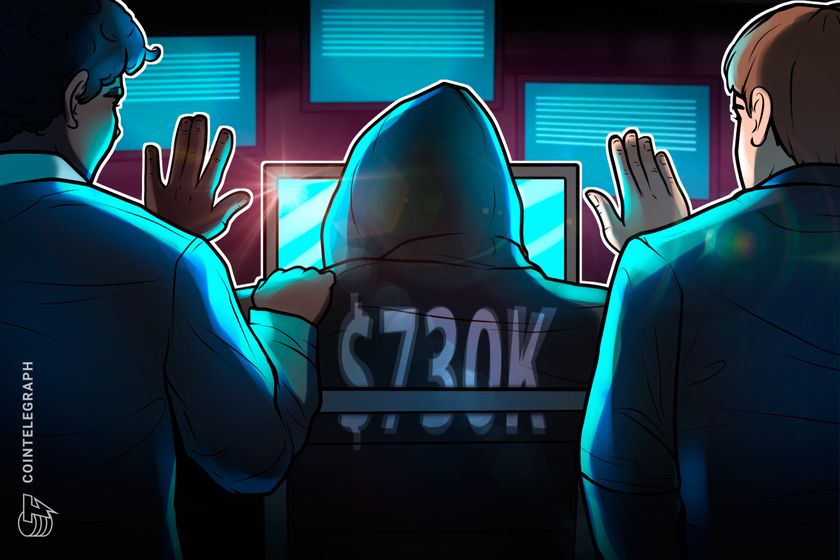
South Korean authorities have arrested one of three Russian nationals accused of an attempted robbery during a fake crypto deal in Seoul. The suspects allegedly lured Korean investors to a hotel, where they tried to steal 1 billion won (approximately $730,000) in cash.

The Gangseo Police Precinct in Seoul detained a man in his 20s in Busan on May 27, according to a report by local news outlet JoongAng Daily. The suspect faces charges of assault and attempted robbery. The other two suspects reportedly fled South Korea shortly after the incident.

According to investigators, the robbery attempt occurred on May 21 at a hotel in Seoul’s Gangseo District. The suspects posed as participants in a peer-to-peer crypto transaction and invited 10 Korean men to the hotel.

Two were called to the room while the others waited in the lobby. Inside the room, the suspects — wearing protective vests — ambushed the victims with a replica handgun and a telescopic baton, tying their hands with cable ties.

Related: Another suspect to surrender in NYC crypto torture case: Reports

Police seize weapons, launch global manhunt

Per the report, one of the victims managed to escape and raise the alarm, prompting the suspects to flee without the cash. Police responded to an emergency call and found one man bleeding in the lobby.

Officers discovered a cache of equipment in the suspects’ hotel room, including a replica firearm, batons, vests and a money counter. Police suspect the robbery had been carefully planned.

A request to prevent the suspects from leaving the country was filed the next morning, but two had already departed. “We have requested assistance from Interpol to track down the suspects who fled overseas,” a police official reportedly said.

Authorities are now questioning the detained suspect and preparing to seek a pretrial detention warrant.

Related: Crypto investor loses $2.6M in stablecoins in double phishing scam

Rise in crypto crime incidents

The incident comes amid a recent uptick in crypto-related violent crimes, including kidnapping and ransom cases.

A Manhattan crypto investor faces serious charges after allegedly kidnapping and torturing an Italian man in a bid to extract access to digital assets.

Russian national arrested in South Korea for attempted crypto robberySource: Mario Nawfal

On May 13, the family of Pierre Noizat, the co-founder and CEO of French crypto exchange Paymium, was targeted in an attempted kidnapping.

In response, executives and investors in the crypto industry are increasingly seeking personal security services. On May 18, private firm Infinite Risks International reported a rise in requests for bodyguards and protection contracts from high-profile figures in the crypto space.

Magazine: TradFi is building Ethereum L2s to tokenize trillions in RWAs: Inside story

Read more at cointelegraph.com

Russian national arrested in South Korea for attempted crypto robbery

South Korean authorities have arrested one of three Russian nationals accused of an attempted robbery during a fake crypto deal in Seoul. The suspects allegedly lured Korean investors to a hotel, where they tried to steal 1 billion won (approximately $730,000) in cash.

The Gangseo Police Precinct in Seoul detained a man in his 20s in Busan on May 27, according to a report by local news outlet JoongAng Daily. The suspect faces charges of assault and attempted robbery. The other two suspects reportedly fled South Korea shortly after the incident.

According to investigators, the robbery attempt occurred on May 21 at a hotel in Seoul’s Gangseo District. The suspects posed as participants in a peer-to-peer crypto transaction and invited 10 Korean men to the hotel.

Two were called to the room while the others waited in the lobby. Inside the room, the suspects — wearing protective vests — ambushed the victims with a replica handgun and a telescopic baton, tying their hands with cable ties.

Related: Another suspect to surrender in NYC crypto torture case: Reports

Police seize weapons, launch global manhunt

Per the report, one of the victims managed to escape and raise the alarm, prompting the suspects to flee without the cash. Police responded to an emergency call and found one man bleeding in the lobby.

Officers discovered a cache of equipment in the suspects’ hotel room, including a replica firearm, batons, vests and a money counter. Police suspect the robbery had been carefully planned.

A request to prevent the suspects from leaving the country was filed the next morning, but two had already departed. “We have requested assistance from Interpol to track down the suspects who fled overseas,” a police official reportedly said.

Authorities are now questioning the detained suspect and preparing to seek a pretrial detention warrant.

Related: Crypto investor loses $2.6M in stablecoins in double phishing scam

Rise in crypto crime incidents

The incident comes amid a recent uptick in crypto-related violent crimes, including kidnapping and ransom cases.

A Manhattan crypto investor faces serious charges after allegedly kidnapping and torturing an Italian man in a bid to extract access to digital assets.

Russian national arrested in South Korea for attempted crypto robberySource: Mario Nawfal

On May 13, the family of Pierre Noizat, the co-founder and CEO of French crypto exchange Paymium, was targeted in an attempted kidnapping.

In response, executives and investors in the crypto industry are increasingly seeking personal security services. On May 18, private firm Infinite Risks International reported a rise in requests for bodyguards and protection contracts from high-profile figures in the crypto space.

Magazine: TradFi is building Ethereum L2s to tokenize trillions in RWAs: Inside story

Read more at cointelegraph.com

Solana may be a memecoin ‘one-trick pony’ — Standard Chartered

Layer-1 blockchain Solana may be evolving into a “one-trick pony” for memecoin generation and trading, according to a recent Standard Chartered report.

According to a May 27 Standard Chartered research report shared with Cointelegraph, Solana “dominates in areas that demand high-volume, low-transaction-cost solutions” due to its design prioritizing fast and cheap transaction confirmation. The report suggested that this has had an unintended consequence:

“So far, this has been mostly in memecoin trading, which accounts for the majority of activity on Solana (as measured by ‘GDP’, which is application revenue).”

Standard Chartered said the memecoin frenzy served as a stress test for Solana’s scalability but came with drawbacks due to the volatility and speculative nature of such assets. As memecoin trading volumes decline, the bank warned that Solana may struggle to maintain momentum.

Related: Migos Instagram account hacked in apparent blackmail bid on Solana co-founder

Memecoin trading passed its peak

The report said Solana-based memecoin activity is past its peak, and “declining usage and trading ‘cheap’ are not a good mix.” The bank suggested that Solana should expand into other sectors that require processing large volumes of transactions cheaply and quickly.

SolanaSolana decentralized exchange volume. Source: Standard Chartered

Per the report, those sectors could include high-throughput financial apps and traditional consumer apps such as social media. Still, scaling such applications may take years, according to the bank, with dire consequences for Solana:

“As a result, we expect Solana to underperform Ethereum over the next two to three years, before catching up, at least in real terms.”SolanaStandard Chartered’s crypto target prices. Source: Standard Chartered

Solana: Solana following Bitcoin? Network activity, chart pattern point to $300 SOL price

Solana’s edge is fading

Solana has long positioned itself as a fast and inexpensive layer-1 blockchain with smart contract support, competing directly with Ethereum. However, that edge may be narrowing.

SolanaAverage transaction fees on Solana and Arbitrum. Source: Standard Chartered

Ethereum layer-2 platforms have caught up with Solana in terms of average transaction cost since the Dencun network upgrade in March 2024. This shift has put pressure on Solana’s value proposition as the cheapest high-throughput blockchain. Standard Chartered acknowledged that Ethereum’s modular design, which separates data availability, execution and consensus, has allowed it to scale more efficiently while preserving decentralization:

“The modular approach allows Ethereum to scale transactions at a low cost (post-Dencun upgrade) while maintaining the security benefits of a highly decentralised mainnet blockchain.”

Magazine: Memecoins are ded — But Solana ‘100x better’ despite revenue plunge

Read more at cointelegraph.com

MARA’s Bitcoin mining revenue hits record $752M as BTC price soars

MARA Holdings, formerly Marathon Digital Holdings, reached a new all-time high in Bitcoin mining revenue, fueled by its recent surge to a record price.

The company’s annualized mining revenue exceeded $752 million on May 27, according to data from CryptoQuant, making it the most profitable day in the company’s history. Marathon is currently the world’s largest publicly traded Bitcoin (BTC) mining firm by market capitalization.

“Quarterly reports are slow. Onchain shows revenue in real time,” CryptoQuant founder and CEO Ki Young Ju wrote in a May 27 X post, confirming the milestone. 

Marathon’s record revenue surge occurred days after Bitcoin rose to a new all-time high of $112,000 on May 22, a development attributed by some analysts to Japanese bond market turbulence, which saw bond yields rise to new highs amid economic turmoil in the country.

MARA’s Bitcoin mining revenue hits record $752M as BTC price soarsBTC mining revenue, MARA, year-to-date chart. Source: CryptoQuant

Related: Metaplanet’s Bitcoin’ premium’ nears $600k per BTC

The revenue surge comes two weeks after MARA’s earnings report for Q1, which missed Wall Street estimates by 0.35%. The company’s Bitcoin production fell 19% year-over-year, primarily due to the April 2024 Bitcoin halving, which cut block rewards in half from 6.25 to 3.125 BTC.

MARA’s Bitcoin mining revenue hits record $752M as BTC price soarsThe 10 largest Bitcoin mining firms. Source: Companiesmarketcap

Marathon is the world’s largest Bitcoin mining firm with a $5.18 billion market capitalization, according to Companiesmarketcap data.

Related: $1M Bitcoin by 2030: Big names predict massive debt-driven BTC rally

MARA’s Bitcoin holdings surpass $5 billion

Despite the reduction in production, Marathon has continued to expand its Bitcoin holdings.

As of May 27, MARA’s Bitcoin holdings were 48,237 BTC worth over $5.28 billion, making the Bitcoin mining company the world’s second-largest corporate Bitcoin holder with over 0.23% of the total supply, Bitbo data showed.

MARA’s Bitcoin mining revenue hits record $752M as BTC price soarsLargest corporate Bitcoin holders. Source: Bitbo

The top spot still belongs to Strategy (formerly MicroStrategy), which holds over $63 billion in Bitcoin.

Despite the revenue surge, daily miner revenues averaged around $50 million, significantly below historic peaks of $80 million, signaling that there is still “room to climb back to those previous highs,” noted macro researcher and CryptoQuant author Axel Adler, in a May 27 X post.

MARA’s Bitcoin mining revenue hits record $752M as BTC price soarsSource: Axel Adler

Marathon adopted Bitcoin as a strategic treasury reserve asset in July 2024, when it added $124 million worth of BTC to its balance sheet.

Magazine: Arthur Hayes $1M Bitcoin tip, altcoins ‘powerful rally’ looms: Hodler’s Digest, May 11 – 17

Read more at cointelegraph.com

StarkWare launches mobile-friendly zero-knowledge prover

Blockchain company StarkWare has unveiled zero-knowledge (ZK) prover STARK Two (S-two), enabling enhanced privacy and verification on everyday devices like phones, laptops and browsers. 

The company said the new ZK prover allows users to generate complex cryptographic proofs from the client side. This means users can generate ZK-proofs directly on their devices instead of relying on a server or cloud infrastructure, opening the door for faster and more private applications across the internet. 

“S-two will bring STARK proving to everyday devices, and open the door for new real-world proving use cases,” said Eli Ben-Sasson, StarkWare co-founder and CEO, adding that the tool could empower the next wave of ZK applications. 

The company said the ZK prover is now available in public alpha and is set to roll out on Starknet, its Ethereum layer-2 scaling solution, later this year.  

StarkWare says new ZK prover is 39 times faster than old solutions 

StarkWare said that benchmark tests for the S-two ZK prover showed that it was 39 times faster than previous solutions. The performance leap enables smoother experiences in privacy-enhancing applications. 

The upgrade also allows use cases in private transactions, ZK-based identity and verifiable artificial intelligence. StarkWare said S-two runs on CPUs, GPUs and will soon be on browsers. 

“For years we’ve called the prover our magic wand, a tool that transforms complex computation into a simple proof,” Ben-Sasson said. “Now, the wand has become a lightsaber in your pocket, something anyone can wield, instantly, from your own device.”

According to StarkWare, developers can build with S-two, adding that its alpha release supports hardware targets. Furthermore, the company said ZK ecosystem participants like Kakarot, Nexus, ZAN and AntChain OpenLabs have already adopted the technology. 

Kakarot uses S-two inside ETHProofs to generate Ethereum block proofs more efficiently, while Nexus is standardizing RISC-V traces to align with S-two’s architecture. Meanwhile, ZAN and AntChain OpenLabs are adding GPU acceleration to push the prover’s performance even further.

Use cases for S-two zero-knowledge prover

StarkWare chief operating officer Oren Katz told Cointelegraph that S-two marks a shift in how ZK-proofs are used in daily lives. Generating validity proofs directly in devices will allow privacy-preserving features in messaging, payments and digital identity. 

“You can prove a payment was valid without showing your balance, or verify identity without revealing personal details,” Katz added. 

Katz said that even salary payments could be made onchain with full transparency and no exposure of sensitive information. He dubbed the development a “big step toward bringing zero-knowledge tech into the mainstream.”

Beyond privacy, Katz said, local proof generation also unlocks use cases in other industries. The executive told Cointelegraph that it can allow gamers to play offline and later generate cryptographic proof of their achievements. 

“An operator, instead of running all logic onchain to prove integrity, can run it on their own servers and simply generate a proof that it was executed correctly,” Katz added.

Related: Ethereum co-founder responds to Sweden’s cashless-society rethink

New ZK prover follows Ethereum’s privacy push

The launch of StarWare’s upgraded ZK prover follows Ethereum’s push for better privacy. On April 11, Ethereum co-founder Vitalik Buterin published a roadmap that addressed privacy enhancements for wallets, decentralized finance (DeFi) applications and infrastructure. 

Buterin advocated implementing privacy-enhancing norms and features across the Ethereum ecosystem, including adding privacy tools in ETH wallets. 

Magazine: TradFi is building Ethereum L2s to tokenize trillions in RWAs: Inside story

Read more at cointelegraph.com

StarkWare launches mobile-friendly zero-knowledge prover

Blockchain company StarkWare has unveiled zero-knowledge (ZK) prover STARK Two (S-two), enabling enhanced privacy and verification on everyday devices like phones, laptops and browsers. 

The company said the new ZK prover allows users to generate complex cryptographic proofs from the client side. This means users can generate ZK-proofs directly on their devices instead of relying on a server or cloud infrastructure, opening the door for faster and more private applications across the internet. 

“S-two will bring STARK proving to everyday devices, and open the door for new real-world proving use cases,” said Eli Ben-Sasson, StarkWare co-founder and CEO, adding that the tool could empower the next wave of ZK applications. 

The company said the ZK prover is now available in public alpha and is set to roll out on Starknet, its Ethereum layer-2 scaling solution, later this year.  

StarkWare says new ZK prover is 39 times faster than old solutions 

StarkWare said that benchmark tests for the S-two ZK prover showed that it was 39 times faster than previous solutions. The performance leap enables smoother experiences in privacy-enhancing applications. 

The upgrade also allows use cases in private transactions, ZK-based identity and verifiable artificial intelligence. StarkWare said S-two runs on CPUs, GPUs and will soon be on browsers. 

“For years we’ve called the prover our magic wand, a tool that transforms complex computation into a simple proof,” Ben-Sasson said. “Now, the wand has become a lightsaber in your pocket, something anyone can wield, instantly, from your own device.”

According to StarkWare, developers can build with S-two, adding that its alpha release supports hardware targets. Furthermore, the company said ZK ecosystem participants like Kakarot, Nexus, ZAN and AntChain OpenLabs have already adopted the technology. 

Kakarot uses S-two inside ETHProofs to generate Ethereum block proofs more efficiently, while Nexus is standardizing RISC-V traces to align with S-two’s architecture. Meanwhile, ZAN and AntChain OpenLabs are adding GPU acceleration to push the prover’s performance even further.

Use cases for S-two zero-knowledge prover

StarkWare chief operating officer Oren Katz told Cointelegraph that S-two marks a shift in how ZK-proofs are used in daily lives. Generating validity proofs directly in devices would allow privacy-preserving features in messaging, payments and digital identity. 

“You can prove a payment was valid without showing your balance, or verify identity without revealing personal details,” Katz added. 

Katz said that even salary payments could be made onchain with full transparency and no exposure of sensitive information. He dubbed the development a “big step toward bringing zero-knowledge tech into the mainstream.”

Beyond privacy, Katz said local proof generation also unlocks use cases in other industries. The executive told Cointelegraph that it could allow gamers to play offline and later generate cryptographic proof of their achievements. 

“An operator, instead of running all logic onchain to prove integrity, can run it on their own servers and simply generate a proof that it was executed correctly,” Katz added.

Related: Ethereum co-founder responds to Sweden’s cashless-society rethink

New ZK prover follows Ethereum’s privacy push

The launch of StarWare’s upgraded ZK prover follows Ethereum’s push for better privacy. On April 11, Ethereum co-founder Vitalik Buterin published a roadmap that addresses privacy enhancements for wallets, decentralized finance (DeFi) applications and infrastructure. 

Buterin advocated implementing privacy-enhancing norms and features across the Ethereum ecosystem, including adding privacy tools in ETH wallets. 

Magazine: TradFi is building Ethereum L2s to tokenize trillions in RWAs: Inside story

Read more at cointelegraph.com

StarkWare launches mobile-friendly zero-knowledge prover

Blockchain company StarkWare has unveiled zero-knowledge (ZK) prover STARK Two (S-two), enabling enhanced privacy and verification on everyday devices like phones, laptops and browsers. 

The company said the new ZK prover allows users to generate complex cryptographic proofs from the client side. This means users can generate ZK-proofs directly on their devices instead of relying on a server or cloud infrastructure, opening the door for faster and more private applications across the internet. 

“S-two will bring STARK proving to everyday devices, and open the door for new real-world proving use cases,” said Eli Ben-Sasson, StarkWare co-founder and CEO, adding that the tool could empower the next wave of ZK applications. 

The company said the ZK prover is now available in public alpha and is set to roll out on Starknet, its Ethereum layer-2 scaling solution, later this year.  

StarkWare says new ZK prover is 39 times faster than old solutions 

StarkWare said that benchmark tests for the S-two ZK prover showed that it was 39 times faster than previous solutions. The performance leap enables smoother experiences in privacy-enhancing applications. 

The upgrade also allows use cases in private transactions, ZK-based identity and verifiable artificial intelligence. StarkWare said S-two runs on CPUs, GPUs and will soon be on browsers. 

“For years we’ve called the prover our magic wand, a tool that transforms complex computation into a simple proof,” Ben-Sasson said. “Now, the wand has become a lightsaber in your pocket, something anyone can wield, instantly, from your own device.”

According to StarkWare, developers can build with S-two, adding that its alpha release supports hardware targets. Furthermore, the company said ZK ecosystem participants like Kakarot, Nexus, ZAN and AntChain OpenLabs have already adopted the technology. 

Kakarot uses S-two inside ETHProofs to generate Ethereum block proofs more efficiently, while Nexus is standardizing RISC-V traces to align with S-two’s architecture. Meanwhile, ZAN and AntChain OpenLabs are adding GPU acceleration to push the prover’s performance even further.

Use cases for S-two zero-knowledge prover

StarkWare chief operating officer Oren Katz told Cointelegraph that S-two marks a shift in how ZK-proofs are used in daily lives. Generating validity proofs directly in devices would allow privacy-preserving features in messaging, payments and digital identity. 

“You can prove a payment was valid without showing your balance, or verify identity without revealing personal details,” Katz added. 

Katz said that even salary payments could be made onchain with full transparency and no exposure of sensitive information. He dubbed the development a “big step toward bringing zero-knowledge tech into the mainstream.”

Beyond privacy, Katz said local proof generation also unlocks use cases in other industries. The executive told Cointelegraph that it could allow gamers to play offline and later generate cryptographic proof of their achievements. 

“An operator, instead of running all logic onchain to prove integrity, can run it on their own servers and simply generate a proof that it was executed correctly,” Katz added.

Related: Ethereum co-founder responds to Sweden’s cashless-society rethink

New ZK prover follows Ethereum’s privacy push

The launch of StarWare’s upgraded ZK prover follows Ethereum’s push for better privacy. On April 11, Ethereum co-founder Vitalik Buterin published a roadmap that addresses privacy enhancements for wallets, decentralized finance (DeFi) applications and infrastructure. 

Buterin advocated implementing privacy-enhancing norms and features across the Ethereum ecosystem, including adding privacy tools in ETH wallets. 

Magazine: TradFi is building Ethereum L2s to tokenize trillions in RWAs: Inside story

Read more at cointelegraph.com