cointelegraph.com

CFTC’s Goldsmith Romero says commissioner exodus ‘not a great situation’

Outgoing US Commodity Futures Trading Commission commissioner Christy Goldsmith Romero says the exodus of the agency’s top brass is “not a great situation” for crypto regulations.

The CFTC could be headed by just one commissioner once the other four depart later this year, which Goldsmith Romero said in a May 27 interview at the Brookings Institution will make creating regulations harder because it leaves a less diverse pool of opinions. 

“I think it’s not a great situation if you have one person who’s determining what the rules should be; you lose the benefit of this back-and-forth, this push-and-pull as to what’s the right thing to do,” she said.

“I’ve always wanted to hear from my fellow commissioners about what makes sense to them, and there are many things that they’ve convinced me of and many things that I’ve convinced them of, so I think it does a disservice to regulation.”

Politics, CFTC, United StatesChristy Goldsmith Romero said that four CFTC commissioners departing is not ideal because it leaves a less diverse pool of opinions. Source: YouTube

Goldsmith Romero’s last day will be May 31, leaving Commissioner Kristin Johnson as the CFTC’s sole Democrat, who has also announced plans to depart the agency before 2026. 

Republican Commissioner Summer Mersinger is also leaving on May 30 to join the crypto advocacy organization the Blockchain Association as CEO and Republican acting CFTC Chair Caroline Pham said on May 15 that she plans to move “to the private sector” if Brian Quintenz were to be confirmed head of the agency.

If Quintenz is confirmed, and Pham follows through on leaving, it would leave him solely in charge of the agency. Five commissioners are supposed to make up the CFTC, and no more than three can be from the same political party.

Goldsmith Romero said that during her tenure, all the commissioners had different perspectives and experiences that, when brought together, were “really helpful.”

“So what happens if the CFTC gets down to one and gets new authority for crypto? It’s going to be really, really hard; you’re not going to have the same push and pull,” she said.

The Trump administration has floated the idea of handing the reins of crypto regulation to the CFTC in the past. Congressional Republicans have also been drafting bills to give the CFTC greater oversight over the industry, 

Retail customer Definition should be CFTC priority 

In the future, Goldsmith Romero thinks the CFTC should work on defining a retail customer to ensure the influx of fresh investments in “crypto and some other products” has a similar retail customer protection regime to the Securities and Exchange Commission.

Related: Crypto perp futures coming ‘very soon,’ says CFTC’s Mersinger

“I came from the SEC with an investor protection regime, you want people to know their rights and risk if they take a risk and they lose that’s on them,” she said.

“But you want to have some basic things like exchanges that are registered that have some basic requirements and have to follow the law and this is, I think, the main thing that needs to happen.”

Goldsmith Romero said other “extremely basic” rules could include a ban against co-mingling a company’s assets with customer funds, and brokers, exchanges and clearing houses being required to register with the SEC, the CFTC or in some cases, both.

Magazine: Bitcoin bears eye $69K, CZ denies WLF ‘fixer’ rumors: Hodler’s Digest, May 18 – 24

Read more at cointelegraph.com

Trump’s CFTC pick Quintenz discloses crypto links, $3.4M assets

US President Donald Trump’s pick to chair the Commodity Futures Trading Commission has disclosed millions of dollars worth of assets, along with his various ties to crypto-related organizations.

In paperwork released by the US Office of Government Ethics on May 25, Brian Quintenz disclosed his key positions in crypto and market firms that would directly relate to the CFTC’s regulatory priorities and disclosed assets worth at least $3.4 million, according to a May 27 Bloomberg report. 

Quintenz was a CFTC commissioner from 2017 to 2021 and is currently the global head of crypto policy at Andreessen Horowitz, a position he said he will step down from if the Senate confirms him as CFTC chair. 

He holds an interest in three AH Capital Management investment funds, CNK Fund III, CNK Seed 1 Fund, and CNK IV Fund, plus capital commitments to related general partners. 

He is also a board member of the prediction markets platform Kalshi and owns stock and unvested stock options in the firm, along with stock and vested stock options in the finance and lending brokerage Next Level Derivatives.

His portfolio intersects directly with two major CFTC policy areas, crypto asset regulation and prediction markets. Kalshi settled a major legal battle with the CFTC over election betting earlier this month. 

Quintenz outlined the steps he will take to avoid conflicts of interest if confirmed as CFTC chairman in an agreement letter to John Einstman, the CFTC’s Designated Agency Ethics Official, dated May 21. 

“I will not participate personally and substantially in any particular matter in which I know that I have a financial interest directly and predictably affected by the matter,” he stated. 

Trump’s CFTC pick Quintenz discloses crypto links, $3.4M assetsEdit the caption here or remove the text

An excerpt of Brian Quintenz’s letter. Source: US Office of Government Ethics

He added that he will resign from all positions and divest conflicting assets within 90 days of confirmation. This includes recusing himself from a16z-related matters for two years, recusing from Kalashi matters for one year, and forfeiting unvested stock options at multiple companies. 

Related: Crypto perp futures coming ‘very soon,’ says CFTC’s Mersinger

Quintenz also said he would comply with standard conflict of interest laws and obtain ethics briefings, but will retain unpaid trustee positions for two family trusts. 

Trump nominated Quintenz to head the financial regulator in February and is currently awaiting Senate confirmation. 

CFTC commissioner exodus continues

The CFTC has seen an exodus of commissioners recently amid concern over the Trump administration’s crypto embrace, with potentially all four remaining positions being up for grabs this year.

On May 21, Democrat Commissioner Kristin Johnson announced that she plans to depart the agency later this year.

Meanwhile, Commissioners Summer Mersinger and Christy Goldsmith Romero previously said they would respectively step down on May 30 and May 31.

Magazine: Bitcoin bears eye $69K, CZ denies WLF ‘fixer’ rumors: Hodler’s Digest

Read more at cointelegraph.com

Trump’s CFTC pick Quintenz discloses crypto links, $3.4M assets

US President Donald Trump’s pick to chair the Commodity Futures Trading Commission has disclosed millions of dollars worth of assets, along with his various ties to crypto-related organizations.

In paperwork released by the US Office of Government Ethics on May 25, Brian Quintenz disclosed his key positions in crypto and market firms that would directly relate to the CFTC’s regulatory priorities and disclosed assets worth at least $3.4 million, according to a May 27 Bloomberg report. 

Quintenz was a CFTC commissioner from 2017 to 2021 and is currently the global head of crypto policy at Andreessen Horowitz, a position he said he will step down from if the Senate confirms him as CFTC chair. 

He holds an interest in three AH Capital Management investment funds, CNK Fund III, CNK Seed 1 Fund, and CNK IV Fund, plus capital commitments to related general partners. 

He is also a board member of the prediction markets platform Kalshi and owns stock and unvested stock options in the firm, along with stock and vested stock options in the finance and lending brokerage Next Level Derivatives.

His portfolio intersects directly with two major CFTC policy areas, crypto asset regulation and prediction markets. Kalashi settled a major legal battle with the CFTC over election betting earlier this month. 

Quintenz outlined the steps he will take to avoid conflicts of interest if confirmed as CFTC chairman in an agreement letter to John Einstman, the CFTC’s Designated Agency Ethics Official, dated May 21. 

“I will not participate personally and substantially in any particular matter in which I know that I have a financial interest directly and predictably affected by the matter,” he stated. 

Trump’s CFTC pick Quintenz discloses crypto links, $3.4M assetsEdit the caption here or remove the text

An excerpt of Brian Quintenz’s letter. Source: US Office of Government Ethics

He added that he will resign from all positions and divest conflicting assets within 90 days of confirmation. This includes recusing himself from a16z-related matters for two years, recusing from Kalashi matters for one year, and forfeiting unvested stock options at multiple companies. 

Related: Crypto perp futures coming ‘very soon,’ says CFTC’s Mersinger

Quintenz also said he would comply with standard conflict of interest laws and obtain ethics briefings, but will retain unpaid trustee positions for two family trusts. 

Trump nominated Quintenz to head the financial regulator in February and is currently awaiting Senate confirmation. 

CFTC commissioner exodus continues

The CFTC has seen an exodus of commissioners recently amid concern over the Trump administration’s crypto embrace, with potentially all four remaining positions being up for grabs this year.

On May 21, Democrat Commissioner Kristin Johnson announced that she plans to depart the agency later this year.

Meanwhile, Commissioners Summer Mersinger and Christy Goldsmith Romero previously said they would respectively step down on May 30 and May 31.

Magazine: Bitcoin bears eye $69K, CZ denies WLF ‘fixer’ rumors: Hodler’s Digest

Read more at cointelegraph.com

Rep. Steil urges restraint on adding ‘non-germane items’ to crypto bills

US Representative Bryan Steil wants lawmakers to stop adding “non-germane items” into two key crypto bills, claiming that doing so is slowing the implementation of a regulatory framework for the industry.

“Individuals, when they see legislation that’s going to move forward, want to attach non-germane items to any bill that’s going to move through and be signed into law,” Steil, a Republican from Wisconsin who chairs the House Financial Services Subcommittee on crypto, told Cointelegraph at the Bitcoin 2025 conference in Las Vegas on May 27.

“We have to restrain ourselves from that instinct and attempt by our colleagues — both sides of the aisle,” he added.

Congress’s biggest crypto backers hope to pass the stablecoin-regulating Guiding and Establishing National Innovation for US Stablecoins Act, or GENIUS Act, and a crypto market structure bill before a month-long August recess.

Democratic lawmakers had pulled support for the GENIUS Act on May 8, citing concerns about US President Donald Trump’s crypto ventures potentially conflicting with his presidential duties

Stable Coin and Market Structure legislation will unlock the golden age of digital assets. pic.twitter.com/lSbX5p2Wqt

— Bryan Steil (@RepBryanSteil) May 27, 2025

While the GENIUS Act eventually moved forward in the Senate with a May 20 procedural vote, Steil said the concerns related to Trump aren’t relevant to the bills themselves.

“They’re not germane to the legislative text. The legislative text is focused on putting forward a regulatory framework in which we can enforce actions to strengthen this broader market, in particular to the benefit of American consumers and innovation and development here.”

Democratic Senator Marker Warner voiced a similar sentiment before the GENIUS Act passed on May 19, stating that the US couldn’t “afford to keep standing on the sidelines” while the crypto industry evolves.

“We cannot allow that corruption to blind us to the broader reality: blockchain technology is here to stay,” Warner said. “If American lawmakers don’t shape it, others will — and not in ways that serve our interests or democratic values.”

Steil credits Democrats

Steil acknowledged that Democratic lawmakers have made an effort to better understand the crypto industry’s gripes with how the Biden administration handled regulation and enforcement of the sector.

He said the political landscape and nature of crypto-related negotiations “looked a little different,” but over 70 Democrats in the last Congress signaled the need for clear crypto rules when the Financial Innovation and Technology for the 21st Century Act (FIT21) passed the House in May 2024.

Related: Trump supports bill to buy 1 million BTC — Senator Lummis

“I think that was a great practice run,” said Steil.

The FIT21 Act wasn’t enacted before the end of the last Congress However, House Agricultural and Financial Services Committee chairs Glenn Thompson and French Hill introduced a new crypto market structure bill on May 5 that aims to build on FIT21.

If lawmakers pass those bills, they will have the opportunity to explore a lot of other “interesting, creative ideas” in the space, Steil said.

Magazine: TradFi is building Ethereum L2s to tokenize trillions in RWAs: Inside story

Additional reporting by Turner Wright

Read more at cointelegraph.com

Jack Dorsey’s Block to bring Bitcoin payments to Square by 2026

Jack Dorsey’s financial services firm Block, Inc. will launch Bitcoin payments on Square, its payments processing arm, with a rollout to begin later this year before a full launch in 2026.

The company announced the plan at the Bitcoin 2025 conference in Las Vegas on May 27, where Block demonstrated the feature at the BTC Inc. merchandise store.

Merchants will be able to accept Bitcoin (BTC) payments through existing Square hardware using the Lightning Network, Bitcoin’s faster, lower-cost layer-2 scaling network. 

“Merchants can choose to hold the Bitcoin, or auto-convert it to fiat in real-time,” Dorsey said on X. 

The company said it expects to start rolling out in the second half of 2025, reaching all eligible Square sellers by 2026, subject to regulatory approvals. 

The move builds on Square’s existing Bitcoin Conversions feature that allows merchants to automatically convert sales to BTC. For consumers, payment is as simple as scanning a QR code, with Square handling the technicalities behind the scenes and Lightning enabling near-instant settlement.

Jack Dorsey’s Block to bring Bitcoin payments to Square by 2026Source: Jack Dorsey 

“This is about economic empowerment for merchants who like to have options when it comes to accepting payments,” said Block’s Bitcoin Product Lead Miles Suter.

Related: Jack Dorsey’s Block is ‘DCA’ing’ into Bitcoin every month

The company added that, starting in May, it’s adding new privacy and security features to its self-custody BTC wallet Bitkey that it launched in late 2023, which are designed to make self-custody more accessible without traditional seed phrases.

Stake n’ Shake slashes fees on BTC adoption 

Meanwhile, Dan Edwards, the operating chief of American fast food chain Stake n’ Shake, said on stage at Bitcoin 2025 that the firm has cut its payment processing fees in half by adopting Bitcoin payments.

“Our experience so far with Bitcoin has been that it is faster than credit cards, and when customers choose to pay in Bitcoin instead of credit cards, we are saving about 50% in our processing fees,” Edwards said.

“This means that Bitcoin is a win for the customer, a win for us, the merchant, and a win for you in the Bitcoin community.”

On May 9, Stake n’ Shake announced that it will begin accepting Bitcoin as payment at all restaurant locations globally starting on May 16.

Magazine: Bitcoin bears eye $69K, CZ denies WLF ‘fixer’ rumors: Hodler’s Digest

Read more at cointelegraph.com

Bitcoin’s ‘aggressive leg higher’ in Q3 still up in the air: Analyst

Bitcoin’s recent all-time high of $111,970 has sparked optimism among crypto market participants, but whether that carries through into the third quarter of this year remains uncertain, analysts say.

“The coming weeks will likely determine whether Bitcoinʼs latest breakout was a local high or the prelude to a more aggressive leg higher in Q3,” Bitfinex analysts said in a May 28 markets note.

Consolidation or mild retracement may “be healthy”

Bitcoin (BTC) reached new all-time highs of $111,970 on May 22; however, Bitfinex analysts say a continued price increase alone won’t necessarily confirm the uptrend heading into the next quarter. 

“A period of consolidation or mild retracement would not only be healthy but also provide a more sustainable foundation for the next leg higher,” the analysts said.

It isn’t unusual for Bitcoin to consolidate for an extended time after reaching all-time highs. After Bitcoin reached a high of $73,679 in March 2024, it swung within about a $20,000 range until Donald Trump was elected US president that November.

The third quarter of the year has, on average, been Bitcoin’s worst-performing quarter since 2013, with an average return of just 6.03% over the past 11 years, according to CoinGlass data. The next worst quarter on average is Q2, which has historically posted a stronger average return of 27.25%.

Cryptocurrencies, Bitcoin Price, MarketsQ4 has been the best-performing quarter on average for Bitcoin since 2013. Source: CoinGlass

The analysts said that Bitcoin had entered a “short-term range-bound phase,” with a significant amount of short-term holders — those holding Bitcoin for under 155 days — selling off their positions over the past 30 days.

“With over $11.4 billion in short-term holder profits realized in the past month, the near-term supply overhang is expected — but so is structural demand. According to Bitbo data, the short-term holder realized price for Bitcoin was $95,781, while Bitcoin was trading at $108,929 at the time of publication. 

This represents an average profit of 13.72% for short-term holders.

Related: Bitcoin profit taking lingers, but rally to $115K will liquidate $7B shorts

Bitfinex’s analysts said that Bitcoin’s ETF “bid strength,” low volatility and Bitcoin’s spot premium all signal a maturing market “poised for eventual continuation once macro clarity improves.”

The trading week ending May 23 saw around $2.75 billion flow into spot Bitcoin ETFs.

Cryptocurrencies, Bitcoin Price, MarketsSpot Bitcoin ETFs in the US saw approximately $2.75 billion in inflows between May 19 and May 23. Source: Farside

Crypto investors will be watching the US Federal Reserve’s next interest rate decision on June 18 for more clarity on the macro environment. The Fed kept rates steady at 4.25% to 4.50% in May.

Bitcoin reaching new highs earlier this month was an event several crypto pundits predicted would happen earlier this year. On March 7, Swan Bitcoin CEO Cory Klippsten said there was a 50% chance Bitcoin would reach new highs before June

Similarly, Real Vision chief crypto analyst Jamie Coutts said Bitcoin may hit “new all-time highs before Q2 is out.”

Magazine: AI cures blindness, ‘good’ propaganda bots, OpenAI doomsday bunker: AI Eye

This article does not contain investment advice or recommendations. Every investment and trading move involves risk, and readers should conduct their own research when making a decision.

Read more at cointelegraph.com

Real-world assets could revitalize dying NFT lending market: DappRadar

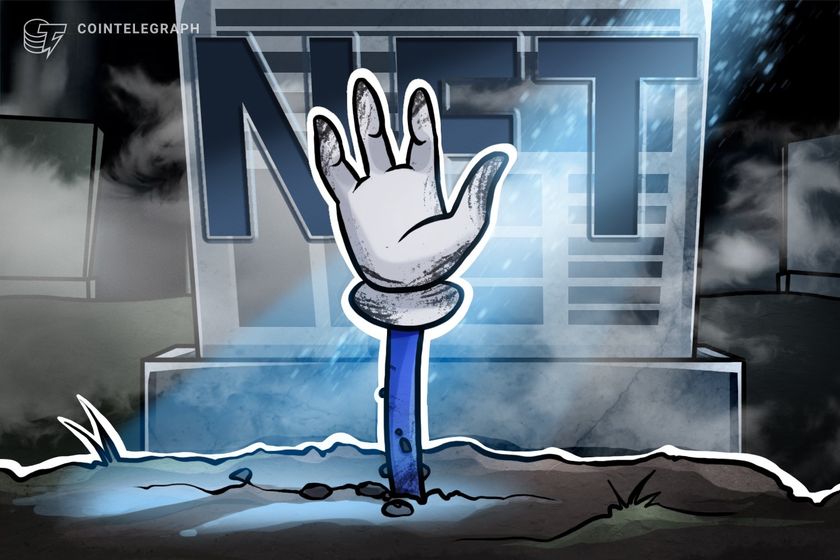
Real-world assets linking up with non-fungible tokens (NFTs) is one of a few key catalysts that could reignite the waning NFT lending sector, which is suffering from a collapse in volumes and user activity, says blockchain analytics platform DappRadar.

Volumes in the NFT lending market, which allows NFT holders to take out a loan against their token, have dropped 97% from a peak of around $1 billion in January 2024 to $50 million in May, DappRadar analyst Sara Gherghelas said in a May 27 report.

Gherghelas said for NFT lending to “move beyond survival mode,” it needs “new catalysts” to reignite the sector, such as real-world asset NFTs, like tokenized real estate or yield-bearing assets that could unlock more stable, trusted collateral sources.

“So far, 2025 has not delivered a compelling reason for NFT lending to bounce back,” she said. “While the infrastructure is still here and the platforms remain active, activity has slowed across the board.” 

Real-world assets could revitalize dying NFT lending market: DappRadarBorrower and leading activity have taken a big hit in the NFT lending sector. Source: DappRadar

“For now, the sector seems to be in a holding pattern, waiting either for market recovery or a new use case to reignite interest.”

Gherghelas added that other catalysts that could rekindle NFT lending were tools that make it easier for NFT holders to borrow against their tokens, and that protocols should create “smart infrastructure” such as undercollateralized loans, credit scores and artificial intelligence risk matching.

The report adds that since January last year, borrower activity has declined by 90% and those willing to lend have shrunk by 78%.

The average NFT loan size has also taken a hit from a peak of $22,000 in 2022 to $4,000 in May, a 71% year-over-year drop.

Gherghelas said this shift “shows that either users are borrowing against lower-value assets or simply becoming more conservative with leverage.”

Real-world assets could revitalize dying NFT lending market: DappRadarNFT lending overall trading volume and market activity have dropped off from the all-time highs of past years. Source: DappRadar

The average loan duration is also lower; after hitting an average of roughly 40 days in 2023, it’s been down to 31 days and has held steady throughout 2024 and into 2025.

Gherghelas said this could indicate that “loans are being taken more frequently but for shorter periods, perhaps a sign of more tactical liquidity plays.”

NFT market downturn also hurts lending

Part of the slowdown in NFT lending is connected to the overall NFT market decline, which has seen volumes drop 61% in the first quarter to $1.5 billion compared to $4.1 billion a year ago.

“With collateral value collapsing, the lending activity naturally followed,” Gherghelas said. “There are a few exceptions that managed to hold or regain traction, but they’ve been outliers, not enough to lift the sector.”

Related: AI decentralized apps are coming for the Web3 throne: DappRadar

The protocol landscape has also narrowed, and the number of active NFT lending apps is limited, with only eight protocols holding any meaningful share.

“The flip-for-liquidity model that worked during bull markets isn’t built for a quieter, more risk-averse environment. But that doesn’t mean NFT lending is finished; it’s simply shifting focus,” Gherghelas said.

“Platforms are diversifying, use cases are shifting, and collateral preferences are changing. If the next wave builds on utility, culture, and better design, NFT lending might just find its second wind — one built to last.”

Magazine: Bitcoin bears eye $69K, CZ denies WLF ‘fixer’ rumors: Hodler’s Digest, May 18 – 24

Read more at cointelegraph.com

Nasdaq files for 21Shares Sui ETF, kicking off SEC review

Nasdaq has filed for crypto asset manager 21Shares to list a spot Sui exchange-traded fund (ETF) in the US, initiating the Securities and Exchange Commission’s review process.

The stock market’s May 23 19b-4 filing, which asks the SEC to list the 21Shares SUI ETF, follows 21Shares’ April 30 submission of its S-1 registration statement to the SEC, which asked the regulator to approve trading of the proposed fund.

Both regulatory filings are needed for the Sui (SUI) tracking fund to go live, with the 19b-4 filing kicking off the SEC’s review process. The agency must decide whether to accept, reject or delay the application within 45 days and it can delay its decision multiple times, for a maximum review period of 240 days.

The SEC must decide on 21Shares’ application by Jan. 18, 2026, at the latest.

Nasdaq files for 21Shares Sui ETF, kicking off SEC reviewSource: Cointelegraph

21Shares proposed BitGo and Coinbase Custody as the custodians to hold SUI on behalf of the trust; however, the filing did not include details on a management fee or ticker.

Canary Capital is the only other asset manager that has submitted 19b-4 and S-1 filings to list a spot Sui ETF, filing the forms on April 8.

21Shares said in its 19b-4 filing that the SUI token powers the Sui network and serves four main purposes: it can be staked to earn rewards, used to pay gas fees, function as a liquid asset for Sui applications and serve as a governance token.

Related: SharpLink launches Ethereum treasury, taps Joe Lubin as board chair

The Sui ecosystem is largely focused on decentralized applications and has been dubbed a potential Solana killer.

SUI is the 13th-largest cryptocurrency, but its $12.3 billion market cap remains a fraction of Solana’s (SOL) $92 billion market cap, according to CoinGecko.

21Shares aims to add to SUI offerings

21Shares already lists a Sui exchange-traded product in Europe, on the Euronext Paris and Euronext Amsterdam stock exchanges.

Those listings have contributed to SUI-based exchange-traded products having $317.2 million in assets under management (AUM), according to a May 26 report from CoinShares.

Flows into SUI ETPs increased by $2.9 million between May 16 and May 24, and only trails Bitcoin (BTC), Ether (ETH), Solana and XRP (XRP) in terms of net assets.

Magazine: TradFi is building Ethereum L2s to tokenize trillions in RWAs: Inside story

Read more at cointelegraph.com

Nasdaq files for 21Shares Sui ETF, kicking off SEC review

Nasdaq has filed for crypto asset manager 21Shares to list a spot Sui exchange-traded fund (ETF) in the US, initiating the Securities and Exchange Commission’s review process.

The stock market’s May 23 19b-4 filing, which asks the SEC to list the 21Shares SUI ETF, follows 21Shares’ April 30 submission of its S-1 registration statement to the SEC, which asked the regulator to approve trading of the proposed fund.

Both regulatory filings are needed for the Sui (SUI) tracking fund to gi live, with the 19b-4 filing kicking off the SEC’s review process. The agency must decide whether to accept, reject or delay the application within 45 days and it can delay its decision multiple times, for a maximum review period of 240 days.

The SEC must decide on 21Shares’ application by Jan. 18, 2026, at the latest.

Nasdaq files for 21Shares Sui ETF, kicking off SEC reviewSource: Cointelegraph

21Shares proposed BitGo and Coinbase Custody as the custodians to hold SUI on behalf of the trust, however, the filing did not include details on a management fee or ticker.

Canary Capital is the only other asset manager that has submitted 19b-4 and S-1 filings to list a spot Sui ETF, filing the forms on April 8.

21Shares said in its 19b-4 filing that the SUI token powers the Sui network and serves four main purposes: it can be staked to earn rewards, used to pay gas fees, function as a liquid asset for Sui applications and serve as a governance token.

Related: SharpLink launches Ethereum treasury, taps Joe Lubin as board chair

The Sui ecosystem is largely focused on decentralized applications and has been dubbed a potential Solana killer.

SUI is the 13th-largest cryptocurrency, but its $12.3 billion market cap remains a fraction of Solana (SOL)’s $92 billion market cap, according to CoinGecko.

21Shares aims to add to SUI offerings

21Shares already lists a Sui exchange-traded product in Europe, on the Euronext Paris and Euronext Amsterdam stock exchanges.

Those listings have contributed to SUI-based exchange-traded products having $317.2 million in assets under management (AUM), according to a May 26 report from CoinShares.

Flows into SUI ETPs increased by $2.9 million between May 16 and May 24, and only trails Bitcoin (BTC), Ether (ETH), Solana and XRP (XRP) in terms of net assets.

Magazine: TradFi is building Ethereum L2s to tokenize trillions in RWAs: Inside story

Read more at cointelegraph.com

Third individual arrested in NYC crypto torture and kidnapping case

A third individual, suspected of being connected to the recent kidnapping, torture and attempted extortion of an Italian tourist in New York City, surrendered to law enforcement on May 27.

33-year-old William Duplessie was taken into custody by the New York Police Department (NYPD) and will be charged with “kidnapping and false imprisonment of an associate,” NYPD Commissioner Jessica Tisch said.

The incident comes amid a string of kidnappings and ransom attempts targeting crypto investors and their loved ones, prompting additional security measures from investors and industry executives.

According to reporting from The New York Times, Duplessie and crypto investor John Woeltz, who was previously arrested by police in connection with the case, both had connections to an NYC-based crypto hedge fund.

Third individual arrested in NYC crypto torture and kidnapping caseSource: Jameson Lopp

Duplessie negotiated his surrender with the NYPD over the course of several days leading up to his arrest.

Related: France arrests over 12 suspects linked to crypto kidnappings: Report

Italian tourist kidnapped and drugged in an attempt to steal crypto

Michael Valentino Teofrasto, a 28-year-old Italian tourist in New York City, was kidnapped in Manhattan and held captive for weeks before managing to escape and alert law enforcement authorities.

Teofrasto said the suspects bound him, stole his passport and mobile device, and subjected him to physical beatings, which included being shocked with a Taser.

The victim also said the suspects repeatedly hit him with a firearm and would submerge his feet in the water while tasing him in an attempt to get him to reveal his crypto private keys.

The tourist was reportedly held in a luxury townhome in the SoHo neighborhood of Manhattan and escaped the luxury townhome where he was being held.

Once free, Teofrasto flagged down a police officer and relayed the kidnapping incident to the official.

Following his incident report, NYC police arrested crypto investor John Woeltz and charged the investor with kidnapping for ransom and three other felony counts.

Woeltz is expected to appear in court for an additional hearing on May 28 and is currently being held in custody without bail while awaiting trial.

Magazine: Crypto ‘more taboo than OnlyFans,’ says Violetta Zironi, who sold song for 1 BTC

Read more at cointelegraph.com