cointelegraph.com

75% of VASPs registered in the EU will not be able to comply with MiCA

Opinion by: Slava Demchuk, co-founder and CEO of AMLBot

All virtual asset service providers (VASPs) registered in the EU before 2025 must comply with Markets in Crypto-Assets Regulation (MiCA) requirements this year. Not all will be able to do so. 

The MiCA regulation is, in essence, a good legal framework for the crypto industry, but it also has some disadvantages, especially for crypto startups and small businesses. 

Looking at the case of Estonia and its implementation of crypto licenses in 2017, it is possible to predict that around 75% of VASPs will need to cease their operations in the EU. 

What happened in Estonia with crypto licenses? 

In 2017, Estonia was one of the first EU member states to introduce a crypto licensing process. Getting a crypto license (a VASP registration) was easy and fast. No physical presence, share capital requirement, or proof of having sound Anti-Money Laundering (AML) and Know Your Customer (KYC) systems in place were required. The result? By 2019, Estonia had issued around 2,000 crypto licenses. 

Starting in 2019, however, Estonia adopted several amendments to the law, incorporating requirements similar to MiCA. As a consequence, the majority of licensed crypto companies were not able to comply with new requirements and lost their licenses. Today, Estonia has only around 45 licensed crypto businesses.

Current situation in the EU with VASP registration

Similar situations will occur in countries with light VASP registration requirements, such as Poland and the Czech Republic. There are around 1,600 VASPs registered in Poland, owing to the easy and fast process of registering in the country before the MiCA implementation. With minimal requirements, one can open a company and receive a VASP registration in these countries within a few weeks. 

These licensing processes completely changed in 2025 when MiCA entered fully into force. All the registered VASPs must comply with new requirements, which will be the same regardless of their country of incorporation; otherwise, they will be required to cease their business. 

Recent: 10 stablecoin issuers approved under EU’s MiCA — Tether is left out

Most of them will not be able to comply, based on previous experience, such as when 1,900 companies lost their VASP registrations in Estonia. Those license losses occurred as a result of several key factors: 

Their size: Many registered VASPs were one-to-three-person companies that provided essential exchange in p2p platforms or over-the-counter. They will not have enough resources to comply with strict MiCA requirements.

The cost: Acquiring a MiCA license is expensive. It was previously possible to receive VASP registration in Poland or the Czech Republic for 2,000-4,000 euros. The price for a MiCA license is much more than that, typically around 30,000-80,000 euros, depending on the business model and country of incorporation.

The requirements: Companies that apply for a MiCA license must prove they have many complex processes in place, including but not limited to AML/KYC, data protection and cyber resilience. Therefore, the company must hire many specialists and build many processes. Based on the number of VASPs registered in Poland, those 1,600 VASPs will need to find 1,600 AML/compliance officers (one per VASP) by July 2025 — when all VASPs in Poland shall comply with MiCA — that have relevant knowledge, expertise and pass the fit-and-proper test. This will be nearly impossible.

In addition, MiCA has high share capital requirements ranging from 50,000 to 150,000 euros, depending on the services a company provides. Many currently registered VASPs are startups or small companies whose revenue will not be able to cover all the costs needed to build the processes mentioned above and satisfy the share capital requirements. 

Where does that leave the small businesses and the startups? They will not be equipped to comply with MiCA.

Opinion by: Slava Demchuk, co-founder and CEO of AMLBot.

This article is for general information purposes and is not intended to be and should not be taken as legal or investment advice. The views, thoughts, and opinions expressed here are the author’s alone and do not necessarily reflect or represent the views and opinions of Cointelegraph.

Read more at cointelegraph.com

US-Canada tariff flip-flops have Bitcoin miners on their toes

Bitcoin miners are adapting their business strategies as the continued trade war between the US and Canada makes energy prices and policies all the more uncertain.

US President Donald Trump threatened to double his tariffs on steel and aluminum from 25% to 50%, leading the government of the province of Ontario to walk back its own plan to increase the cost of power exports to the US.

Ontario Premier Doug Ford had promised to further increase the surcharge or even “shut off the electricity completely,” given further provocation. However, he appears to have softened his stance, at least for now. 

The trade war may have reached a lull, but some crypto firms are looking ahead at possible policy changes in order to protect their growth. 

Bitcoin miners expect changes in energy markets

Ben Ganon, the CEO of Canadian Bitcoin mining firm Bitfarms, told Bloomberg on March 11 that the recent energy price hikes, had they gone through, were unlikely to affect his firm’s business. 

Bitfarms’ operations are mostly in Quebec and British Columbia, both of which boast significant hydroelectric capacity in relation to the total provincial energy mix. Ontario, by comparison, is “not as robust of an energy market. And over the last several years, they’ve really taken a big push on cutting back on baseload capacity.”

US-Canada tariff flip-flops have Bitcoin miners on their toes

But even though Bitfarms’ energy situation may look solid for the time being, Ganon said that the tariffs “have implications for what policy and regulatory frameworks are going to look like in the future.”

He said that his firm wants to see “greater access to electricity markets” as well as fewer regulations on setting up a new business or new power applications. 

Energy policy has been a contentious area of debate in Canadian politics, with critics accusing the Liberal government — now led by Prime Minister Mark Carney — of harming the Canadian economy with their strategies to lower emissions. 

Related: What Canada’s new Liberal PM Mark Carney means for crypto

Ganon said: “The opportunities that are present in the United States are also present in Canada. And I think that this will all resolve itself and end up in a much more deregulated and smooth and efficient market because for years it’s been tied up in regulatory red tape.”

How would a Bitcoin miner benefit from tariffs?

Tariffs on goods such as steel, aluminum, and other industrial products — intended to encourage domestic production in the US— also impact Bitcoin miners, with some effects being unexpectedly beneficial.

While Ganon noted that miners can’t control the Bitcoin price, they can control their electricity costs. “One of the ways that we can do that is we can look for pockets of energy that are underutilized, that used to power heavy industry, which has been outsourced to other countries over the last 20 or 30 years.”

According to Ganon, Bitfarms has operations in Pennsylvania — a “Rust Belt” state heavily affected by the outsourcing of American steel and metals industries. His firm’s assets could soon be in high demand if the US manufacturing industry were to come back from the dead.

Ganon said that Bitcoin miners have been investing heavily in energy infrastructure that “used to power aluminum smelters and steel refineries and all the stuff which was outsourced.”

“Now Bitcoin miners have these assets. And as the pendulum swings back to America, those assets are now in high demand.”

China tariffs squeeze Bitcoin mining hardware

Canadian miners like Bitfarms may be unconcerned for now, but Trump’s tariffs on China have already begun to squeeze American crypto miners, who import hardware from China-based firms like Bitmain.

According to Bloomberg, shipments of Bitcoin mining hardware from China to the US were experiencing significant delays as of February 2025. The delays reportedly were the result of the US blacklisting Bitmain’s AI affiliate Xiamen Sophgo Technologies. 

Heavy customs fees for inspections of Bitmain-affiliated hardware have cost US miners up to $500,000, according to Vishnu Mackenchery, director of global logistics and services at Compass Mining Inc. New tariffs could make new imports of next-gen miners to the US “completely cost-prohibitive,” according to Synteq Digital CEO Taras Kulyk.

China-based mining hardware producers like Bitmain could set up operations in other countries to avoid US sanctions. During Trump’s first term, when he imposed a 25% tax duty on a number of consumer electronic goods from China, many mining hardware producers moved to Malaysia, Indonesia and Thailand to avoid tariffs.

Bitmain even announced it would launch a US production line in December 2024 to “provide faster response times and more efficient services to the North American customers.” Bloomberg noted that the firm did not provide the exact location of its US line. 

Related: Treasury Secretary Scott Bessent says US should bring BTC onshore

Trump’s economic policies continue to be a mixed bag for the crypto industry. Wild fluctuations in trade policy and last-minute reversals have made the market difficult to predict. Elsewhere, the European Union has promised to impose counter-tariffs on the US, further threatening asset valuations. 

US-Canada tariff flip-flops have Bitcoin miners on their toes

Bitcoin price chart Sept. 1, 2024 to March 13, 2025. Source: TradingView

Marcin Kazmierczak, co-founder and chief operating officer of blockchain oracle solution firm RedStone, told Cointelegraph this could see Bitcoin sink to $75,000, a level not seen since November 2024. 

Magazine: Mystery celeb memecoin scam factory, HK firm dumps Bitcoin: Asia Express

Read more at cointelegraph.com

Trump family held talks with Binance for stake in crypto exchange — Report

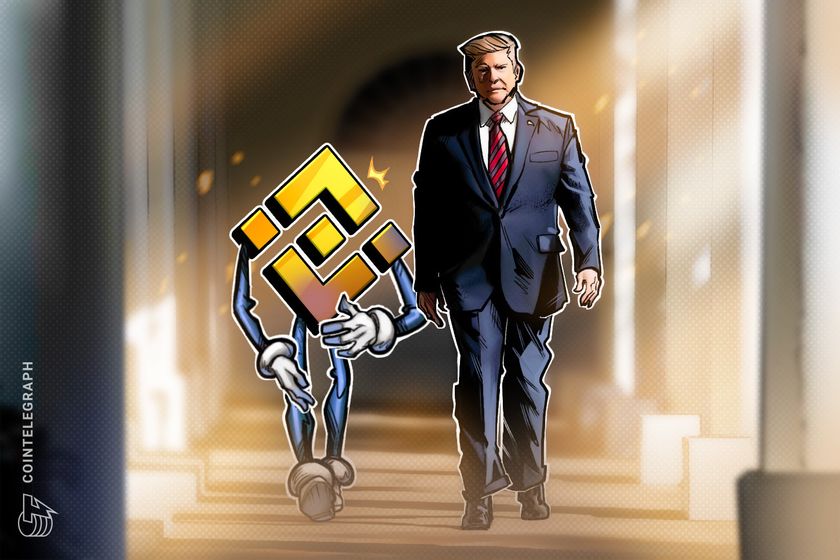
Representatives of US President Donald Trump’s family have reportedly held talks with Binance about acquiring a stake in the crypto exchange.

Binance reached out to Trump’s family representatives in 2024, offering to strike a deal as part of a plan to resume Binance.US operations in the country, The Wall Street Journal reported on March 13.

Citing sources familiar with the matter, the report mentioned that Binance’s billionaire founder Changpeng Zhao — who served four months in prison in the US — has been pushing for the Trump administration to grant him a pardon.

“It is unclear what form the Trump family stake would take if the deal comes together or whether it would be contingent on a pardon,” the report said.

World Liberty Financial among deal options

According to WSJ, a potential opportunity could be a scenario where Trump takes the stake in Binance or proceeds with the deal through World Liberty Financial (WLFI), a Trump-backed crypto venture launched in September 2024.

Trump has emerged as the first US “crypto president,” launching his Official Trump (TRUMP) memecoin days before returning to the White House on Jan. 20. A similar memecoin subsequently came from Trump’s wife, Melania, while Trump’s son, Eric Trump, has been actively pushing for Bitcoin (BTC) and crypto adoption.

Cointelegraph approached Binance for a comment regarding the report on the alleged deal but did not receive a response by publication.

Additionally, Binance executives anticipated a potential legal resolution in the Securities and Exchange Commission’s (SEC) civil case against Tron founder Justin Sun, The WSJ reported.

Sun, who in November 2024 announced a $30 million investment in Trump’s WLFI, jointly asked a US court to halt his case with the SEC in February 2025.

Neither Sun nor any Binance representatives attended the first White House Crypto Summit on March 7, 2025.

Trump slams WSJ for “polluted thinking” of the EU

Minutes before the WSJ article was published at 1:00 pm UTC, Trump took to Truth Social to slam the publication for allegedly reporting wrong information.

“The Globalist Wall Street Journal has no idea what they are doing or saying. They are owned by the polluted thinking of the European Union, which was formed for the primary purpose of ‘screwing’ the United States of America,” the president wrote.

Investments, Changpeng Zhao, Markets, United States, Donald Trump, Binance, Policy

Source: Donald Trump

While Trump was fast to address the WSJ report minutes before its publication, key Trump-linked industry figures — including Elon Musk and David Sacks — did not react to the news on social media.

Investments, Changpeng Zhao, Markets, United States, Donald Trump, Binance, Policy

Source: Changpeng Zhao

Zhao subsequently took to X to deny the allegations, suggesting that the WSJ article is “motivated as an attack on the president and crypto.”

“Fact: I have had no discussions of a Binance.US deal with … well, anyone,” CZ wrote.

Related: Donald Trump’s memecoin generated $350M for creators: Report

Binance CEO praises Trump as a catalyst for a “global pro-crypto shift”

Meanwhile, Binance CEO Richard Teng did not immediately respond to the report within the first hour of its publication.

Instead, Teng took to X on March 13 to highlight his new interview with CNBC, where he praised Trump as a catalyst for a “global pro-crypto shift.” Teng expressed confidence that the crypto industry is widely supporting Trump, stating:

“If you ask anybody in the crypto industry, people prefer the current administration compared to the last one.”

Still, some apparently have not been happy with all of Trump’s crypto policies, with many advocating for Bitcoin-only US reserves instead of a multi-crypto approach that has been eventually chosen by the administration.

House Democrats have also been concerned about the plummeting TRUMP memecoin, proposing legislation to ban the issuance of memecoins by any US public officials.

Magazine: Trump’s crypto ventures raise conflict of interest, insider trading questions

Read more at cointelegraph.com

Trump family held talks with Binance for stake in crypto exchange — Report

Representatives of US President Donald Trump’s family have reportedly held talks with Binance about potentially acquiring a stake in the crypto exchange.

Binance reached out to Trump’s family representatives in 2024, offering to strike a business deal as part of a plan to resume Binance.US operations in the country, The Wall Street Journal reported on March 13.

Citing sources familiar with the matter, the report mentioned that Binance’s billionaire founder Changpeng Zhao — who served four months in prison in the US — has been pushing for the Trump administration to grant him a pardon.

“It is unclear what form the Trump family stake would take if the deal comes together or whether it would be contingent on a pardon,” the report said.

World Liberty Financial among deal options

According to WSJ, a potential opportunity could be a scenario where Trump takes the stake in Binance or proceeds with the deal through World Liberty Financial, a Trump-backed crypto venture launched in September.

Trump has emerged as the US first “crypto president,” launching his Official Trump (TRUMP) memecoin days before returning to the White House on Jan. 20, 2025. A similar memecoin subsequently came from Trump’s wife, Melania, while Trump’s son, Eric Trump, has been actively pushing for Bitcoin (BTC) and crypto adoption as well.

Cointelegraph approached Binance for a comment regarding the report on the alleged deal but did not receive a response by publication.

This is a developing story, and further information will be added as it becomes available.

Magazine: Trump’s crypto ventures raise conflict of interest, insider trading questions

Read more at cointelegraph.com

Web3’s UX problem — and how to fix it, feat. Ponder One

The latest episode of Hashing It Out dives into one of Web3’s most persistent challenges: usability.

Host Elisha Owusu Akyaw speaks with Moe El-Shibib and Selim Sezgin, co-founders of Ponder One, about the hurdles preventing mainstream adoption and the technologies that could make blockchain interactions seamless for everyday users.

The UX Roadblock

Web3 continues to grow, but usability remains a major barrier. Many users struggle with onboarding, navigating DeFi platforms and managing assets across multiple chains.

In the interview, Sezgin highlights that technical innovation has outpaced user experience, making blockchain interactions complex for newcomers.

“While technical innovation has been a driving force, usability and accessibility remain pain points… Our whole goal is to simplify Web3 and make it as usable as possible.”

To address this, the discussion explores AI-driven solutions that simplify blockchain transactions. AI can automate swaps, bridging and decision-making, reducing the need for technical knowledge.

Related: Web3 businesses can outsmart crypto scams before they strike — Here’s how

Crosschain functionality is also a key focus, ensuring users can interact seamlessly across blockchains without manually switching networks.

Decentralization vs usability in governance

Decentralized governance also plays a significant role in shaping Web3 applications. The Ponder One team emphasizes the importance of community-driven decisions, allowing users to vote on integrations and protocol developments.

However, governance structures must balance decentralization with efficiency to remain effective.

Looking ahead, the industry is moving toward real-world assets (RWAs), AI-driven applications and enhanced accessibility to DeFi. As innovation progresses, broader adoption will hinge on simplifying blockchain technology for users.

This episode touches on key insights into Web3’s current challenges and future developments, highlighting the need for a simplified and more accessible blockchain ecosystem.

Cryptocurrencies, Podcast, Hashing It OutListen to the full episode of Hashing It Out on Cointelegraph’s podcast pageSpotifyApple Podcasts or your podcast platform of choice. And don’t forget to check out Cointelegraph’s full lineup of other shows.

Magazine: Crypto fans are obsessed with longevity and biohacking: Here’s why

Read more at cointelegraph.com

US Bitcoin ETFs break outflow streak with $13.3M inflow

Over $1.67 billion exited US spot Bitcoin and Ether exchange-traded funds (ETFs) in March, but investors stopped the bleeding by bringing in $13.3 million on March 12 as the BTC market price inched closer to $85,000.

As of March 12, spot Bitcoin ETFs had attracted $35.4 million worth of inflows spread across two days, according to Farside Investors data. On the other hand, spot Ether ETFs recorded inflows on just one occasion, bringing in $14.6 million on March 4.

US Bitcoin ETFs break outflow streak with $13.3M inflow

Spot Bitcoin ETF daily flow data. Source: Farside Investors

Bitcoin ETFs break outflow streak with $13.3 million inflow

According to Sosovalue, the cumulative net inflows of BTC ETFs confirmed the recent $13.3 million inflow on March 12, signaling a pause in Bitcoin’s ETF outflows.

The total value of the trades that day for Bitcoin ETFs amounted to $2.01 billion, its lowest daily value since Feb. 20. The inflows were contributed by three BTC funds: BlackRock’s iShares Bitcoin Trust (IBIT), the ARK 21Shares Bitcoin ETF (ARKB) and the Grayscale Bitcoin Mini Trust ETF (BTC).

US Bitcoin ETFs break outflow streak with $13.3M inflow

Daily flow of investments into spot Bitcoin ETFs. Source: Sosovalue

On the Ethereum side, the one day of inflows saw contributions from the Fidelity Ethereum Fund (FETH), Bitwise Ethereum ETF (ETHW), Grayscale Ethereum Trust (ETHE) and the Grayscale Ethereum Mini Trust (ETH).

US Bitcoin ETFs break outflow streak with $13.3M inflow

Spot Ether ETF daily flow data. Source: Farside Investors

Market downturn and geopolitical tensions drive ETF outflows

The broader market downturn and macroeconomic uncertainties have contributed to the ETF outflows, driven by geopolitical tensions, trade wars and bearish investor sentiment.

Related: Crypto ETPs see 4th straight week of outflows, totaling $876M — CoinShares

Analysts say that the lack of concrete implementation or unmet expectations regarding President Donald Trump’s Strategic Bitcoin Reserve plan has also exacerbated selling pressure.

Despite Bitcoin maintaining levels above $80,000, market watchers warned that the upcoming European Union retaliatory tariffs could introduce greater volatility, further influencing Bitcoin’s price trajectory.

Magazine: Crypto fans are obsessed with longevity and biohacking: Here’s why

Read more at cointelegraph.com

Ethereum average gas fees drop 95% one year after the Dencun upgrade

The average Ethereum gas fee has dropped by 95% in the year following the Dencun upgrade, one of Ethereum’s most significant network improvements.

On March 13, 2024, Ethereum’s Dencun upgrade was rolled out. The upgrade combined the Cancun upgrade on the execution layer and the Deneb upgrade on the consensus layer. It also introduced nine Ethereum Improvement Proposals (EIPs).

The primary goal was to enhance Ethereum’s scalability and reduce transaction costs for layer-2 networks. According to YCharts data, Ethereum’s average gas fee has fallen from 72 gwei in 2024 to just 2.7 gwei as of March 12, 2025.

Last year, an average swap cost users $86 in fees, while non-fungible token sales averaged $145 in gas fees. At the time of writing, Etherscan data showed that an average swap would cost $0.39, while an NFT sale would average $0.65.  

Fees, Dencun Upgrade

Ethereum average gas fee. Source: YCharts 

Ether price has dropped 53% since the Dencun Upgrade

Despite the sharp drop in gas fees, Ether (ETH) price has declined by 53% since the Dencun upgrade.

During the upgrade in March 2024, ETH was trading above $4,070. One year later, as of March 13, 2025, ETH was valued at around $1,891, according to CoinGecko data.

Fees, Dencun Upgrade

Ether’s 1-year price chart. Source: CoinGecko

In a statement sent to Cointelegraph, Dominik Harz, the co-founder of hybrid layer-2 Build on Bitcoin (BOB), said Ethereum has “underperformed” recently:

“Monday’s price drop erased all DeFi TVL gains since Trump’s election. Between Solana’s memecoin frenzy and Ethereum’s fractured few months, it’s clear the industry is searching for a new, more sustainable and secure frontier for DeFi.” 

Related: More than 50% of validators signal to increase ETH gas limit

Upcoming Pectra upgrade sees hiccups

On March 5, Ethereum’s next major upgrade, Pectra, rolled out on its final testnet, Sepolia. However, the team started seeing error messages and empty blocks being mined.

Ethereum developer Marius van der Wijden confirmed that a fix was deployed, but an unknown user later triggered the same error, leading to further issues. The development team has since managed to stabilize the testnet and successfully process transactions.

Harz said that while these testnet issues are “disrupting the mainnet launch,” they are far from Ethereum’s biggest problems. The executive said that once Pectra goes live, it will double the available data space for layer-2s, reduce costs and increase execution capacity. 

“While that’s a step in the right direction, the reality is that Ethereum is quickly losing its position as the go-to chain for builders, and Pectra isn’t the fix-all solution to its deeper issues,” Harz said. 

Magazine: Crypto fans are obsessed with longevity and biohacking: Here’s why

Read more at cointelegraph.com

Wallet in Telegram to list 50 tokens and launch yield program

Wallet in Telegram, a third-party cryptocurrency wallet Mini App on Telegram, is set to expand its custodial crypto services, adding at least 50 new cryptocurrencies and launching an earn feature for users.

The Open Platform (TOP), the largest venture builder in The Open Network (TON) ecosystem, which manages Wallet in Telegram as one of its portfolio businesses, announced the rollout of the next wallet generation on March 13, introducing a wide range of new features.

With the rollout, Wallet in Telegram will add at least 50 new crypto assets, including major cryptocurrencies Ether (ETH) and XRP (XRP), as well as memecoins like Dogecoin (DOGE) and Pepe (PEPE), a spokesperson for Wallet told Cointelegraph.

Wallet, Rewards, XRP, Telegram, TON, Memecoin

Source: Wallet in Telegram

Wallet’s new generation is set to be rolled out within the next two months and will also introduce an “Earn” feature, which will allow users to gain yields on assets including Tether’s USDt (USDT).

Initial rollout limited to in-app transactions

Initially, Wallet users will be able to buy, sell and hold non-TON tokens without onchain deposits or withdrawals, meaning altcoin transactions to other wallets and exchanges will not be allowed.

“The current stage of the rollout is only available for in-app transactions for non-TON tokens,” Wallet’s spokesperson said, adding that the altcoin option is only available for trading within the custodial wallet. The spokesperson added:

“We focus primarily on the TON Ecosystem and maintain a full range of operations for TON-native tokens within the custodial Wallet. At the same time, we see consumer interest in expanding the portfolio with other assets and want to provide them with such an option in trade-only mode.”

“The list of tokens is not final yet, as it will be rolling out gradually within the next two months,” the spokesperson said, adding that the first release will feature 50 assets, with a full list now being finalized.

Wallet’s Earn: Minimum deposit is 0.1 TON

In addition to expanding Wallet with a large number of altcoins, TOP is working to introduce the new “Trade” section and the “Earn” section.

Starting with Toncoin (TON), the first Earn campaign will provide a “flexible yield” on TON deposits, with a minimum deposit amount of 0.1 TON.

“The yield is generated from TON staking,” the spokesperson for Wallet said.

In addition to Toncoin, Wallet plans to expand the earn offering to more altcoins and stablecoins, including Tether’s USDt (USDT), the announcement stated.

Magazine: Mystery celeb memecoin scam factory, HK firm dumps Bitcoin: Asia Express

Read more at cointelegraph.com

Wallet in Telegram to list 50 tokens and launch yield program

Wallet in Telegram, a third-party cryptocurrency wallet Mini App on Telegram, is set to expand its custodial crypto services, adding at least 50 new cryptocurrencies and launching an earn feature for users.

The Open Platform (TOP), the largest venture builder in The Open Network (TON) ecosystem, which manages Wallet in Telegram as one of its portfolio businesses, announced the rollout of the next wallet generation on March 13, introducing a wide range of new features.

With the rollout, Wallet in Telegram will add at least 50 new crypto assets, including major cryptocurrencies such as Ether (ETH) and XRP (XRP), as well as memecoins like Dogecoin (DOGE) and Pepe (PEPE), a spokesperson for Wallet told Cointelegraph.

Wallet, Rewards, XRP, Telegram, TON, Memecoin

Source: Wallet in Telegram

Wallet’s new generation is set to be rolled out within the next two months and will also introduce an “Earn” feature, which will allow users to gain yields on assets including Tether’s USDt (USDT).

Initial rollout limited to in-app transactions

Initially, Wallet users will be able to buy, sell and hold non-TON tokens without onchain deposits or withdrawals, meaning altcoin transactions to other wallets and exchanges will not be allowed.

“The current stage of the rollout is only available for in-app transactions for non-TON tokens,” Wallet’s spokesperson said, adding that the altcoin option is only available for trading within the custodial wallet. The spokesperson added:

“We focus primarily on the TON Ecosystem and maintain a full range of operations for TON-native tokens within the custodial Wallet. At the same time, we see consumer interest in expanding the portfolio with other assets and want to provide them with such an option in trade-only mode.”

“The list of tokens is not final yet, as it will be rolling out gradually within the next two months,” the spokesperson said, adding that the first release will feature 50 assets, with a full list now being finalized.

Wallet’s Earn: Minimum deposit is 0.1 TON

In addition to expanding Wallet with a large number of altcoins, TOP is working to introduce the new “Trade” section and the “Earn” section.

Starting with Toncoin (TON), the first Earn campaign will provide a “flexible yield” on TON deposits, with a minimum deposit amount of 0.1 TON.

“The yield is generated from TON staking,” the spokesperson for Wallet said.

In addition to Toncoin, Wallet plans to expand the earn offering to more altcoins and stablecoins, including Tether’s USDt (USDT), the announcement stated.

This is a developing story, and further information will be added as it becomes available.

Magazine: Mystery celeb memecoin scam factory, HK firm dumps Bitcoin: Asia Express

Read more at cointelegraph.com

Turkey tightens crypto regulations with new rules for exchanges, investors

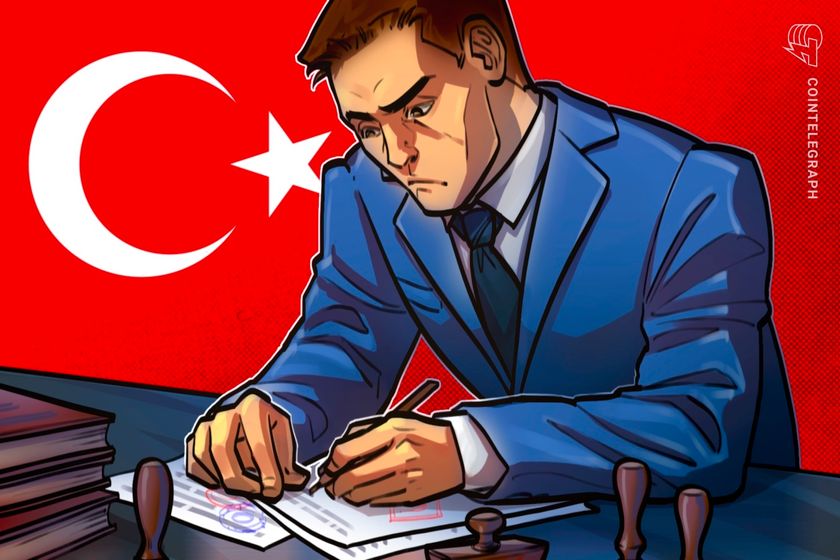
Turkey is advancing its cryptocurrency regulations with new rules for crypto asset service providers (CASPs).

On March 13, the Capital Markets Board (CMB) of Turkey published two regulatory documents related to the licensing and operations of CASPs, including crypto exchanges, custodians and wallet service providers.

The framework grants the CMB full oversight of crypto platforms, ensuring compliance with national and international standards.

Cryptocurrencies, Turkey, Cryptocurrency Exchange, Policy

An excerpt from the title page of the CASP regulation document by the CMB. Source: Official Gazette

It also sets standards and requirements for establishing and providing crypto asset services in Turkey, such as establishment capital, history of executives, shareholder rules and others.

Stricter requirements for CASPs

Under the framework, CASPs will be required to invest in compliance infrastructure and establish dedicated risk management teams to identify and manage a range of risks. The providers will also have to establish a price monitoring system to alert suspicious trading activity.

Turkish CASPs will also have to adhere to stringent reporting requirements, providing the CMB with timely information about their operations.

Additionally, the new framework further strengthens Turkey’s crypto Anti-Money Laundering (AML) standards, requesting CASPs to record significant data sets of transaction information, including canceled and unexecuted transactions.

Cryptocurrencies, Turkey, Cryptocurrency Exchange, Policy

An excerpt from CMB’s CASP regulation document (translated by Google). Source: Official Gazette

Turkey previously introduced crypto AML regulations in December 2024, requiring users to share identifying information with CASPs for transactions of

Under the new regime, users executing transactions of more than 15,000 Turkish lira ($425) will be required to share their identifying information with the country’s crypto service providers, according to a Dec. 25 document issued by the Official Gazette of the Republic of Turkey.

According to the document, Turkey’s new crypto regulations align with global standards and follow regulatory approaches set by Europe’s Markets in Crypto-Assets Regulation (MiCA) and the US Securities and Exchange Commission.

The regulations also target stricter trading requirements for Turkish investors, introduce potential stablecoin restrictions and address the decentralized finance (DeFi) market in Turkey.

This is a developing story, and further information will be added as it becomes available.

Magazine: How crypto laws are changing across the world in 2025

Read more at cointelegraph.com