cointelegraph.com

Solana proposal to cut inflation rate by up to 80% fails to pass

A proposal to dramatically change Solana’s inflation system has been rejected by stakeholders but is being hailed as a victory for the network’s governance process.

“Even though our proposal was technically defeated by the vote, this was a major victory for the Solana ecosystem and its governance process,” commented Multicoin Capital co-founder Tushar Jain on March 14.

Around 74% of the staked supply voted on proposal SIMD-228 across 910 validators, but just 43.6% voted in favor of it, with 27.4% voting against it and 3.3% abstaining, according to Dune Analytics. It needed 66.67% approval from participating votes to pass and only received 61.4%.

Jain added that this was the biggest crypto governance vote ever, by both the number of participants and the participating market cap, of any ecosystem, chain or network.

“This was a meaningful scaling stress test — a social, rather than technical, stress test — and the network passed despite a wide stratification of diverging opinions and interests.”

“Solana SIMD-228 voter turnout was higher than every US presidential election in the last 100 years,” claimed the team behind Solana’s X account. 

Solana proposal to cut inflation rate by up to 80% fails to pass

SIMD-228 final vote count. Source: Dune

SIMD-228 is a proposal to change Solana’s (SOL) inflation system from a fixed schedule to a dynamic, market-based model. Instead of a pre-set decrease in inflation, this new system would dynamically adjust based on staking participation.

Currently, supply inflation begins at 8% annually, decreasing by 15% per year until it reaches 1.5%. The new mechanism may have reduced it by as much as 80%, according to some estimates. Solana inflation is currently 4.66%, and just 3% of the total supply is staked, according to Solana Compass. 

However, such high inflation can increase selling pressure, reduce SOL’s price and discourage network use. The proposed system would have adjusted inflation based on staking levels to stabilize the network and minimize unnecessary token issuance.

Solana proposal to cut inflation rate by up to 80% fails to pass

Solana’s current inflation schedule. Source: Helius

Benefits would have included increased network security due to dynamically increasing inflation if staking participation drops, reaction to real-time staking levels rather than following a fixed, inflexible schedule, and encouraging more active use of SOL in DeFi, according to Solana developer tools provider Helius. 

However, lower inflation could have made it harder for smaller validators to stay profitable, the proposed model increased complexity, and unexpected shifts in staking rates might have led to instability.

Related: Solana price bottom below $100? Death cross hints at 30% drop

There was little reaction in SOL prices, with the asset dipping 1.5% on the day to just below $125 at the time of writing. 

However, it has tanked by almost 60% in just two months as the memecoin bubble burst. Solana network revenue has also slumped over 90% since it was primarily used to mint and trade memecoins. 

Magazine: Mystery celeb memecoin scam factory, HK firm dumps Bitcoin: Asia Express

Read more at cointelegraph.com

Vermont follows SEC’s lead, drops staking legal action against Coinbase

US state Vermont has dropped its “show cause order” against crypto exchange Coinbase for allegedly offering unregistered securities to users through a staking service.

Vermont’s Department of Financial Regulation said in a March 13 order that in light of the US Securities and Exchange Commission tossing out its case on Feb. 28, it would follow suit and rescind its action against Coinbase without prejudice.

“The SEC has announced the formation of a new task force to, among other things, provide guidance for the promulgation of rules regarding the regulation of cryptocurrency products and services,” the department said.

Coinbase

Vermont’s financial regulator has decided to drop its legal action against Coinbase. Source: Vermont’s Department of Financial Regulation

“In light of the dismissal of the Federal Action and likelihood of new federal regulatory guidance, the Division believes it would be most efficient and in the best interests of justice to rescind the pending Show Cause Order, without prejudice.”

On the same day the SEC filed its lawsuit in June 2023, the US states of Alabama, California, Illinois, Kentucky, Maryland, New Jersey, South Carolina, Vermont, Washington and Wisconsin said they were launching legal proceedings against Coinbase.

The show cause order asserted that Coinbase was violating securities laws by offering staking to its users without a license and demanded the exchange provide a reason why the courts shouldn’t hit them with an order directing them to halt the service. 

Now that Vermont has opted out, Coinbase chief legal officer Paul Grewal said in a March 13 statement to X that the other states with staking actions should take a “page from Vermont’s playbook.”

Coinbase

Source: Paul Grewal

“As we have always said: staking services are not securities. We applaud Vermont for embracing progress and providing clarity for its citizens who own digital assets,” he said.

“Our work isn’t over. Congress must seize the bipartisan momentum we’re seeing across the House and Senate to pass comprehensive legislation that takes into account the novel features of digital assets, such as staking,” he added.

Related: YouTuber says SEC will recommend dropping lawsuit over 2018 token ICO

A growing number of firms facing legal action from the SEC have had their cases dismissed in the wake of former SEC Chair Gary Gensler, who took a hardline stance toward crypto, resigning on Jan. 20.

Crypto trading firm Cumberland DRW was among the latest to have its case dropped on March 4, while the regulator is reportedly wrapping up its enforcement action against Ripple Labs after more than four years.

Grewal has also launched a request under the Freedom of Information Act to find out how many enforcement actions were brought against crypto firms under Gensler’s tenure between April 17, 2021, and Jan. 20, 2025, and the cost to the taxpayer. 

Magazine: Elon Musk’s plan to run government on blockchain faces uphill battle

Read more at cointelegraph.com

Vermont follows SEC’s lead, drops staking legal action against Coinbase

US state Vermont has dropped its “show cause order” against crypto exchange Coinbase for allegedly offering unregistered securities to users through a staking service.

Vermont’s Department of Financial Regulation said in a March 13 order that in light of the US Securities and Exchange Commission tossing out its case on Feb. 28, it would follow suit and rescind its action against Coinbase without prejudice.

“The SEC has announced the formation of a new task force to, among other things, provide guidance for the promulgation of rules regarding the regulation of cryptocurrency products and services,” the department said.

Coinbase

Vermont’s financial regulator has decided to drop its legal action against Coinbase. Source: Vermont’s Department of Financial Regulation

“In light of the dismissal of the Federal Action and likelihood of new federal regulatory guidance, the Division believes it would be most efficient and in the best interests of justice to rescind the pending Show Cause Order, without prejudice.”

On the same day the SEC filed its lawsuit in June 2023, the US states of Alabama, California, Illinois, Kentucky, Maryland, New Jersey, South Carolina, Vermont, Washington and Wisconsin said they were launching legal proceedings against Coinbase.

The show cause order asserted that Coinbase was violating securities laws by offering staking to its users without a license and demanded the exchange provide a reason why the courts shouldn’t hit them with an order directing them to halt the service. 

Now that Vermont has opted out, Coinbase chief legal officer Paul Grewal said in a March 13 statement to X that the other states with staking actions should take a “page from Vermont’s playbook.”

Coinbase

Source: Paul Grewal

“As we have always said: staking services are not securities. We applaud Vermont for embracing progress and providing clarity for its citizens who own digital assets,” he said.

“Our work isn’t over. Congress must seize the bipartisan momentum we’re seeing across the House and Senate to pass comprehensive legislation that takes into account the novel features of digital assets, such as staking,” he added.

Related: YouTuber says SEC will recommend dropping lawsuit over 2018 token ICO

A growing number of firms facing legal action from the SEC have had their cases dismissed in the wake of former SEC Chair Gary Gensler, who took a hardline stance toward crypto, resigning on Jan. 20.

Crypto trading firm Cumberland DRW was among the latest to have its case dropped on March 4, while the regulator is reportedly wrapping up its enforcement action against Ripple Labs after more than four years.

Grewal has also launched a request under the Freedom of Information Act to find out how many enforcement actions were brought against crypto firms under Gensler’s tenure between April 17, 2021, and Jan. 20, 2025, and the cost to the taxpayer. 

Magazine: Elon Musk’s plan to run government on blockchain faces uphill battle

Read more at cointelegraph.com

Ethereum pushes back Pectra upgrade to conduct third testnet ‘Hoodi’

Ethereum core developers have decided to create a third testnet, Hoodi, to better prepare for the Pectra upgrade, which has now been delayed until at least late April after the first two testnets encountered several bugs.

The Hoodi testnet will launch on March 17 and the Pectra upgrade for it will be activated on March 26, Ethereum Foundation developer Tim Beiko said following the Ethereum All Core Dev Call on March 13.

If Pectra runs smoothly on Hoodi without major issues, core developers could set a mainnet launch date for Pectra as soon as 30 days after Hoodi’s activation, Beiko said.

That would mean Pectra could go live on Ethereum mainnet as early as April 25.

Ethereum pushes back Pectra upgrade to conduct third testnet ‘Hoodi’

Tim Beiko’s latest announcement on the Pectra upgrade: Ethereum Magicians

Pectra, which combines features from the Prague and Electra proposals, will implement over 10 Ethereum Improvement Proposals mostly aimed at bringing more functionality to Ethereum wallets and improving user experience.

It will also include scaling proposals to double the blob count for data availability from three to six.

Pectra was initially slated to launch on Ethereum mainnet in late 2024 but has faced repeated delays due to client readiness issues and synchronization bugs in the first two Ethereum testnets, Holesky and Sepolia.

Pectra was rolled out on Sepolia on March 5, but soon after, Ethereum developers started seeing error messages on their geth nodes and empty blocks being mined.

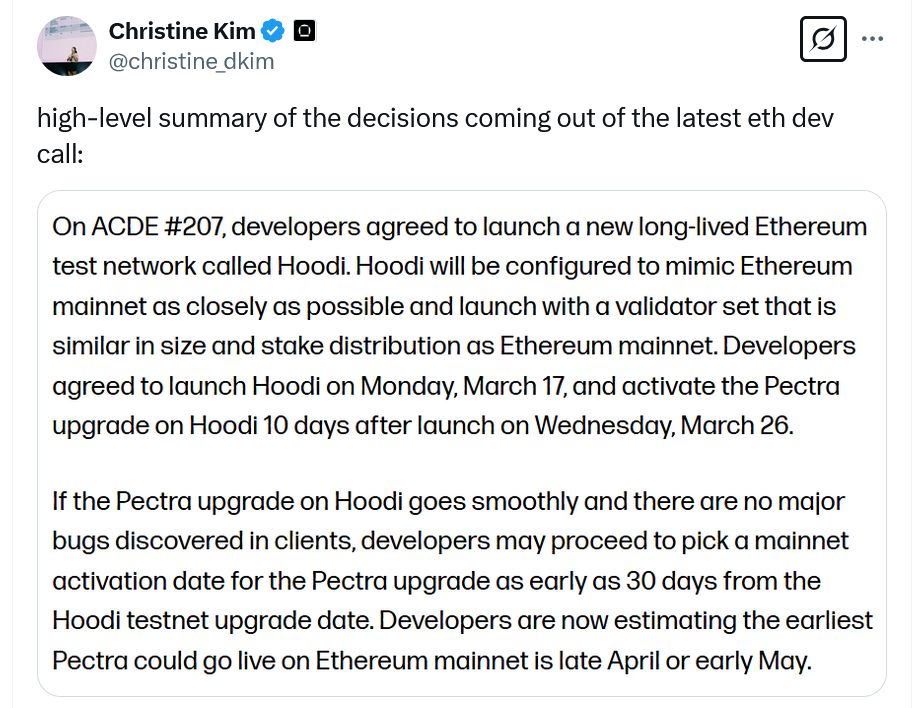
Galaxy Digital vice president of research Christine Kim said Hoodi would look to “mimic” the Ethereum mainnet as closely as possible by launching a validator set similar to how mainnet currently operates.

That would see at least 20 million test staked-Ether (ETH) distributed across 11 client teams and five staking operators.

Ethereum pushes back Pectra upgrade to conduct third testnet ‘Hoodi’

Source: Christine Kim

Beiko noted that aspects of Pectra may still be tested on Sepolia and Holesky.

Related: Ethereum average gas fees drop 95% one year after the Dencun upgrade

The third testnet comes as Ethereum core developers agreed to deploy future Ethereum protocol upgrades at a faster cadence during an “All Core Devs” meeting on Feb. 13.

Crypto-focused venture capital firm Paradigm also called on Ethereum core developers to ship faster protocol updates to achieve more milestones on its technical roadmap and maintain its competitive edge as a leading layer 1 blockchain.

Magazine: MegaETH launch could save Ethereum… but at what cost

Read more at cointelegraph.com

Solana CME futures tip impending US ETF approvals — Exec

The upcoming launch of Solana (SOL) futures on the Chicago Mercantile Exchange (CME), a US derivatives exchange, signals that the first US SOL exchange-traded fund (ETF) listings are coming soon, Chris Chung, founder of Solana-based swap platform Titan, told Cointelegraph. 

On March 17, CME is preparing to launch SOL futures contracts. They will be among the first regulated Solana futures to hit the US market after Coinbase’s launched in February

The listing “paves the way for the eventual approval of SOL ETFs,” Chung told Cointelegraph.

Chung said he expects the US Securities and Exchange Commission (SEC) to approve asset managers VanEck and Canary Capital’s proposed spot Solana ETFs as soon as May.

The existence of regulated Solana futures “signals to regulators that Solana is maturing as an asset, making it easier for them to greenlight additional financial products of similar risk and type,” Chung said. 

Futures contracts are standardized agreements to buy or sell an underlying asset at a future date. They play a crucial supporting role for spot cryptocurrency ETFs because regulated futures markets provide a stable benchmark for measuring a digital asset’s performance.

CME already lists futures contracts for Bitcoin (BTC) and Ether (ETH). US regulators approved ETFs for both of those cryptocurrencies last year. 

Solana CME futures tip impending US ETF approvals — Exec

CME already lists crypto futures, including Bitcoin contracts. Source: CME

Related: CME Group reports record crypto volumes for Q4

Beyond memecoins

Additionally, Solana futures and ETFs will help expand Solana’s growth story beyond memecoins, which were central to the blockchain network’s success in 2024, Chung said.

These products “will bring more serious, sticky capital and pave the way for the development of other real-world use cases, such as payments and remittances,” according to Chung. 

Those use cases are “[f]ar more boring than memecoins, perhaps, but a reliable source of long-term revenue that will buoy Solana’s price in the next bear market.”

Memecoin trading, largely tied to the popular Pump.fun platform, comprises roughly 80% of the Solana blockchain network’s revenues, according to asset manager VanEck.

However, activity on the Solana network declined in February after a series of memecoin-related scandals soured sentiment among retail traders. 

Solana CME futures tip impending US ETF approvals — Exec

Solana vs. Ethereum price chart. Source: TradingView

Rivaling Ethereum

Still, cryptocurrency trading volumes on Solana continue to rival those of the entire Ethereum ecosystem, including its layer-2 scaling chains, VanEck said on March 6. 

Chung said he expects Solana ETFs to take off among retail investors, partly because of the challenges facing rival smart contract platform Ethereum. 

Solana’s native SOL token has performed about twice as well as Ether since early 2024, according to TradingView. 

Ethereum’s spot price has struggled since March 2024, when the network’s Dencun upgrade cut transaction fees by approximately 95%. 

“With the extremely weak price action we’re seeing in ETH, Solana is now the only option for retail investors wanting to get exposure to crypto beyond Bitcoin, but not willing to go full degen,” Chung said.

Bloomberg Intelligence has set the odds of the SEC approving spot Solana and Litecoin ETFs at 70%.

Magazine: What Solana’s critics get right… and what they get wrong

Read more at cointelegraph.com

DOGE proposes slashing Internal Revenue Service staff by 20%

The Department of Government Efficiency (DOGE) is reportedly proposing cutting the Internal Revenue Service’s (IRS) workforce by 20% in a change expected to take effect by May 15.

According to CNN, the cuts would impact an estimated 6,800 employees at the government agency, in addition to the 6,700 probationary employees who have already been let go and 4,700 IRS agents who were given severance packages to retire.

However, a recent ruling from US district judge William Alsup ordering federal agencies to reinstate probationary workers terminated due to the DOGE cost-cutting programs could hinder the layoffs if the order is not overturned.

President Trump has promised comprehensive tax reform in the United States, including potentially eliminating the federal income tax and funding the federal government exclusively through tariffs on foreign goods.

IRS, US Government, Donald Trump, Elon Musk

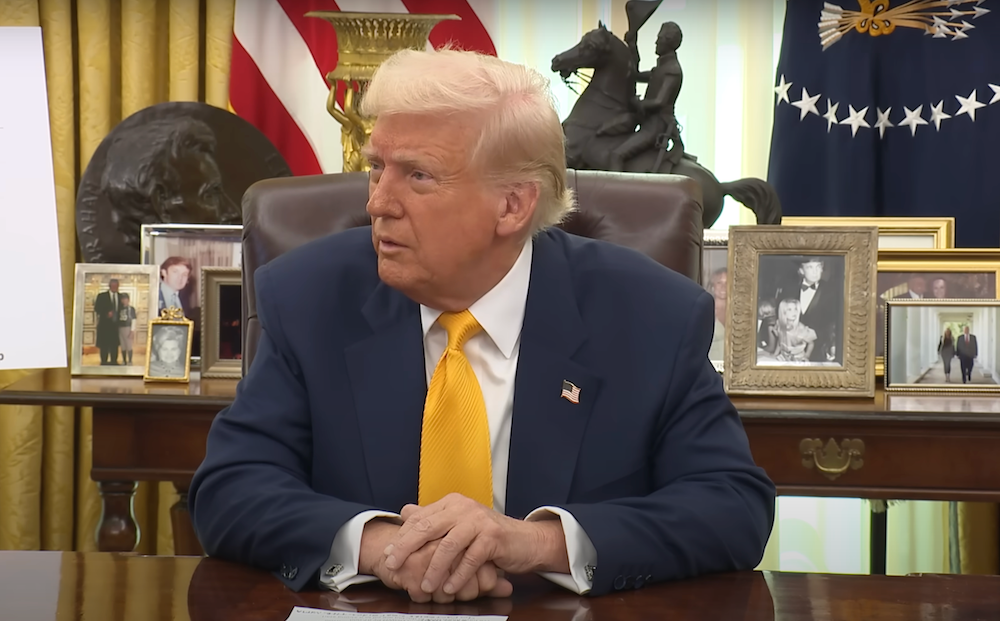
President Trump discussing his policy proposals with reporters inside the Oval Office. Source: The White House

Related: Crypto taxes, DOGE, Trump and avoiding an IRS audit: Taxbit exec spills the tea

DOGE pursues cost-cutting and efficiency strategies

The Department of Government Efficiency, headed by businessman Elon Musk, is exploring methods to reduce the $36 trillion US national debt by substantially reducing the size of the federal bureaucracy and introducing cost-cutting measures.

One of the more unique measures proposed included putting all public spending onchain to reduce deficits and ensure transparency.

On Feb. 21, the Securities and Exchange Commission (SEC) announced it was cutting its regional office directors to comply with the Trump administration’s cost-saving directives.

However, under the reorganization plan, the regional offices, which are spread out across major US cities, would stay open, and the SEC recently submitted its 2025 budget proposal to Congress requesting $2.6 billion.

IRS, US Government, Donald Trump, Elon Musk

The US national debt has exploded to over $36 trillion. Source: US Debt Clock

President Trump and Elon Musk have considered passing on 20% of the DOGE savings to Americans in a stimulus check or potential tax credits.

Research from accounting automation company Dancing Numbers argued that Trump’s plan to eliminate federal income tax could save the average American $134,809 in taxes throughout their lives.

The company added that these lifetime tax savings could extend to as much as $325,561 per person if other wage-based taxes at the state level are also repealed.

Despite this, not everyone is convinced by DOGE’s cost-cutting tactics, including US Senator Elizabeth Warren, who is highly critical of Elon Musk, Trump, and DOGE.

In January 2025, the Massachusetts Senator sent a letter to the DOGE proposing increasing taxes and federal spending to make the government more efficient.

Magazine: Elon Musk’s plan to run government on blockchain faces uphill battle

Read more at cointelegraph.com

L2 gaming activity spikes in February, but wallets decline — Report

Gaming activity on some layer-2 blockchains rose by over 20,000% in February 2025 while the number of daily unique active wallets (dUAWs) dropped, according to a report by DappRadar.

Abstract, an Ethereum layer-2 blockchain developed by Igloo, the parent company of NFT collection Pudgy Penguins, led all chains with a growth of over 20,000% in daily active unique wallets (dAUWs). Soneium, Sony’s Ethereum L2 blockchain, came in second with a growth of over 3,200%, and Linea, another L2 blockchain, placed third with over 1,000% growth.

L2 gaming activity spikes in February, but wallets decline — Report

Monthly growth of unique active wallets across blockchains. Source: DappRadar

On Abstract and Soneium, two games were the primary drivers of activity growth: Treasure Ship on Abstract, which currently has around 72,000 UAWs, and Evermoon on Soneium, with approximately 32,000 UAWs.

However, despite the rise of gaming activity on L2s, dUAWs overall dropped by 16% compared to January, settling at around 5.8 million. The report notes that while blockchain gaming “has historically held strong market dominance, economic conditions have shifted investor focus back towards DeFi. With market uncertainty causing traders to exit positions, DeFi now leads as the most dominant sector.”

The most dominant blockchains for gaming in terms of dUAWs are opBNB, a layer-2 blockchain built on top of the BNB Smart Chain; independent layer-1 blockchain Aptos built for decentralized applications; and Nebula, which is a Skale chain.

According to the report, blockchain gaming investments soared to $55 million in February, marking a 243% increase from January, with 92% of the funds allocated to infrastructure development.

Blockchain gaming activity sees year-over-year growth, but challenges persist

As Cointelegraph reported in February, blockchain gaming activity saw a significant year-over-year surge, with daily unique active wallets soaring by 386% to 7 million. The sharp rise led some industry observers to speculate about a potential blockchain gaming bull run in 2025 — though that prospect is now under debate.

One of the games that had been drawing attention to the use of blockchains in games was “Off The Grid.” The title, which plans to use an Avalanche subnet, generated more than 100 million transactions in its first month.

The sector, however, has faced challenges. Gunzilla Games Web3 director Theodore Agranat told Cointelegraph that there “is no new money coming into the system,” explaining that existing capital is just being recycled between gaming projects.

“They will just go from project to project and extract whatever value they can from that project,” he said. “And once there’s no more value to be had there, they are going to move on to another project.”

Magazine: Web3 Gamer: How AI could ruin gaming, The Voice, addictive Axies game

Read more at cointelegraph.com

Hyperliquid ups margin requirements after $4 million liquidation loss

Hyperliquid, a blockchain network specializing in trading, has increased margin requirements for traders after its liquidity pool lost millions of dollars during a massive Ether (ETH) liquidation, the network said. 

On March 12, a trader intentionally liquidated a roughly $200 million Ether long position, causing Hyperliquid’s liquidity pool, HLP, to lose $4 million, unwinding the trade. 

Starting March 15, Hyperliquid will begin requiring traders to maintain a collateral margin of at least 20% on certain open positions to “reduce the systemic impact of large positions with hypothetical market impact upon closing,” Hyperliquid said in a March 13 X post. 

The incident highlights the growing pains confronting Hyperliquid, which has emerged as Web3’s most popular platform for leveraged perpetual trading. 

Hyperliquid ups margin requirements after $4 million liquidation loss

Hyperliquid has adjusted margin requirements for traders. Source: Hyperliquid

Hyperliquid said the $4 million loss was not from an exploit but rather a predictable consequence of the mechanics of its trading platform under extreme conditions. 

“[Y]esterday’s event highlighted an opportunity to strengthen the margining framework to address extreme conditions more robustly,” Hyperliquid said

These changes only apply in certain circumstances, such as when traders are withdrawing collateral from open positions, Hyperliquid said. Traders can still take on new positions with up to 40 times leverage.

Perpetual futures, or “perps,” are leveraged futures contracts with no expiry date. Traders deposit margin collateral — typically USDC (USDC) for Hyperliquid — to secure open positions. 

By withdrawing most of his collateral and liquidating his own position, the trader effectively cashed out of his trade without incurring slippage — or losses from selling a large position all at once. 

Instead, those losses were borne by Hyperliquid’s HLP liquidity pool. 

Hyperliquid ups margin requirements after $4 million liquidation loss

Hyperliquid’s HLP has more than $350 million in TVL. Source: DeFiLlama

Related: Crypto market liquidations likely reached $10B — Bybit CEO

Leading perps exchange

As of March 13, HLP has a total value locked (TVL) of approximately $340 million sourced from user deposits, according to DefiLlama. 

Launched in 2024, Hyperliquid’s flagship perps exchange has captured 70% of the market share, surpassing rivals such as GMX and dYdX, according to a January report by asset manager VanEck. 

Hyperliquid touts a trading experience comparable to a centralized exchange, featuring fast settlement times and low fees, but is less decentralized than other exchanges.

As of March 12, Hyperliquid has clocked approximately $180 million per day in transaction volume, according to DefiLlama. 

Magazine: Trump’s crypto ventures raise conflict of interest, insider trading questions

Read more at cointelegraph.com

AML Bitcoin creator convicted of wire fraud, money laundering

The founder of a cryptocurrency exchange whose namesake was tied to Anti-Money Laundering (AML) was found guilty of wire fraud and money laundering in a California court.

In a March 12 trial in the US District Court for the Northern District of California, a jury found AML Bitcoin creator Rowland Marcus Andrade guilty of two felony counts as part of a scheme to defraud investors.

Authorities initially filed criminal charges against Andrade in June 2020 in parallel to a civil case filed by the US Securities and Exchange Commission (SEC) against the AML Bitcoin creator and the NAC Foundation, for which he was the founder and CEO.

“Mr. Andrade’s outrageous lies lured and scammed individuals into investing their hard-earned money into a new cryptocurrency with fabricated features,” said Linda Nguyen, the IRS Criminal Investigation Oakland Field Office Special Agent in Charge. “But there is nothing advanced about this scheme. Rowland Marcus Andrade stole money from innocent people and used it to further his personal wealth.”

Law, California, AML, Crimes, Money Laundering

Rowland Marcus Andrade jury verdict on March 12. Source: PACER

The SEC’s civil case against Andrade was notable for the involvement of political lobbyist Jack Abramoff, who served four years in prison between 2006 and 2010 following his conviction on mail fraud, conspiracy to bribe public officials and tax evasion. A judge agreed to stay the SEC lawsuit in January 2021 until the conclusion of Andrade’s criminal case, suggesting that it may once again proceed soon.

The June 2020 indictment alleged the NAC Foundation claimed a cryptocurrency that AML Bitcoin would launch — it never did — would comply with money laundering and Know Your Customer (KYC) regulations.

Andrade used those claims for an initial coin offering between 2017 and 2018. According to the information presented at his trial, the AML Bitcoin creator diverted more than $2 million in proceeds from the sale of the platform, spending it on real estate and luxury automobiles.

Related: IRS wants court to toss crypto exec’s appeal over bank record summons

“Andrade falsely claimed, among other misrepresentations, that the Panama Canal Authority was close to permitting AML Bitcoin to be used for ships passing through the Panama Canal when no such agreement existed,” said the Justice Department.

The AML Bitcoin creator is scheduled to return to court for a sentencing hearing on July 22, having remained free on a $75,000 bond since 2020 with some travel restrictions. He faces a maximum penalty of 20 years in prison for the wire fraud count and 10 years for the money laundering count.

Magazine: Trump’s crypto ventures raise conflict of interest, insider trading questions

Read more at cointelegraph.com

DigiFT launches Invesco private credit token on Arbitrum

Digital asset exchange DigiFT has launched Invesco’s tokenized private credit strategy on Arbitrum, further expanding the use cases of real-world assets (RWA) and giving institutional investors access to onchain credit markets.

According to a March 13 announcement, Invesco’s US Senior Loan Strategy (iSNR) token is now live on Arbitrum, a popular Ethereum layer-2 network.

The tokenized asset was launched on Feb. 19 and is designed to track the performance of a private credit fund managed by Invesco, a publicly traded investment manager headquartered in Atlanta, Georgia. 

At the time of launch, the Invesco fund had $6.3 billion in assets under management, according to Bloomberg

DigiFT described the iSNR token as the “first and only tokenized private credit strategy.”

Asset Management, Stablecoin, Tokenization, RWA Tokenization

The iSNR tokenized fund has a minimum investment of $10,000. Source: DigiFT

DigiFT CEO Henry Zhang said adding iSNR to Aribitrum increases its utility by “allowing DeFi applications, DAOs and institutional investors to integrate with a regulated, onchain private credit strategy.”

Consistent with the initial launch of iSNR on Ethereum last month, investors on Arbitrum can purchase tokenized shares using popular stablecoins USDC (USDC) and USDt (USDT).

Related: Cantor Fitzgerald taps Anchorage Digital, Copper as Bitcoin custodians

DeFi tokenization on the rise

Despite the recent crypto market downtrend, RWA tokenization appears to be heating up with the launch of several DeFi-oriented products. Positive regulatory developments, the rise of liquid multichain economies and innovations in decentralized exchanges are expected to push RWA tokenization into the crypto limelight this year. 

Earlier this week, tokenization company Securitize announced that oracle provider RedStone will deliver price feeds for its tokenized products, which include the BlackRock USD Institutional Liquidity Fund (BUIDL) and the Apollo Diversified Credit Securitize Fund (ACRED). 

The integration means that Securitize’s funds “can now be utilized across DeFi protocols such as Morpho, Compound or Spark,” RedStone’s chief operating officer, Marcin Kazmierczak, told Cointelegraph. 

Meanwhile, asset manager Franklin Templeton has launched a tokenized money fund on the Coinbase layer-2 network Base and a US government money fund on Solana. 

Asset Management, Stablecoin, Tokenization, RWA Tokenization

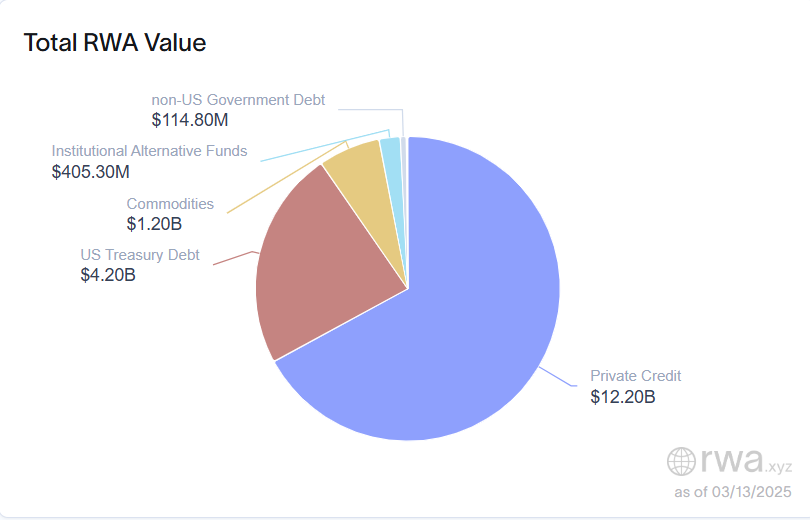
Private credit ($12.2 billion) and US Treasury debt ($4.2 billion) have dominated real-world asset tokenization so far. Source: RWA.xyz

According to industry data, the total value of RWAs onchain has grown by 17.5% over the past 30 days to reach $18.1 billion. Private credit and US Treasury debt account for nearly 91% of that total. 

Related: Trump-era policies may fuel tokenized real-world assets surge

Read more at cointelegraph.com