cointelegraph.com

Kraken to acquire NinjaTrader for $1.5B to offer US crypto futures

Update (March 20, 1:00 pm UTC): This article has been updated to include an official acquisition agreement announcement by Kraken.

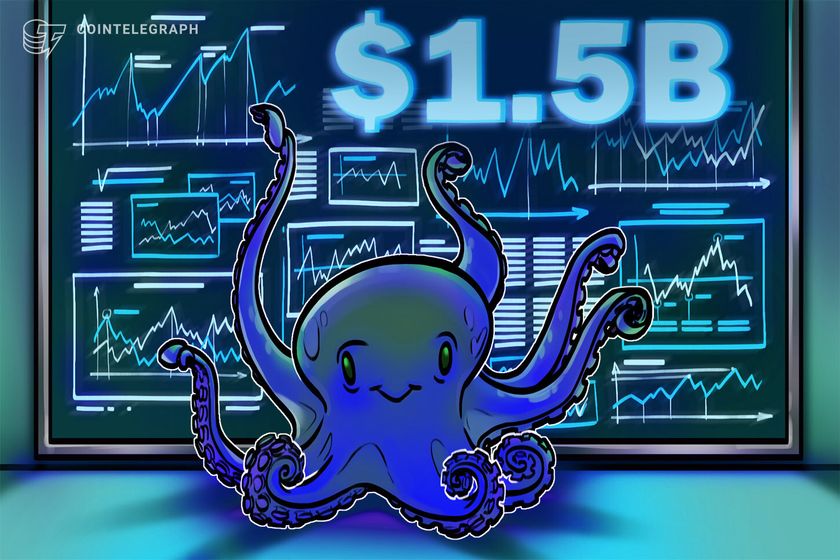
Crypto exchange Kraken is preparing for a $1.5 billion acquisition of trading platform NinjaTrader, a move that would expand Kraken’s customer base and enable it to offer crypto futures and derivatives in the United States.

Kraken officially announced that it has entered into an agreement to acquire NinjaTrader on March 20, confirming a previous report by The Wall Street Journal.

Kraken’s expanded offerings would be made possible through NinjaTrader’s registration as a Futures Commission Merchant registered with the US Commodity Futures Trading Commission (CFTC).

Kraken, Cryptocurrency Exchange, Derivatives, Futures

Source: Kraken

The move would help Kraken’s strategy to work across several asset classes — including plans for equities trading and payments — while enabling NinjaTrader to expand into the UK, continental Europe and Australian markets.

The transaction is expected to close in H1 2025

In the announcement, Kraken said that NinjaTrader is expected to remain a standalone platform under Kraken, with its clients gaining access to an expanded array of trading opportunities in the future.

NinjaTrader is majority-backed by Long Ridge Equity Partners, it added.

Kraken to acquire NinjaTrader for $1.5B to offer US crypto futures

Source: Wall Street Journal Markets

Subject to customary closing conditions, the acquisition is expected to close in the first half of 2025, Kraken said.

Kraken among crypto firms freed by the SEC

Kraken posted $1.5 billion in revenue and $665 billion in trading volume from 2.5 million funded customer accounts on its platform in 2024, while NinjaTrader recently said its futures trading tools are used by over 1.8 million customers.

Kraken announced its intention to broaden its product offerings and services last November when it shuttered its non-fungible token marketplace.

Kraken, Cryptocurrency Exchange, Derivatives, Futures

Source: Blocknews

It comes as the US Securities and Exchange Commission dropped its lawsuit against Kraken on March 3 after it initially alleged that the crypto platform acted as an unregistered broker, dealer, exchange and clearing agency. 

The suit was dismissed with prejudice, with no admission of wrongdoing, no penalties paid and no changes to Kraken’s business. 

Related: Australia fines Kraken operator $5M for regulatory breaches

Kraken is one of many firms that stand to benefit from a more relaxed regulatory environment in the US under President Donald Trump, who has promised to make America the “crypto capital” of the world.

The crypto exchange was founded in 2011 by Thanh Luu, Michael Gronager and former CEO Jesse Powell, who handed the reins over to former data analytics executive Amir Orad last July.

Kraken consistently ranks among the top seven to 15 largest crypto exchanges by spot trading volume, handling between $390 million and $4.4 billion in daily trades over the past three months, according to CoinGecko data.

Additional reporting by Helen Partz.

Magazine: Deposit risk: What do crypto exchanges really do with your money?

Read more at cointelegraph.com

Sanctioned crypto exchange Garantex shifts millions as it reboots platform

The shuttered crypto exchange Garantex has allegedly resurfaced under a new name after reportedly laundering millions in ruble-backed stablecoins and transferring them to a newly established exchange, claims a Swiss blockchain analytics firm.

Global Ledger claims the operators of the Russian exchange have shifted liquidity and customer deposits to Grinex, which they say is “Garantex’s full-fledged successor,” in a report released to X on March 19.

“We can confidently state that Grinex and Garantex are directly connected both onchain and offchain.”

“The movement of funds, including the systematic transfer of A7A5 liquidity, the use of one-time-use wallets, and the involvement of addresses previously associated with Garantex, provides clear onchain proof of their link,” the Global Ledger team said in the report.

After completing its investigation on March 13, Global Ledger says it had found onchain data showing Garantex laundered over $60 million worth of ruble-backed stablecoins called A7A5 and sent them to addresses associated with Grinex.

Sanctioned crypto exchange Garantex shifts millions as it reboots platform

Global Ledger claims Garantex has moved all its funds over to a newly launched exchange and is back in business. Source: Global Ledger

“In this case, the burning and subsequent minting process was used to launder funds from Garantex, allowing new coins to be minted from a system address with a clean history,” the team said.

A Garantex manager also reportedly told Global Ledger that customers have been visiting the exchange office in person and moving funds from Garantex to Grinex.

“Additionally, offchain indicators, such as transactional patterns, commentaries and exchange behaviors, further reinforce this connection,” it said.

The report also points to a description of Grinex on the Russian crypto tracking site CoinMarketRating, claiming that the owners of Garantex created it. The reports said this shows “Grinex is not an independent entity but rather a full-fledged successor to Garantex, continuing its financial operations despite the exchange’s official shutdown.”

Sanctioned crypto exchange Garantex shifts millions as it reboots platform

Source: Global Ledger

By March 14, the volume of incoming transactions on Grinex was nearly $30 million, according to Global Ledger. CoinMarketRating shows that the trade volume for the month is now over $68 million, with spot trading topping $2 million.

The US Department of the Treasury’s Office of Foreign Assets Control first hit Garantex with sanctions in April 2022 for allegedly money laundering violations.

Related: US, UK, Australia sanction Zservers for hosting crypto ransomware LockBit

On March 6, the US Department of Justice collaborated with authorities in Germany and Finland to freeze domains associated with Garantex, which they claim processed over $96 billion worth of criminal proceeds since launching in 2019.

Stablecoin operator Tether also froze $27 million in Tether (USDT), on March 6 which forced Garantex to halt all operations, including withdrawals.

Only a few days later, on March 12, officials with India’s Central Bureau of Investigation arrested Aleksej Bešciokov, who allegedly operated Garantex, on US charges that included conspiracy to commit money laundering. 

Magazine: How crypto laws are changing across the world in 2025

Read more at cointelegraph.com

Sanctioned crypto exchange Garantex shifts millions as it reboots platform

Shuttered crypto exchange Garantex is reportedly back under a new name after laundering millions in ruble-backed stablecoins and sending them to a freshly created exchange, according to a Swiss blockchain analytics company.  

Global Ledger claims the operators of the Russian exchange have shifted liquidity and customer deposits to Grinex, which they say is “Garantex’s full-fledged successor,” in a report released to X on March 19.

“We can confidently state that Grinex and Garantex are directly connected both onchain and offchain.”

“The movement of funds, including the systematic transfer of A7A5 liquidity, the use of one-time-use wallets, and the involvement of addresses previously associated with Garantex, provides clear onchain proof of their link,” the Global Ledger team said in the report.

After completing its investigation on March 13, Global Ledger says it had found onchain data showing Garantex laundered over $60 million worth of ruble-backed stablecoins called A7A5 and sent them to addresses associated with Grinex.

Sanctioned crypto exchange Garantex shifts millions as it reboots platform

Global Ledger claims Garantex has moved all its funds over to a newly launched exchange and is back in business. Source: Global Ledger

“In this case, the burning and subsequent minting process was used to launder funds from Garantex, allowing new coins to be minted from a system address with a clean history,” the team said.

A Garantex manager also reportedly told Global Ledger that customers have been visiting the exchange office in person and moving funds from Garantex to Grinex.

“Additionally, offchain indicators, such as transactional patterns, commentaries and exchange behaviors, further reinforce this connection,” it said.

The report also points to a description of Grinex on the Russian crypto tracking site CoinMarketRating, claiming that the owners of Garantex created it. The reports said this shows “Grinex is not an independent entity but rather a full-fledged successor to Garantex, continuing its financial operations despite the exchange’s official shutdown.”

Sanctioned crypto exchange Garantex shifts millions as it reboots platform

Source: Global Ledger

By March 14, the volume of incoming transactions on Grinex was nearly $30 million, according to Global Ledger. CoinMarketRating shows that the trade volume for the month is now over $68 million, with spot trading topping $2 million.

The US Department of the Treasury’s Office of Foreign Assets Control first hit Garantex with sanctions in April 2022 for allegedly money laundering violations.

Related: US, UK, Australia sanction Zservers for hosting crypto ransomware LockBit

On March 6, the US Department of Justice collaborated with authorities in Germany and Finland to freeze domains associated with Garantex, which they claim processed over $96 billion worth of criminal proceeds since launching in 2019.

Stablecoin operator Tether also froze $27 million in Tether (USDT), on March 6 which forced Garantex to halt all operations, including withdrawals.

Only a few days later, on March 12, officials with India’s Central Bureau of Investigation arrested Aleksej Bešciokov, who allegedly operated Garantex, on US charges that included conspiracy to commit money laundering. 

Magazine: How crypto laws are changing across the world in 2025

Read more at cointelegraph.com

Sanctioned crypto exchange Garantex shifts millions as it reboots platform

Shuttered crypto exchange Garantex is reportedly back under a new name after laundering millions in ruble-backed stablecoins and sending them to a freshly created exchange, according to a Swiss blockchain analytics company.  

Global Ledger claims the operators of the Russian exchange have shifted liquidity and customer deposits to Grinex, which they say is “Garantex’s full-fledged successor,” in a report released to X on March 19.

“We can confidently state that Grinex and Garantex are directly connected both onchain and offchain.”

“The movement of funds, including the systematic transfer of A7A5 liquidity, the use of one-time-use wallets, and the involvement of addresses previously associated with Garantex, provides clear onchain proof of their link,” the Global Ledger team said in the report.

After completing its investigation on March 13, Global Ledger says it had found onchain data showing Garantex laundered over $60 million worth of ruble-backed stablecoins called A7A5 and sent them to addresses associated with Grinex.

Sanctioned crypto exchange Garantex shifts millions as it reboots platform

Global Ledger claims Garantex has moved all its funds over to a newly launched exchange and is back in business. Source: Global Ledger

“In this case, the burning and subsequent minting process was used to launder funds from Garantex, allowing new coins to be minted from a system address with a clean history,” the team said.

A Garantex manager also reportedly told Global Ledger that customers have been visiting the exchange office in person and moving funds from Garantex to Grinex.

“Additionally, offchain indicators, such as transactional patterns, commentaries and exchange behaviors, further reinforce this connection,” it said.

The report also points to a description of Grinex on the Russian crypto tracking site CoinMarketRating, claiming that the owners of Garantex created it. The reports said this shows “Grinex is not an independent entity but rather a full-fledged successor to Garantex, continuing its financial operations despite the exchange’s official shutdown.”

Sanctioned crypto exchange Garantex shifts millions as it reboots platform

Source: Global Ledger

By March 14, the volume of incoming transactions on Grinex was nearly $30 million, according to Global Ledger. CoinMarketRating shows that the trade volume for the month is now over $68 million, with spot trading topping $2 million.

The US Department of the Treasury’s Office of Foreign Assets Control first hit Garantex with sanctions in April 2022 for allegedly money laundering violations.

Related: US, UK, Australia sanction Zservers for hosting crypto ransomware LockBit

On March 6, the US Department of Justice collaborated with authorities in Germany and Finland to freeze domains associated with Garantex, which they claim processed over $96 billion worth of criminal proceeds since launching in 2019.

Stablecoin operator Tether also froze $27 million in Tether (USDT), on March 6 which forced Garantex to halt all operations, including withdrawals.

Only a few days later, on March 12, officials with India’s Central Bureau of Investigation arrested Aleksej Bešciokov, who allegedly operated Garantex, on US charges that included conspiracy to commit money laundering. 

Magazine: How crypto laws are changing across the world in 2025

Read more at cointelegraph.com

Bakkt names new co-CEO amid re-focus on crypto offerings

Crypto custody and trading firm Bakkt Holdings has appointed a new co-CEO and is cutting some of its services to focus on its crypto offerings after recently losing two major clients.

Akshay Naheta, the founder of stablecoin payments infrastructure firm Distributed Technologies Research (DTR), will join Bakkt CEO Andy Main in the role, the company said on March 19.Bakkt added that it will enter into an agreement with DTR to integrate its stablecoin-based payment infrastructure with Bakkt’s crypto trading and brokerage technology, subject to regulatory approval.

Bakkt said the partnership would open new revenue streams in stablecoin payments and crypto trading while increasing efficiency in cross-border payments, a popular use case for crypto.

Naheta founded DTR in 2022 after a nearly six-year stint in various executive roles at investment management giant SoftBank Group, which has a history of investing in crypto firms.

In a separate statement reporting its fourth quarter and full year 2024 results, Bakkt said it wants “to focus resources on core crypto offerings” and was potentially looking to sell or wind down its loyalty services business, which allows its clients to offer travel and merchandise perks.

Bakkt names new co-CEO amid re-focus on crypto offerings

Bakkt recently shared its take on stablecoins ahead of it, sharing it had partnered with DTR. Source: Bakkt

Bakkt added that it was selling its crypto custody subsidiary, Bakkt Trust, to its parent company, Intercontinental Exchange, for $1.5 million. It said the sale would cut operating costs by $3.8 million a year and free up around $3 million for investment into its crypto business.

The firm added it would maintain custody solutions “through a robust network of reputable custody providers.”

Its moves come after Bakkt disclosed on March 17 that its major clients, Bank of America and trading platform Webull, won’t be renewing contacts with the firm when they expire in April and June, respectively.

Bank of America accounted for around 16% of Bakkt’s loyalty services revenue in 2023 and 2024, while Webull represented 74% of its crypto revenues over that same period.

The disclosure sent its share price tumbling on March 18, which closed the trading day down over 27% to $9.33.

Bakkt improves top and bottom-line earnings 

Bakkt reported on March 19 that its total 2024 revenues came in at $3.49 billion, up nearly 350% year-over-year, while its yearly net loss roughly halved to $103.4 million.

Related: Fund managers dump US stocks at record pace — Can recession fears hurt Bitcoin? 

Fourth-quarter revenues increased more than seven-fold from 2024, reaching $1.8 billion, while its net loss narrowed to $40.4 million. 

It forecasts revenues of between $1.03 billion and $1.28 billion for the first quarter of 2025, which would be a nearly 50% bump from the first quarter of 2024.

Shares in Bakkt (BKKT) closed flat at $9.31 on March 19 after a dip to $8.50 during trading; it reached a top of $9.88 after the bell but has since settled to around its closing price, according to Google Finance.

Bakkt names new co-CEO amid re-focus on crypto offerings

Bakkt shares closed mostly flat on March 19 and settled after the bell. Source: Google Finance

Bakkt is down nearly 62.5% so far this year and has essentially lost all value since peaking at over $1,000 in October 2021.

Opinion: Coinbase and Base: Is crypto just becoming traditional finance 2.0?

Read more at cointelegraph.com

Bakkt names new co-CEO amid re-focus on crypto offerings

Crypto custody and trading firm Bakkt Holdings has appointed a new co-CEO and is cutting some of its services to focus on its crypto offerings after recently losing two major clients.

Akshay Naheta, the founder of stablecoin payments infrastructure firm Distributed Technologies Research (DTR), will join Bakkt CEO Andy Main in the role, the company said on March 19.Bakkt added that it will enter into an agreement with DTR to integrate its stablecoin-based payment infrastructure with Bakkt’s crypto trading and brokerage technology, subject to regulatory approval.

Bakkt said the partnership would open new revenue streams in stablecoin payments and crypto trading while increasing efficiency in cross-border payments, a popular use case for crypto.

Naheta founded DTR in 2022 after a nearly six-year stint in various executive roles at investment management giant SoftBank Group, which has a history of investing in crypto firms.

In a separate statement reporting its fourth quarter and full year 2024 results, Bakkt said it wants “to focus resources on core crypto offerings” and was potentially looking to sell or wind down its loyalty services business, which allows its clients to offer travel and merchandise perks.

Bakkt names new co-CEO amid re-focus on crypto offerings

Bakkt recently shared its take on stablecoins ahead of it, sharing it had partnered with DTR. Source: Bakkt

Bakkt added that it was selling its crypto custody subsidiary, Bakkt Trust, to its parent company, Intercontinental Exchange, for $1.5 million. It said the sale would cut operating costs by $3.8 million a year and free up around $3 million for investment into its crypto business.

The firm added it would maintain custody solutions “through a robust network of reputable custody providers.”

Its moves come after Bakkt disclosed on March 17 that its major clients, Bank of America and trading platform Webull, won’t be renewing contacts with the firm when they expire in April and June, respectively.

Bank of America accounted for around 16% of Bakkt’s loyalty services revenue in 2023 and 2024, while Webull represented 74% of its crypto revenues over that same period.

The disclosure sent its share price tumbling on March 18, which closed the trading day down over 27% to $9.33.

Bakkt improves top and bottom-line earnings 

Bakkt reported on March 19 that its total 2024 revenues came in at $3.49 billion, up nearly 350% year-over-year, while its yearly net loss roughly halved to $103.4 million.

Related: Fund managers dump US stocks at record pace — Can recession fears hurt Bitcoin? 

Fourth quarter revenues increased more than seven-fold from 2024, reaching $1.8 billion, while its net loss narrowed to $40.4 million. 

It forecast revenues of between $1.03 billion to $1.28 billion for the first quarter of 2025, which would be a nearly 50% bump from the first quarter of 2024.

Shares in Bakkt (BKKT) closed flat at $9.31 on March 19 after a dip to $8.50 during trading; it reached a top of $9.88 after the bell but has since settled to around its closing price, according to Google Finance.

Bakkt names new co-CEO amid re-focus on crypto offerings

Bakkt shares closed mostly flat on March 19 and settled after the bell. Source: Google Finance

Bakkt is down nearly 62.5% so far this year and has essentially lost all value since peaking at over $1,000 in October 2021.

Opinion: Coinbase and Base: Is crypto just becoming traditional finance 2.0?

Read more at cointelegraph.com

Bakkt names new co-CEO amid re-focus on crypto offerings

Crypto custody and trading firm Bakkt Holdings has appointed a new co-CEO and is cutting some of its services to focus on its crypto offerings after recently losing two major clients.

Akshay Naheta, the founder of stablecoin payments infrastructure firm Distributed Technologies Research (DTR), will join Bakkt CEO Andy Main in the role, the company said on March 19.Bakkt added that it will enter into an agreement with DTR to integrate its stablecoin-based payment infrastructure with Bakkt’s crypto trading and brokerage technology, subject to regulatory approval.

Bakkt said the partnership would open new revenue streams in stablecoin payments and crypto trading while increasing efficiency in cross-border payments, a popular use case for crypto.

Naheta founded DTR in 2022 after a nearly six-year stint in various executive roles at investment management giant SoftBank Group, which has a history of investing in crypto firms.

In a separate statement reporting its fourth quarter and full year 2024 results, Bakkt said it wants “to focus resources on core crypto offerings” and was potentially looking to sell or wind down its loyalty services business, which allows its clients to offer travel and merchandise perks.

Bakkt names new co-CEO amid re-focus on crypto offerings

Bakkt recently shared its take on stablecoins ahead of it, sharing it had partnered with DTR. Source: Bakkt

Bakkt added that it was selling its crypto custody subsidiary, Bakkt Trust, to its parent company, Intercontinental Exchange, for $1.5 million. It said the sale would cut operating costs by $3.8 million a year and free up around $3 million for investment into its crypto business.

The firm added it would maintain custody solutions “through a robust network of reputable custody providers.”

Its moves come after Bakkt disclosed on March 17 that its major clients, Bank of America and trading platform Webull, won’t be renewing contacts with the firm when they expire in April and June, respectively.

Bank of America accounted for around 16% of Bakkt’s loyalty services revenue in 2023 and 2024, while Webull represented 74% of its crypto revenues over that same period.

The disclosure sent its share price tumbling on March 18, which closed the trading day down over 27% to $9.33.

Bakkt improves top and bottom-line earnings 

Bakkt reported on March 19 that its total 2024 revenues came in at $3.49 billion, up nearly 350% year-over-year, while its yearly net loss roughly halved to $103.4 million.

Related: Fund managers dump US stocks at record pace — Can recession fears hurt Bitcoin? 

Fourth quarter revenues increased more than seven-fold from 2024, reaching $1.8 billion, while its net loss narrowed to $40.4 million. 

It forecast revenues of between $1.03 billion to $1.28 billion for the first quarter of 2025, which would be a nearly 50% bump from the first quarter of 2024.

Shares in Bakkt (BKKT) closed flat at $9.31 on March 19 after a dip to $8.50 during trading; it reached a top of $9.88 after the bell but has since settled to around its closing price, according to Google Finance.

Bakkt names new co-CEO amid re-focus on crypto offerings

Bakkt shares closed mostly flat on March 19 and settled after the bell. Source: Google Finance

Bakkt is down nearly 62.5% so far this year and has essentially lost all value since peaking at over $1,000 in October 2021.

Opinion: Coinbase and Base: Is crypto just becoming traditional finance 2.0?

Read more at cointelegraph.com

‘I am ashamed’ — Solana CEO breaks silence over controversial ad backlash

Solana Labs CEO Anatoly Yakovenko has broken his silence over the “America Is Back — Time to Accelerate” advertisement, which blended American patriotism and tech innovation with political messaging around gender identity.

“The ad was bad, and it’s still gnawing at my soul,” Yakovenko said in a March 19 X post after receiving immense backlash over the controversial ad. 

“I am ashamed I downplayed it instead of just calling it what it is – mean and punching down on a marginalized group.”

Yakovenko praised those in the Solana ecosystem who called out the “mess” that was posted on Solana’s X account, which accumulated around 1.2 million views and 1,300 comments before it was deleted roughly nine hours later.

Yakovenko said he will use the learning experience to ensure Solana stays focused on open-source software development and decentralization while staying “out of cultural wars.”

‘I am ashamed’ — Solana CEO breaks silence over controversial ad backlash

Source: Anatoly Yakovenko

Solana hasn’t made an official comment on the matter, though its X account reshared Yakovenko’s post to its 3.3 million followers.

Cointelegraph also reached out to the Solana Foundation shortly after the ad was taken down but didn’t receive a response.

The two-and-a-half-minute ad for the Solana Accelerate conference showcased a man acting as America in a therapy session who said he was having thoughts “about innovation” such as crypto.

The therapist responded that he should instead do “something more productive, like coming up with a new gender” and later said the man should “focus on pronouns.”

The man snapped back, stating that he wanted “to invent technologies, not genders.”

Took them 9 hours to delete it.Also all the major players in the Solana ecosystem suddenly delete their tweets promoting/supporting the ad and RT’d and liked takes about it being bad.They approved this, supported it and celebrated it.They rolled it back because it hurt… pic.twitter.com/kPMERDpTcn

— Adam Cochran (adamscochran.eth) (@adamscochran) March 18, 2025

The now-deleted ad came nine days after Solana’s X account posted: “Solana is for everyone.”

Related: Solana rallies 8% as crypto markets recover — Is there room for more SOL upside?

Cinneamhain Ventures partner Adam Cochran pointed out that transgender people contribute to open-source software and cryptography in an “insanely disproportionate amount.”

A GitHub survey from 2017 found that of the 5,500 randomly selected open-source developers, 1% were transgender, and another 1% were non-binary.

Most data obtained during 2017 and 2018 suggest that transgender and non-binary people combined represented somewhere between 0.1% and 0.6% of the population.

Magazine: Memecoins are ded — But Solana ‘100x better’ despite revenue plunge

Read more at cointelegraph.com

Regulation must go through Congress for lasting change — Wiley Nickel

Crypto regulations must be enacted through an act of Congress to become permanent and meaningful pieces of legislation, according to former Congressman Wiley Nickel.

In an exclusive video interview with Cointelegraph’s Turner Wright, Nickel urged bipartisan collaboration to push through comprehensive crypto regulations. The former Congressman added:

“I think it’s really important for anybody who cares about this issue to step back and realize that if you want lasting change in Washington, you must move legislation through Congress. Otherwise, if you’re talking about executive orders, it will just go back and forth.”

“You don’t want to have the mess that we saw just months ago with Gary Gensler’s SEC — you need to get legislation through Congress,” Nickel reiterated.

President Trump’s Jan. 23 executive order establishing the Working Group on Digital Assets, which also prohibited the development of a central bank digital currency (CBDC), and the order establishing a Bitcoin strategic reserve alongside a separate crypto stockpile, were both examples of executive actions that can be reversed at a later date.

Congress, Senate, Bitcoin Regulation, US Government, United States

Former Congressman Wiley Nickel is pictured sitting second from the left at the Blockworks Digital Asset Summit. Source: Cointelegraph

Related: Congress on track for stablecoin, market structure bills by August: Blockchain Association

Both chambers of Congress rush to push through meaningful legislation

Rep. Tom Emmer, the majority whip of the United States House of Representatives, reintroduced legislation banning a CBDC in the US on March 6.

Wyoming Senator Cynthia Lummis also reintroduced the Bitcoin Act in March, which builds upon an earlier bill of the same title but allows the US to purchase more than 1 million Bitcoin (BTC).

Congress, Senate, Bitcoin Regulation, US Government, United States

Senator Lummis’ Bitcoin Act of 2025. Source: Senator Cynthia Lummis

Rep. Byron Donalds recently announced that he would draft legislation to codify the Bitcoin strategic reserve into law — shielding President Trump’s original executive order from being overturned by a future administration.

On March 12, the House of Representatives repealed the IRS broker rule requiring decentralized finance platforms to report information to the Internal Revenue Service in a 292-131 vote.

Speaking at this year’s Blockworks Digital Asset Summit, Democrat Rep. Ro Khanna said that Congress should be able to pass comprehensive crypto regulation in 2025, including a stablecoin bill and a market structure bill.

Magazine: SEC’s U-turn on crypto leaves key questions unanswered

Read more at cointelegraph.com

Crypto regulation must go through Congress for lasting change — Wiley Nickel

Crypto regulations must be enacted through an act of Congress to become permanent and meaningful pieces of legislation, according to former Congressman Wiley Nickel.

In an exclusive video interview with Cointelegraph’s Turner Wright, Nickel urged bipartisan collaboration to push through comprehensive crypto regulations. The former Congressman added:

“I think it’s really important for anybody who cares about this issue to step back and realize that if you want lasting change in Washington, you must move legislation through Congress. Otherwise, if you’re talking about executive orders, it will just go back and forth.”

“You don’t want to have the mess that we saw just months ago with Gary Gensler’s SEC — you need to get legislation through Congress,” Nickel reiterated.

President Trump’s Jan. 23 executive order establishing the Working Group on Digital Assets, which also prohibited the development of a central bank digital currency (CBDC), and the order establishing a Bitcoin strategic reserve alongside a separate crypto stockpile, were both examples of executive actions that can be reversed at a later date.

Congress, Senate, Bitcoin Regulation, US Government, United States

Former Congressman Wiley Nickel is pictured sitting second from the left at the Blockworks Digital Asset Summit. Source: Cointelegraph

Related: Congress on track for stablecoin, market structure bills by August: Blockchain Association

Both chambers of Congress rush to push through meaningful legislation

Rep. Tom Emmer, the majority whip of the United States House of Representatives, reintroduced legislation banning a CBDC in the US on March 6.

Wyoming Senator Cynthia Lummis also reintroduced the Bitcoin Act in March, which builds upon an earlier bill of the same title but allows the US to purchase more than 1 million Bitcoin (BTC).

Congress, Senate, Bitcoin Regulation, US Government, United States

Senator Lummis’ Bitcoin Act of 2025. Source: Senator Cynthia Lummis

Rep. Byron Donalds recently announced that he would draft legislation to codify the Bitcoin strategic reserve into law — shielding President Trump’s original executive order from being overturned by a future administration.

On March 12, the House of Representatives repealed the IRS broker rule requiring decentralized finance platforms to report information to the Internal Revenue Service in a 292-131 vote.

Speaking at this year’s Blockworks Digital Asset Summit, Democrat Rep. Ro Khanna said that Congress should be able to pass comprehensive crypto regulation in 2025, including a stablecoin bill and a market structure bill.

Magazine: SEC’s U-turn on crypto leaves key questions unanswered

Read more at cointelegraph.com